أنجز عملك بكفاءة!





Vacuum vs clamp lifter systems each offer unique advantages for stone handling. This guide compares lifting performance, safety, maintenance, and efficiency to help factories choose the right solution.
Vacuum vs clamp lifter comparisons are becoming increasingly important as stone factories seek safer, faster, and more cost-efficient slab handling systems. This comprehensive guide explains the differences between vacuum lifters and clamp lifters, including lifting methods, safety performance, slab compatibility, maintenance requirements, operational efficiency, ROI, and ideal factory applications. Whether you operate a granite workshop, quartz fabrication facility, or large-scale stone factory, understanding these two systems is critical for improving productivity and reducing handling risks.
Vacuum vs Clamp Lifting Systems: The Complete Stone Factory Material Handling Guide

Large board clamp
Modern stone factories rely heavily on automated slab handling systems to improve safety, reduce labor dependency, and increase operational efficiency. Among the most widely used technologies, vacuum lifters and clamp lifters dominate industrial slab handling operations. Choosing between these two systems is not simply a matter of equipment preference—it directly impacts factory workflow, labor cost, slab protection, lifting safety, maintenance expenses, and production speed.
This detailed vacuum vs clamp lifter comparison explores how each lifting technology works, where each system performs best, and what factories should evaluate before making an investment decision. While both systems are designed to reduce manual handling, their mechanical principles, maintenance requirements, and operational strengths differ significantly.
Today’s factories increasingly adopt advanced slab handling systems because traditional manual lifting methods are no longer sustainable in modern industrial environments. Rising labor costs, stricter safety regulations, and growing slab sizes are forcing factories to modernize handling processes. As explained in
this overview of slab lifter systems
,
modern lifting technologies are transforming factory efficiency and significantly reducing workplace risk.
Why Stone Factories Need Advanced Lifting Systems
Stone slabs are heavy, fragile, and difficult to maneuver safely. A single granite slab can weigh several hundred kilograms, while engineered quartz slabs continue becoming larger and thinner. Manual movement exposes workers to injury risks and increases the chance of slab breakage.
Without professional lifting systems, factories commonly experience:
- Higher labor costs
- Frequent worker fatigue
- Increased slab damage
- Unsafe lifting conditions
- Production bottlenecks
- Slow material transport
- Reduced operational consistency
This is why industrial factories now treat lifting systems as essential infrastructure rather than optional tools. The right lifting solution improves workflow reliability while protecting both workers and expensive stone materials.
What Is a Vacuum Lifter?
A vacuum lifter uses suction technology to grip slabs securely during movement and positioning. Vacuum pumps create negative pressure inside suction pads, allowing the system to adhere firmly to the slab surface. These systems are particularly popular in fabrication environments where surface protection and precision handling are critical.
Vacuum systems are commonly used for:
- Polished marble slabs
- Quartz slabs
- Porcelain panels
- مناولة الزجاج
- Countertop fabrication
- CNC machine loading
- Bridge saw operations
Unlike mechanical clamps, vacuum lifters distribute force across the slab surface rather than applying pressure to slab edges. This significantly reduces edge chipping risk and makes vacuum systems ideal for delicate materials.
How Vacuum Lifters Work
A vacuum lifting system typically includes:
- Vacuum pump
- Suction pads
- Pressure monitoring gauges
- Safety tank or reservoir
- Audible and visual alarms
- Rotating or tilting frame
Once the suction pads contact the slab surface, the vacuum pump removes air and creates a sealed pressure zone. The stronger the vacuum pressure, the stronger the holding force. Safety systems monitor pressure levels continuously to prevent accidental release.
What Is a Clamp Lifter?
A clamp lifter uses mechanical gripping force to hold slabs securely during lifting and transportation. These systems are widely used in stone yards, warehouses, container loading areas, and heavy industrial production environments because of their simplicity, durability, and strong load capacity.
Clamp lifters are especially effective for:
- Granite slabs
- Rough surface materials
- Outdoor slab movement
- Vertical slab transport
- Heavy-duty industrial handling
- Container loading operations
Most clamp lifters operate using gravity-assisted gripping principles. As the slab weight increases, the gripping force becomes stronger. This creates highly stable lifting performance for large and heavy materials.
Modern factories increasingly rely on
advanced clamp lifting systems
to improve operational safety while reducing maintenance complexity.
How Clamp Lifters Work
Clamp lifters generally include:
- Mechanical gripping arms
- Rubber protective pads
- Load balancing frame
- نظام قفل الأمان
- Crane or forklift connection point
The clamp grips the slab edges and applies mechanical pressure to secure the material during transport. High-quality clamp systems use non-marking rubber pads to protect slab surfaces while maintaining strong friction.
Vacuum vs Clamp Lifter Comparison Table
| الميزة | رافعة تفريغ الهواء | رافع المشبك |
|---|---|---|
| Lifting Method | Vacuum suction | Mechanical gripping |
| Surface Protection | ممتاز | جيد |
| Heavy Load Handling | معتدل | ممتاز |
| الصيانة | Higher | أقل |
| Suitable Materials | Smooth surfaces | Various slab types |
| Outdoor Operation | Limited | ممتاز |
| Operational Stability | Depends on suction quality | Strong mechanical stability |
| Power Requirement | Requires electricity or battery | Minimal power requirement |
| Initial Investment | Higher | أقل |
When to Choose a Vacuum Lifter
Vacuum lifters are ideal for environments where surface protection and handling precision are top priorities.
Factories should consider vacuum systems if they:
- Handle polished marble regularly
- Produce quartz countertops
- Work with fragile porcelain slabs
- Need scratch-free handling
- Use CNC and bridge saw machines
- Require precise slab positioning
Vacuum lifters excel in fabrication workshops where slabs must be moved horizontally onto cutting tables or processing equipment. Because suction pads distribute force evenly across the surface, they minimize localized stress points.
However, vacuum systems also require more maintenance and careful operation. Dirty surfaces, power interruptions, or damaged suction pads can affect lifting performance. Operators must regularly inspect pressure gauges, hoses, seals, and vacuum pumps.
When to Choose a Clamp Lifter
Clamp lifters are preferred for rugged industrial applications where durability, simplicity, and heavy lifting capacity are more important than surface sensitivity.
Clamp systems are particularly suitable for:
- Heavy granite slabs
- Outdoor slab yards
- Warehouse transport
- Container loading
- Rough-textured materials
- High-volume slab movement
Industrial users often prefer clamp systems because they are easier to maintain and less dependent on electrical systems. This makes them highly reliable in demanding environments.
Factories seeking durable handling solutions often begin with
this detailed clamp lifter guide
.
Safety Comparison: Which System Is Safer?
Both systems significantly improve workplace safety compared to manual lifting, but their risk profiles differ.
Vacuum Lifter Safety Considerations
- Requires stable vacuum pressure
- Needs alarm systems and pressure monitoring
- Dependent on suction pad condition
- More sensitive to dust and surface contamination
- Power failure protection is critical
Modern vacuum systems include backup reservoirs and warning alarms to prevent sudden slab drops during pressure loss.
Clamp Lifter Safety Considerations
- Mechanical systems are generally simpler
- Strong grip on heavy materials
- Requires proper slab positioning
- Incorrect clamping angle can create instability
- Pad wear must be monitored regularly
Overall, clamp systems are often viewed as mechanically safer in rugged industrial environments because they are less dependent on electrical systems.
Stone Lifter Comparison: Efficiency and Productivity
هذا stone lifter comparison is not only about lifting force—it is about workflow optimization.
Advanced slab lifting technologies dramatically reduce:
- Manual labor dependency
- Worker fatigue
- Production delays
- Slab breakage risk
- Material transport time
As explained in
this slab lifter efficiency analysis
,
modern lifting equipment improves overall factory productivity while reducing workplace injuries.
In high-volume factories, even small improvements in slab movement speed can significantly increase daily throughput.
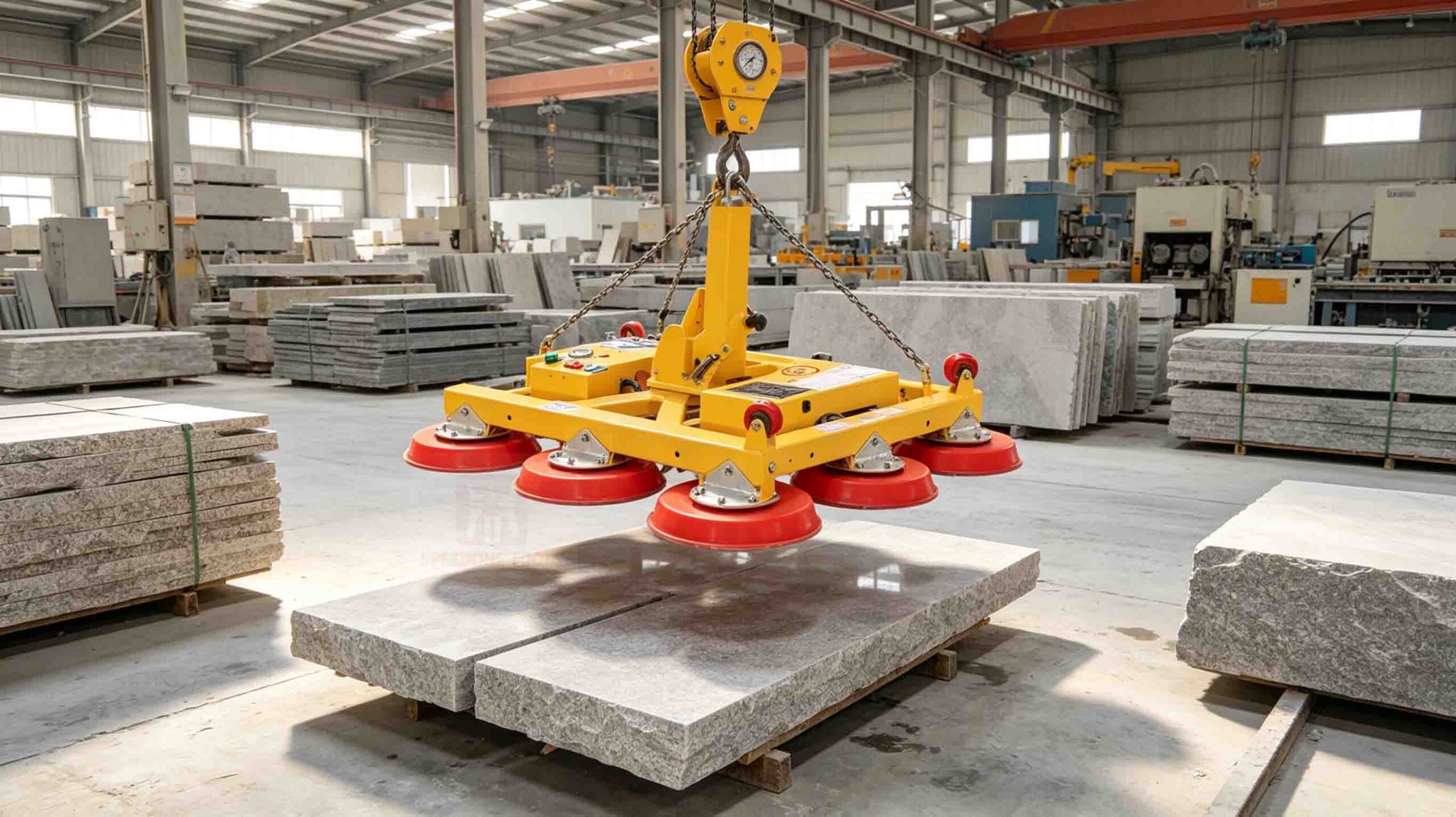
Vacuum stone material handling
Maintenance Comparison
| Maintenance Factor | رافعة تفريغ الهواء | رافع المشبك |
|---|---|---|
| الفحص اليومي | Vacuum seals and gauges | Clamp pads and joints |
| Electrical Components | Complex | Minimal |
| Wear Components | Suction cups and hoses | Rubber pads |
| Maintenance Frequency | Higher | أقل |
| Long-Term Durability | معتدل | ممتاز |
Cost and ROI Analysis
Vacuum systems generally require higher initial investment due to pumps, electrical systems, sensors, and safety monitoring components. Clamp lifters are mechanically simpler and usually more affordable.
However, cost should not be evaluated only by purchase price.
Factories must also consider:
- Labor savings
- Reduced slab damage
- Maintenance expenses
- Production efficiency
- Equipment lifespan
- Safety improvements
In fabrication workshops handling expensive polished materials, vacuum systems often generate better ROI because they reduce surface damage. In heavy industrial slab yards, clamp lifters usually deliver stronger ROI through lower maintenance and greater durability.
Can Factories Use Both Systems?
Yes. Many modern factories combine vacuum and clamp lifting technologies to maximize operational flexibility.
For example:
- Clamp lifters move slabs in storage yards
- Vacuum lifters load slabs onto CNC machines
- Clamp systems handle rough granite outdoors
- Vacuum systems process polished quartz indoors
Using both technologies allows factories to optimize different stages of the production workflow.
How to Select the Right Slab Lifter
Before choosing between vacuum and clamp systems, factories should evaluate:
- Slab material type
- Surface finish sensitivity
- Maximum slab weight
- Indoor vs outdoor operations
- Production volume
- Maintenance capability
- Available power supply
- Required lifting precision
Factories often begin with
professional slab lifter selection strategies
to identify which system best matches their workflow.
The Future of Stone Handling Equipment
Stone handling technologies continue evolving rapidly. Automation, ergonomic design, and smart safety systems are becoming standard in modern factories.
Many facilities now integrate:
- Remote-controlled vacuum systems
- Rotating clamp lifters
- Automated crane handling
- Sensor-based safety monitoring
- AI-assisted material positioning
As discussed in
this analysis of advanced slab lifter machines
,
modern lifting systems are replacing traditional manual handling because they provide superior safety, productivity, and consistency.
If X, Choose Y: Decision Logic
If your factory processes polished quartz or porcelain panels, choose vacuum lifters. Surface protection and precision positioning are critical for these materials.
If your operation handles heavy granite slabs outdoors, choose clamp lifters. Their rugged mechanical design performs better in industrial yard environments.
If your workflow includes CNC loading or bridge saw operations, vacuum systems are generally more efficient.
If your priority is low maintenance and long-term durability, clamp lifters are usually the better choice.
If your factory handles multiple material types, combining both systems may provide the highest operational flexibility.
Common Mistakes When Choosing Lifting Equipment
- Choosing based only on price
- Ignoring slab surface sensitivity
- Underestimating maintenance requirements
- Selecting insufficient load capacity
- Ignoring future production growth
- Failing to train operators properly
The wrong lifting system can create long-term operational inefficiencies and safety risks. Factories should evaluate workflow requirements carefully before purchasing equipment.
الملاحظة الختامية / الوجبات الجاهزة العملية
The best choice between vacuum and clamp lifters depends on material type, production workflow, lifting environment, and operational priorities. Vacuum systems excel at protecting delicate surfaces and improving precision fabrication, while clamp lifters deliver stronger heavy-duty performance, simpler maintenance, and greater durability in industrial environments. Many modern factories integrate both technologies to maximize flexibility, improve safety, and optimize overall material handling efficiency.
المراجع
- ISO 12100 – Safety of Machinery: General Principles for Design
- EN 13155 – Cranes: Safety Requirements for Non-fixed Load Lifting Attachments
- OSHA Material Handling Guidelines
- Natural Stone Institute Technical Resources
- Industrial Vacuum Lifting Safety Standards
- General Stone Factory Handling Best Practices
الأسئلة الشائعة
1. What is the difference between a vacuum lifter and a clamp lifter?
Vacuum lifters use suction technology to grip slab surfaces, while clamp lifters use mechanical gripping force to hold slab edges during movement.
2. Which system is safer for polished slabs?
Vacuum lifters are generally safer for polished surfaces because they minimize edge pressure and reduce the risk of chipping or scratching.
3. Are clamp lifters suitable for heavy granite slabs?
Yes. Clamp lifters are widely used for heavy-duty granite handling because of their strong mechanical gripping performance and durability.
4. Which system requires less maintenance?
Clamp lifters usually require less maintenance because they have fewer electrical and pneumatic components compared to vacuum systems.
5. Can factories use both vacuum and clamp lifters?
Yes. Many factories combine both systems to optimize different handling tasks within the production workflow.
6. Are vacuum lifters suitable for outdoor operations?
Vacuum systems can operate outdoors, but environmental conditions such as dust, moisture, and unstable power supply may affect performance.
7. Which system has lower operating costs?
Clamp lifters generally have lower long-term operating and maintenance costs, especially in rugged industrial environments.
8. How do I choose the right slab lifting system?
You should evaluate slab material, surface finish, lifting capacity, production volume, maintenance capability, and workflow requirements before choosing a lifting system.
>

هنري
مرحبًا، أنا كاتب هذا المنشور، وأنا أعمل في هذا المجال منذ أكثر من 16 عامًا. إذا كنت بحاجة إلى خدمة تصنيع المعدات الأصلية وتصنيع التصميم الشخصي للأدوات الحجرية، فلا تتردد في طرح أي أسئلة عليّ.