Erledigen Sie Ihre Arbeit effizient!





Learn expert container loading stone techniques to safely transport marble, granite, and quartz slabs. Discover slab shipping tips, lifting equipment recommendations, and best practices for international stone exports.
Proper container loading is one of the most important steps in stone export logistics. This guide explains how professional container loading stone practices reduce slab damage, improve shipping efficiency, and ensure heavy stone products arrive safely at international destinations.
Container Loading Tips for Stone Exporters
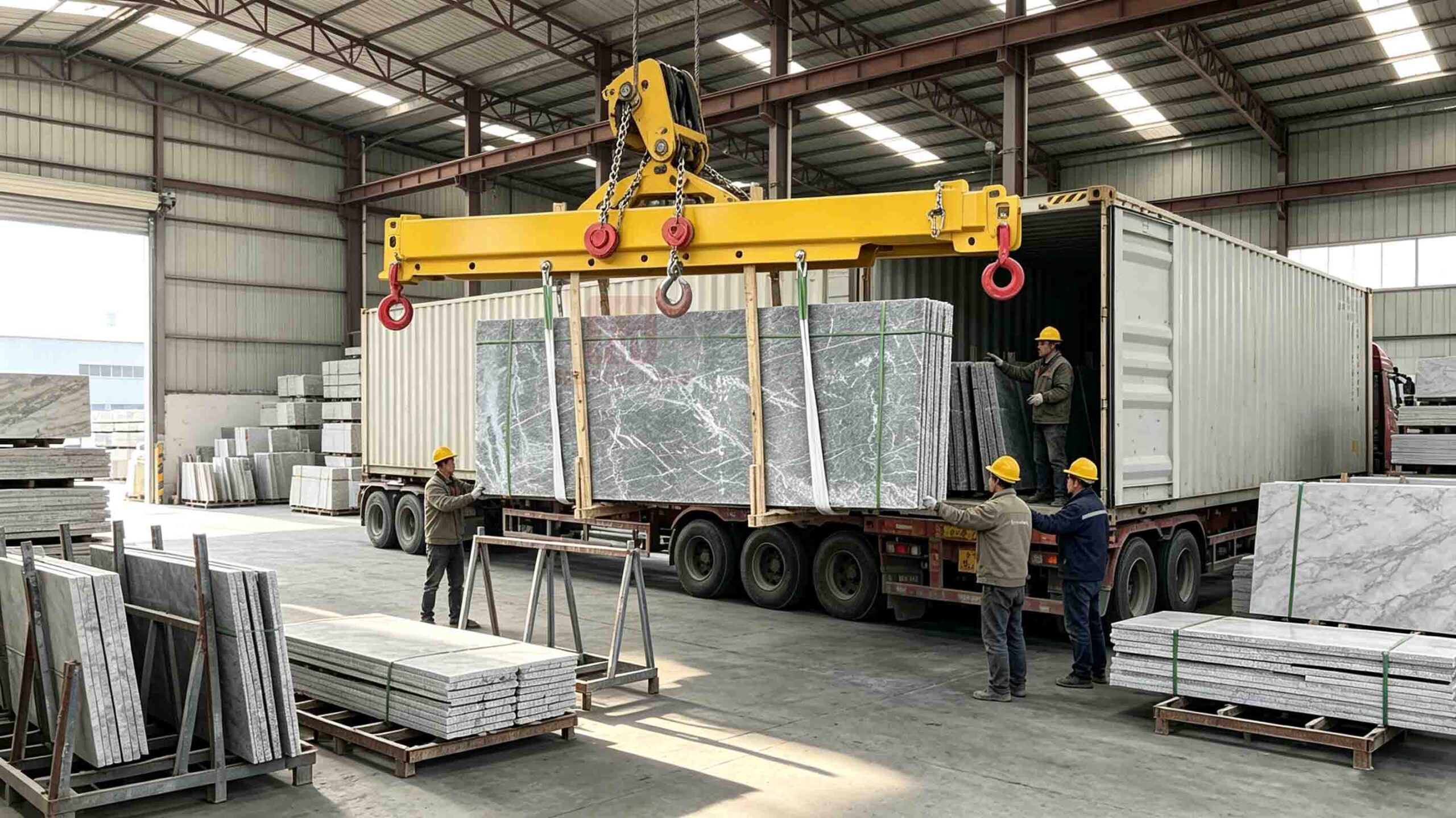
Forklift loading granite slab bundles into a shipping
Exporting natural stone is a complex logistics process that extends well beyond manufacturing. One of the most critical stages is container loading stone, where heavy granite, marble, quartz, and sintered stone slabs must be secured correctly before international transportation. Even premium-quality slabs can suffer serious damage if containers are loaded improperly.
Following proven slab shipping tips helps exporters reduce breakage, prevent costly insurance claims, improve unloading efficiency, and enhance customer satisfaction. Whether shipping full containers or mixed stone products, careful planning is essential for successful international deliveries.
Why Container Loading Matters
Ocean freight exposes containers to continuous vibration, sharp turns, sudden braking, lifting by cranes, and rough sea conditions. Heavy stone slabs naturally generate tremendous force during movement. Without adequate restraint, slabs may shift inside the container, causing edge chipping, cracking, or complete breakage.
Professional loading procedures not only protect valuable materials but also improve warehouse efficiency, reduce loading time, and ensure compliance with international shipping standards.
Common Causes of Stone Damage During Shipping
| Problem | Result | Recommended Solution |
|---|---|---|
| Poor weight distribution | Container instability | Balance the load evenly |
| Loose slabs | Impact damage | Use steel racks and straps |
| Weak packaging | Scratches and chips | Protective wrapping and spacers |
| Incorrect lifting | Dropped slabs | Use certified lifting equipment |
| Poor inspection | Hidden transport risks | Perform final loading inspection |
Step 1: Inspect Every Slab Before Loading
Before moving any stone into the container, every slab should undergo a final inspection. Small cracks, damaged corners, or loose protective materials become much larger problems after weeks of ocean transportation.
Inspection should include:
- Surface finish quality
- Edge condition
- Slab dimensions
- Protective film installation
- Label verification
- Packaging integrity
Step 2: Plan the Container Layout
Successful loading begins long before the forklift enters the container. Exporters should calculate total shipment weight, slab dimensions, equipment position, and unloading sequence before loading starts.
Proper planning helps maintain container balance while allowing customers to unload materials safely and efficiently upon arrival.
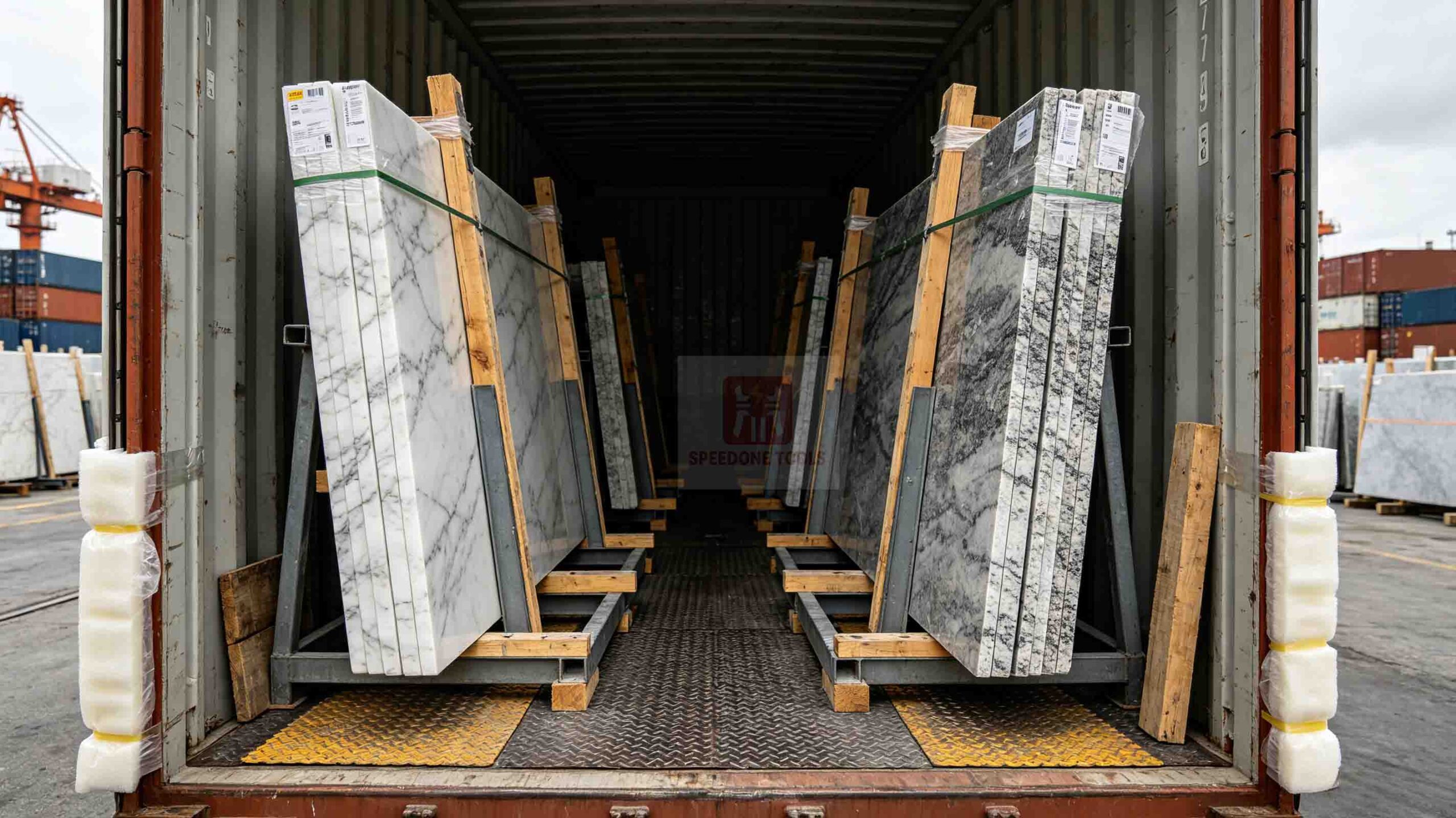
Container loading stone process
Step 3: Use Professional Lifting Equipment
Moving heavy stone slabs into containers requires reliable lifting equipment. Improper lifting techniques create unnecessary risks for both workers and materials.
Many exporters improve loading efficiency by using
heavy-duty double forklift boom attachments
that allow existing forklifts to handle heavy stone bundles safely during container loading.
Step 4: Understand Forklift Boom Limitations
Forklift boom attachments increase lifting flexibility, but operators must understand how attachments affect load centers, lifting capacity, and machine stability. Safe operation requires both suitable equipment and trained personnel.
Before investing in lifting equipment, many stone exporters review
how forklift booms can solve crane space and budget problems
to evaluate whether boom attachments are the right solution for their warehouse.
Step 5: Secure Stone Bundles Correctly
Once slabs are positioned inside the container, every bundle should be firmly secured using steel straps, timber blocking, anti-slip rubber pads, and reinforced supports. The objective is to eliminate movement throughout the entire shipping journey.
Never rely solely on the weight of the slabs to keep them in position. Continuous vibration during sea transport can gradually shift even extremely heavy stone materials.
Weight Distribution Is Critical
Heavy bundles should be positioned evenly across the container floor to prevent excessive stress on one side. Maintaining a low center of gravity improves transport stability and reduces the risk of cargo movement during transit.
Step 6: Protect Against Moisture and Vibration
Sea transportation exposes containers to changing temperatures and humidity. Moisture can stain certain natural stones, while continuous vibration may gradually loosen improperly secured bundles. Waterproof wrapping, desiccant bags, rubber spacers, and protective corner guards should always be included in the loading process.
Every contact point between stone slabs and steel structures should be cushioned to absorb vibration and reduce the possibility of edge damage during long-distance transportation.
Step 7: Perform a Final Container Inspection
Before sealing the container, conduct a complete inspection to confirm that every slab bundle is stable and properly protected.
- Check steel straps for proper tension.
- Inspect timber blocking and anti-slip pads.
- Verify bundle stability.
- Ensure container doors close without pressure on the cargo.
- Take loading photographs for shipment records.
- Confirm packing lists and shipping labels.
- Record the container number and seal number.
Detailed loading records can simplify insurance claims and help resolve transportation disputes if damage occurs during shipping.
Understand Your Lifting Equipment
Professional loading depends on both skilled operators and reliable lifting equipment. Understanding the construction and limitations of forklift lifting systems helps operators work more safely while reducing equipment wear.
Exporters who want a deeper understanding of lifting equipment should review
the main components of forklift lifting equipment
before selecting attachments for container loading operations.
Choosing the Right Forklift Boom
Forklift boom attachments are widely used because they offer a flexible and economical alternative to fixed overhead cranes. However, every attachment has advantages and limitations depending on the lifting application.
Before making purchasing decisions, it is worthwhile to understand
the advantages and disadvantages of forklift boom attachments
to ensure the equipment matches your loading requirements.
Best Practices for International Stone Shipments
Professional stone exporters generally follow several proven practices:
- Inspect every slab before loading.
- Use engineered steel transport racks.
- Distribute container weight evenly.
- Protect polished surfaces with foam separators.
- Secure every bundle with steel straps and blocking.
- Use certified lifting equipment.
- Document every shipment with photos.
- Train operators regularly.
These procedures significantly reduce transportation risks while improving customer satisfaction and lowering long-term logistics costs.
Schlussfolgerung
Successful container loading stone operations rely on careful planning, professional lifting equipment, proper weight distribution, engineered securing systems, and thorough final inspections. Following these slab shipping tips helps exporters minimize product damage, improve loading efficiency, and build stronger relationships with international customers through reliable deliveries.
FAQs
1. Why is container loading important for stone exports?
Proper container loading prevents slab movement, reduces breakage, improves unloading efficiency, and protects valuable stone products throughout international transportation.
2. What equipment is commonly used for loading stone containers?
Forklifts, forklift boom attachments, slab lifters, steel transport racks, lifting clamps, and heavy-duty straps are commonly used during loading operations.
3. How can exporters reduce shipping damage?
Use professional packing materials, secure every slab bundle, distribute weight evenly, inspect shipments carefully, and follow standardized loading procedures.
4. Should stone slabs be secured inside containers?
Yes. Every slab bundle should be restrained using steel straps, timber blocking, anti-slip pads, and reinforced supports to eliminate movement during transportation.
5. What are the best slab shipping tips?
Plan the loading layout, inspect every slab, use certified lifting equipment, balance container weight, document the shipment, and perform a final safety inspection before sealing the container.

Henry
Hallo, ich bin der Autor dieses Beitrags, und ich habe in diesem Bereich für mehr als 16 Jahre gewesen. Wenn Sie OEM & ODM-Service für Steinwerkzeuge benötigen, zögern Sie nicht, mir irgendwelche Fragen zu stellen.