Erledigen Sie Ihre Arbeit effizient!





Learn everything you need to know about importing stone equipment from China, including supplier evaluation, quality inspection, shipping machinery, customs documentation, and OEM customization.
Importing stone equipment from China has become a practical choice for distributors, fabricators, and stone factories worldwide. This guide explains the complete importing process, including supplier selection, equipment inspection, shipping machinery, customs documentation, and tips to reduce purchasing risks.
Import Stone Equipment from China: Full Guide for Global Buyers
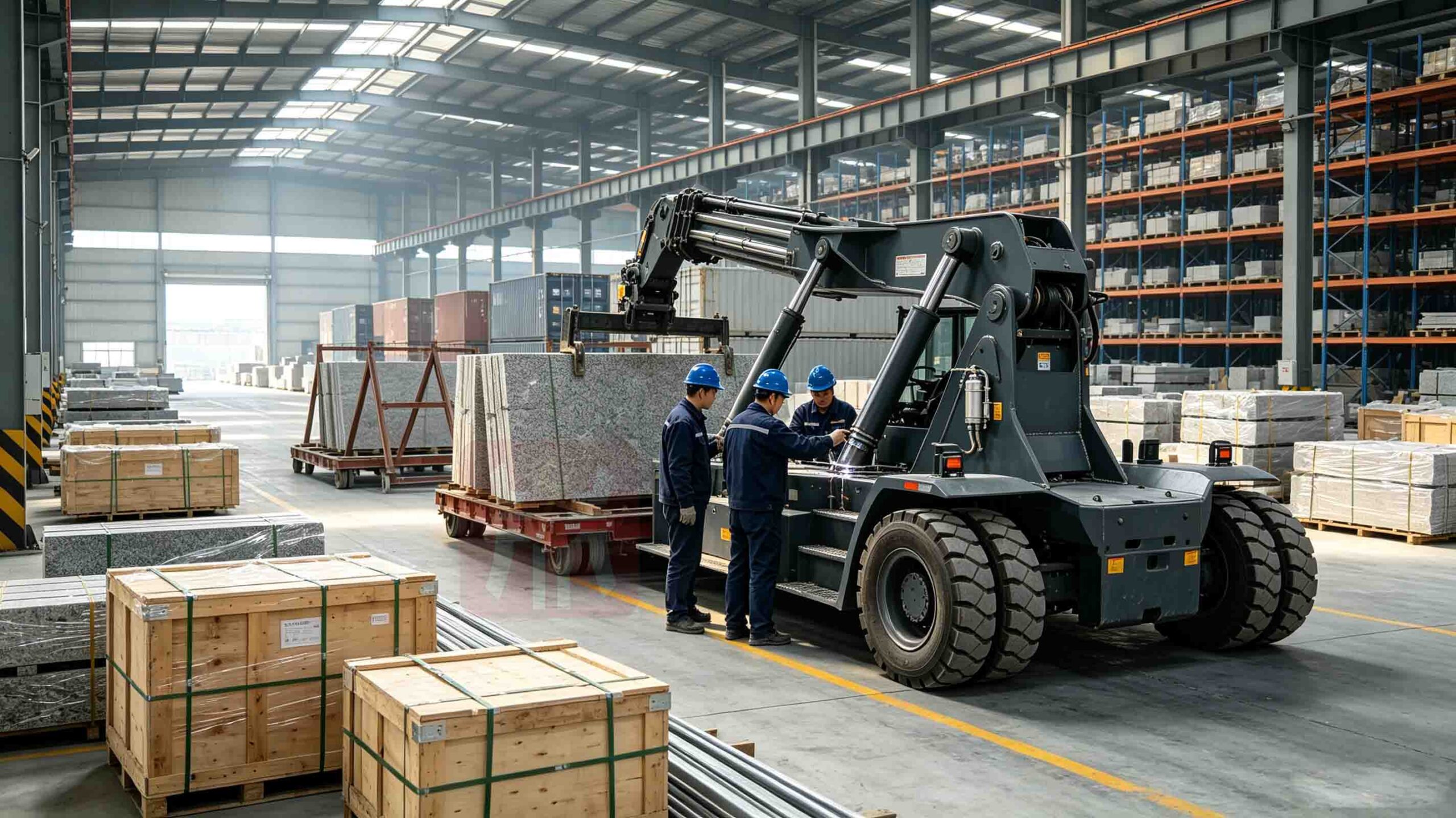
Chinese stone factory exporting slab handling equipment with granite slabs ready for international shipment
China has become one of the world’s largest manufacturing centers for stone processing and material handling equipment. From slab transport carts and forklift attachments to lifting systems and storage racks, Chinese manufacturers supply thousands of stone factories across Europe, North America, the Middle East, Southeast Asia, and South America.
If you plan to import stone equipment, understanding the purchasing process is essential. Choosing the right supplier, preparing shipping documents, and arranging reliable shipping machinery can significantly reduce costs while avoiding unnecessary delays.
Why Import Stone Equipment from China?
Over the past decade, Chinese manufacturers have continuously improved manufacturing technology, quality management, and export experience. Today, buyers can obtain reliable equipment with excellent value while benefiting from flexible OEM customization.
Major advantages include:
- Competitive pricing
- Strong manufacturing capacity
- OEM and custom design services
- Short production lead times
- Wide product selection
- Global export experience
For many factories, importing directly from manufacturers eliminates unnecessary distributor costs while providing greater flexibility.
Step 1: Identify Your Equipment Requirements
Before contacting suppliers, buyers should clearly define their operational needs.
| Evaluation Item | Questions to Consider |
|---|---|
| Anmeldung | Storage, lifting, transport or loading? |
| Tragfähigkeit | Maximum working weight? |
| Factory Layout | Indoor or outdoor operation? |
| Personalisierung | Special dimensions or branding? |
| Certification | CE or other market requirements? |
Providing complete specifications allows manufacturers to prepare accurate quotations and recommend suitable equipment.
Step 2: Choose an Experienced Manufacturer
Not every supplier has the same level of engineering capability. Buyers should evaluate manufacturers based on production facilities, export experience, quality control systems, and customization capabilities.
Reliable manufacturers typically provide:
- Technical drawings
- Engineering consultation
- Production photos
- Load testing reports
- Export packaging
- Unterstützung nach dem Verkauf
Selecting an experienced supplier is often more important than finding the lowest quotation.
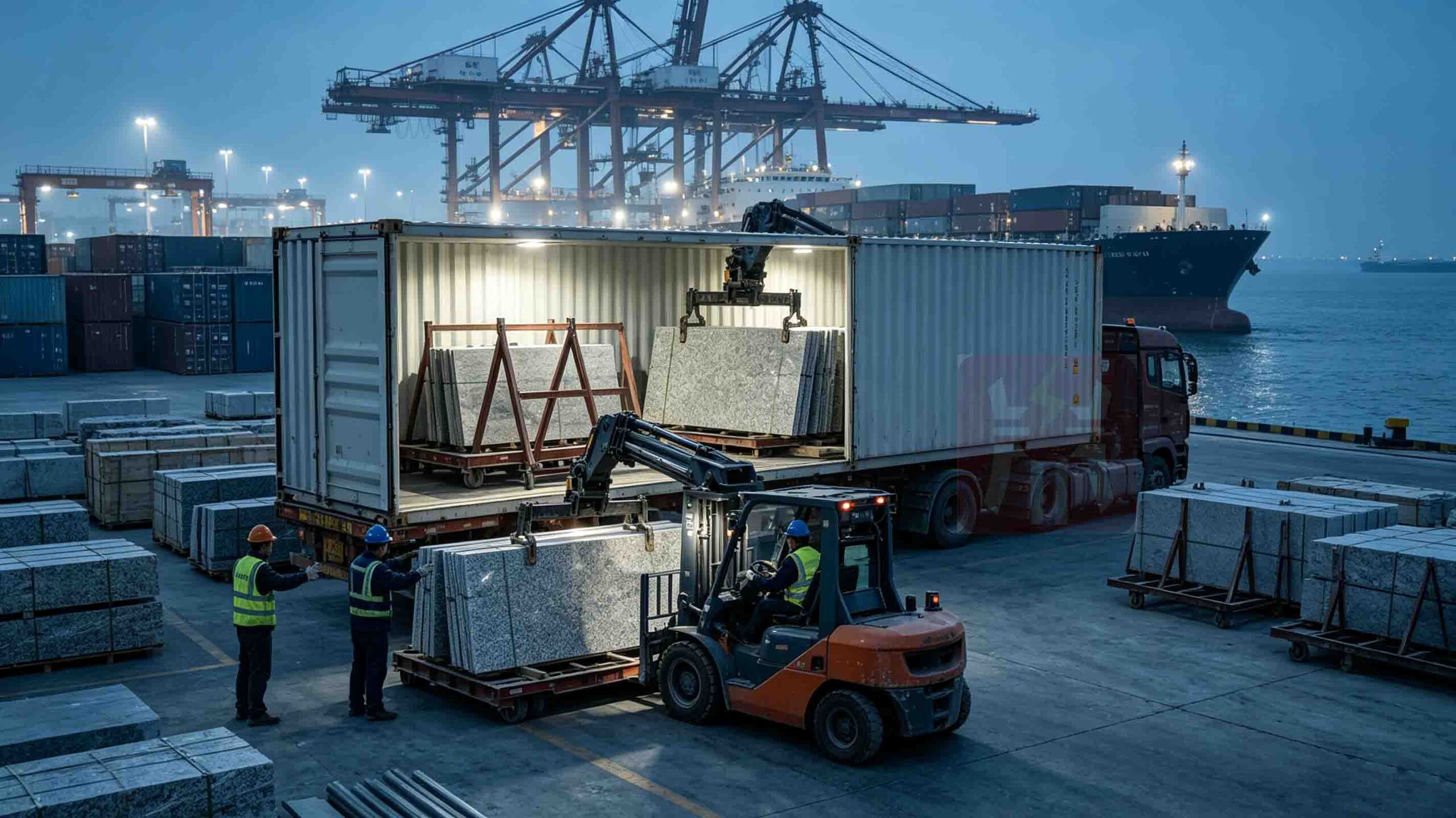
Import stone equipment from China with stone slabs and material handling equipment loaded into shipping containers
Step 3: Confirm Product Specifications
Before production begins, buyers should carefully review all technical drawings and specifications.
Pay particular attention to:
- Abmessungen
- Tragfähigkeit
- Steel thickness
- Surface treatment
- Wheel specifications
- Safety features
Clarifying these details early helps prevent misunderstandings during manufacturing.
Forklift Attachments Are Popular Import Products
Forklift attachments remain one of the fastest-growing categories in international stone equipment trade because they improve lifting efficiency without requiring expensive crane installations.
Many buyers begin by evaluating
heavy-duty double forklift boom solutions
that can safely handle heavy stone materials in warehouses and fabrication plants.
Before purchasing, understanding
the main components of forklift lifting equipment
helps buyers compare structural quality, lifting performance, and long-term durability.
OEM Customization Can Increase ROI
Many international buyers request customized dimensions, branding, or reinforced structures instead of purchasing standard equipment.
OEM production allows manufacturers to optimize equipment for individual factory layouts, resulting in improved workflow efficiency and reduced labor requirements.
Although customized production may slightly increase manufacturing time, the long-term operational benefits often outweigh the additional investment.
Understanding Shipping Machinery Options
Once production is complete, shipping machinery becomes the next major consideration. Equipment size, weight, and destination determine the most appropriate transportation method.
Most stone handling equipment is shipped using:
- 20-foot containers
- 40-foot containers
- Flat rack containers
- LCL (Less than Container Load)
- Sea freight
Proper packaging and container loading are essential to prevent damage during international transportation.
Documentation Required for Importing
Professional manufacturers normally prepare the documentation required for customs clearance.
- Commercial Invoice
- Packing List
- Bill of Lading
- Certificate of Origin (when required)
- Inspection reports
- Product specifications
Import regulations vary by country, so buyers should confirm local customs requirements before shipment.
Quality Inspection Before Shipment
Professional quality inspection is one of the most important steps when importing stone equipment. Buyers should never rely solely on product photos. Instead, they should request detailed inspection reports, videos, or arrange third-party inspections before shipment.
Inspection should include:
- Gesamtabmessungen
- Load capacity verification
- Welding quality
- Surface coating inspection
- Wheel and bearing performance
- Packaging condition
Identifying potential issues before shipping can save considerable time and expense after the equipment arrives.
Choosing the Right Shipping Method
The best shipping option depends on order quantity, equipment dimensions, and delivery schedule.
| Shipping Method | Am besten für | Vorteile |
|---|---|---|
| FCL Container | Large orders | Lower freight cost per unit |
| LCL Shipment | Small orders | Lower initial investment |
| Flat Rack | Oversized machinery | Suitable for heavy equipment |
How Forklift Boom Attachments Reduce Equipment Costs
Many buyers importing stone equipment are looking for alternatives to expensive overhead crane systems. Forklift boom attachments provide an economical lifting solution while utilizing existing forklifts already operating inside the factory.
Many international customers discover that
forklift boom attachments can solve crane space and budget limitations
without major infrastructure investments.
If additional technical information is required, buyers should also review
the advantages and disadvantages of forklift booms
before making purchasing decisions.
Another practical case study explaining cost savings can be found in
this forklift boom application guide
,
which demonstrates how flexible lifting attachments improve factory productivity.
Common Mistakes First-Time Importers Make
- Choosing suppliers based only on price
- Ignoring technical specifications
- Failing to inspect products before shipment
- Using inadequate packaging
- Not confirming customs requirements
- Overlooking after-sales support
Avoiding these mistakes significantly improves purchasing success and reduces long-term operational risks.
Tips for Building Long-Term Supplier Relationships
The most successful buyers rarely treat importing as a one-time transaction. Instead, they establish long-term partnerships with manufacturers that understand their production requirements and can provide continuous engineering support.
- Maintain clear communication
- Share future purchasing plans
- Provide operational feedback
- Request product improvements
- Develop customized solutions together
Strong supplier relationships often lead to better pricing, faster production, and improved product development over time.
Schlussbemerkung / Praktische Hinweise
Importing stone equipment from China offers significant opportunities for distributors and stone factories seeking reliable machinery at competitive prices. Success depends on selecting experienced manufacturers, verifying product quality, understanding shipping machinery requirements, and establishing long-term supplier partnerships rather than focusing solely on purchase price.
FAQs
1. Is it safe to import stone equipment from China?
Yes. Choosing experienced manufacturers with strong quality control systems and export experience can significantly reduce purchasing risks.
2. What documents are required to import stone equipment?
Most shipments require a commercial invoice, packing list, bill of lading, and any applicable certificates requested by local customs authorities.
3. How long does shipping machinery from China usually take?
Shipping times vary by destination, shipping method, and customs clearance procedures, but sea freight is the most common option for heavy equipment.
4. Can Chinese manufacturers provide OEM customization?
Yes. Many manufacturers offer customized dimensions, load capacities, branding, and structural modifications based on customer requirements.
5. How can buyers reduce import risks?
Work with reputable suppliers, confirm technical specifications, arrange quality inspections before shipment, and verify shipping and customs documentation.

Henry
Hallo, ich bin der Autor dieses Beitrags, und ich habe in diesem Bereich für mehr als 16 Jahre gewesen. Wenn Sie OEM & ODM-Service für Steinwerkzeuge benötigen, zögern Sie nicht, mir irgendwelche Fragen zu stellen.