Selesaikan Pekerjaan Anda Secara Efisien!





Heavy stone slabs require proper lifting techniques and equipment to ensure workplace safety and prevent material damage. Learn the best slab lifting safety practices for modern stone factories.
Learning how to lift stone slabs safely is essential for reducing workplace injuries, preventing slab damage, and improving factory productivity. This guide explains the best slab lifting safety practices, equipment options, and handling procedures for stone factories and warehouses.
How to Lift Heavy Stone Slabs Safely
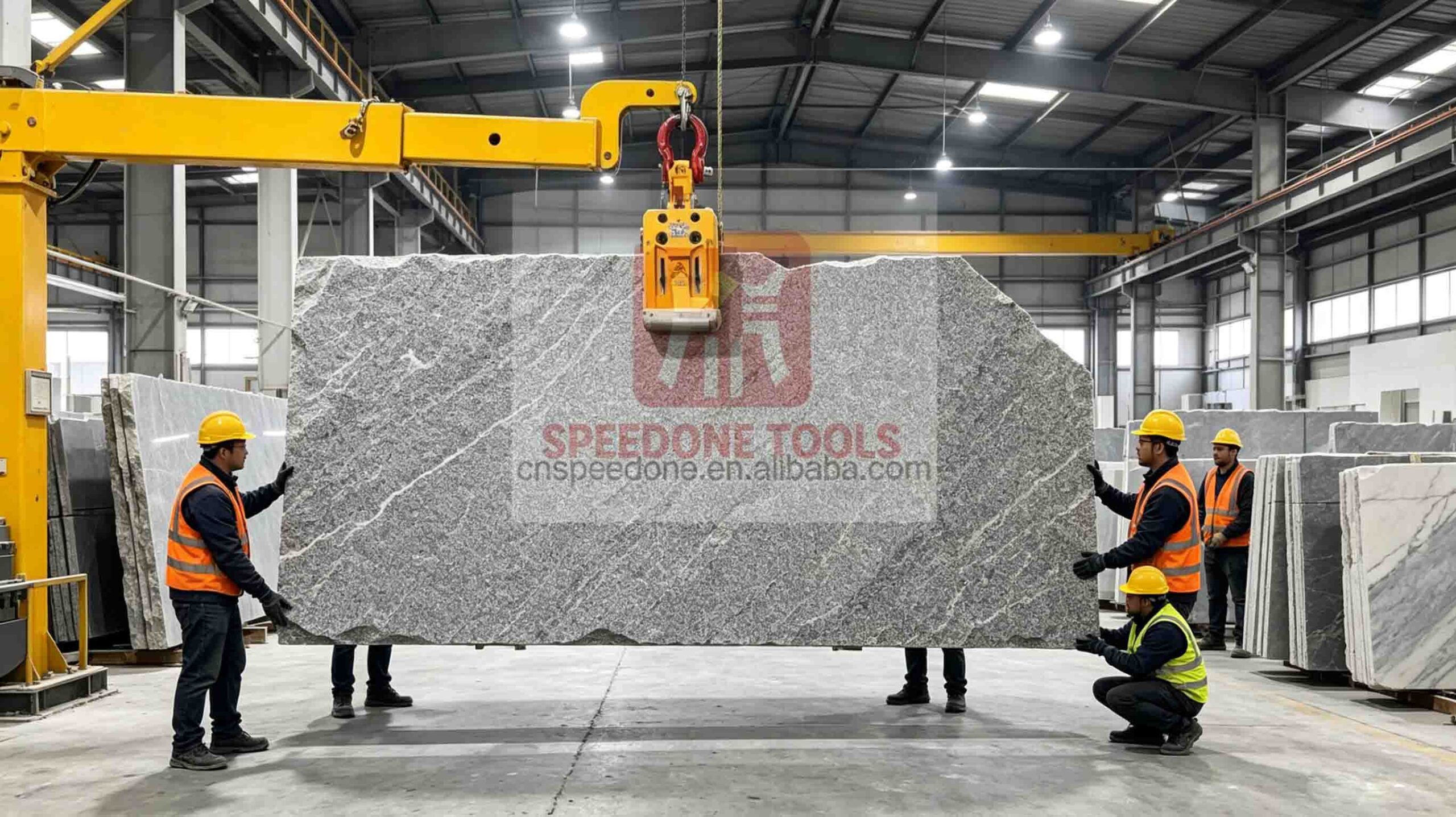
Heavy stone slabs are among the most challenging materials to handle in the stone industry. Granite, marble, quartz, and engineered stone slabs can weigh hundreds or even thousands of kilograms, creating significant risks during transportation, storage, and fabrication.
Understanding how to lift stone slabs safely is critical for protecting workers, minimizing material damage, and maintaining efficient production workflows.
Why Slab Lifting Safety Matters
Improper lifting procedures can result in:
- Worker injuries
- Slab breakage and costly material losses
- Equipment damage
- Production delays
- Higher insurance and operating costs
Modern factories increasingly invest in advanced lifting technologies because safety directly impacts productivity and profitability.
Common Risks When Lifting Heavy Stone Slabs
Before selecting lifting equipment, it is important to understand the primary hazards associated with slab handling:
- Slab tipping or instability
- Insufficient gripping force
- Manual handling fatigue
- Uneven weight distribution
- Improper forklift or crane operation
- Equipment overload
Many of these risks can be significantly reduced through proper equipment selection and operator training.
Best Equipment for Safe Stone Slab Lifting
| Jenis Peralatan | Aplikasi Terbaik | Safety Benefit |
|---|---|---|
| Pengangkat Penjepit | Heavy granite and marble slabs | Strong gripping stability |
| Pengangkat Vakum | Polished surfaces and glass | Minimizes surface damage |
| Slab Lifter Machine | High-volume production | Reduces manual handling |
| Overhead Crane System | Long-distance lifting | Improves workflow safety |
Clamp Lifters: A Popular Safety Solution
Among all lifting methods, clamp lifters remain one of the most widely used solutions for heavy stone applications. Their mechanical gripping system provides reliable holding force even when handling large granite slabs.
Many factories are adopting
modern clamp lifting systems
to improve both workplace safety and operational sustainability.
If you are considering clamp technology, understanding
the key aspects of clamp lifters
can help ensure proper equipment selection.
How Slab Lifters Improve Handling Safety
Automated slab lifters reduce the need for manual labor while improving lifting precision. These systems help operators move heavy materials more efficiently and with greater control.
The benefits are highlighted in
this overview of slab lifter technology
,
which demonstrates how specialized lifting equipment improves factory performance.
Similarly,
modern slab lifter innovations
continue to reshape material handling practices across the stone industry.

Step-by-Step Guide to Lift Stone Slabs Safely
1. Inspect the Slab Before Lifting
Always inspect slabs for cracks, chips, hidden fractures, or edge damage before handling. Even minor structural weaknesses can cause a slab to fail during lifting.
2. Verify Equipment Capacity
Never assume lifting equipment can handle every slab. Check the weight of the slab and compare it to the rated lifting capacity of the clamp lifter, vacuum lifter, crane, or forklift attachment being used.
3. Secure the Lifting Device Properly
For clamp lifters, ensure the gripping surfaces are fully engaged. For vacuum lifters, verify sufficient suction pressure and inspect vacuum pads for wear before lifting.
4. Lift Slowly and Evenly
Avoid sudden movements, jerking motions, or rapid acceleration. Smooth lifting minimizes stress on both the slab and lifting equipment.
5. Keep Personnel Clear of Suspended Loads
Workers should never stand under or directly beside suspended slabs. Establish clear safety zones and maintain communication between operators and spotters.
6. Transport Along a Clear Route
Before moving the slab, remove obstacles and verify that the transport path is free of hazards. Clear pathways reduce collision risks and improve operational safety.
7. Lower the Slab Carefully
Place slabs onto stable storage systems, transport carts, or A-frame racks using controlled movements. Sudden lowering can damage slab edges and compromise worker safety.
How to Choose the Right Slab Lifting Equipment
Selecting the correct lifting system depends on several factors:
- Stone type and surface finish
- Slab size and weight
- Indoor or outdoor operations
- Production volume
- Available lifting infrastructure
- Safety requirements
Many factory managers begin by reviewing
professional slab lifter selection guidelines
to determine the most appropriate solution for their operation.
Benefits of Modern Slab Lifter Machines
As stone fabrication becomes increasingly automated, advanced lifting systems continue to replace traditional manual handling methods.
Modern slab lifter machines offer:
- Higher productivity
- Reduced labor requirements
- Improved workplace safety
- Lower slab damage rates
- Consistent lifting performance
These advantages explain why
slab lifter machines are becoming standard equipment
in many stone processing facilities.
Best Practices for Long-Term Slab Lifting Safety
- Conduct regular equipment inspections
- Train operators on proper lifting procedures
- Follow manufacturer safety guidelines
- Replace worn lifting components promptly
- Monitor lifting capacity limits
- Maintain clean and organized work areas
A proactive safety culture helps reduce accidents while improving operational efficiency throughout the factory.
Catatan Akhir / Catatan Praktis
The safest way to lift heavy stone slabs combines proper equipment, trained personnel, and standardized procedures. Investing in professional lifting systems not only improves slab lifting safety but also reduces material damage, lowers labor costs, and increases overall factory productivity.
Pertanyaan Umum
1. What is the safest way to lift heavy stone slabs?
The safest method is using professional lifting equipment such as clamp lifters, vacuum lifters, or slab lifting machines designed specifically for stone handling.
2. Why is slab lifting safety important?
Proper lifting procedures reduce workplace injuries, prevent slab damage, and improve operational efficiency.
3. Are clamp lifters suitable for granite slabs?
Yes. Clamp lifters are widely used for heavy granite and marble slabs because they provide strong and reliable gripping force.
4. How can factories reduce slab handling risks?
By using suitable lifting equipment, providing operator training, and following standardized safety procedures.
5. What equipment is best for polished stone slabs?
Vacuum lifters are often preferred for polished surfaces because they reduce direct contact and minimize the risk of scratches or edge damage.

Henry.
Hai, saya penulis posting ini, dan saya telah berkecimpung di bidang ini selama lebih dari 16 tahun. Jika Anda membutuhkan layanan OEM & ODM untuk alat batu, jangan ragu untuk bertanya kepada saya.