






Stone Crusher Machine Manufacturer | 15 T/H Jaw Crusher | Speedone
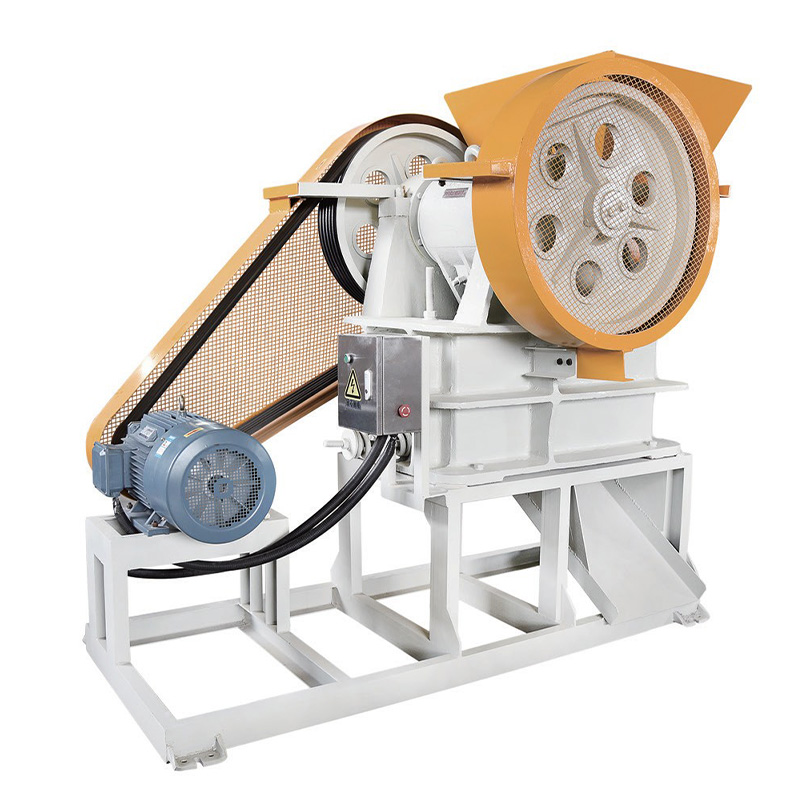
- Peso : 3074kg
- Output/Hour : 15T/H
- Power : 15KW
- Feeding Size : 25x40cm
- Output Size : 1-2-3cm
Descrizione del prodotto
15 T/H Stone Crusher Machine for Granite, Limestone & Construction Stone
Lo Speedone stone crusher machine KSP-2540 is designed to reduce larger natural stone into smaller aggregate-sized material. According to the supplied product specifications, the machine uses 15 kW power, 380V/50Hz electricity, a listed feeding size of 25×40 cm, listed output sizes of 1 / 2 / 3 cm and an approximate capacity of 15 T/H. It is suitable for granite, limestone, construction stone and selected clean stone-waste crushing applications.
What Is a Stone Crusher Machine?
|
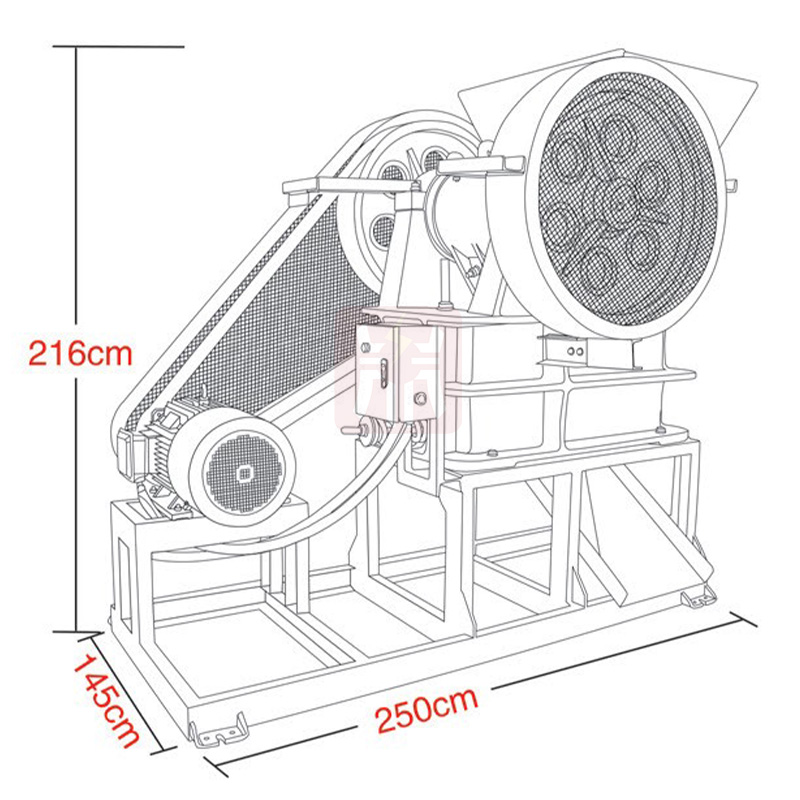 |
| Product display and size indication | |
A stone crusher machine is industrial equipment used to break larger rock or natural stone into smaller pieces.
The main purpose is size reduction.
This is different from a stone splitter. A splitter tries to create larger usable products such as wall stone, paving pieces or cubes. A crusher reduces the material into much smaller aggregate.
Typical crushed-stone applications include:
- Construction aggregate
- Road-base material
- Landscape gravel
- Stone recycling
- Secondary building materials
- Selected quarry processing
- Clean stone-waste reduction
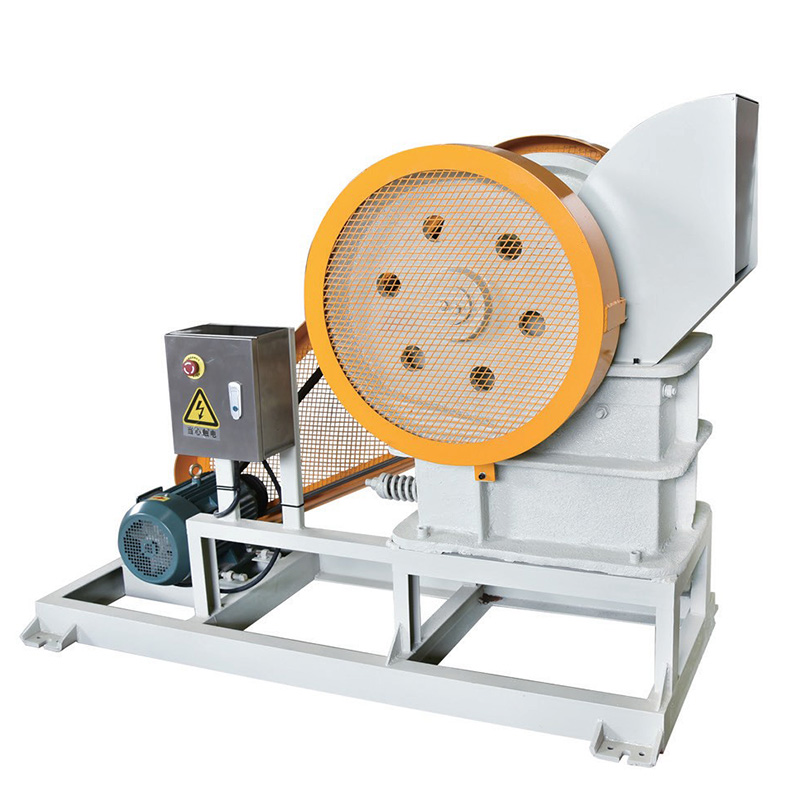
The Speedone KSP-2540 uses a stationary crushing structure with a motor, belt-drive system, crushing chamber, large rotating wheel assembly, feed opening and reinforced steel frame.
Speedone KSP-2540 Stone Crusher Machine Specifications
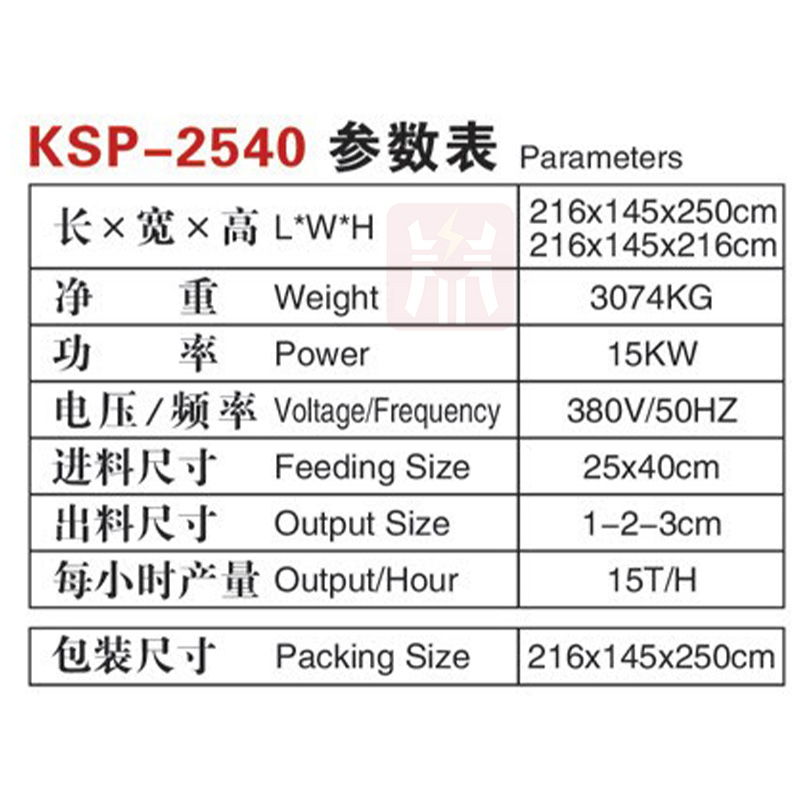
| Specifiche | KSP-2540 |
|---|---|
| Machine Type | Stone Crusher Machine |
| Overall Size (L×W×H) | 216 × 145 × 250 cm |
| Peso | 3074 kg |
| Power | 15 kW |
| Voltage / Frequency | 380V / 50Hz |
| Feeding Size | 25 × 40 cm |
| Listed Output Size | 1 / 2 / 3 cm |
| Output | Approx. 15 T/H |
| Dimensione dell'imballaggio | 216 × 145 × 250 cm |
The listed 15 T/H capacity is a product specification, not a guaranteed output for every material. Actual production can change according to stone hardness, feed size, moisture, feeding consistency, required output size and operating conditions.
How Does a Stone Crusher Machine Work?
The KSP-2540 reduces stone through mechanical crushing force.
A typical process is:
Stone Feeding → Crushing Chamber → Compression → Size Reduction → Discharge → Collection / Screening
1. Feed the Stone
Prepared stone enters through the upper feed opening.
2. Crush the Material
The crushing mechanism repeatedly applies force to the incoming material.
3. Reduce the Stone Size
As the material moves through the crushing area, larger pieces break into smaller particles.
4. Discharge the Crushed Stone
The smaller material leaves through the lower discharge area.
5. Collect or Screen the Output
The crushed material can then be collected or sent to separate screening equipment if different particle sizes need to be separated.
The final result depends on both the stone and the crusher setup.
Jaw-Type Crushing Principle
The visible KSP-2540 structure follows the general layout commonly associated with stationary jaw-type crushing equipment.
This type of crushing uses compression rather than cutting.
The stone enters a crushing chamber and is progressively reduced as mechanical force is applied.
This type of working principle is commonly relevant when the purpose is to break relatively hard stone into smaller material rather than preserve the original stone shape.
 |
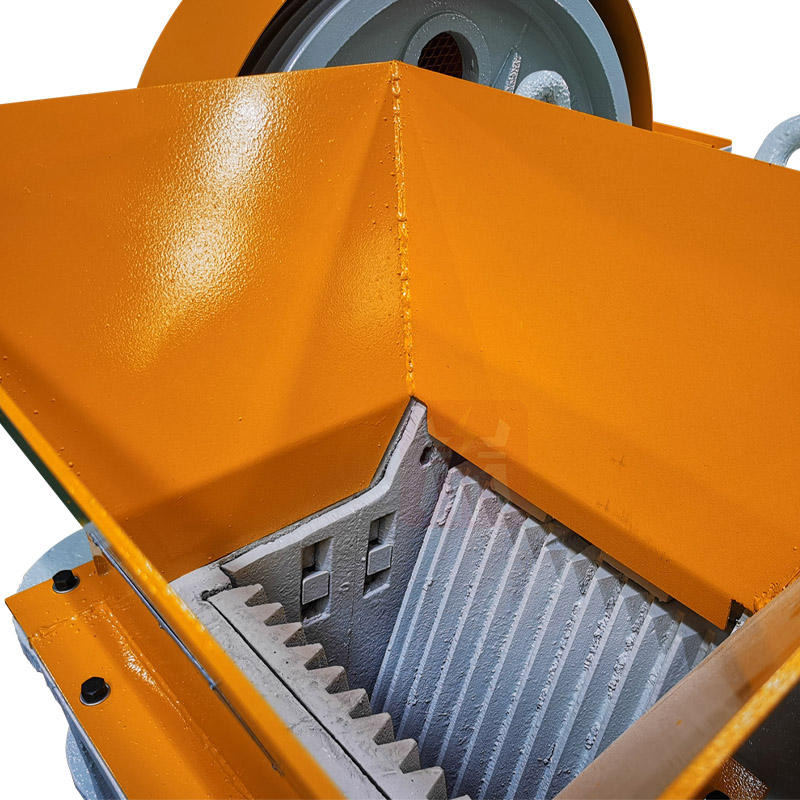 |
| Product information parameters and product details | |
Stone Crusher Machine for Granite
Granite is widely used for paving, countertops, monuments, architecture and construction.
Stone factories can also generate granite pieces that are too irregular or too small for normal dimensional products.
Suitable clean granite pieces may be crushed into smaller material.
Potential uses include:
- Granite aggregate
- Landscape gravel
- Construction material
- Road-base material
- Selected granite offcut recycling
Granite is relatively hard, so actual crushing capacity can vary according to the specific granite type, incoming size and required output.
Stone Crusher Machine for Limestone
Limestone is widely processed for construction, landscape and aggregate applications.
A crusher can reduce larger limestone pieces into smaller material for downstream use.
Potential products include:
- Limestone aggregate
- Construction stone
- Road-base material
- Landscape gravel
- Secondary crushed stone
The KSP-2540’s listed capacity of approximately 15 T/H makes it more relevant to smaller or medium-scale crushing requirements than very large quarry production lines.
Stone Crusher Machine for Marble
Marble factories often generate offcuts and irregular pieces during slab cutting and fabrication.
Selected clean marble waste may have potential for secondary processing instead of being treated only as disposal waste.
Possible applications may include:
- Decorative aggregate
- Landscape material
- Selected construction aggregate
- Further mineral processing
However, not all marble waste is suitable for crushing or reuse.
Factories should consider contamination from:
- Resin
- Mesh backing
- Adhesives
- Metal
- Plastic
- Other foreign materials
Stone Crusher Machine for Construction Stone
Building-stone processing can generate pieces that are no longer suitable for their original dimensional use.
A crusher provides another processing route by reducing suitable material into smaller aggregate-sized pieces.
Potential applications may include:
- Building aggregate
- Road foundation material
- Backfill
- Landscape stone
- Secondary crushed material
Local engineering requirements should determine whether a particular crushed material is suitable for a specific construction application.
Stone Crusher Machine for Stone Factory Waste
Stone factories often look for ways to reduce waste and improve material utilization.
Suitable clean offcuts can sometimes be crushed instead of occupying storage or disposal space.
A practical process is:
Stone Offcuts → Sorting → Remove Foreign Material → Pre-Size → Crushing → Aggregate Collection
Before crushing, remove unsuitable materials such as:
- Metal pieces
- Plastic
- Legno
- Imballaggio
- Contaminated waste
- Material larger than the approved feed range
Correct sorting protects both the crusher and the quality of the finished crushed material.
15 T/H Stone Crusher Machine
The KSP-2540 has a listed output of approximately 15 T/H.
This capacity range may be relevant to:
- Stone fabrication factories
- Small aggregate processing operations
- Stone-waste recycling sections
- Building-material workshops
- Secondary stone processing
Actual tons per hour can change depending on:
- Material hardness
- Incoming stone size
- Feed consistency
- Material moisture
- Required output size
- Machine condition
- Feeding efficiency
25×40 cm Feeding Size
The supplied KSP-2540 specification lists a feeding size of 25×40 cm.
Incoming stone should remain within the approved feed range.
Oversized stone should not simply be forced into the crushing chamber.
If the material is too large, it may need pre-sizing before crushing.
More consistent incoming sizes can also help maintain a steadier production process.
1 / 2 / 3 cm Crushed Stone Output
The supplied product information lists output sizes of 1 / 2 / 3 cm.
These sizes are suitable for applications where larger stone needs to be reduced into aggregate-sized material.
Buyers should tell Speedone the required finished particle size before ordering so the machine configuration can be evaluated around the real production requirement.
15 kW Electric Stone Crusher
The KSP-2540 specification lists a motor power of 15 kW.
The supplied electrical configuration is:
380V / 50Hz
Before purchasing, confirm:
- Factory voltage
- Frequency
- Available electrical capacity
- Electrical installation requirements
- Local electrical standards
Do not assume that the standard supplied electrical configuration is suitable for every destination market without confirmation.
Telaio in acciaio resistente
The KSP-2540 uses a substantial support structure beneath the crushing assembly.
A stable machine base is important because crushing produces repeated mechanical load and vibration.
Installation planning should consider:
- Floor strength
- Machine footprint
- Maintenance access
- Stone-feeding space
- Discharge space
- Electrical connection
Belt Drive and Flywheel Structure
The machine includes a motor, multiple drive belts and a large rotating wheel assembly protected by safety mesh.
These components form part of the mechanical power-transmission system.
Drive components should remain properly guarded during operation.
Routine inspection should include:
- Belt condition
- Belt tension
- Drive alignment
- Guard condition
- Fastener security
Stone Crusher Machine vs. Stone Splitter
This is one of the most important differences for stone factories.
A crusher and splitter solve different production problems.
| Factor | Stone Crusher Machine | Stone Splitter |
|---|---|---|
| Main Purpose | Reduce stone size | Create usable stone pieces |
| Finished Product | Aggregate / crushed stone | Blocks, cubes or wall stone |
| Preserve Stone Shape | Low priority | Important |
| Aggregate Production | Primary application | Not primary |
If the goal is to keep larger usable stone pieces instead of crushing them, buyers can compare Speedone’s automatic stone splitter for granite and marble.
Crusher or Splitter: Which Should a Stone Factory Choose?
The answer depends on the value and shape of the incoming stone.
If a piece can still become a higher-value dimensional product, it may be better suited to splitting or forming.
Possible products include:
- Paving stone
- Wall stone
- Cube stone
- Landscape stone
- Decorative stone
Crushing becomes more relevant when suitable material is too irregular or too small for dimensional products and the required output is aggregate.
A useful decision process is:
Stone Waste → Inspect Size & Quality → Can It Become a Finished Product? → Split / Form if Suitable → Crush Suitable Remaining Material
Crusher vs. Other Stone Processing Machines
A crusher reduces stone into small material, while other Speedone machines are designed to preserve and process usable stone pieces.
For wall stone and natural decorative fracture, buyers can review Speedone’s natural stone splitter and mushroom-face trimming alternative.
For mould-defined paving products, see the paving stone stamping machine.
For decorative granite pavers, the granite stamping machine for pavers uses a different forming process.
Factories requiring mould-based stone forming can compare the stone pressing machine for granite and marble.
For hydraulic decorative forming, Speedone also provides a hydraulic stone stamping machine.
Stone Crusher Machine for Aggregate Production
Aggregate is one of the main finished uses of crushed natural stone.
Potential applications include:
- Costruzione
- Road work
- Landscape projects
- Drainage applications
- Secondary building-material processing
The required particle size depends on the downstream application.
Local standards and engineering requirements should determine whether the crushed material is suitable for a specific use.
Standalone Stone Crusher vs. Complete Crushing Line
The KSP-2540 shown here is a standalone crushing machine.
Depending on the factory workflow, additional feeding, screening or discharge equipment may also be required.
| Factor | Standalone Crusher | Integrated Crushing Line |
|---|---|---|
| System Complexity | Più basso | Higher |
| Material Feeding | Separate handling | Can be integrated |
| Screening | Separate if required | Can be integrated |
| Il migliore per | Focused smaller-scale crushing | Continuous larger workflows |
Planning a Stone Crushing Workflow
A practical factory process may include:
Stone Collection → Sorting → Pre-Sizing → Crusher Feeding → Crushing → Discharge → Screening / Collection → Storage
The crusher is only one stage of the complete workflow.
Total production may also be limited by:
- Slow stone sorting
- Oversized feed
- Inconsistent feeding
- Discharge accumulation
- Screening capacity
- Material transport
How to Choose the Right Stone Crusher Machine
1. Define the Material
Specify granite, limestone, marble, sandstone, construction stone or another material.
2. Define Maximum Feed Size
Provide the largest routine incoming stone dimensions.
3. Define Required Output Size
Specify the target crushed-stone particle size.
4. Define Required Capacity
Estimate the required tons per hour based on actual factory demand.
5. Define Material Hardness
Different stones place different loads on the crusher and wear components.
6. Define the Final Application
Clarify whether the crushed material is intended for aggregate, recycling, construction, landscaping or another downstream process.
7. Confirm Electrical Supply
Provide factory voltage and frequency.
8. Plan Material Feeding
Determine how stone will be safely moved into the crusher.
9. Plan Material Discharge
Allow enough space for crushed-stone collection or downstream equipment.
10. Consider Wear Parts
Crusher wear components should be included in long-term operating-cost planning.
11. Plan Maintenance Access
Leave enough space around the machine for inspections and component replacement.
12. Evaluate Supplier Support
Technical documentation, spare parts and application communication are important for professional crushing equipment.
Information to Send Speedone for a Quotation
To help Speedone evaluate the correct stone crusher machine, provide:
- Stone material
- Raw-material photographs
- Typical feed size
- Maximum feed size
- Required output size
- Required tons per hour
- Estimated daily operating hours
- Material moisture condition
- Intended use of crushed material
- Current crushing method
- Factory voltage and frequency
- Available installation area
- Preferred feeding method
- Preferred discharge or collection method
Send Speedone your stone material, incoming stone photos, maximum feed size, required output size and tons-per-hour target. These details help evaluate whether the KSP-2540 configuration matches your actual crushing requirement.
Common Stone Crusher Problems
Crushing Capacity Is Lower Than Expected
Check material hardness, feed size, feeding consistency, required output size and machine condition.
Stone Blocks the Feed Opening
The incoming material may be too large or irregular. Stop the machine according to the approved procedure before checking the blockage.
Excessive Belt Wear
Inspect belt condition, alignment and tension according to the maintenance instructions.
Abnormal Vibration
Stop and inspect the equipment if vibration changes significantly from normal operating behavior.
Output Size Is Not Suitable
Confirm that the material and machine setup are appropriate for the required finished particle size.
Crushed Stone Accumulates Under the Machine
Improve discharge handling and make sure downstream material collection does not restrict the crusher outlet.
Stone Crusher Machine Maintenance
Routine maintenance should include inspection of:
- Drive motor
- Drive belts
- Flywheel assembly
- Safety guards
- Crushing chamber
- Crusher wear components
- Bearings
- Fasteners
- Machine frame
- Electrical components
- Feed opening
- Discharge area
Wear components should be checked according to operating hours and material conditions.
Loose or damaged guards should be repaired before the machine returns to production.
Maintenance should follow the documentation supplied with the Speedone KSP-2540.
Stone Crusher Machine Safety
A stone crusher contains high-force crushing components, rotating drive parts and heavy incoming material.
- Only trained personnel should operate the machine.
- Keep hands away from the feed opening and crushing chamber.
- Do not remove guards during operation.
- Do not reach into a blocked crusher while power is connected.
- Use suitable handling equipment for heavy stone.
- Do not feed material larger than the approved range.
- Keep loose clothing away from moving components.
- Wear appropriate personal protective equipment.
- Control dust according to local workplace requirements.
- Keep unnecessary personnel away from the crusher.
- Follow lockout procedures before maintenance.
- Inspect electrical equipment regularly.
- Replace damaged wear or drive components before continued operation.
Who Uses Stone Crusher Machines?
The Speedone KSP-2540 may be suitable for:
- Stone fabrication factories
- Granite processing facilities
- Marble processing facilities
- Building-stone factories
- Aggregate processors
- Construction-material businesses
- Landscape stone suppliers
- Stone recycling operations
- Natural stone quarries with secondary processing
- Stone machinery distributors
Perché scegliere Speedone?
Speedone supplies professional stone-processing and material-handling equipment for stone factories and industrial buyers.
When choosing a stone crusher machine, buyers should evaluate the complete crushing requirement rather than comparing motor power alone.
A practical selection process is:
Stone Material → Maximum Feed Size → Required Output Size → T/H Requirement → Electrical Supply → Feeding Method → Discharge Method
Important purchasing factors include:
- Crusher structure
- Feed opening
- Required output size
- Production capacity
- Motor power
- Drive system
- Wear-part availability
- Installation requirements
- Maintenance access
- Electrical compatibility
- Technical documentation
- Supplier communication
The Speedone KSP-2540 stone crusher machine is specified with approximately 15 T/H output, 15 kW motor power, a listed 25×40 cm feeding size and listed 1 / 2 / 3 cm output sizes. The final machine choice should still be based on the actual stone material, maximum incoming size and required crushed-stone output rather than nominal capacity alone.
Domande frequenti
What is a stone crusher machine?
A stone crusher machine uses mechanical crushing force to reduce larger natural stone into smaller aggregate-sized material.
What is the Speedone KSP-2540 used for?
The KSP-2540 is designed for stone crushing applications, with a listed output of approximately 15 T/H.
What is the power of the KSP-2540?
The supplied specification lists a motor power of 15 kW.
What is the feeding size?
The supplied KSP-2540 specification lists a feeding size of 25×40 cm.
What output size does the machine produce?
The supplied product information lists output sizes of 1 / 2 / 3 cm. Final suitability depends on the actual material and machine setup.
Can the stone crusher machine crush granite?
Suitable granite can be crushed, although actual production depends on granite hardness, incoming size and required output.
Can it crush limestone?
Suitable limestone can be reduced into smaller aggregate when the incoming material remains within the approved operating range.
Can it crush marble?
Suitable clean marble pieces can be reduced in size, subject to material condition and the required downstream application.
What is the difference between a stone crusher and a stone splitter?
A crusher reduces stone into small aggregate, while a splitter creates larger controlled products such as cubes, wall stone or split-face pieces.
Can the machine process stone factory waste?
Selected clean stone offcuts may be suitable after sorting and pre-sizing. Foreign material and unsuitable waste should be removed before crushing.
Is the listed 15 T/H capacity guaranteed for every material?
No. Actual output can vary according to stone hardness, incoming size, feed consistency, required output size and operating conditions.
What information should I provide for a quotation?
Provide the stone material, raw-material photos, typical and maximum feed size, required output size, tons-per-hour target, operating hours, factory power supply and available installation area.