효율적으로 업무를 완료하세요!





Learn how professional marble slab packing protects natural stone during international shipping. Discover export packaging stone techniques, slab rack systems, container loading methods, and best practices for safe global transportation.
Proper marble slab packing is essential for preventing damage during international transportation. This guide explains export packaging standards, protective materials, loading methods, storage racks, and shipping best practices to help exporters deliver stone safely worldwide.
How to Pack Marble Slabs for Export
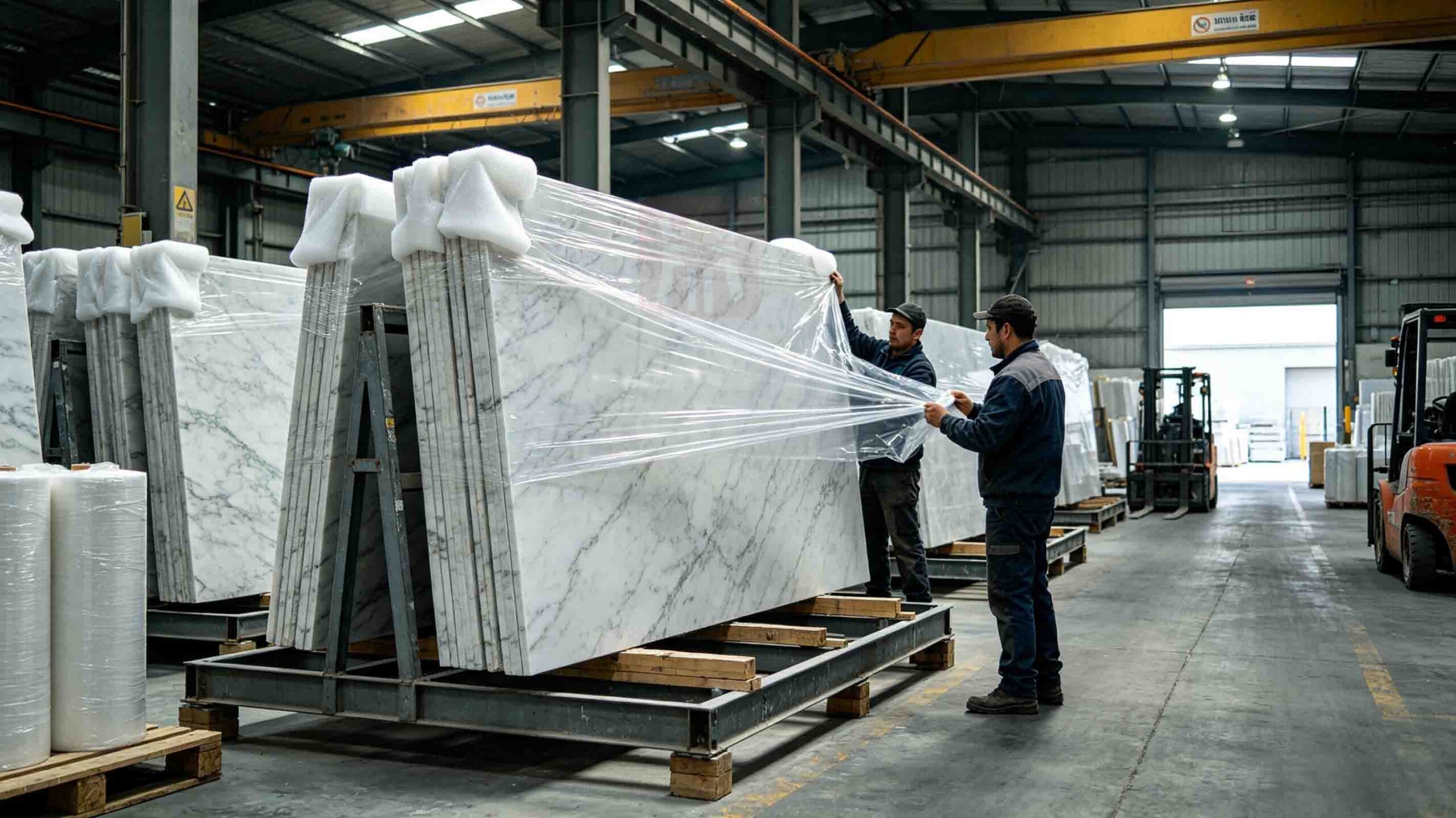
Transportation of marble
Exporting marble slabs requires much more than simply placing stone inside a container. Natural stone is heavy, fragile, and valuable, making proper marble slab packing one of the most critical steps in international logistics. Poor packaging can lead to edge chipping, surface scratches, slab breakage, delayed deliveries, and costly insurance claims.
Professional export packaging stone solutions combine protective materials, reinforced steel racks, wooden crates, moisture protection, and proper container loading techniques. By following proven export procedures, manufacturers can reduce transportation risks while ensuring customers receive slabs in perfect condition.
Why Marble Slab Packing Matters
During international shipping, containers experience continuous vibration, sudden braking, crane lifting, sea movement, and repeated handling. Without adequate protection, even premium marble slabs may arrive damaged.
A professional packing system provides several important benefits:
- Reduces slab breakage during transport
- Protects polished surfaces from scratches
- Prevents moisture damage
- Improves loading efficiency
- Meets international shipping standards
- Lowers insurance and replacement costs
Main Risks During Export Transportation
| Risk | Possible Damage | Recommended Solution |
|---|---|---|
| Container vibration | 엣지 치핑 | Rubber spacers and secure racks |
| 수분 | Surface staining | Waterproof wrapping |
| Impact | Broken slabs | Steel A-frame and wood protection |
| Incorrect loading | Slab movement | Container securing system |
| Poor handling | Surface scratches | Protective separators |

Marble loading into trucks
Step 1: Inspect Every Slab Before Packing
Before packaging begins, every slab should undergo a final quality inspection. Exporting damaged material creates unnecessary claims and harms customer relationships.
Inspectors should verify:
- Surface polish quality
- Edge integrity
- Dimensions and thickness
- Color consistency
- Absence of cracks
- Product labeling
Only approved slabs should proceed to the packing area.
Step 2: Apply Surface Protection
Protective film or soft foam sheets should be placed between polished surfaces to prevent scratches during transportation. Corner protectors should also be installed to reduce edge damage caused by movement inside the container.
High-quality packaging materials include:
- PE protective film
- Foam sheets
- Corrugated cardboard
- Rubber edge protectors
- Plastic corner guards
- Moisture-resistant wrapping
Step 3: Use Professional Slab Storage Racks
One of the most important elements of marble slab packing is selecting a reliable support structure. Steel slab racks keep slabs stable throughout handling, loading, and transportation while minimizing pressure on the stone.
Exporters looking for economical storage solutions often choose
professional slab racks
that combine structural strength with efficient space utilization.
Different slab sizes and weights require different rack designs. Understanding
granite transportation slab rack systems
helps exporters choose the most suitable support equipment for international shipping.
Step 4: Separate Different Stone Materials
Marble, granite, quartz, and sintered stone have different physical characteristics. Packing different materials together without proper separation can increase the risk of damage during transportation.
Professional exporters generally follow
best practices for transporting and storing marble, granite, and quartz slabs
to ensure every material receives the appropriate level of protection.
Step 5: Secure Slabs Before Container Loading
Once slabs are positioned on steel racks, heavy-duty straps, wooden blocking, anti-slip pads, and steel braces should be used to eliminate movement inside the container.
Even small movements during ocean transportation can create repeated impacts that eventually cause cracks or edge damage.
Step 6: Maximize Container Space Safely
Efficient container loading is not simply about fitting more slabs into a shipment. Weight distribution must remain balanced to prevent excessive stress on one side of the container. Heavy slabs should always be positioned close to the container floor, while adequate spacing should be maintained between bundles for safe unloading.
Many exporters improve loading efficiency by using
modular slab rack systems
that simplify warehouse organization while maximizing container utilization.
Step 7: Protect Slabs During Warehouse Storage
Packing begins long before the container arrives. Poor storage conditions can damage slabs before export even starts. Warehouses should provide clean, dry, and level storage areas with sufficient aisle space for forklifts and lifting equipment.
For companies displaying premium materials before shipment,
professional slab display racks
offer both protection and easy product access while minimizing handling risks.
International Packaging Standards
Global buyers increasingly expect export packaging stone solutions that comply with international logistics and safety requirements. Strong packaging not only protects valuable materials but also improves customs inspections and warehouse handling.
Professional export packaging normally includes:
- Heat-treated wooden packaging (ISPM 15 compliant where required)
- Galvanized or powder-coated steel racks
- Waterproof protective wrapping
- Anti-slip rubber pads
- Steel strapping and tension belts
- Clear shipping labels and handling instructions
Exporters should also stay informed about
global compliance requirements and slab rack market trends
to ensure their packaging systems meet changing international standards.
Common Marble Packing Mistakes
- Using weak wooden supports
- Insufficient edge protection
- Incorrect weight distribution inside containers
- Poor moisture protection
- Overtightened steel straps causing pressure damage
- Mixing different slab thicknesses without separators
- Failing to inspect packaging before shipment
Avoiding these mistakes greatly reduces transportation claims and improves customer satisfaction.
Best Practices Before Shipment
Before sealing the container, conduct one final inspection:
- Verify all slabs are securely fastened.
- Inspect protective films and edge guards.
- Check steel rack stability.
- Confirm container weight distribution.
- Take loading photos for shipping records.
- Attach handling and fragile labels.
- Prepare packing lists and export documents.
A documented inspection process provides valuable evidence should transportation claims arise.
Final Thoughts
Effective marble slab packing combines proper inspection, high-quality protective materials, engineered steel slab racks, balanced container loading, and internationally compliant export packaging. Investing in professional export packaging stone solutions not only protects valuable marble slabs but also strengthens customer confidence, reduces logistics costs, and supports long-term international business growth.
자주 묻는 질문
1. What is the best way to pack marble slabs for export?
The best method combines protective film, foam separators, steel slab racks, reinforced wooden supports, waterproof wrapping, and secure container loading to prevent movement during transportation.
2. Why is marble slab packing so important?
Proper marble slab packing reduces breakage, edge damage, scratches, moisture exposure, and transportation claims while protecting valuable stone throughout international shipping.
3. What materials are commonly used for export packaging stone?
Common materials include PE protective film, foam sheets, rubber spacers, plastic corner protectors, waterproof wrapping, steel racks, heat-treated wooden crates, and steel straps.
4. Should marble slabs be stored before export?
Yes. Slabs should be stored vertically on professional slab racks in clean, dry warehouses before container loading to minimize damage.
5. How can exporters reduce shipping damage?
Use professional slab racks, distribute weight evenly, secure slabs properly, inspect every shipment, and follow international packaging standards throughout the export process.

Henry
안녕하세요, 저는 이 게시물의 작성자로 16년 이상 이 분야에 종사하고 있습니다. 석재 도구에 대한 OEM 및 ODM 서비스가 필요한 경우 언제든지 저에게 질문하십시오.