Get Your Work Done Efficiently !





The Self-Locking Trolley: The ‘Secret Weapon’ for Flawless Slab Handling and Precision
The Self-Locking Trolley: The ‘Secret Weapon’ for Flawless Slab Handling and Precision
 |
 |
(Imagine this frustrating scene.) You’ve just carefully maneuvered a large, expensive slab onto a trolley. As you push it across the workshop floor towards the saw, it starts to shift. You stop to readjust. You push again; it drifts. By the time it reaches its destination, it’s misaligned, and you spend five precious minutes wrestling it into the perfect cutting position. This constant battle against sliding, shifting material is a daily drain on time, patience, and safety. The culprit? A standard trolley lacking one 致命细节: the self-locking mechanism.
This overlooked feature is what separates basic transport from precision handling. In discussions about workshop innovation, groups like ESTA often highlight that efficiency gains come from refining fundamental processes. The ability to securely lock a slab in place during transport and at the point of use is one such fundamental refinement. This article will reveal why a Self-Locking Trolley is not just another cart, but a transformative tool that bridges the gap between moving material and positioning it with absolute accuracy.
The High Cost of Slippage: More Than Just an Inconvenience
 |
 |
Using a non-locking trolley or cart forces workers into a reactive, rather than proactive, mode of handling. The consequences ripple through your operation:
-
Precision Lost Before the Cut: A slab that moves during transport is almost never perfectly aligned when it arrives. This leads to wasted time for re-positioning and increases the risk of measurement errors at the critical moment of cutting.
-
Compromised Safety: A worker trying to simultaneously push a heavy trolley and prevent a slab from sliding is off-balance and distracted. This is a prime scenario for strains, pinched fingers, or losing control of the load.
-
Material Damage: Uncontrolled sliding, even over short distances, can cause edge-to-edge contact or scrape the slab against the trolley frame, leading to chips and scratches that require repair or lead to waste.
-
Workflow Friction: The process becomes a series of stops and starts, breaking the flow of work. This mental and physical friction accumulates, slowing down the entire production day.
The SPEEDONE Solution: Transport with Intentional Stability
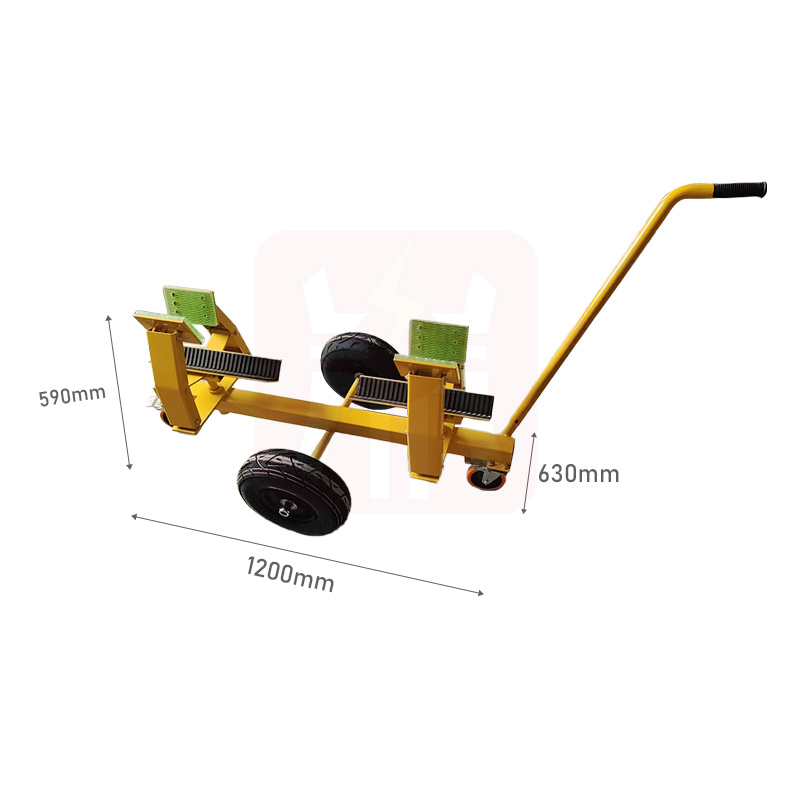
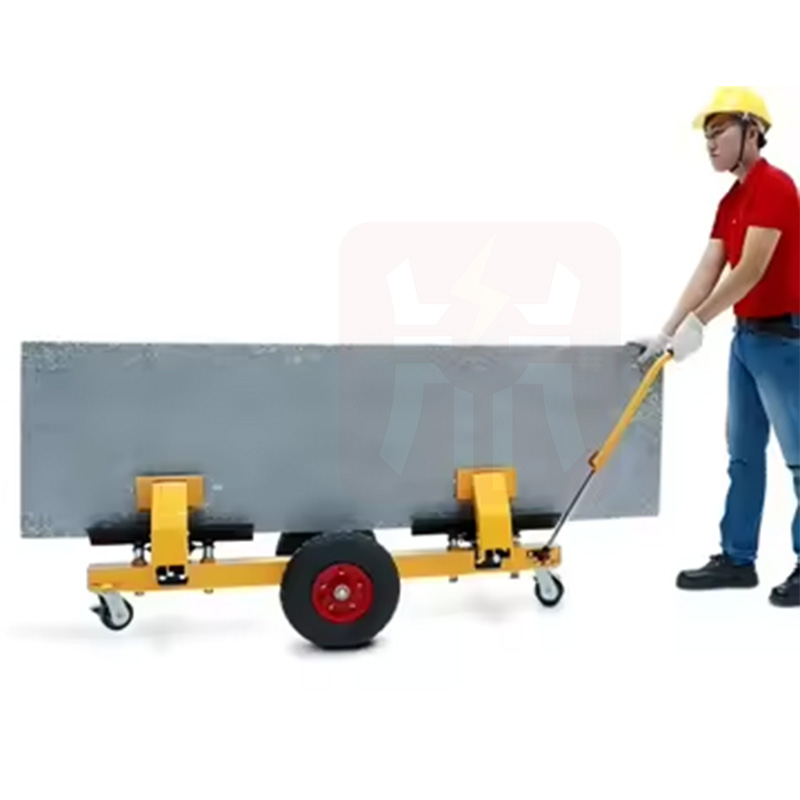
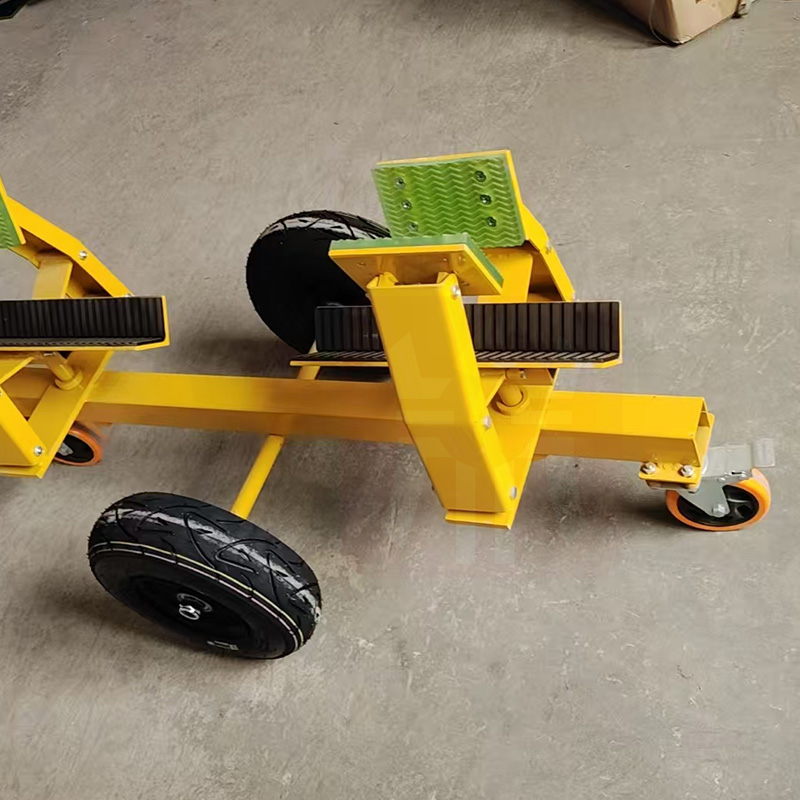
SPEEDONE’s engineering philosophy addresses this exact gap. Their Self-Locking Trolley is designed with a simple, robust locking mechanism—often a foot pedal or lever—that secures the wheels or the load platform. With a click, the trolley and its precious cargo become a single, immovable unit. This allows the operator to focus solely on steering, or to walk away knowing the slab will remain exactly where they left it. It transforms the trolley from a passive rolling frame into an active, secure workstation on wheels.
Building a Locked-Down Workflow: From Receiving to Installation
The Self-Locking Trolley shines at multiple stages, creating a seamless chain of secure handling.
Stage 1: Secure Transfer from Primary Transport
After a slab is moved from storage on a heavy-duty A-Frame Metal Cart, it often needs to be transferred to a more maneuverable unit for in-shop travel. Rolling it onto a Self-Locking Trolley and engaging the lock prevents any dangerous sway or shift during this transfer, ensuring a safe handoff between equipment.
Stage 2: Precision Placement at Machinery
This is where the Self-Locking Trolley proves indispensable. Once wheeled next to the bridge saw or CNC, the lock is engaged. The slab is now rock-solid. Workers can make micro-adjustments for perfect alignment without fighting against rolling resistance. They can then safely secure the slab to the machine table, knowing the trolley itself won’t budge. For detailed work, combining it with a Universal Ball Transfer Table allows for easy rotation of the piece while the trolley base stays locked.
Stage 3: Safe Staging and Organization
Cut pieces, especially large ones, need to be moved to polishing stations or temporary storage. A Self-Locking Trolley acts as a mobile, secure holding station. Pieces can be locked in place, moved across the shop, and will not slide off if the trolley has to stop suddenly or navigate a slope. For a high-volume of smaller pieces, a Foldable Stone Slab Trolley with a similar locking feature would be ideal for organizing and moving batches of glass sheets or cut stone securely.
Stage 4: Guaranteed Stability for Final Delivery
The final test comes during installation. A Stone Slab Countertop Install Cart often incorporates a braking or locking system as a core feature. When navigating a customer’s home, the ability to instantly lock the wheels on carpet or at a doorway is critical for maintaining control and preventing the countertop from shifting at the worst possible moment.
Case Study: From Sloppy to Streamlined with One Change
A countertop fabricator was struggling with consistency. Their installers complained that slabs were often delivered to the job site slightly out of square from shifting in transit, requiring on-site recutting. In the shop, cutters wasted an average of 8 minutes per slab re-aligning on the saw.
They replaced their standard shop trolleys with SPEEDONE Self-Locking Trolleys and trained staff to use the lock during every positioning step.
The results were immediate and measurable:
-
Time spent positioning slabs at the saw decreased by 75%.
-
Installation site callbacks due to fitment issues dropped by over 90%.
-
Shop foreman reported a noticeable decrease in “near-miss” incidents involving slabs shifting unexpectedly.
-
The team developed a new standard operating procedure: “Lock, Position, Work.”
This case shows that the Self-Locking Trolley is a low-complexity, high-impact upgrade that standardizes safety and precision.
Frequently Asked Questions (FAQ)
Q1: Is the locking mechanism strong enough to hold a heavy slab on an incline?
A: Yes, quality Self-Locking Trolleys like SPEEDONE’s are designed with industrial-grade locks that positively engage the wheels, providing sufficient braking force to hold significant weight on moderate slopes. However, for severe inclines, proper site preparation and additional blocking are always recommended.
Q2: Can I retrofit a locking mechanism to my existing trolleys?
A: It is not recommended. The locking system is integrated into the frame and axle design for strength and reliability. Retrofitted solutions are rarely as robust or safe. Investing in purpose-built equipment is the correct approach.
Q3: Does the lock work on all floor types (epoxy, concrete, uneven surfaces)?
A: The mechanical wheel lock is effective on most firm surfaces. The primary goal is to prevent rolling during precise positioning, which it achieves reliably. On very rough or soft terrain, the trolley’s mobility itself may be limited, but the lock will still add stability.
Q4: How do I maintain the locking mechanism?
A: Maintenance is minimal. Keep the mechanism clean of stone dust and debris. Periodically check for loose parts and apply a drop of lubricant to the pivot points as per the manufacturer’s instructions to ensure smooth operation.
Q5: Are there different types of locks (e.g., wheel lock vs. platform lock)?
A: Yes. The most common and effective is a wheel lock/brake that stops all rotation. Some designs may have a lock that secures the tilting or lifting function of the platform. The key is to ensure the lock prevents the type of movement that causes your slab to shift.
Conclusion: Stop Pushing, Start Positioning
The difference between a good workshop and a great one lies in the control over details. Allowing valuable stone slabs to slide around during handling is an uncontrolled detail that costs you time, money, and safety.
A Self-Locking Trolley is the embodiment of taking control. It is the simple, decisive tool that says the material will move only when and where you intend it to. By making this a standard in your material handling flow—from the versatile range of Slab Transport Carts to the final install—you elevate your entire operation from haphazard to precise. Stop fighting friction and start embracing fixation. Lock in your efficiency today.

Henry
Hi, I’m the author of this post, and I have been in this field for more than 16 years. If you need OEM&ODM service for stone tools, feel free to ask me any questions.