Get Your Work Done Efficiently !





Vacuum Lifter vs. Manual Labor: A Data-Driven Breakdown of the Real Cost of Lifting Stone
Quick Summary
This article presents a stark data comparison between manual slab handling and using a Vacuum Lifter. It calculates the high labor cost, injury risk, and inefficiency of manual methods, then contrasts it with the speed, safety, and one-person operation of a professional lifter. A detailed case study shows a 73% reduction in handling time and 67% fewer workers needed. The article argues that a Vacuum Lifter is a rapid-ROI investment that eliminates a major business risk.
Vacuum Lifter vs. Manual Labor: A Data-Driven Breakdown of the Real Cost of Lifting Stone
 |
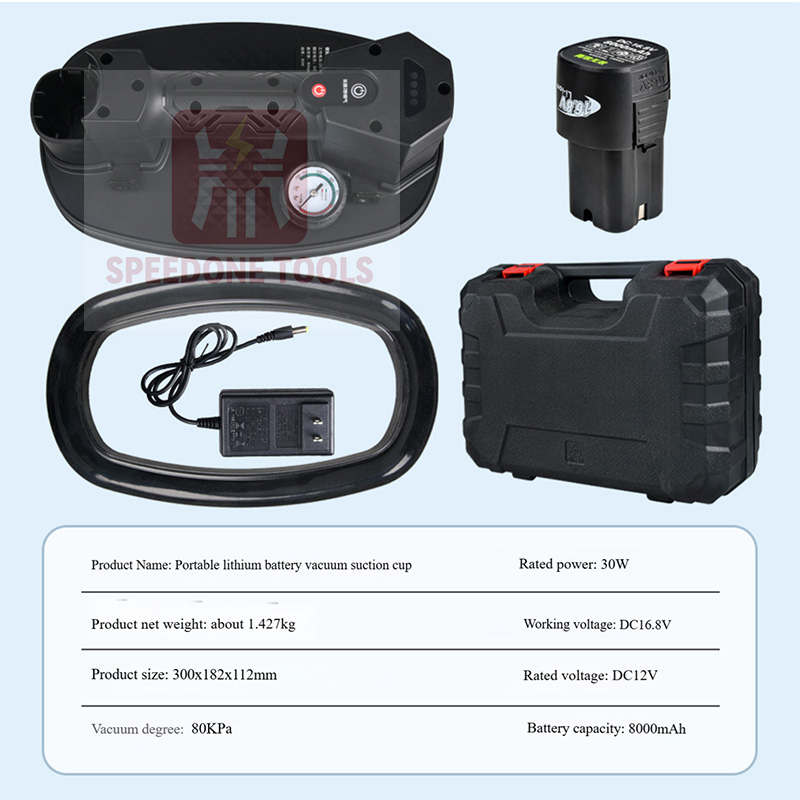 |
| Product packaging and accessories display | |
(Consider this simple equation.) On one side: a team of 4 workers, straining to lift a 500kg slab, their grips tightening, communication tense, and the slab swaying dangerously. On the other side: a single operator, standing clear, using a remote control to effortlessly lift the same slab with a quiet hiss of a Vacuum Lifter. The difference seems obvious, but the real cost—and savings—are hidden in the numbers. This isn’t just about convenience; it’s a fundamental shift in risk management and operational economics that reshapes the very foundation of workshop safety and profitability.
A study cited in European Stone Association (ESTA) safety guidelines highlights that mechanizing high-risk manual handling tasks is the single most effective measure to prevent severe workplace injuries. Beyond safety, the financial logic is compelling. This article will present a stark, data-driven comparison between manual slab handling and using a professional Vacuum Lifter system. We will calculate the true hourly cost, the risk premium, and the productivity multiplier, proving that for any serious fabricator, the question isn’t if you can afford a lifter, but how long you can afford to work without one.
The Manual Method: Calculating the Hidden Surcharge
Let’s quantify the “traditional” way. To safely(ish) lift and move a medium-to-large slab manually, you need at least 3-4 skilled workers.
-
Direct Labor Cost: At an average rate of $30/hour, a 15-minute lift-and-move operation costs $22.50 to $30.00 in pure wages, with zero value added to the stone.
-
The Injury Probability Tax: The U.S. Bureau of Labor Statistics states overexertion is a top injury cause. The average workers’ compensation claim for a back injury exceeds $40,000. Even a modest annual premium increase for just one claim can add thousands.
-
The Inefficiency Multiplier: Manual lifting is slow, cautious, and fatiguing. It creates bottlenecks at unloading, flipping, and feeding machines. This lost time compounds across every slab you process.
-
The Quality Risk: Uneven lifting pressure or a slip can crack a slab or chip an edge, turning an asset into a liability in seconds. This risk is rarely factored into the “cost” of manual labor.
The SPEEDONE Solution: Engineering Risk Out of the Equation
A Vacuum Lifter, like the 360-degree rotating slab lifter or semi-automatic slab lifter from SPEEDONE’s range, is a force multiplier. It replaces human muscle with hydraulic or electric power, and human grip with engineered vacuum seals. An operator controls the lift, tilt, and rotation from a safe distance. The system is designed with fail-safes, ensuring the slab stays secured even in a power loss. This transforms a high-risk, multi-person event into a routine, one-person operation.
 |
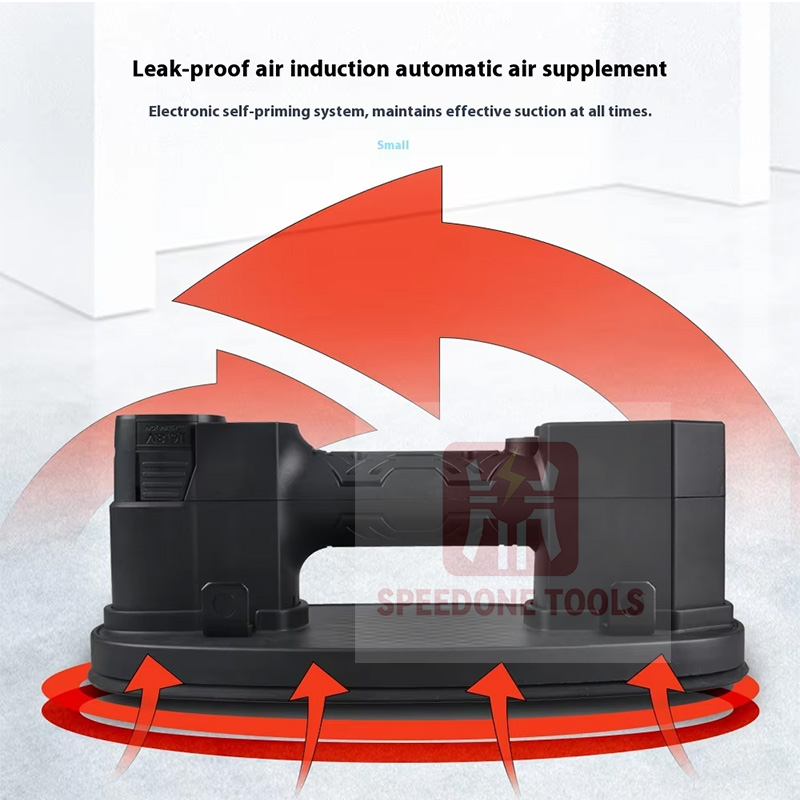 |
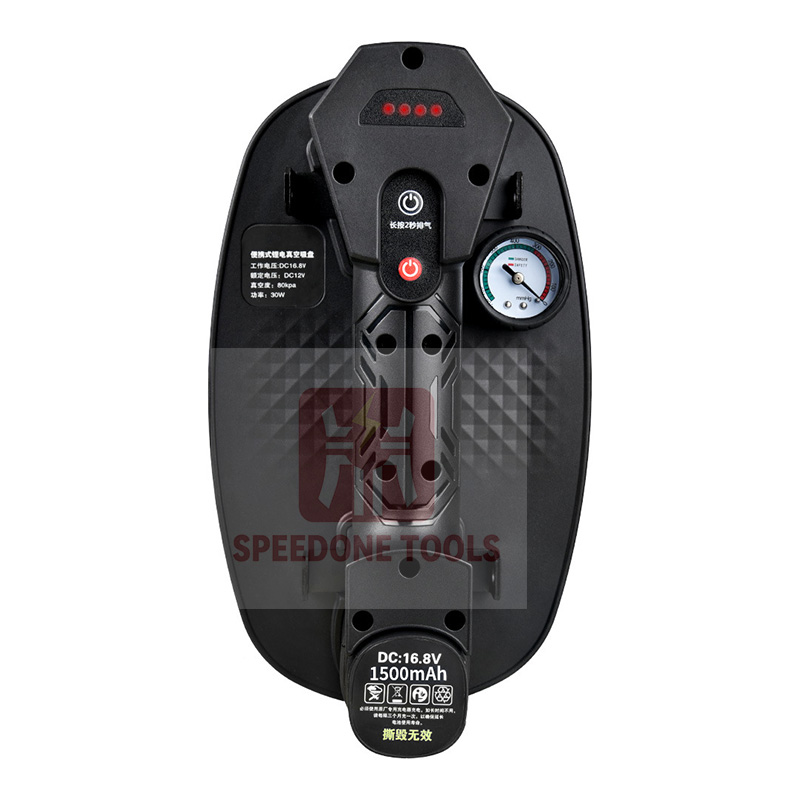
| Product display | |
A Data-Driven Workflow: Integrating the Lifter from Truck to Table
A Vacuum Lifter isn’t an island; it’s the most powerful node in your material handling network.
Phase 1: Unloading & Primary Movement – Eliminating the Crew
The first application is at delivery. Instead of a crew manually wrestling a slab off a truck, a single operator with a Vacuum Lifter can secure and unload it directly onto a waiting A-Frame Metal Cart. The time saved is immense, and the safety risk plummets to near zero. The cart then provides stable transport to storage.
Phase 2: Storage Retrieval & Flipping – The Ultimate Safety Play
Retrieving a slab vertically from a rack is perilous manually. With a lifter, it’s controlled and precise. Need to flip the slab for inspection or to work on the other side? A Vacuum Lifter with rotation capability performs this in seconds, compared to the dangerous, multi-person manual flip. The flipped slab can be placed securely on a Self-Locking Trolley for in-shop transport, with the trolley’s lock engaged for total stability.
Phase 3: Machine Feeding & Positioning – Precision at the Point of Work
Feeding a CNC or saw is about precision. A Vacuum Lifter allows micro-adjustments of the slab in mid-air, enabling perfect alignment before lowering it onto the machine bed or a Universal Ball Transfer Table for final positioning. This eliminates the back-and-forth nudging that wastes time and risks pinch-point injuries.
Phase 4: Handling Cut Pieces & Finished Work
For large cut pieces or finished countertops, a Vacuum Lifter continues to add value. It can safely transfer a polished top from a worktable to a Foldable Stone Slab Trolley, guaranteeing no edge damage. For final loading onto an installation vehicle, it is again indispensable.
Phase 5: The Final Install – Bringing Power to the Job Site
On-site, the challenges multiply. A portable Vacuum Lifter or a dedicated Stone Slab Countertop Install Cart that integrates lifting principles allows a two-person crew to handle what would normally require four, navigating stairs and tight spaces with far greater control and safety.
Case Study: The Numbers Don’t Lie
A fabrication shop processing 10 slabs per day conducted a 90-day analysis. For 5 of those slabs, they used their new SPEEDONE Vacuum Lifter. For the other 5, they continued manual handling (as a control).
The results were unequivocal:
| Metric | Manual Handling (Per Slab) | Vacuum Lifter (Per Slab) | Difference |
|---|---|---|---|
| Avg. Handling Time | 22 minutes | 6 minutes | -73% |
| Workers Required | 3 | 1 | -67% |
| Labor Cost (@$30/hr) | $33.00 | $3.00 | -$30.00 |
| Reported “Close Call” Incidents | 7 (in 90 days) | 0 | -100% |
| Slab Damage Events | 2 (edge chips) | 0 | -100% |
Conclusion: The Vacuum Lifter paid for its investment in saved labor costs alone in under 5 months, not including the avoided cost of a single injury or damaged slab.
Frequently Asked Questions (FAQ)
Q1: Are vacuum lifters safe? What if the power fails?
A: Professional lifters like SPEEDONE’s are designed with multiple safety valves. If vacuum is lost, non-return valves lock the pressure, and the system will typically hold the load for a significant period, allowing for a controlled emergency lowering. They are far safer than manual handling.
Q2: Can they handle textured, rough, or porous stone?
A: Yes, with the right sealing pads. Different pad materials (soft rubber, foam, etc.) are available to create an effective seal on a variety of surfaces, including honed, flamed, and split-face stone.
Q3: What maintenance does a vacuum lifter require?
A: Maintenance is straightforward: regularly inspect and clean the sealing pads, check hoses for wear, and ensure the pump and filters (if electric/hydraulic) are serviced according to the manufacturer’s schedule. It’s minimal compared to the “maintenance” cost of worker injuries.
Q4: Is a lifter practical for a small shop that only handles a few slabs a week?
A: Absolutely. The safety argument is universal. Furthermore, the time and labor savings on just a few slabs per week quickly add up, and it allows a small crew to confidently take on larger, more profitable projects they might otherwise refuse due to handling concerns.
Q5: Can one lifter handle all our slab sizes?
A: Most lifters have adjustable spreader beams or multiple pickup points to accommodate a range of slab sizes and weights. It’s crucial to select a model whose minimum and maximum dimensions and weight capacity match your typical stock.
Conclusion: Stop Paying the Risk Premium
Every time your team gathers to lift a slab with their hands, you are paying a premium—in elevated labor costs, in accepted risk, in bottlenecked time, and in latent anxiety. A Vacuum Lifter isn’t just a tool; it’s an insurance policy that pays dividends in daily efficiency.
The data makes an irrefutable case. By integrating a SPEEDONE Vacuum Lifter into your workflow, supported by the full suite of Slab Transport Carts, you don’t just modernize your shop—you fundamentally de-risk your business and unlock a new tier of productivity. Calculate your own numbers. The result will point you toward a smarter, safer way to work.

Henry
Hi, I’m the author of this post, and I have been in this field for more than 16 years. If you need OEM&ODM service for stone tools, feel free to ask me any questions.