Faça o seu trabalho de forma eficiente!





Principais Problemas Resolvidos por Sistemas Modernos de Carrinhos de Transporte de Lajes
Discover how modern Carros de transporte de lajes improve safety, efficiency, and reduce damage in stone fabrication. Learn the best solutions for transporting heavy slabs safely across your workspace.
The stone and marble industries have always faced unique challenges when it comes to handling and transporting large, heavy slabs. Whether you’re managing a fabrication shop, a warehouse, or a showroom, the risks associated with manual slab handling are not only costly but also dangerous. In this article, we’ll explore the top problems modern Carro de transporte de lajes systems solve, how they improve workplace safety, and the best practices for selecting the right cart for your needs.
What is a Modern Slab Transport Cart System?
A Carro de transporte de lajes system is an advanced solution designed to move large, heavy slabs of stone, granite, marble, or quartz with ease and precision. Unlike basic carts, these systems feature enhanced stability, ergonomic designs, and robust safety mechanisms to ensure that slabs are moved safely across tight factory floors, workshops, and warehouses.
These carts are equipped with key features such as:
- Steel frame construction for durability
- Polyurethane or rubber wheels for smooth movement
- Shock absorption systems to protect slabs from vibration damage
- Manual, electric, or hybrid movement systems depending on the level of automation needed
For those looking for the best carrinhos de transporte de placas, it’s essential to understand the materials and parameters that best suit your facility’s needs, such as load capacity, wheel material, and surface support features.
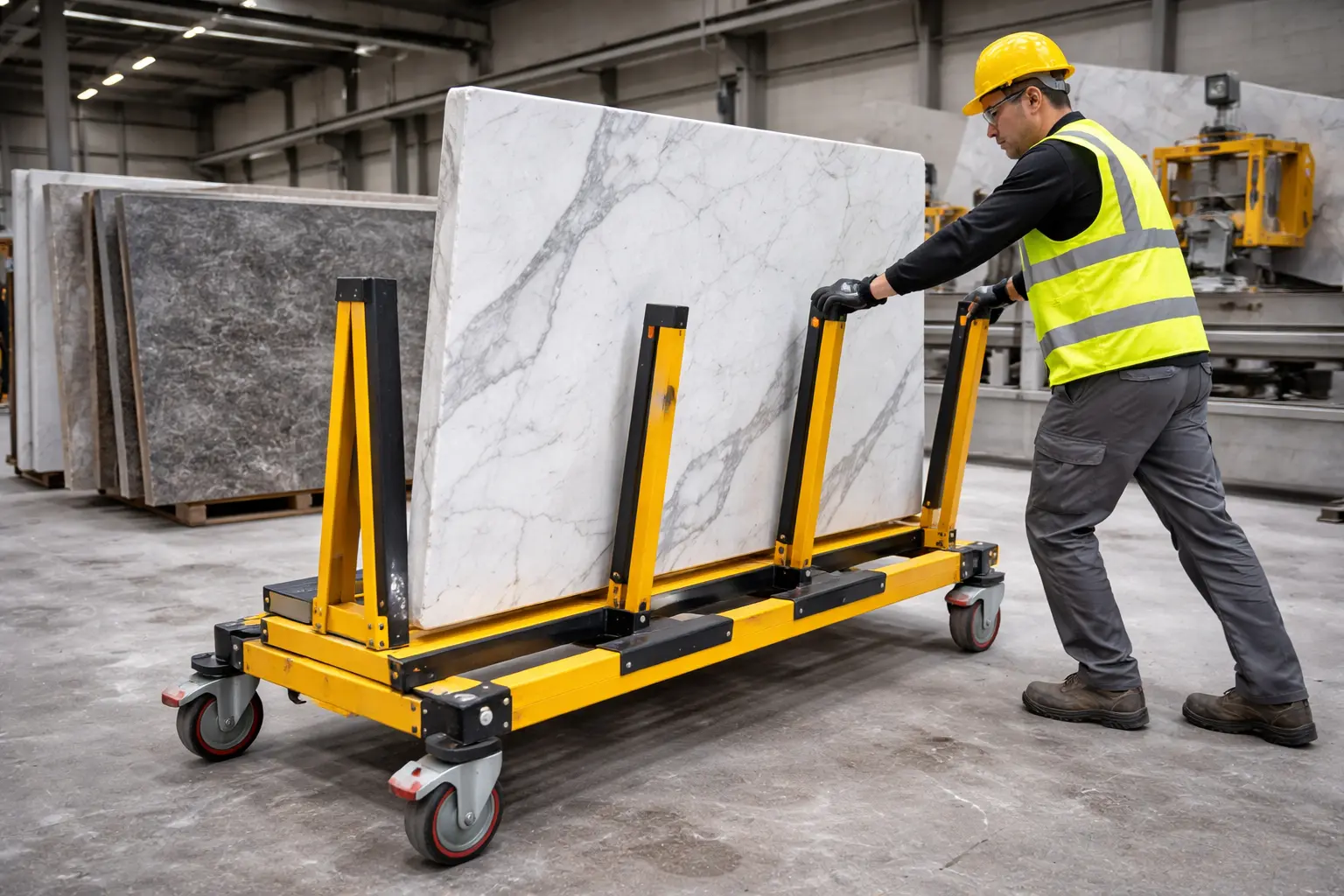
Carro de transporte de lajes
Why Traditional Slab Moving Methods Fail in Modern Shops
Before the invention of modern slab transport carts, stone slabs were moved using basic methods such as manual lifting, forklifts, or makeshift carts. These methods often lead to inefficient workflows, safety hazards, and product damage. Workers were at risk of injury from carrying heavy slabs, while forklifts often required large spaces for maneuvering, wasting valuable time.
Moderno stone slab transport carts solve these issues by:
- Offering smoother movement with reduced physical strain
- Providing adjustable systems to handle different slab sizes
- Reducing the risk of product damage, like edge chipping or surface scratching, during transport
Problem 1: Worker Injury Risk from Manual Slab Handling
Stone slabs are heavy, often weighing hundreds of kilograms. Moving these slabs without proper equipment is a serious safety concern. Injuries from lifting or pushing slabs can be debilitating, leading to long-term worker compensation costs and lost productivity.
Moderno Carros de transporte de lajes are designed with ergonomics in mind. They are equipped with features like:
- Balanced load support that minimizes the need for manual lifting
- Wheels with lower rolling resistance to make the cart easier to move
- Braking systems that ensure stability during loading and unloading
By investing in these carts, stone shops significantly reduce the likelihood of injuries, improving both worker health and productivity.
Problem 2: Edge Chipping, Surface Damage, and Slab Breakage
Moving stone slabs manually or with inadequate equipment can lead to surface damage, including scratches, chips, and cracks. This is especially problematic with delicate materials like marble or quartz, which require extra care during handling. The cost of damaged slabs can quickly outweigh the cost of investing in quality transport carts.
Moderno slab transport systems solve this issue by using:
- Non-marking, shock-absorbing wheels that protect slabs from damage
- Adjustable support features to keep slabs stable during movement
- Rubber-lined supports that reduce the impact of rough floors
These features ensure that slabs arrive at their destination without sustaining damage, saving both time and money in repairs and replacements.
For a detailed comparison of various stone slab transport carts, you can check out this slab transport cart catalog.
Problem 3: Poor Maneuverability in Narrow Aisles and Busy Workshops
One of the key issues in stone fabrication shops and warehouses is maneuvering large slabs in tight spaces. Forklifts and traditional carts often need more room to turn, leading to delays and inefficiency. In a busy workshop, workers need to move slabs quickly while avoiding obstacles, such as equipment, other carts, and stacked materials.
Moderno Carro de transporte de lajes systems solve this problem with:
- Swivel casters for tight turns
- Smaller, more compact cart designs
- Powered options that allow for easy navigation through narrow aisles
These carts enable workers to move slabs quickly without wasting time waiting for forklifts or navigating around tight spaces.
For a comprehensive guide on granite slab transport carts, visit this link.
Problem 4: Low Efficiency Between Storage, Cutting, Fabrication, and Loading Areas
When slabs need to be moved from one area to another, workers often face inefficiencies. Moving slabs from storage to the cutting area, then to fabrication, and finally to the loading dock can be a time-consuming process, especially when relying on manual or forklift-only systems.
Um moderno carrinho de transporte de lajes de pedra can streamline these workflows by providing a dedicated, flexible transport solution. These carts improve operational efficiency by:
- Reducing the time spent waiting for forklifts or other workers
- Allowing for direct transport between areas without unnecessary handling
- Improving overall factory or warehouse throughput
If you’re looking for the right slab transport cart for stone factories, check out this guide: Como escolher o carrinho de transporte de placas correto.
 |
 |
Problem 5: Load Instability Caused by Mismatched Cart Design
Not all transport carts are created equal, and choosing the wrong cart for your slabs can result in load instability. When slabs are improperly supported, they are at risk of tipping, which can cause injuries and product damage.
Moderno slab transport cart systems are designed with specific parameters to ensure stability:
- The load capacity of the cart is aligned with the slab’s size and weight
- Carts feature wider bases and reinforced frames for added support
- Anti-tip mechanisms that prevent the cart from toppling during movement
For those in need of a tilting slab transport cart, you can explore options like this tilting stone slab transport cart.
Problem 6: Floor Conditions, Ramps, and Uneven Surfaces
Stone fabrication shops often have to deal with uneven flooring, ramps, and outdoor transitions. These conditions can make moving slabs with traditional carts difficult and unsafe.
Moderno carrinhos de transporte de placas are designed to handle these conditions with:
- Larger wheels that can roll over uneven surfaces
- Shock-absorbing suspension systems to reduce impact on the slabs
- Brake systems that provide extra control on ramps
A well-designed cart ensures smooth transport even in less-than-ideal conditions, making it easier for workers to move slabs across different areas without damage or instability.
Problem 7: Compliance Pressure and Safer Material Handling Practices
The stone industry is subject to strict regulations regarding worker safety and material handling. Compliance with industry standards, such as OSHA and NIOSH, is critical for avoiding penalties and ensuring a safe work environment. Modern carrinhos de transporte de placas help companies meet these safety requirements by:
- Reducing manual handling risks
- Complying with ergonomic standards
- Ensuring that workers use equipment that minimizes the risk of injury
By adopting modern carts, companies can avoid safety violations and keep workers protected.
Problem 8: Labor Shortages and the Need for Smarter Handling Equipment
The shortage of skilled labor in the stone industry is another growing concern. As workers become harder to find, businesses need to rely on smarter equipment to get the job done. Modern slab transport cart systems help by:
- Reducing the amount of manual labor required to move slabs
- Streamlining workflows and increasing overall efficiency
- Reducing the training time for new workers
These systems allow for faster, safer, and more efficient movement of slabs without relying on a large workforce.
Problem 9: The Rise of Automation and Data-Driven Stone Logistics
As automation continues to influence the manufacturing and logistics sectors, stone fabrication is no exception. The next generation of stone slab transport carts is designed to integrate seamlessly with automated systems. Features include:
- Automated tracking systems
- Integration with warehouse management software
- Electric-powered carts that automate movement between areas
These innovations are part of the broader trend towards smarter, more connected production lines, which will increase efficiency and reduce human error.

carrinho de transporte de lajes de pedra
Conclusão
In conclusion, modern Carro de transporte de lajes systems are far more than simple tools for moving heavy slabs. They address a range of operational, safety, and efficiency problems, including worker injury, slab damage, and slow workflows. By investing in the right cart, businesses can not only improve safety and reduce product loss but also streamline their operations for maximum productivity.
For more information about the latest slab transport cart systems, you can check out these articles:
- Slab Transport Cart Catalog
- Granite Slab Transport Cart Options
- Universal Ball Transport for Slabs
- Tilting Granite Slab Transport Cart
- Choosing the Right Slab Transport Cart
- New Electric Slab Transport Cart
By adopting modern slab transport cart systems, businesses will not only enhance their operational capacity but also stay ahead of industry trends, ensuring both safety and sustainability in the years to come.
Perguntas frequentes (FAQ)
1. Qual é o propósito de um Carrinho de Transporte de Lajes?
A Carro de transporte de lajes is designed to help transport large, heavy stone slabs safely and efficiently. It reduces the risk of injury, product damage, and operational inefficiency in stone fabrication and warehouse environments.
2. Como você move lajes de pedra com segurança?
To move stone slabs safely, it’s important to use proper carrinho de transporte de placas systems. These carts feature balanced load support, smooth wheels, and ergonomic handles that minimize physical strain and protect both workers and slabs during transport.
3. Quais problemas um carrinho de transporte de lajes resolve?
A carrinho de transporte de placas helps solve a range of issues such as worker injuries, slab breakage, poor maneuverability in narrow aisles, and inefficiencies in warehouse workflows. It also provides safety features that prevent accidents and damage.
4. Qual é o melhor carrinho para transportar lajes de granito?
The best cart for transporting granite slabs should have a high load capacity, stable base, durable wheels, and adjustable supports. Granite slab transport carts are specifically designed for heavy loads, ensuring safe and smooth handling.
5. Quanto peso uma carrinho de transporte de lajes pode suportar?
The weight capacity of a carrinho de transporte de placas varies depending on the model, but many can hold between 1000 to 3000 kg. It’s important to choose a cart with an appropriate load rating based on the weight of the slabs being transported.
Referências
- “Stone Slab Handling Safety: An Overview”, National Institute for Occupational Safety and Health (NIOSH), Centers for Disease Control and Prevention (CDC).
- “Guidelines for Safe Handling of Heavy Slabs in the Stone Industry”, Occupational Safety and Health Administration (OSHA).
- “Improving Efficiency in Stone Fabrication with Modern Transport Systems”, Stone Fabrication Journal.
- “Warehouse Safety Standards for Heavy Equipment Handling”, American National Standards Institute (ANSI).
- “Material Handling Systems and Their Role in the Stone Industry”, Journal of Stone Processing Technologies.
- “Automation in Stone Fabrication: The Future of Slab Transport”, Industrial Automation Review.
- “Slab Transport Equipment: From Manual to Automated Systems”, Stone Industry Insight Magazine.
- “Improving Slab Transport Efficiency with Electric Powered Carts”, Stone Logistics and Technology Review.
Why Slab Transport Carts Matter: In today’s stone industry, efficient and safe transport of heavy slabs is a critical component for maximizing productivity and minimizing product damage. Modern **Slab Transport Cart** systems are designed to handle the specific needs of granite, marble, quartz, and other heavy materials with precision. These carts improve safety standards, reduce injuries, and eliminate inefficiencies found in older transport methods. Their ergonomic design ensures smoother movement, reducing the physical strain on workers while protecting valuable slabs from damage.
How These Systems Solve Key Problems:
Slab transport carts address several issues:
– **Worker Injury Prevention:** By allowing safe, controlled movements, these carts prevent injuries caused by manual lifting and handling. They are equipped with balanced load supports and ergonomic handles that minimize strain.
– **Product Protection:** With specialized rubber-lined supports and shock-absorbing wheels, these carts protect slabs from scratches, chips, and cracks, extending the lifespan of the material.
– **Maneuverability in Tight Spaces:** The swivel caster design allows easy movement in narrow aisles, overcoming the challenges presented by traditional forklifts or manual carts.
Why This Is Important for Stone Shops:
As the stone industry continues to innovate, businesses need to adopt modern equipment to keep up with safety standards and efficiency demands. Slab transport carts not only enhance operational workflows but also comply with industry safety regulations, including OSHA guidelines for manual handling and machine safety.
What to Consider When Choosing the Right Slab Transport Cart:
When selecting a **Slab Transport Cart**, consider factors like:
– **Load Capacity:** Choose a cart that can support the weight of your largest slabs to prevent tipping or instability.
– **Wheel Type:** For smoother transport, opt for carts with high-quality wheels that are suited for your floor conditions (e.g., polyurethane for smooth floors or larger wheels for uneven surfaces).
– **Customization Options:** Depending on your shop’s needs, look for carts with adjustable supports or tilting features that provide added flexibility.
Emerging Trends and Future Directions:
The stone industry is increasingly adopting automation and electric-powered systems for slab transport. This trend helps reduce labor costs and enhances efficiency, particularly in larger facilities. These innovations are driven by the need for faster, safer, and more accurate slab handling systems that align with modern production needs. As slab transport carts evolve, they will continue to play a pivotal role in streamlining workflows and improving safety in stone processing environments.

Henrique
Olá, sou o autor deste post, e estou neste sector há mais de 16 anos. Se precisar de um serviço OEM&ODM para ferramentas de pedra, não hesite em colocar-me quaisquer questões.