





DG-D 5T Lifting Beam for Forklift & Crane Applications
The Speedone DG-D Viga de elevação de 5T is designed for industrial material-handling applications where a compatible crane, forklift lifting system or other approved lifting arrangement is used to raise and position heavy loads.
The published technical data identifies two different operating limits: a 5T maximum lifting limit e um 3T weight limit for turning operations. These values should not be treated as interchangeable.
Unlike a conventional slab clamp, the current DG-D specification does not publish a clamp opening, jaw range or gripping force. For technical clarity, the DG-D is therefore better positioned as a viga de elevação rather than described as a mechanical gripping clamp.
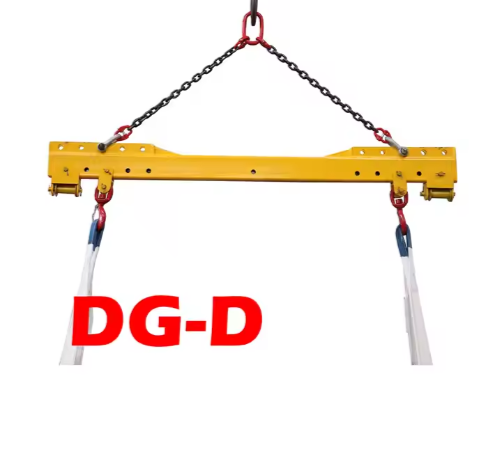
DG-D Technical Specifications
| Especificação | Published Data |
|---|---|
| Brand | Speedone |
| Modelo | DG-D |
| Tipo de Produto | Lifting Beam / Industrial Lifting Equipment |
| Published Usage | Lifting equipment for forklift / crane systems |
| Limite Máximo de Elevação | 5T / 11,023 lbs |
| Limite de Peso para Virar | 3T / 6,614 lbs |
| [TAMANHO DO FEIXE] | 1500 × 100 × 250 mm |
| [Tamanho da Montagem Publicado com Corrente] | 1500 × 1000 × 900 mm |
| Tamanho da embalagem | 1520 × 100 × 300 mm |
| Peso líquido | 55 kg |
| Material | Aço |
| Cor | Yellow / Customized |
| Local de origem | Fujian, China |
| Direct Fork Size | Not published; original specification lists “NO” |
| Minimum Forklift Tonnage | Not published; original specification lists “NO” |
What Is the DG-D 5T Lifting Beam?
The DG-D is a steel lifting device designed to transfer and distribute lifting forces between compatible lifting equipment and the load.
Based on the published specifications, DG-D is better understood as a lifting-beam system than as a conventional mechanical slab clamp.
The current technical information does not publish:
- clamp jaw width,
- clamping range,
- gripping force,
- automatic gripping mechanism,
- or direct fork-pocket dimensions.
These features should therefore not be claimed unless they are confirmed by the current DG-D engineering drawing.
5T Maximum Lift Limit vs 3T Turning Limit
The most important technical distinction on the DG-D product page is the difference between its published lifting and turning limits.
| Operation | Published Limit | Interpretation |
|---|---|---|
| Maximum Lifting | 5T | Published maximum lift limit for the defined lifting configuration |
| Turning Operation | 3T | Published weight limit for the defined turning operation |
Why Is the Turning Limit Lower Than the Maximum Lift Limit?
Lifting and turning are different operating conditions.
The DG-D specifications distinguish between a 5T maximum lift limit e um 3T turning weight limit. This means equipment selection should be based on the actual operation rather than applying one capacity figure to every type of movement.
The current product information does not publish the engineering calculation or detailed turning geometry behind the 3T value, so the applicable connection arrangement and operating procedure should be confirmed from the current technical documentation.
1500 mm Steel Beam Structure
The DG-D beam itself is published at:
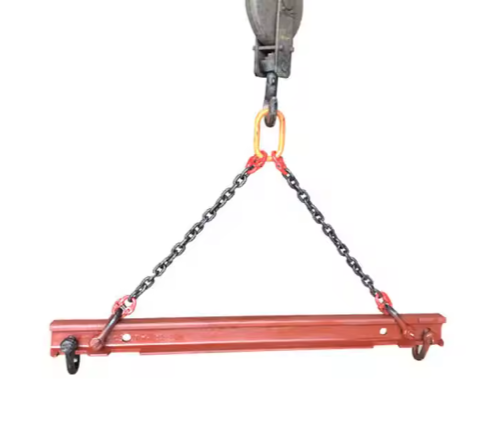
The specification also provides a dimension described as Height with Chain: 1500 × 1000 × 900 mm.
Because this field contains three dimensions rather than one vertical measurement, it is more accurate to describe it as the published chain-assembly size until the engineering drawing provides a more precise definition.

55 kg Net Weight
The published net weight of the DG-D is 55 kg.
This self-weight forms part of the complete suspended lifting system and should be considered together with:
- the actual load weight,
- chain or sling weight,
- hooks and shackles,
- other lifting accessories,
- and the rated capacity of the crane, forklift attachment or other lifting equipment supporting the assembly.
How Is DG-D Used with a Crane?
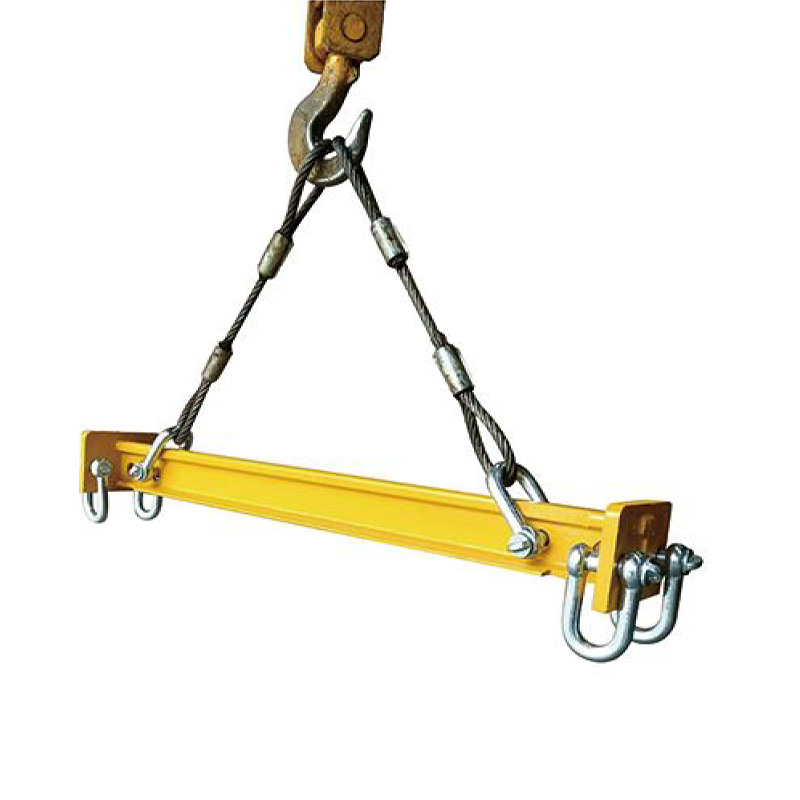
The source product information identifies DG-D for forklift / crane lifting applications and publishes a chain-related assembly dimension.
However, the current specification does not provide enough detail to define:
- lifting-eye dimensions,
- chain specification,
- shackle size,
- hook opening,
- sling angle,
- number of upper suspension points,
- or lower load-connection geometry.
These values should be taken from the current DG-D technical drawing rather than estimated from product photographs.
How Is DG-D Used with a Forklift?
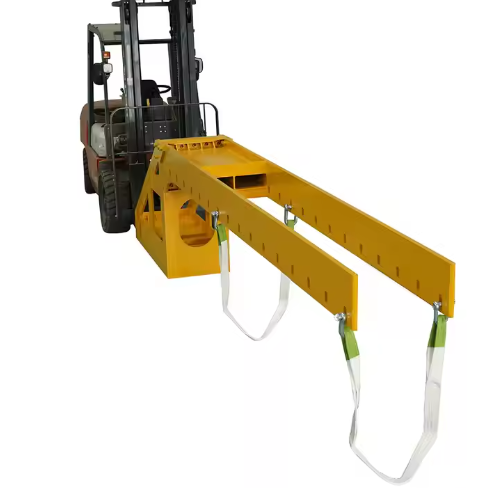
The DG-D is published for forklift/crane lifting applications, but the specification also lists:
Minimum Forklift Tons: NO
This means DG-D should not automatically be described as a direct slip-on fork attachment.
If used with a forklift system, buyers should confirm whether the DG-D is suspended from a compatible forklift boom, forklift lifting hook or another approved attachment.
The published 5T DG-D rating should not be interpreted as proof that a forklift can safely lift 5T with the device installed.
Lifting Beam vs Slab Clamp
| Factor | DG-D Lifting Beam | Slab Clamp |
|---|---|---|
| Main Principle | Transfers or distributes load through defined lifting connections | Grips slab material using clamp jaws |
| Clamp Range | Not published for DG-D | Normally a critical specification |
| Published DG-D Limits | 5T lifting / 3T turning | Model-specific |
| Selection Basis | Load weight, lifting points, balance and connection arrangement | Slab thickness, jaw range, surface condition and load weight |
Lifting Beam vs Spreader Beam
The terms “lifting beam” and “spreader beam” are sometimes used interchangeably in commercial listings, but their structural load paths can differ.
For the DG-D, the final terminology should follow the actual engineering design.
A complete technical drawing should identify:
- upper suspension points,
- lower load points,
- chain arrangement,
- lifting-point spacing,
- and allowable loading configuration.
Until those engineering details are published, DG-D 5T Lifting Beam is the clearest buyer-facing product name.

Steel Construction and Customization
The DG-D is published with a steel construction and a standard yellow appearance, with customization available.
Project-specific customization may include:
- color,
- logo identification,
- product marking,
- packaging,
- and other non-structural requirements.
Suitable Industrial Applications
Subject to the approved lifting configuration and actual load characteristics, the DG-D may be considered for handling:
- stone slabs,
- granite and marble materials,
- fabricated components,
- machinery parts,
- construction materials,
- and compatible heavy loads with suitable lifting points.
Actual suitability depends on load weight, load dimensions, center of gravity, lifting-point geometry and the capacity of the complete lifting system.
Pre-Use Inspection Checklist
- Confirm the product model is DG-D.
- Confirm the actual load weight.
- Determine whether the operation is lifting or turning.
- Use the applicable 5T or 3T published limit.
- Inspect the beam for bending, deformation or impact damage.
- Inspect welded and structural connection areas.
- Inspect lifting eyes and connection points where fitted.
- Inspect chains for wear, deformation or damage.
- Inspect hooks, shackles and other lifting accessories.
- Confirm pins and fasteners are properly installed.
- Check load balance and center of gravity.
- Confirm lifting accessories have suitable ratings.
- Raise the load slowly and verify stability.
- Avoid shock loading.
- Keep personnel clear of suspended loads.
- Remove damaged equipment from service until evaluated.
Common Buyer Mistakes
Using the 5T Rating for Turning Operations
The published turning limit is 3T even though the maximum lifting limit is 5T.
Using the Old 90 kg Weight
The product specification publishes a net weight of 55 kg. The conflicting 90 kg statement should not remain on the page.
Calling DG-D a Forklift
DG-D is lifting equipment, not a forklift truck.
Calling DG-D a Clamp Without Clamp Specifications
The current specification does not publish a jaw opening, gripping range or gripping force.
Assuming Direct Fork Compatibility
The current table lists no fork size and no minimum forklift tonnage. The actual forklift interface should be confirmed before ordering.
Ignoring the Complete Lifting System
The usable capacity depends not only on the DG-D but also on chains, shackles, hooks, slings and the supporting lifting equipment.
Ignoring the Load Center of Gravity
A load may become unstable even when its weight is below the published maximum if its lifting-point arrangement or center of gravity is unsuitable.
What Information Should Buyers Provide Before Ordering?
| Information | What to Provide |
|---|---|
| Maximum Load Weight | kg / tons |
| Operation | Straight lifting / turning / positioning |
| Load Dimensions | Length × width × height |
| Center of Gravity | Position if known |
| Pontos de Elevação | Quantity, spacing and type |
| Equipamento de elevação | Crane / forklift lifting system / other |
| Connection Method | Hook / chain / shackle / sling / other |
| Personalização | Color / marking / project requirements |
Perguntas mais frequentes
Qual é a capacidade máxima de elevação do DG-D?
The published maximum lift limit is 5T / approximately 11,023 lbs.
What is the turning weight limit?
The published turning weight limit is 3T / approximately 6,614 lbs.
O DG-D pode suportar uma carga de 5T?
The current published specification lists a 3T turning limit, so the 5T maximum lifting limit should not be assumed to apply to turning operations.
What are the DG-D dimensions?
As dimensões do feixe publicadas são 1500 × 100 × 250 mm.
Quanto pesa o DG-D?
O peso líquido publicado é de 55 kg.
Is DG-D a slab clamp?
The current technical specification does not publish a jaw opening, gripping range or gripping force. Based on the available product data, DG-D is more accurately positioned as a lifting beam.
O DG-D pode ser usado com um guindaste?
The published usage identifies forklift and crane lifting applications. The actual connection method and lifting-accessory configuration should be confirmed for the application.
O DG-D pode ser montado diretamente nos garfos de empilhadeira?
A especificação atual não lista nenhum tamanho de garfo nem tonelagem mínima para empilhadeiras; portanto, não se deve assumir a montagem direta do garfo sem confirmação a partir do desenho técnico.
What material is DG-D made from?
O material estrutural publicado é aço.
Can the color be customized?
Sim. As informações publicadas sobre o produto listam amarelo/personalizado como a opção de cor.
What should be inspected before lifting?
Inspect the beam structure, welds, lifting points, chains, hooks, shackles and other lifting accessories, then confirm the correct load limit and load balance before lifting.
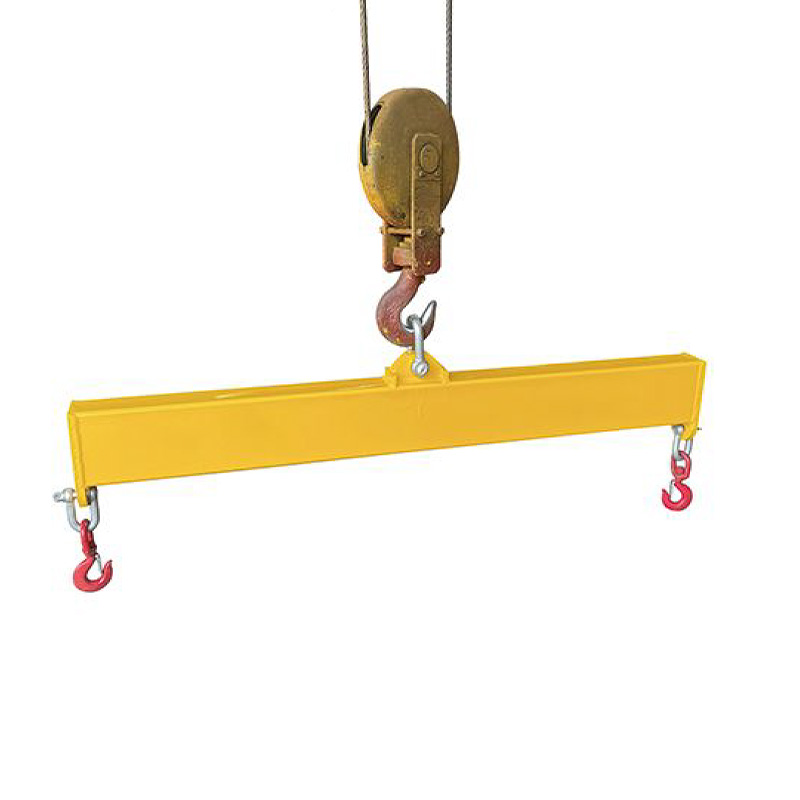
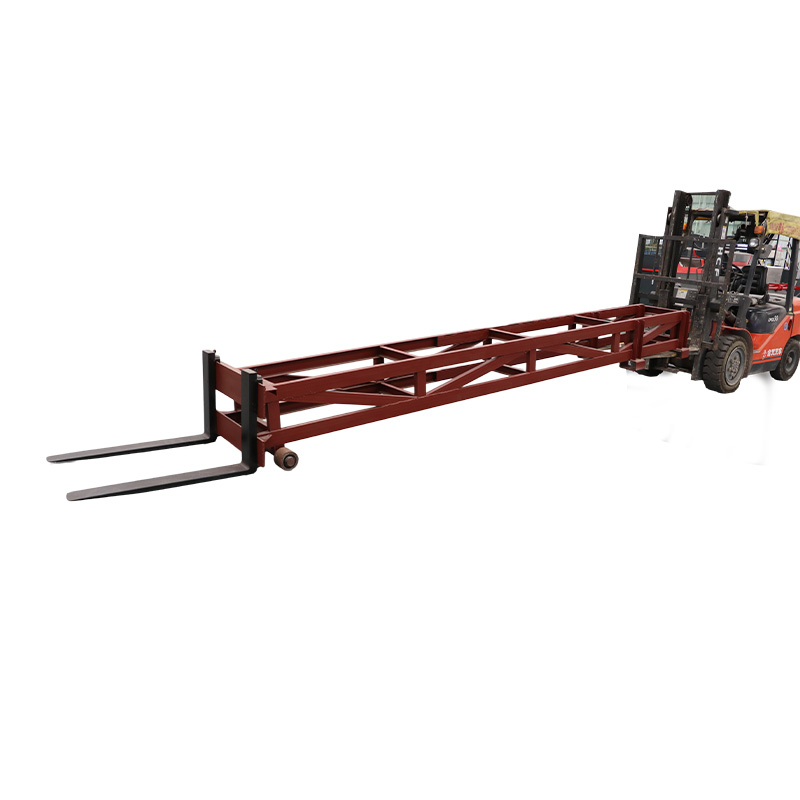
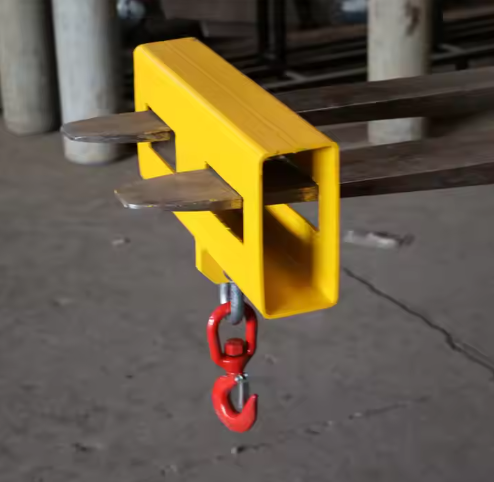
The DG-D already contains several highly valuable product facts for Google and AI retrieval: 5T maximum lift limit, 3T turning limit, 1500 × 100 × 250 mm dimensions, 55 kg net weight, steel construction and forklift/crane application.
The biggest weakness in the original content was not insufficient length. It was conflicting product identity. The page called DG-D a slab lifter, described an unsupported gripping mechanism, referred to the product as a forklift and stated a 90 kg weight even though the technical table publishes 55 kg.
The biggest remaining technical-data gap is the actual lifting interface. A technical drawing showing upper suspension points, chains, lower connection points, shackles, applicable angles and the forklift connection arrangement would significantly improve both buyer confidence and AI extractability.
Buyer takeaway: treat DG-D as a 5T lifting beam with a separate 3T turning limit, and select the complete lifting configuration according to load weight, lifting points, balance and supporting equipment.