






Stone Guillotine Machine Manufacturer for Mushroom Face Stone | Speedone

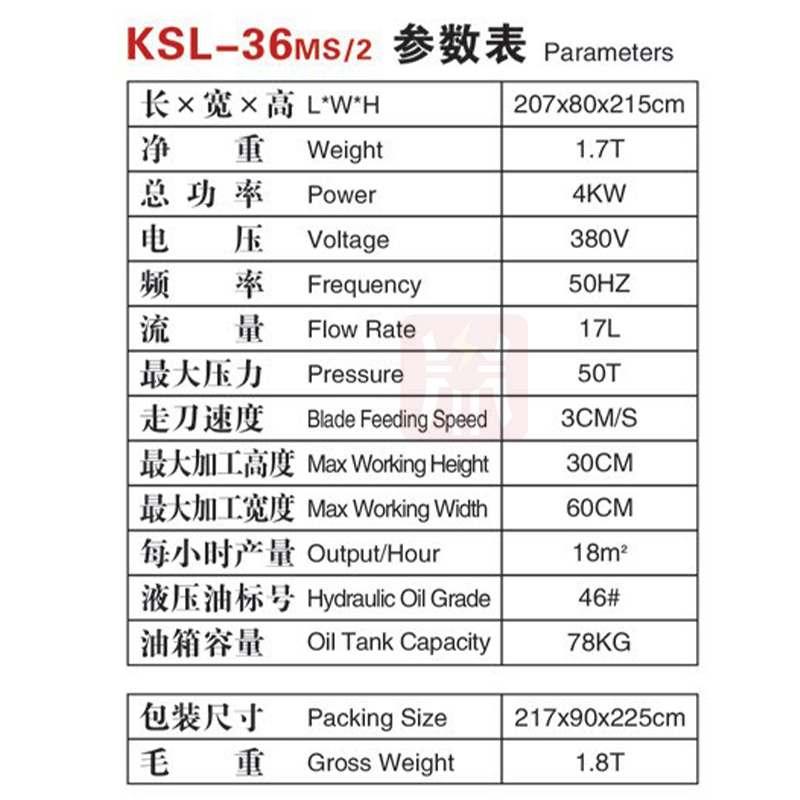
- น้ำหนัก : 1.7T
- Pressure : 50T
- Power : 4KW
Product Description
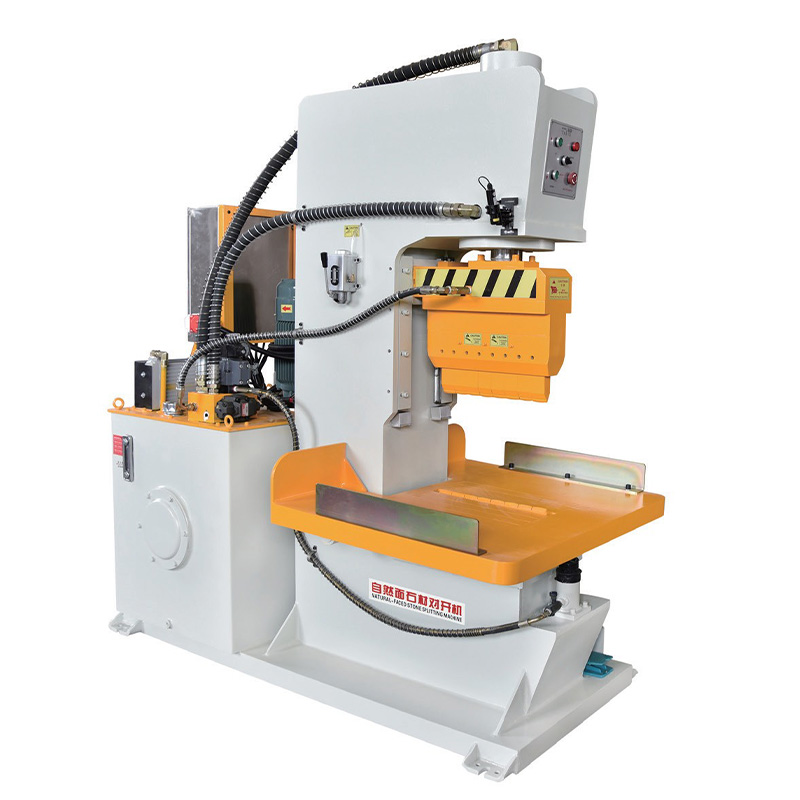
Hydraulic Stone Guillotine Machine for Mushroom Face & Wall Stone
Speedone stone guillotine machine is designed for professional natural-stone factories producing mushroom face stone, wall stone, natural cladding and architectural stone products. Instead of simply splitting a large block into two pieces, this machine can be used to trim selected stone edges while preserving a raised, rough natural center. The correct machine should be selected according to stone type, blank dimensions, required mushroom-face appearance, tooling, workpiece support and hydraulic capacity.
What Is a Stone Guillotine Machine for Mushroom Face Stone?
|
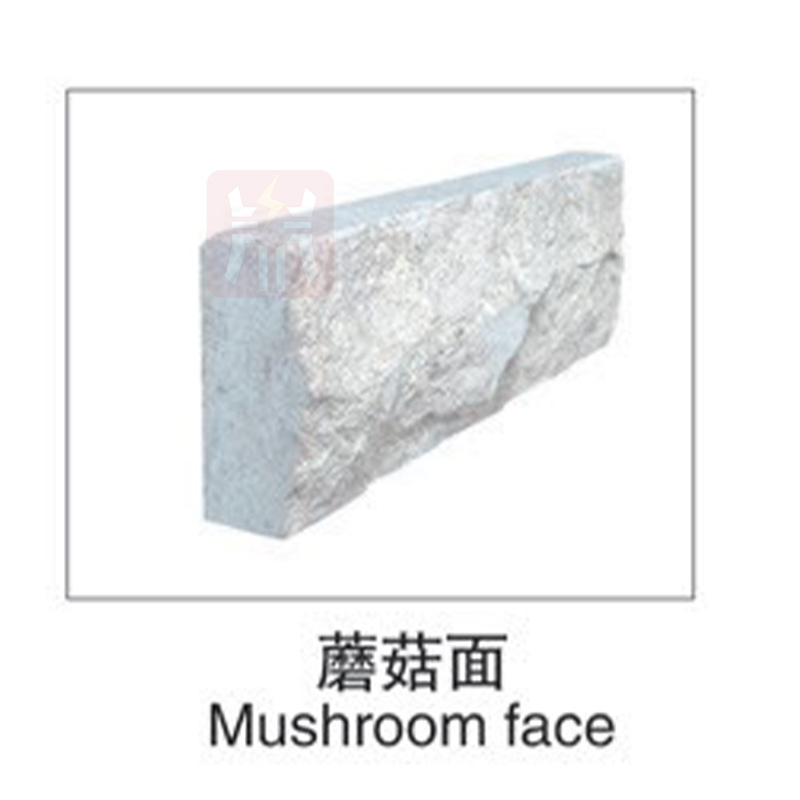 |
| Product display and finished product display | |
A stone guillotine machine for mushroom-face processing is hydraulic stone equipment used to trim or fracture selected areas around a natural-stone workpiece.
The main objective is different from ordinary full-width stone splitting.
Instead of only dividing a stone piece into two parts, mushroom-face production focuses on:
- Trimming the stone perimeter
- Controlling the outer edges
- Keeping the center surface raised
- Preserving natural stone texture
- Creating a stronger three-dimensional appearance
This makes the machine especially suitable for:
- Mushroom face wall stone
- Granite facade stone
- Marble decorative wall stone
- Natural split-face cladding
- Landscape wall stone
- Architectural masonry
- Rustic building stone
- Natural-face decorative stone
What Is Mushroom Face Stone?
Mushroom face stone is a decorative natural-stone product with a rough, raised center and more controlled surrounding edges.
The center projects outward while the perimeter is trimmed or dressed.
This creates a strong natural appearance with:
- Deep surface relief
- Natural shadow lines
- Rustic texture
- Visible mineral variation
- A three-dimensional architectural effect
Mushroom-face stone is commonly used for:
- Exterior building walls
- Villa facades
- Retaining walls
- Garden walls
- Landscape structures
- Entrance features
- Architectural columns
- Decorative cladding
Because the visible surface is intentionally left rough and natural, hydraulic trimming can be more suitable than grinding the entire face flat.
Speedone Mushroom Face Stone Guillotine Structure
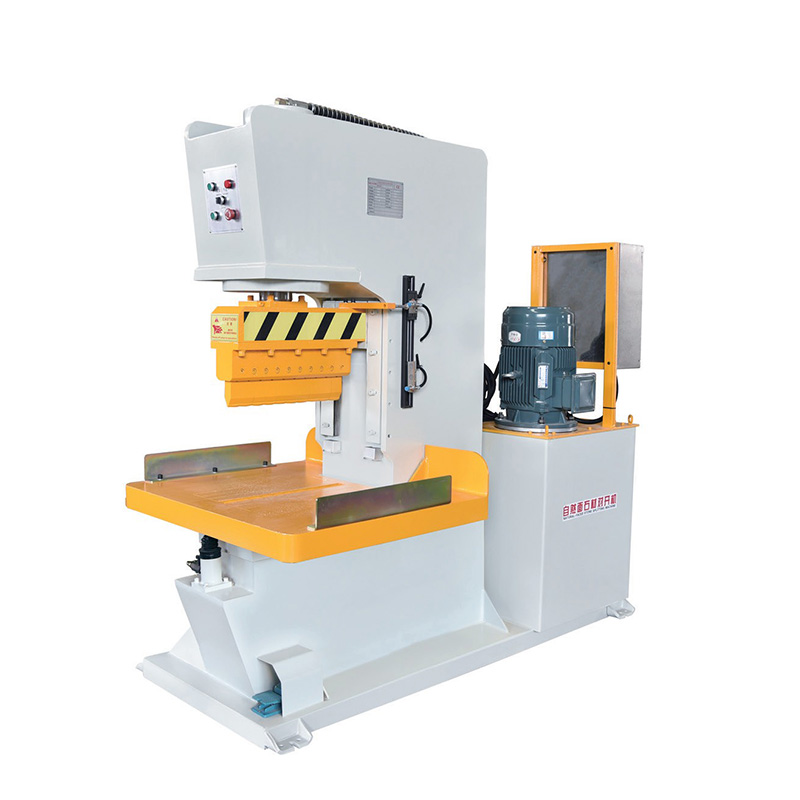
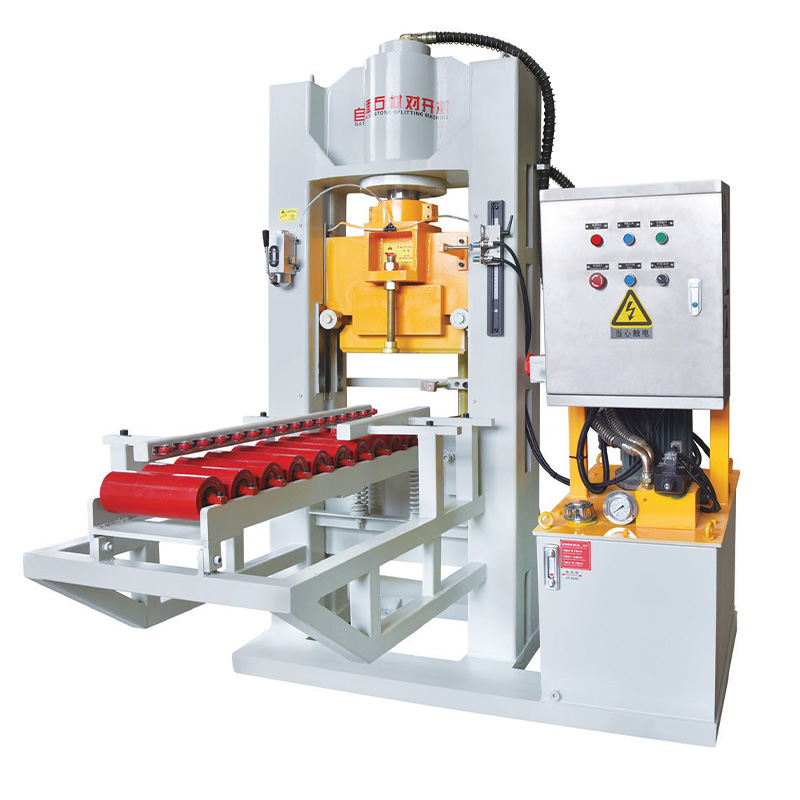
The Speedone machine shown for this application uses a strong hydraulic structure with a wide central working area.
Rigid Portal-Style Main Frame
The main frame surrounds the active working area and supports the hydraulic head.
This structure helps keep the machine stable during repeated edge trimming and natural-stone processing.
Wide Hydraulic Working Head
The upper working assembly applies controlled force to selected areas of the stone.
Depending on the selected tooling, the machine can be configured for different trimming or splitting requirements.
Open Stone Working Area
The central working zone allows the operator to position and reposition the stone.
This is important for mushroom-face production because one piece may need several trimming operations.
A typical sequence may include:
- Load the stone
- Align the first edge
- Complete the first trim
- Release the machine
- Rotate or reposition the stone
- Trim the next edge
Independent Hydraulic Power Unit
The machine uses a separate hydraulic power section to supply the pressure required for trimming and splitting.
Exact motor power, hydraulic pressure, oil capacity and cycle characteristics depend on the selected machine configuration.
Reinforced Lower Structure
The lower frame supports the machine and the working load generated during repeated hydraulic processing.
 |
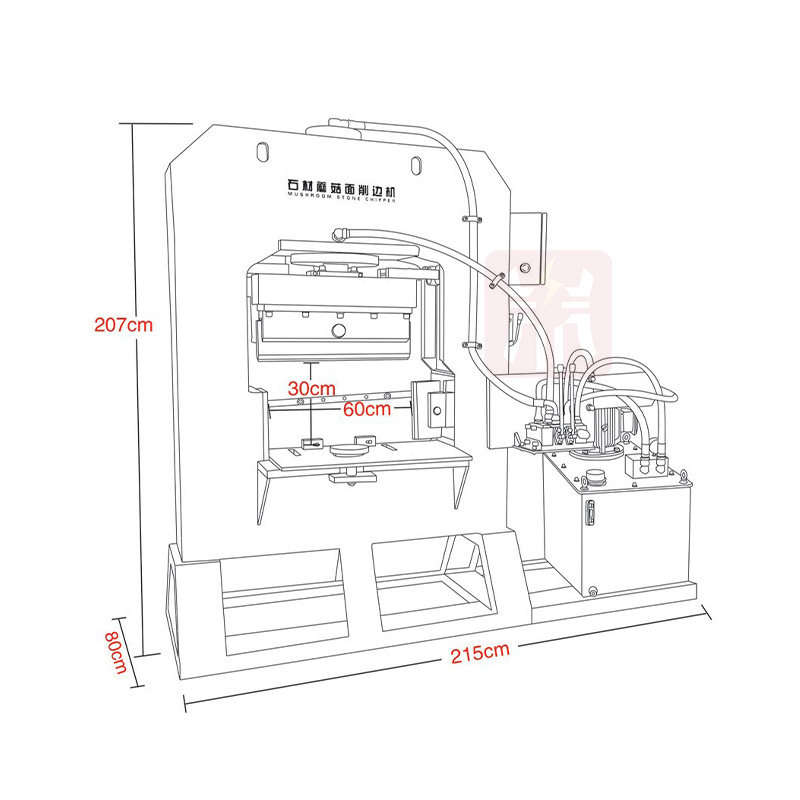 |
| Information parameter table and size annotations | |
How Does Mushroom Face Trimming Work?
A typical production process is:
Prepare Stone → Inspect → Position First Edge → Hydraulic Trim → Reposition → Trim Remaining Edges → Inspect Finished Face
1. Prepare the Stone Blank
The stone is first cut or pre-sized to a suitable basic shape.
2. Inspect the Stone
Check for major cracks, unstable areas or defects that could affect the trimming result.
3. Position the First Edge
Place the selected edge beneath the working tool.
4. Apply Hydraulic Force
The machine applies controlled force to fracture or remove part of the stone perimeter.
5. Reposition the Workpiece
After the machine reaches the approved unloading position, rotate or move the stone to the next edge.
6. Complete the Remaining Edges
Repeat the trimming process until the required perimeter is formed.
7. Inspect the Finished Mushroom Face
Check the edge condition, raised center, overall appearance and finished dimensions.
The final result may be affected by:
- Stone type
- Stone thickness
- Stone width
- Natural grain
- Vein direction
- Existing fractures
- Tool geometry
- Trimming depth
- Stone positioning
- Workpiece support
- Hydraulic force
Why Use Hydraulic Trimming for Mushroom Face Stone?
Mushroom-face stone can be produced manually, but repeated hammering is difficult to control in larger factory production.
A hydraulic machine can help provide:
- Controlled trimming force
- Repeatable working cycles
- Reduced repeated manual hammering
- Faster multi-edge processing
- More organized production
- Natural fractured texture
- Compatibility with different suitable natural stones
The goal is not to make every finished stone identical.
Natural variation is part of the appearance of mushroom-face stone.
The machine helps control the process while keeping that natural character.
Stone Guillotine Machine for Granite Mushroom Face
Granite is widely used for mushroom-face products because of its durability and strong natural texture.
Possible applications include:
- Granite facade stone
- Garden wall stone
- Villa exterior cladding
- Landscape blocks
- Decorative columns
- Architectural wall panels
Different granite types can respond differently to hydraulic trimming.
Grain size, mineral composition and internal fractures can all influence the final appearance.
A practical machine-selection process is:
Granite Type → Stone Dimensions → Desired Mushroom Face → Tooling → Hydraulic Requirement → Machine
Stone Guillotine Machine for Marble Mushroom Face
Suitable marble can also be processed into textured wall and decorative stone.
Marble often contains visible veins, so the material should be evaluated carefully before full production.
Important factors include:
- Marble variety
- Vein direction
- Stone thickness
- Edge treatment
- Required center projection
- Final architectural application
Testing representative stone samples can be useful when developing a new marble mushroom-face product.
Stone Guillotine Machine for Wall Stone
Wall stone is one of the strongest applications for mushroom-face trimming.
A factory may begin with saw-cut or pre-sized blanks and then use hydraulic trimming to create a more natural visible face.
A typical workflow is:
Stone Slab or Block → Saw Cutting → Prepared Blank → Mushroom Face Trimming → Inspection → Sorting → Packing
The saw controls the basic dimensions.
The guillotine-style trimming process creates the architectural natural-face appearance.
Stone Guillotine Machine for Natural Stone Cladding
Natural stone cladding needs both visual texture and practical installation dimensions.
Mushroom-face trimming helps keep a rugged front surface while controlling the stone perimeter.
This can be useful for:
- Exterior cladding
- Interior feature walls
- Landscape walls
- Commercial facades
- Residential architecture
Finished thickness and back-face preparation should be planned separately according to the installation method.
Mushroom Face Stone vs. Standard Split-Face Stone
| Feature | Mushroom Face Stone | Standard Split-Face Stone |
|---|---|---|
| Center Surface | Raised / pronounced | Natural fractured face |
| Edge Processing | Deliberately trimmed | Depends on product |
| Visual Relief | Strong | Moderate to strong |
| Common Use | Architectural wall stone | Wall, cladding and building stone |
Mushroom Face Trimming vs. General Stone Guillotine Splitting
A general stone guillotine is mainly used to divide stone across a selected splitting line.
Mushroom-face trimming has a more specialized purpose.
The operator normally processes the perimeter while preserving the raised center.
| Factor | Mushroom Face Trimming | General Guillotine Splitting |
|---|---|---|
| Main Objective | Trim edges and keep raised center | Divide the stone |
| Stone Repositioning | Often several times | Usually fewer operations |
| Wall Stone | Strong application | Strong application |
| Finished Appearance | Raised decorative face | Natural split surface |
Stone Guillotine Machine vs. Automatic Stone Splitter
An automatic stone splitter places more emphasis on cycle automation, material feeding and production flow.
Mushroom-face production places more emphasis on:
- Edge trimming
- Stone repositioning
- Wall-stone appearance
- Raised natural faces
- Architectural stone production
Factories that prioritize automatic general splitting can review Speedone’s automatic stone splitter for granite and marble.
Mushroom Face Trimming vs. Paving Stone Stamping
These two processes use hydraulic pressure for very different products.
Mushroom-face trimming creates a raised natural surface through controlled fracture.
Paving-stone stamping uses a mould to create a defined paving shape or decorative pattern.
For mould-based paving production, see Speedone’s paving stone stamping machine.
Stone Guillotine Machine vs. Narrow Mushroom Face Trimmer
Mushroom-face equipment can use different machine structures.
A narrow trimming machine may be more suitable for long or relatively narrow wall-stone pieces.
A wider portal-style machine can provide a larger working opening for broader stone products.
Buyers comparing the two configurations can also review Speedone’s natural stone splitter and mushroom-face trimming alternative.
Mushroom Face Trimming vs. Granite Stamping
Both processes can create decorative granite products, but the appearance is very different.
Mushroom-face trimming keeps a natural fractured texture.
Granite stamping uses mould-defined tooling to create a more controlled design.
For patterned granite paving, see Speedone’s granite stamping machine for pavers.
Stone Guillotine Machine vs. Stone Pressing Machine
Both machines may use hydraulic pressure, but the processing goal is different.
A mushroom-face stone guillotine relies on controlled fracture and edge trimming.
A stone pressing machine generally uses mould-based tooling to create a defined product.
For mould-based stone forming, see Speedone’s stone pressing machine for granite and marble.
Mushroom Face Trimming vs. Hydraulic Stone Stamping
A hydraulic stamping machine creates decorative products using approved moulds.
A mushroom-face trimming machine instead uses controlled fracture to keep the natural character of the stone.
Factories interested in mould-based decorative production can review Speedone’s hydraulic stone stamping machine.
Stone Guillotine Machine vs. Diamond Saw
A diamond saw and mushroom-face trimming machine often work together in the same production process.
| Feature | Stone Guillotine / Trimming | Diamond Saw |
|---|---|---|
| Process | Controlled fracture | Cutting |
| Surface | Natural rough texture | Flat saw-cut surface |
| Mushroom Face | Strong application | Not primary |
| Dimensional Preparation | Secondary | Strong |
A common production workflow is:
Stone Block → Saw Cutting → Sized Blank → Mushroom Face Trimming → Inspection → Packing
Can Mushroom Face Stone Be Made from Offcuts?
Selected structurally sound stone offcuts may be suitable for smaller mushroom-face or decorative wall-stone products.
A possible process is:
Stone Offcut → Inspection → Pre-Sizing → Edge Trimming → Mushroom Face Product
This can create another use for suitable leftover stone.
However, material with major internal cracks, unstable geometry or insufficient dimensions should be rejected.
Why Stone Preparation Matters
Mushroom-face trimming is easier to control when incoming blanks are prepared consistently.
Important variables include:
- Blank length
- Blank width
- Stone thickness
- Back-face flatness
- Edge condition
- Natural grain direction
Large variation between workpieces can increase the amount of adjustment and repositioning required.
Why Tooling Matters
The working tool determines how hydraulic force enters the stone.
Tool geometry can influence:
- Fracture initiation
- Trimming depth
- Edge breakage
- Surface relief
- Finished appearance
The tooling should therefore be selected according to the actual stone and required mushroom-face profile.
Why Workpiece Support Matters
The stone must remain stable while trimming force is applied.
Poor support may cause:
- Unexpected cracking
- Excessive edge loss
- Uneven trimming
- Tooling wear
- Inconsistent finished faces
The working table and stone-support method should be considered part of the complete processing system.
How Much Hydraulic Force Is Required?
There is no single hydraulic-force requirement for every mushroom-face stone.
The required force depends on:
- Stone material
- Stone hardness
- Stone width
- Stone thickness
- Tool geometry
- Required trimming depth
- Desired finished appearance
A practical selection process is:
Stone Material → Blank Dimensions → Desired Mushroom Face → Tooling → Hydraulic Requirement → Machine
Planning a Mushroom Face Stone Production Workflow
A professional production flow may include:
Raw Stone Storage → Saw Cutting → Blank Preparation → Staging → Mushroom Face Trimming → Inspection → Sorting → Packing
Total production depends on the complete workflow.
Output may also be limited by:
- Slow sawing
- Inconsistent blank sizes
- Manual loading
- Repeated stone repositioning
- Finished-product inspection
- Sorting
- การบรรจุภัณฑ์
The hydraulic cycle should therefore not be evaluated on its own.
How to Choose the Right Stone Guillotine Machine for Mushroom Face Stone
1. Define the Stone Material
Specify granite, marble, limestone, sandstone or another suitable natural stone.
2. Define Typical Blank Dimensions
Normal daily production sizes should guide machine selection.
3. Define Maximum Dimensions
Provide the largest routine workpiece.
4. Define Stone Thickness
Provide both typical and maximum thickness.
5. Define the Finished Mushroom Face
Provide clear photos showing the required appearance.
6. Define Edge Trimming Requirements
Explain how much stone should remain raised in the center and how the surrounding edges should look.
7. Evaluate Working-Head Width
The working head should suit the stone dimensions and trimming method.
8. Evaluate Tooling
Tool geometry should match the required trimming style.
9. Evaluate Hydraulic Capacity
Required force should match the actual stone rather than simply being maximized.
10. Define Production Target
Estimate realistic daily or shift output.
11. Plan Material Handling
Consider how stone blanks will be loaded, repositioned and removed.
12. Evaluate Supplier Support
Technical communication, tooling support, documentation and spare parts are important for industrial stone machinery.
Information to Send Speedone for a Quotation
To help Speedone evaluate the correct stone guillotine machine for mushroom-face production, provide:
- Stone material
- Raw-stone photographs
- Typical blank length
- Typical blank width
- Typical thickness
- Maximum dimensions
- Approximate workpiece weight
- Finished mushroom-face photographs
- Required finished dimensions
- Required raised-center effect
- Production target
- Current processing method
- Preferred loading method
- Factory voltage and frequency
- Available installation area
Raw-material and finished-product photos are especially important because mushroom-face appearance is difficult to define using dimensions alone.
Common Mushroom Face Trimming Problems
Too Much of the Stone Face Breaks Away
Check the stone structure, tool position, trimming depth and approved hydraulic settings.
The Raised Center Is Too Small
The trimming position may be too close to the center of the stone.
The Mushroom Face Is Uneven
Natural stone variation can contribute, but blank preparation and consistent positioning should also be checked.
The Edge Breaks Too Deeply
Review material quality, tooling geometry and how the force enters the stone.
The Stone Moves During Trimming
Improve workpiece support and confirm stable positioning before applying force.
Production Is Lower Than Expected
Measure loading, positioning, trimming, stone rotation, unloading, inspection and packing separately to identify the actual bottleneck.
Stone Guillotine Machine Maintenance
Routine inspection should include:
- Hydraulic oil
- Hydraulic cylinder
- Hydraulic pump
- Electric motor
- Hydraulic hoses
- Fittings
- Control valves
- Pressure-control components
- Working head
- Mushroom-face trimming tooling
- Working table
- Main frame
- Reinforced base
- Electrical controls
- Safety systems
Hydraulic leaks should be investigated promptly.
Damaged hoses or tooling should not remain in production.
Maintenance should follow the documentation for the specific Speedone machine supplied.
Mushroom Face Stone Machine Safety
A hydraulic stone guillotine generates substantial force, and natural stone can fracture unpredictably.
- Only trained personnel should operate the machine.
- Inspect every stone blank before processing.
- Keep hands away from the working head.
- Support the stone correctly.
- Do not reposition the stone while force is being applied.
- Do not bypass safety controls.
- Inspect hydraulic hoses regularly.
- Use suitable material-handling equipment when required.
- Wear appropriate personal protective equipment.
- Keep unauthorized personnel away from the machine.
- Follow lockout procedures during maintenance.
- Do not exceed approved workpiece dimensions.
- Do not exceed manufacturer-rated hydraulic settings.
- Replace damaged tooling before continued operation.
Who Uses Mushroom Face Stone Guillotine Machines?
This type of equipment may be suitable for:
- Granite processing factories
- Marble processing factories
- Wall-stone manufacturers
- Natural stone cladding factories
- Landscape stone suppliers
- Architectural stone companies
- Building-stone producers
- Stone quarries with secondary processing
- Stone machinery distributors
ทำไมต้องเลือก Speedone?
Speedone supplies professional equipment for natural-stone processing, handling and installation.
When choosing a stone guillotine machine for mushroom-face production, the finished appearance should guide the machine selection.
A practical selection process is:
Stone Material → Blank Dimensions → Desired Mushroom Face → Edge Treatment → Tooling → Hydraulic Requirement → Material Handling → Production Target
Buyers should also consider:
- Main-frame rigidity
- Hydraulic power system
- Working-head configuration
- Tooling compatibility
- Stone-support area
- Ease of workpiece repositioning
- Maintenance requirements
- Spare-parts support
- Technical documentation
- Supplier communication
For mushroom-face stone, the best machine is not simply the model with the highest hydraulic-force rating. Stone characteristics, blank dimensions, tooling, trimming position and workpiece support all influence the finished appearance. Send Speedone photos of both the raw stone and the mushroom-face product you want to produce so the machine can be evaluated around the actual application.
Frequently Asked Questions
What is a stone guillotine machine for mushroom face trimming?
It is hydraulic stone-processing equipment that trims or fractures selected stone edges while preserving a raised rough center for mushroom-face products.
What is mushroom face stone?
Mushroom face stone has a rough protruding center and trimmed surrounding edges, creating a strong three-dimensional natural-stone appearance.
Can the machine process granite mushroom face stone?
Suitable configurations can process compatible granite when the stone dimensions and material characteristics remain within the approved machine range.
Can it process marble?
Suitable marble can be processed, although natural veins may influence how the stone fractures during trimming.
What products can a mushroom face trimming machine make?
Typical applications include wall stone, facade stone, landscape stone, architectural cladding, decorative columns and other natural-face building products.
Is mushroom face trimming the same as normal stone splitting?
No. Normal splitting mainly divides a stone piece, while mushroom-face trimming focuses on processing selected edge areas while keeping a raised center.
Does the stone need to be saw-cut first?
Many production workflows use sawing or pre-sizing first so the basic dimensions are controlled before mushroom-face trimming.
Can different stone sizes be processed?
Suitable sizes depend on the machine working opening, tooling and approved capacity.
Can stone offcuts be used?
Selected structurally sound offcuts may be suitable for smaller mushroom-face products after inspection and pre-sizing.
How much hydraulic force is required?
The required force depends on stone type, hardness, thickness, dimensions, tooling geometry and desired trimming depth.
Why is tooling important?
The working tool determines how hydraulic force enters the stone and directly affects trimming depth, edge breakage and finished appearance.
What information should I provide for a quotation?
Provide the stone material, raw-stone photos, typical and maximum dimensions, approximate weight, desired mushroom-face photos, production target, loading method and factory power supply.