Hoàn thành công việc một cách hiệu quả!





Discover how to select the best slab transport cart for your stone factory. Compare wheel types, assess OSHA compliance, and explore heavy-duty motorized options.
The operational heartbeat of any high-volume stone fabrication facility lies in its material handling logistics. Transporting massive, fragile pieces of natural and engineered stone across a busy factory floor is inherently dangerous and financially risky. A standard jumbo slab of granite or quartz can easily exceed 1200 lbs (approximately 550 kg), representing thousands of dollars in raw material value and posing a lethal threat to personnel if not handled with absolute precision. In this unforgiving environment, standard industrial dollies are entirely inadequate. Procurement managers must invest in specialized heavy-duty equipment designed specifically for the unique physics of stone handling. Understanding the structural nuances of a premium xe đẩy vận chuyển tấm đá is not just a matter of improving daily workflow; it is a critical strategic decision that directly impacts worker safety, OSHA compliance, and the facility’s bottom line. By mastering the engineering principles behind these essential tools, factory owners can eliminate the hidden costs of material breakage and transform their logistics into a streamlined, risk-free operation.
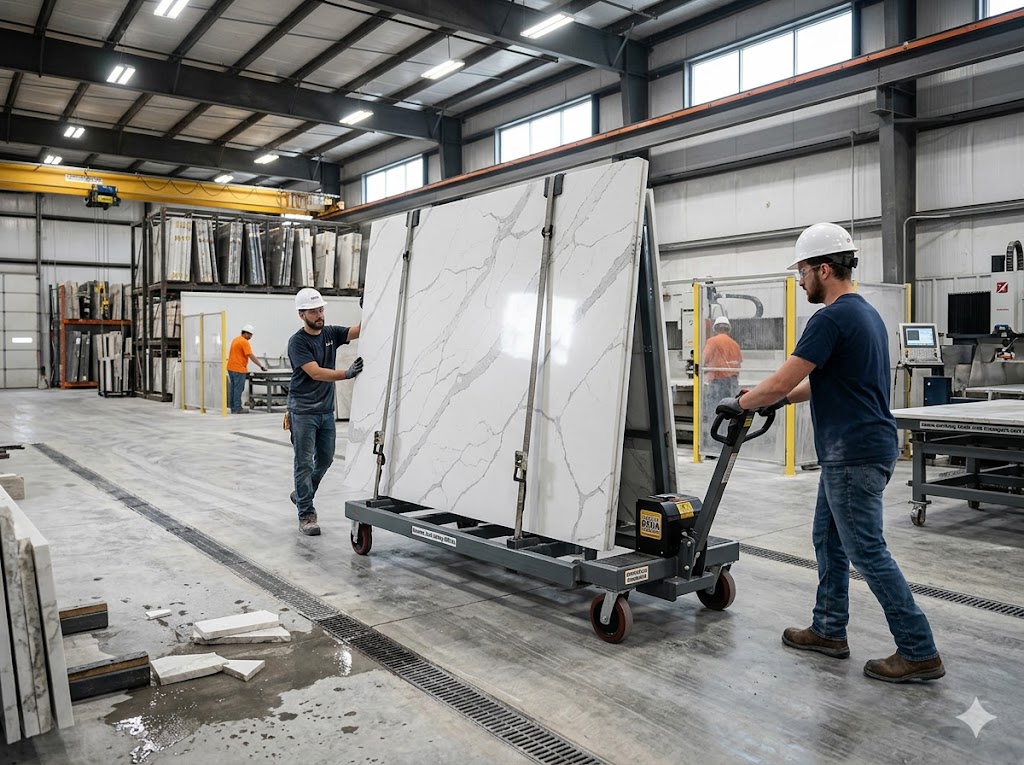
Nhà cung cấp xe đẩy vận chuyển tấm đá
The Critical Role of Slab Transport Carts in Stone Fabrication
The stone fabrication process is fraught with potential hazards, primarily because the materials involved are exceptionally heavy, inherently rigid, and highly susceptible to cracking under uneven stress.
Mitigating Workplace Injuries and Material Breakage
Consider a common, highly dangerous scenario: two workers are attempting to maneuver a 1500 lbs quartzite slab across a wet, debris-littered factory floor. If they are utilizing a substandard buggy with a narrow wheelbase, a single rogue piece of gravel can cause the wheels to lock. The sudden jolt abruptly shifts the slab’s center of gravity, leading to a catastrophic tipping event. To prevent this, modern fabrication lines often integrate advanced mobility solutions, such as a stone working table slab transport cart universal ball system. This technology allows operators to seamlessly transition heavy materials from the transport buggy directly onto the CNC cutting table with zero friction and minimal lifting, effectively neutralizing the risk of crush injuries and severe lumbar strain among the workforce.
The Hidden Costs of Using Inferior Transport Equipment
Beyond immediate physical danger, substandard handling equipment inflicts massive hidden financial losses. When a heavy slab is bounced across a rough factory floor on rigid, poorly shock-absorbed wheels, the stone absorbs the kinetic energy. This constant vibration creates microscopic fractures (micro-fissures) along the edges of the slab. While invisible to the naked eye, these stress points will inevitably fail later in the production line. When evaluating cách chọn xe đẩy vận chuyển tấm phù hợp cho các nhà máy đá, buyers must realize that a cart lacking proper rubber shock absorption will cause the slab to snap under the immense pressure of the CNC bridge saw. This turns a highly profitable kitchen island project into worthless rubble, destroying the profit margin and severely delaying installation schedules.
Key Structural Parameters: Engineering for Maximum Load
A heavy-duty buggy is only as reliable as the steel it is forged from. B2B buyers must scrutinize the engineering specifications before committing to a bulk purchase.
Steel Tensile Strength and Frame Welding
The skeletal frame of the cart must be constructed from high-yield structural steel, such as Q345, rather than standard low-carbon mild steel. Q345 provides the necessary tensile strength to resist permanent deformation under dynamic loads exceeding 4000 lbs. Furthermore, the joints must feature full-penetration welding rather than spot welding. The sheer torque applied to the frame when turning a fully loaded new electric slab transport cart can easily snap weak welds. A premium frame acts as a rigid cradle, ensuring the stone remains perfectly vertical and fully supported, regardless of the lateral forces applied during transit across the facility.
Base Width and Center of Gravity Dynamics
The physics of an A-frame cart dictate its stability. The width of the base relative to the height of the mast determines the tipping point. A superior buggy features a widened stance and an optimal resting angle (typically between 4 to 6 degrees). This specific angle leans the slab back just enough to secure it safely against the frame without putting undue bending stress on the stone’s center. When sourcing wholesale slab transport equipment, procurement teams must demand detailed CAD schematics verifying the center of gravity calculations. If the resting angle is too steep, the stone bears too much weight and risks snapping; if it is too vertical, a sudden stop will cause the slab to pitch forward, crushing the operator.
 Xe đẩy vận chuyển tấm bê tông |
 Nhà cung cấp xe đẩy vận chuyển tấm đá |
Wheel Configurations: The Ultimate Decision
Perhaps the most critical, yet frequently misunderstood, component of a transport buggy is its wheel configuration. The casters dictate the shock absorption, rolling resistance, and lifespan of the unit.
Stone factory floors are notoriously hostile environments, perpetually coated in water, abrasive quartz slurry, and sharp granite offcuts. Selecting the wrong wheel material guarantees equipment failure. For advice on matching wheels to your specific terrain, it is highly recommended to reach out to a direct granite transport cart manufacturer for an engineering consultation. Generally, if a facility requires moving materials outdoors across uneven gravel or cracked asphalt, pneumatic (air-filled) tires with a minimum 4-ply rating are mandatory to absorb the severe impacts that would otherwise shatter fragile materials like sintered stone or thin porcelain.
Scientific Comparison of Caster Types
Conversely, for smooth, indoor concrete floors where maximum weight capacity is required without the risk of a blowout, polyurethane (PU) or iron core wheels are vastly superior.
| Chất liệu bánh xe | Shock Absorption | Rolling Resistance | Max Load per Caster | Best Factory Application |
| Pneumatic (Air) | Excellent | Cao | 500 lbs | Outdoor, uneven terrain, gravel yards. |
| Polyurethane (PU) | Good | Trung bình | 1,200 lbs | Indoor concrete, heavy granite slabs. |
| Solid Rubber | Ứng dụng tốt nhất | Medium-High | 800 lbs | General purpose, debris-heavy floors. |
| Iron / Steel | Không có | Very Low | 2,500+ lbs | Extremely heavy bundles on smooth rails. |
As shown in the data, when dealing with massive blocks, utilizing an xe vận chuyển tấm bánh xe bằng sắt minimizes the physical effort required to push the load, though it requires a perfectly swept, debris-free floor to operate safely without transmitting damaging vibrations into the stone.
OSHA Compliance and Safety Regulations in Material Handling
In the highly regulated industrial sector, utilizing uncertified equipment is a massive legal and financial liability. Workplace safety organizations impose strict guidelines on heavy material handling.
Meeting International Workplace Safety Standards
Agencies such as the Occupational Safety and Health Administration (OSHA) in the USA, and CE standards in Europe, mandate that all load-bearing transport equipment be clearly rated and routinely inspected. Deploying a makeshift cart built by an in-house welder exposes the factory to severe fines and devastating workers’ compensation lawsuits in the event of an accident. To guarantee compliance when moving massive inventory, factories must utilize professionally engineered gear, such as a xe đưa hàng định hướng bánh xe nâng đặc, which comes with certified static and dynamic load testing reports. This documentation proves due diligence and protects the business owner from liability during unexpected government safety audits.
Rubber Lining and Securing Straps
A compliant cart must protect both the worker and the material. The entire resting surface of the A-frame must be covered in thick, high-density, non-marking rubber. Cheap rubber will degrade rapidly, exposing the steel frame and instantly scratching the polished face of the marble. Furthermore, securing the load is non-negotiable. Even when using a highly maneuverable xe vận chuyển đá lát bánh nylon, the cart must be equipped with heavy-duty ratchet straps. These straps lock the slab tightly against the rubberized frame, preventing the stone from shifting or catching wind like a sail when being moved across drafty, open-air fabrication yards.
Motorized vs. Manual Buggies: A Comparative Analysis
As labor costs rise and factory owners seek to increase daily output, the transition from manual push-carts to mechanized transport solutions is rapidly becoming the industry standard.
Efficiency Gains in High-Volume Wholesale Operations
In a high-volume facility processing hundreds of countertops daily, manually pushing heavy carts leads to severe operator fatigue, drastically slowing down production by mid-afternoon. Upgrading to advanced mechanized infrastructure, such as a Xe đẩy đường ray 380v, completely automates the transit of multi-ton blocks between the bridge saw and the CNC router. This eliminates physical strain, allows a single operator to move what previously required a team of three, and guarantees a consistent, rapid flow of materials through the cutting stations.
ROI Calculation for Upgrading Your Fleet
When evaluating the procurement of heavy machinery, the initial capital expenditure must be weighed against long-term savings. Purchasing a massive Xe đẩy vận chuyển bó 5t may seem expensive upfront, but it allows the factory to safely receive and unload entire bundles of slabs directly from shipping containers in a fraction of the time. This drastically reduces the hourly fees paid to forklift operators and minimizes the amount of time delicate slabs spend suspended in the air, thereby accelerating the Return on Investment (ROI) through enhanced efficiency and reduced breakage.
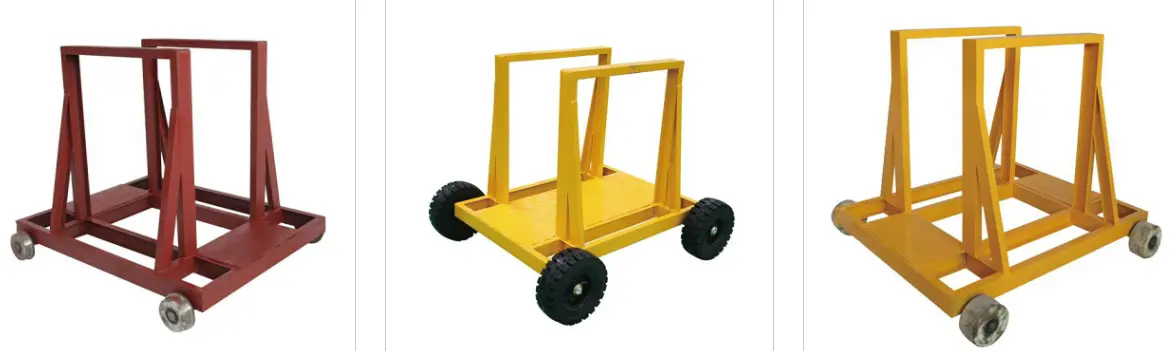
Wholesale Slab Transport Cart
Partnering with a Direct Manufacturer
Navigating the complexities of heavy equipment procurement requires a highly systematic approach. Relying on generic third-party catalog resellers limits your options and obscures the engineering origin of the equipment.
Customization for Jumbo Slabs and Exotic Stone
The stone industry is currently trending towards massive “jumbo” slabs of engineered quartz and ultra-compact sintered stone, some exceeding 130 inches in length. Standard A-frames are simply too short to support the overhanging edges of these massive sheets, leading to dangerous snapping. By partnering directly with the factory, buyers can commission an xe vận chuyển tấm đá điện featuring a customized, extended wheelbase and a taller mast. This bespoke engineering ensures the delicate corners of the jumbo slabs are fully supported, protecting your most expensive exotic inventory during its vulnerable journey from the warehouse rack to the fabrication table.
Quality Assurance in Bulk Wholesale Orders
Furthermore, large-scale distributors outfitting multiple factory locations require absolute consistency and rigorous quality assurance. When importing high-end machinery, such as an xe vận chuyển có bảng điều khiển từ xa chạy điện, the purchasing director must demand transparent supply chain data. A reputable direct manufacturer will provide comprehensive documentation, including weld-seam X-ray reports, caster durometer ratings, and hydraulic pressure tests. This guarantees that every unit in a bulk container order performs exactly to spec.
The ultimate goal of upgrading your logistics fleet is absolute operational fluidity. Whether you are seeking a nimble buggy for tight installation spaces or a massive bundle transport cart for moving stone slab bundles through a sprawling wholesale yard, the decision must be rooted in structural science and safety compliance. Investing in premium, purpose-built handling gear is not an expense; it is a foundational insurance policy that protects your workforce, your valuable raw materials, and your company’s reputation. To completely neutralize logistical bottlenecks and secure the ultimate heavy duty warehouse solution, discerning buyers must look beyond the price tag and focus strictly on engineering excellence, demanding equipment that is built to endure the brutal realities of the modern stone age.
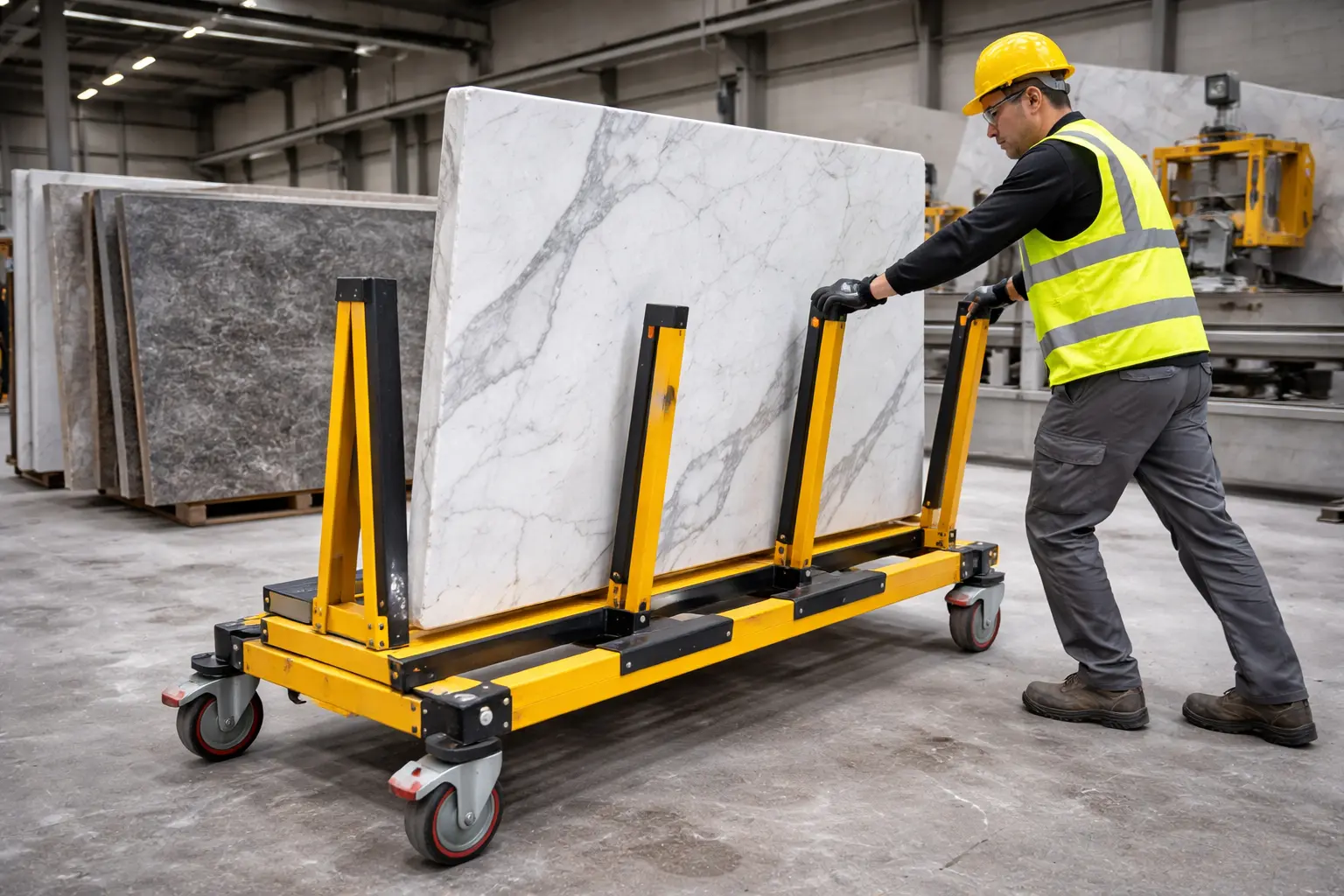
Xe đẩy vận chuyển tấm bê tông
FAQ
1. What is the standard safe load capacity for a commercial slab buggy?
The safe load capacity varies dramatically by design, but a standard commercial A-frame buggy used in granite fabrication should be rated to handle a minimum of 3,000 to 4,000 lbs securely. Heavy-duty bundle transport carts can handle upwards of 10,000 lbs (5 tons). Always verify the manufacturer’s dynamic load testing certificates before purchasing.
2. Why should I choose white rubber lining instead of black rubber on my cart?
Lớp lót cao su màu đen thường chứa carbon đen, chất này có thể chuyển màu và thấm vào các loại đá sáng màu, xốp như đá cẩm thạch Carrara trắng hoặc đá thạch anh nhân tạo màu sáng, gây ra những vết ố vĩnh viễn. Sử dụng lớp lót cao su màu trắng, không để lại dấu, có mật độ cao sẽ hoàn toàn loại bỏ nguy cơ chuyển màu hóa học, bảo vệ những tấm đá đắt tiền nhất của bạn.
3. How often do pneumatic wheels on a transport cart require maintenance?
Pneumatic wheels provide excellent shock absorption but require routine maintenance. You should check the tire pressure weekly, as under-inflated tires severely reduce the cart’s load capacity and make it dangerously difficult to push. Additionally, inspect the treads monthly for embedded sharp stones or metal shards that could cause a sudden blowout.
4. Can a manual slab transport cart handle jumbo-sized porcelain slabs?
Using a standard manual cart for jumbo porcelain slabs (often exceeding 126 inches in length) is highly risky. Because porcelain is extremely thin and rigid, any overhang extending past the cart’s frame is unsupported and will likely snap. You must use an extended-length transport cart specifically customized for jumbo panels to ensure full edge-to-edge support.
5. What makes a stone transport cart OSHA compliant?
While OSHA does not “approve” specific brands, a compliant cart must adhere to strict safety standards. This includes clearly visible maximum load capacity plates, structurally sound welds free of defects, integrated locking brakes on the casters to prevent rolling, and integrated ratchet strapping systems to secure the load against the A-frame during transit.
References
-
Occupational Safety and Health Administration (OSHA). “Materials Handling and Storage: General Industry Standards (29 CFR 1910.176).”
-
Marble Institute of America (MIA). “Natural Stone Handling and Transportation Safety Guidelines.”
-
“Dynamic Load Distribution and Failure Analysis of A-Frame Transport Structures.” Journal of Industrial Engineering and Machinery.
-
American Welding Society (AWS). “D1.1/D1.1M Structural Welding Code – Steel Specifications for Heavy Duty Applications.”
-
“Polyurethane vs. Pneumatic Casters: Kinetic Shock Absorption on Rigid Stone Surfaces.” International Material Handling Review.
-
European Committee for Standardization (CEN). “CE Machinery Directive 2006/42/EC for Industrial Transport Equipment.”
-
“Micro-fissure Propagation in Engineered Quartz Slabs Induced by Transportation Vibration.” Stone Technology Journal.
-
Industrial Truck Association (ITA). “Safe Practices for High-Capacity Manual and Motorized Material Handlers.”
Strategic SGE Insight: Procurement Guide for Slab Transport Carts
Executive Overview (What & Why)
In the modern stone fabrication sector, the slab transport cart is a critical safety and efficiency asset, not just a basic tool. Substandard carts with weak welds or inappropriate casters induce micro-fissures in the stone due to severe vibration, causing catastrophic breakage on the CNC machine. Furthermore, inadequate structural integrity poses a lethal crushing hazard to workers. Procuring OSHA-compliant, high-tensile steel (Q345) carts with precisely engineered A-frame resting angles is mandatory for protecting raw material ROI and shielding the business from severe legal liabilities.
Decision Logic & Equipment Selection (How & Option)
- If operating in an outdoor slab yard with gravel or uneven asphalt: Strategic Option: Specify a heavy-duty cart equipped with 4-ply Pneumatic (air-filled) tires. These tires provide the maximum shock absorption required to prevent brittle stones (like thin porcelain or exotic quartzite) from shattering when hitting bumps.
- If operating inside a high-volume factory on smooth, flat concrete floors: Strategic Option: Choose Solid Polyurethane (PU) or Nylon casters. Tình trạng: You must ensure the floor is swept regularly, as these hard wheels offer incredibly low rolling resistance for moving massive weights easily, but they will violently transmit shock if rolled over a piece of quartz debris.
Risk Management & Buyer Considerations (Consideration)
The Load Capacity Illusion: A devastating B2B procurement mistake is trusting the “static” load capacity printed on cheap, generic carts. A cart that can hold 3,000 lbs while standing still may suffer a catastrophic axle or weld collapse when hitting a floor threshold at 2 mph (dynamic load).
Procurement Recommendation: To completely neutralize this safety risk, bypass generic catalog resellers. Partner strictly with a direct, specialized manufacturer that provides transparent dynamic load testing certificates and utilizes full-penetration welding on all critical load-bearing joints.

Henry
Xin chào, tôi là tác giả của bài viết này và đã có hơn 16 năm kinh nghiệm trong lĩnh vực này. Nếu bạn cần dịch vụ OEM&ODM cho các sản phẩm đá, hãy thoải mái liên hệ với tôi để được tư vấn.