Hoàn thành công việc một cách hiệu quả!





Learn how to choose the right slab rack for different stone sizes. Improve safety, efficiency, and storage with expert tips and industry insights.
Why the Right Storage System Is a Strategic Investment
In the stone industry, storage is not just about stacking slabs—it directly impacts safety, operational efficiency, and long-term profitability. A poorly selected Kệ tấm system can lead to slab tipping, surface scratches, and even catastrophic breakage.
According to industry data, improper storage contributes to 3%–8% material loss annually in stone factories. Considering that a single granite slab can cost hundreds of dollars, the financial impact becomes significant at scale.
For buyers evaluating solutions, exploring a full range of Kệ tấm options from a reliable source like giá đỡ tấm đá is often the first step toward understanding available configurations and load capacities.
Beyond safety, the right rack improves workflow. Forklift access, slab visibility, and handling speed all depend on rack design. A well-optimized system can increase warehouse throughput by 20–35%, especially in high-volume stone distribution environments.

Kệ tấm
Understanding Stone Sizes and Storage Requirements
Different stone materials vary not only in size but also in density and fragility. This makes one-size-fits-all storage impractical.
Standard Industry Dimensions
| Material Type | Average Size (mm) | Thickness | Weight Range |
|---|---|---|---|
| Đá granit | 2800 × 1600 | 18–30 mm | 300–700 kg |
| Đá cẩm thạch | 2600 × 1500 | 16–25 mm | 250–600 kg |
| Quartz | 3200 × 1600 | 20–30 mm | 350–800 kg |
Granite is denser and more impact-resistant, while marble requires more careful handling due to its brittle nature. Quartz slabs are often larger and heavier, requiring reinforced rack structures.
For operations dealing with transportation and handling, understanding systems like granite transportation slab rack becomes critical, especially when slabs move frequently between locations.
Types of Storage Systems for Stone Slabs
Selecting the right configuration depends on space constraints, slab size, and workflow design.
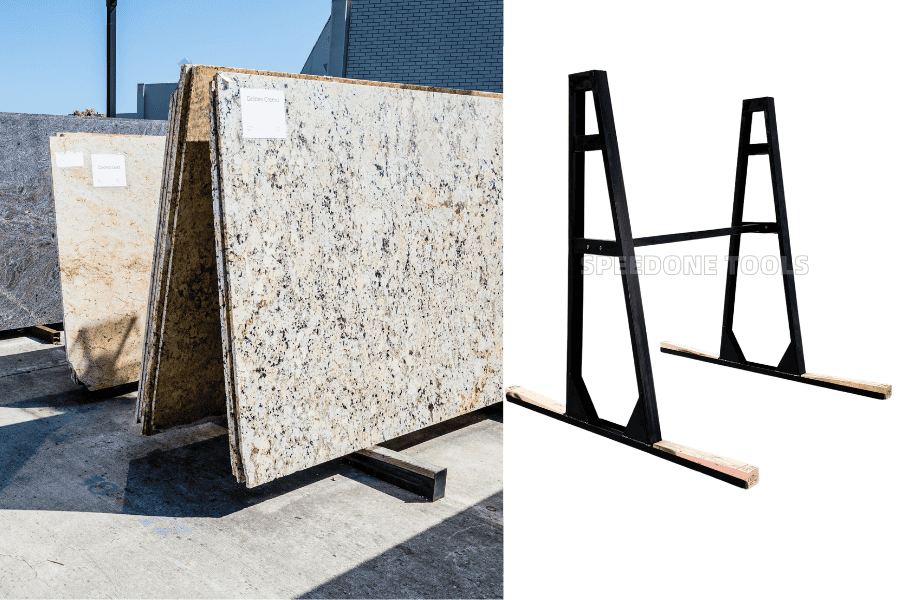
Kệ lưu trữ hình chữ A
A-Frame Systems
A-frame racks are widely used due to their stability and simplicity. They support slabs at a slight angle, reducing tipping risk.
Vertical Rack Systems
Vertical racks are ideal for warehouses aiming to maximize floor space. They allow easy sorting and retrieval, especially for mixed inventory.
Mobile Rack Systems
Mobile racks run on tracks, enabling high-density storage. These systems can increase storage capacity by up to 50% compared to static layouts.
Custom Heavy-Duty Solutions
For oversized slabs, custom systems are often necessary. These solutions are typically sourced from a heavy duty slab rack manufacturer capable of engineering racks with load capacities exceeding 2000 kg per slot.
To better understand efficiency and protection strategies, resources like slab racks for stone storage provide practical insights into optimizing layouts.
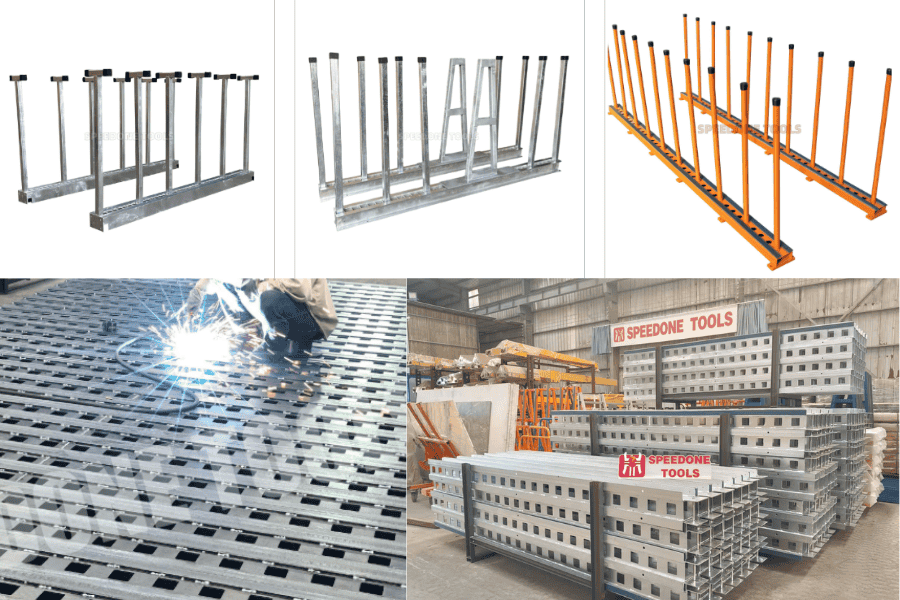
High-quality Slab Rack
Key Factors That Influence the Right Choice
Tải trọng và độ ổn định cấu trúc
The most critical factor is load capacity. Steel thickness, weld quality, and structural design determine how much weight each slot can safely hold.
Rack Dimensions vs Slab Size
Mismatch between slab height and rack dimensions increases tipping risk. Ideally, rack height should be slightly lower than slab height for optimal support.
Material: Steel vs Wood
| Tính năng | Kệ thép | Wooden Rack |
|---|---|---|
| Độ bền | Cao | Trung bình |
| Tải trọng | Very High | Thấp |
| Lifespan | 10+ years | 2–5 years |
| Bảo dưỡng | Thấp | Cao |
Steel racks dominate modern warehouses due to durability and compliance with safety standards.
For a deeper understanding of warehouse-level systems, refer to slab rack systems for stone warehouses which outlines structural considerations and layout planning.
Matching Rack Types to Stone Sizes
Small Slabs (Below 1500 mm)
Lightweight racks or compartmentalized systems work best. These are often used in retail or showroom environments.
Medium Slabs (1500–2500 mm)
Standard A-frame racks provide a balance between cost and stability.
Large Slabs (Above 2500 mm)
Large slabs require reinforced systems with anti-slip surfaces and wider bases. Choosing a custom slab rack for large stone slabs ensures structural safety and long-term durability.
For product-level specifications and options, exploring giá đỡ tấm đá configurations can help buyers compare features and capacities.
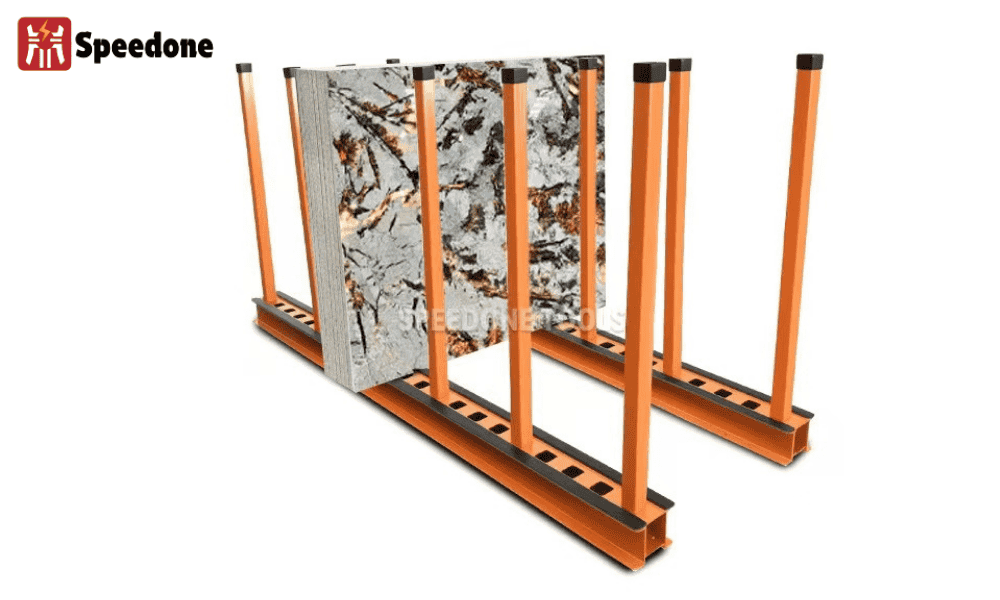
giá trưng bày tấm đá
Real-World Applications and Use Cases
Stone Factories
Factories prioritize durability and high-frequency handling. Heavy-duty racks are essential for continuous operations.
Kho bãi
Warehouses focus on density and organization. Vertical or mobile racks improve storage efficiency.
Distributors
Distributors often manage mixed slab sizes, requiring flexible and modular systems.
When selecting suppliers, evaluating the credibility and experience of companies like slab rack manufacturer ensures better product quality and long-term reliability.
Industry Trends Shaping the Future
Automation and Smart Warehousing
IoT-enabled racks and automated handling systems are becoming increasingly common. These technologies improve tracking accuracy and reduce manual errors.
Sustainability
Eco-friendly coatings and recyclable steel materials are gaining popularity as companies aim to reduce environmental impact.
Customization Demand
More buyers are seeking tailored solutions to match specific workflows.
Efficient layout planning is also becoming a priority, as highlighted in slab rack layouts improve stone warehouse efficiency, where optimized designs significantly enhance productivity.
Common Buyer Mistakes to Avoid
- Choosing based on price alone
- Ignoring future scalability
- Overlooking safety certifications
- Selecting non-standard sizes
Many buyers underestimate the importance of layout design. Reviewing resources like slab rack systems for stone warehouses can help avoid costly mistakes.
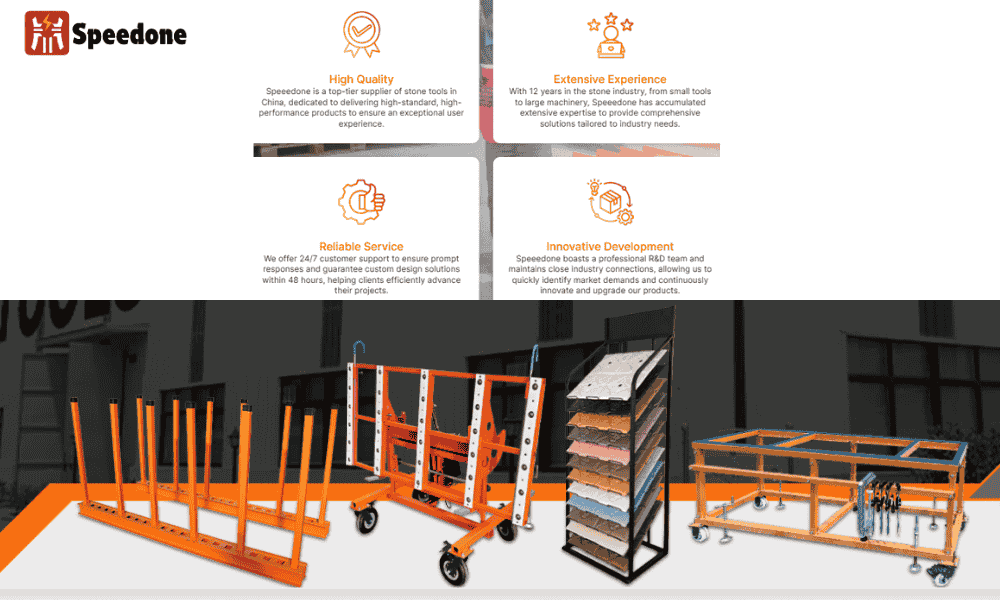
Nhà cung cấp kệ pallet
Final Thoughts: Making a Smart Investment
Choosing the right storage system is not just a technical decision—it’s a strategic investment. The right solution enhances safety, reduces waste, and improves operational efficiency.
If you are evaluating options or need expert guidance, working directly with professionals through slab rack supplier contact can help you find the most suitable solution tailored to your business needs.
FAQ
1. What is the best slab rack for granite slabs?
The best solution depends on slab size and handling frequency. Granite slabs are heavy and dense, so heavy-duty steel A-frame racks with high load capacity (typically over 1500 kg per slot) are recommended. Anti-slip padding and proper tilt angles also improve safety.
2. How much weight can a slab rack hold?
Most industrial slab racks support between 1000 kg and 3000 kg per slot. Custom racks can exceed this depending on design and steel thickness. Always verify load ratings from the manufacturer.
3. Are custom slab racks worth the investment?
Yes, especially for businesses handling large or irregular slabs. Custom racks improve safety, reduce breakage risk, and optimize space utilization, leading to better long-term ROI.
4. What safety standards should slab racks meet?
Slab racks should comply with OSHA safety guidelines, including stability, load testing, and anti-slip features. Proper installation and regular inspection are also essential.
5. How do slab rack layouts improve warehouse efficiency?
Optimized layouts reduce handling time, improve accessibility, and increase storage density. Studies show efficiency gains of up to 35% when layouts are properly designed.
References
- Stone Storage Safety Guidelines – John Smith – Natural Stone Institute
- Warehouse Optimization in Stone Industry – Michael Brown – Logistics Today
- Material Handling Systems – David Clark – Industrial Engineering Journal
- OSHA Warehouse Safety Standards – U.S. Department of Labor
- Granite and Marble Handling Techniques – Lisa Wong – Stone World Magazine
- Storage Systems Engineering – Robert Lee – MIT Industrial Research
- Smart Warehousing Trends – Emily Davis – McKinsey & Company
- Industrial Rack Design Principles – Mark Johnson – Engineering Review
How to choose the right slab rack?
The optimal choice depends on slab size, weight, and handling frequency. Large slabs require reinforced racks, while smaller slabs benefit from flexible storage systems.
Why does slab rack selection impact ROI?
Incorrect storage leads to breakage, inefficiency, and higher labor costs. A well-designed system improves throughput and reduces material loss.
What are the best options available?
Options include A-frame racks, vertical racks, mobile systems, and custom heavy-duty solutions. Each serves different operational needs.
What should buyers consider before purchasing?
Key factors include load capacity, material quality, safety compliance, scalability, and supplier reliability. Ignoring these can lead to costly mistakes.
Market trends and future outlook
The industry is moving toward automation, smart warehousing, and customized solutions. Buyers who invest in adaptable systems gain a long-term competitive advantage.

Henry
Xin chào, tôi là tác giả của bài viết này và đã có hơn 16 năm kinh nghiệm trong lĩnh vực này. Nếu bạn cần dịch vụ OEM&ODM cho các sản phẩm đá, hãy thoải mái liên hệ với tôi để được tư vấn.