Hoàn thành công việc một cách hiệu quả!





Trực tiếp từ nhà sản xuất: Hướng dẫn B2B tìm nguồn cung kệ lưu trữ dạng khung chữ A công nghiệp
Master B2B procurement of A-frame storage racks. Mitigate risks with KD shipping logistics, robotic welding capacity, hot-dip galvanizing, and OSHA standards.
Quick Overview: Strategic A-Frame Procurement
The global material handling industry serves as the invisible backbone of modern architectural development. For warehouse facility managers, commercial stone fabricators, and large-scale glass distributors, the infrastructure utilized to store and transport raw materials is just as critical as the materials themselves. The rapid architectural shift toward massive, ultra-heavy quartz slabs and large-format architectural glass has rendered legacy storage systems entirely obsolete. Standard warehouse shelving simply cannot accommodate the immense weight or fragile nature of these modern materials.
Enter the industrial Kệ lưu trữ hình chữ A. Designed specifically to hold flat, heavy materials at a safe vertical angle, this equipment is an indispensable liability management tool. However, procuring these units directly from a high-capacity manufacturing hub requires navigating significant supply chain risks. For a comprehensive breakdown of the specific metrics required for safe procurement, reviewing a comprehensive buyers manual for A-frame storage rack in 2026 provides the baseline knowledge necessary to avoid costly purchasing errors.

Kệ lưu trữ hình chữ A
Common Misunderstandings in Material Handling Procurement
Before analyzing factory capabilities, B2B buyers must discard outdated industry assumptions. Relying on traditional procurement myths frequently leads to wasted capital and dangerous warehouse environments.
The “Heavier Steel Equals Higher Capacity” Myth
A pervasive misunderstanding is that simply utilizing thicker steel tubing automatically increases the Safe Working Load (SWL) of the rack. In reality, structural failure rarely occurs in the center of a steel beam. Failures occur at the joints. A rack made of exceptionally heavy steel but assembled with poor, shallow welds is far more dangerous than a rack made of standard Q235 steel assembled with deep, flawless robotic welds. Excessively heavy steel only serves to increase your shipping weight and product cost without guaranteeing actual structural safety.
The “One Coating Fits All” Fallacy
Another common error is assuming standard paint or basic powder coating is sufficient for all operational environments. Buyers often experience the painful reality of “rust bleed”—where a poorly coated rack oxidizes, and orange rust drips onto porous, highly expensive white marble slabs, permanently ruining the inventory. Selecting the surface treatment must be a calculated decision based entirely on environmental exposure, not just upfront cost.
Evaluating Factory Capabilities: Robotic Welding vs. Manual
The foundational integrity of any heavy-duty storage unit is dictated by the precision of its welded joints. When evaluating a prospective manufacturing partner, procurement officers must look beyond the blueprint.
The Physics of Load-Bearing Capacity and Safety Risks
Consider the extreme physics involved in stone storage. A standard bundle of natural granite slabs can easily exceed 12,000 pounds. When this mass rests against the inclined vertical supports of an Kệ lưu trữ hình chữ A, the load is transferred directly into the base joints. If a weld contains microscopic porosity (trapped gas bubbles) due to manual human error, the joint will succumb to metal fatigue and shear. A collapsing rack is not just an inventory loss; it is a catastrophic safety liability that can result in severe injuries and denied insurance claims.
Automated Precision vs. Manual Inconsistency
To eliminate the variable of human fatigue, buyers should prioritize sourcing from a technologically advanced industrial material handling equipment factory that integrates 6-axis robotic welding arms. Robotic welding guarantees absolute metallurgical consistency. The computer-controlled arms maintain the exact same travel speed, voltage, and wire feed rate for every single joint. Specifying robotic welded stone racks in your procurement contract is the most effective method for guaranteeing the structural uniformity of your infrastructure.
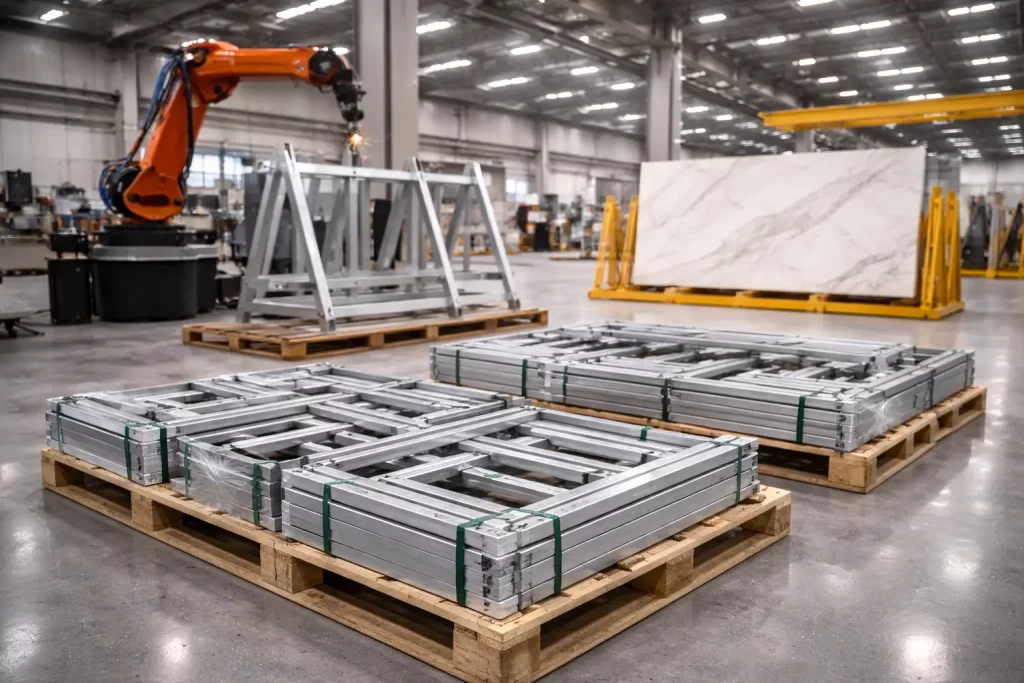
Giá đỡ lưu trữ khung chữ A bán buôn
Surface Treatment: Combating Rust and Inventory Damage
Industrial storage racks operate in some of the most corrosive environments within the manufacturing sector. Mitigating environmental degradation is critical for long-term ROI.
In the stone fabrication industry, processing slabs requires thousands of gallons of water. This creates a constantly wet environment saturated with abrasive stone slurry. Similarly, a heavy-duty A-frame granite transport system is frequently mounted on flatbed trucks, exposing the steel to torrential rain and road salt. Unprotected carbon steel will rapidly oxidize, compromising the structural thickness of the metal.
Hot-Dip Galvanizing vs. Electrostatic Powder Coating
Electrostatic Powder Coating involves spraying electrically charged polymer resins onto the steel frame, then curing it in an oven at 200°C. This creates a highly durable finish ideal for indoor warehouse storage and dry showrooms.
However, for extreme outdoor environments or constantly wet fabrication floors, B2B buyers must partner with a galvanized A-frame supplier China. The raw steel frame is submerged in molten zinc at 450°C, creating a cathodic protection system. Even if the rack is deeply gouged by a forklift, the surrounding zinc will sacrifice itself to prevent the underlying steel from rusting.
Quantitative Material Data
The following scientific data table outlines the performance metrics of various industrial coatings to aid your decision-making logic:
| Xử lý bề mặt | Process Application | Coating Thickness | Salt Spray Resistance (ASTM B117) | Environmental Suitability | Estimated Lifespan (Harsh Environment) |
| Standard Liquid Enamel | Spray application | 40 – 60 microns | 150 – 250 hours | Dry, indoor, low-impact | 1 – 3 years |
| Electrostatic Powder Coat | Thermal curing at 200°C | 80 – 120 microns | 500 – 800 hours | Indoor, moderate humidity | 5 – 10 years |
| Hot-Dip Galvanization | Molten zinc bath (450°C) | 85 – 150 microns | > 2,000 hours | Outdoor, extreme wet | 20+ years |
Customizing Dimensions for Super-Sized Jumbo Slabs
The architectural design industry is evolving, and standard racking systems designed a decade ago are fundamentally incapable of supporting modern inventory without introducing severe risks.
The Rise of Large Format Porcelain and Quartz
Engineered quartz and large-format porcelain manufacturers are now producing “Jumbo” slabs measuring up to 3200mm by 1600mm. Storing these massive sheets on legacy racks causes the top edges to overhang dangerously, leading to structural bowing and catastrophic snapping. Upgrading your facility with wholesale heavy-duty stone racks designed specifically for jumbo slabs is a mandatory operational upgrade.
Engineering Safe Base Widths and Vertical Angles
Procurement teams must source jumbo slab storage solutions with custom-engineered geometry. The resting angle of the vertical uprights must be meticulously calibrated between 5 to 8 degrees off the vertical center. If the angle is too steep, slabs risk tipping forward. If too shallow, the heavy slabs place immense lateral shear stress on the lower inventory, causing stress fractures.
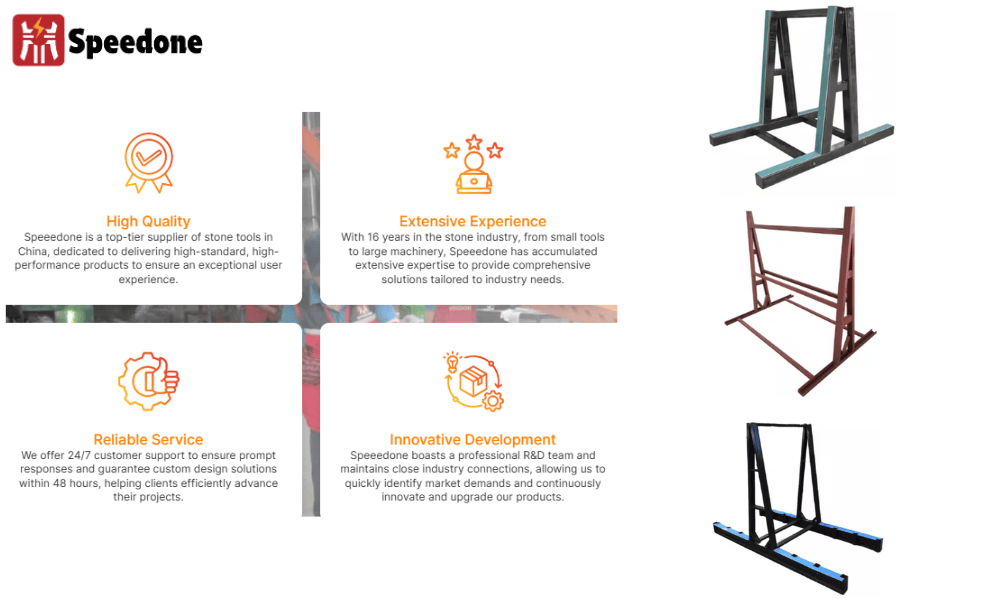
High-quality A-Frame Storage Rack
Packaging Logistics and The Hidden Costs of Import
The financial viability of direct sourcing hinges entirely on international shipping logistics. Ocean freight costs fluctuate wildly, and importing heavy steel structures can destroy profit margins if not managed intelligently.
The Logistics Crisis of Shipping Fully Welded Racks
A fully welded A-frame is essentially a massive triangle of empty space. When loading these into a standard 40-foot High Cube (40HQ) container, buyers are paying thousands of dollars to “ship air.” The container will “cube out” long before it reaches its maximum weight capacity, drastically increasing the landed cost per unit.
The Knock-Down (KD) Structural Advantage & Decision Logic
To solve this pain point, top-tier factories engineer modular systems. Sourcing knock-down steel A-frames wholesale is the ultimate strategy for maximizing container utilization. A Knock-Down (KD) design means the frame is manufactured in discrete components that are flat-packed.
This modular ingenuity is especially beneficial when ordering a complex wholesale custom A-frame stone slab transport A-frame cart with casters, where heavy-duty wheels and structural steel can be separated for optimal packing. Upon arrival, the racks are assembled utilizing high-tensile structural bolts. KD engineering allows suppliers to pack up to 300% more units into a single container, dramatically lowering the landed freight cost per unit.
OSHA Compliance, Risks, and Buyer Recommendations
Importing heavy industrial equipment requires strict adherence to regional safety regulations. Utilizing uncertified, poorly engineered storage racks is a legal liability.
Safe Working Load (SWL) Certifications and Insurance Risks
Procurement contracts must mandate rigorous stress testing to establish the Safe Working Load (SWL) of the products. This ensures the equipment qualifies as OSHA compliant slab storage. In the event of a workplace accident, insurance auditors will demand SWL certifications. If the racks are uncertified, the facility faces devastating financial penalties and denied claims.
Final Strategic Recommendations
When establishing your procurement strategy, adhere to this logical framework:
-
Capacity Validation: Demand robotic welding for all high-capacity frames.
-
Environmental Alignment: Specify hot-dip galvanization for outdoor/wet use, and powder coating for indoor warehouse display.
-
Logistical Optimization: Strictly procure KD (Knock-Down) modular designs to mitigate container freight costs.
-
Asset Protection: Ensure the design includes replaceable rubber or timber bases to prevent the raw steel from chipping the stone inventory.
For businesses looking to upgrade their facility safety, lower their import logistics costs, or discuss specific custom engineering blueprints, we highly encourage you to Liên hệ với chúng tôi directly. By partnering with a technologically transparent manufacturer, you can guarantee both the safety of your workforce and the integrity of your most valuable raw materials.
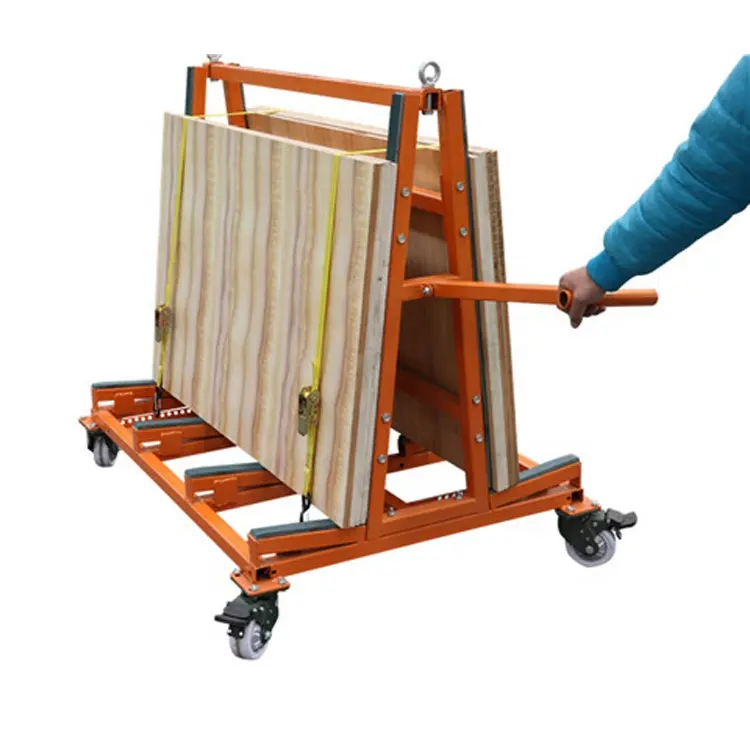
Kệ lưu trữ khung chữ A
FAQ
1. What is the difference between a welded A-frame and a Knock-Down (KD) A-frame?
Khung chữ A hàn kín được chế tạo thành một khối thép nguyên khối, không thể thay đổi, mang lại khả năng sẵn sàng ngay lập tức nhưng lại chiếm rất nhiều thể tích trong quá trình vận chuyển, dẫn đến chi phí vận chuyển cao. Khung chữ A dạng tháo lắp (KD) được thiết kế thành các bộ phận mô-đun và được đóng gói phẳng để dễ dàng vận chuyển. Sau khi giao hàng, khung này sẽ được lắp ráp tại chỗ bằng các bu lông kết cấu có độ bền kéo cao. Các thiết kế KD có khả năng chịu tải tương đương với các mẫu hàn kín, nhưng cho phép người mua xếp vào một container vận chuyển tiêu chuẩn số lượng đơn vị gấp tới ba lần.
2. Why is robotic welding preferred for heavy-duty storage racks?
Hàn robot được ưa chuộng vì nó loại bỏ yếu tố mệt mỏi của con người trong sản xuất hàng loạt. Các cánh tay hàn robot điều khiển bằng máy tính với 6 trục duy trì chính xác cùng tốc độ di chuyển, điện áp và lưu lượng dây hàn trên mọi mối nối ở mỗi khung giá. Điều này đảm bảo mối hàn thâm nhập đồng đều, sâu sắc và loại bỏ các lỗ rỗ vi mô, giúp mỗi khung giá trong đơn hàng số lượng lớn đều giữ được độ bền cấu trúc và khả năng chịu tải giống hệt nhau dưới những áp lực cực đoan.
3. Should I choose powder coating or hot-dip galvanization for my racks?
Lựa chọn hoàn toàn phụ thuộc vào môi trường vận hành của bạn. Nếu các kệ sẽ được sử dụng ngoài trời (chịu mưa và muối đường trên xe tải vận chuyển) hoặc trong các khu vực chế tác đá ẩm ướt, nơi phải tiếp xúc với hỗn hợp chất mài mòn, thì việc mạ kẽm nhúng nóng là bắt buộc. Bể kẽm nóng chảy cung cấp khả năng bảo vệ chống gỉ cực kỳ hiệu quả về mặt catốt, ngăn chặn tình trạng gỉ sét lan sang hàng tồn kho của bạn. Nếu các kệ chỉ dùng để lưu trữ trong nhà kho khô ráo, thì lớp sơn tĩnh điện sẽ mang lại độ bền cao, tính thẩm mỹ chuyên nghiệp với mức giá tiết kiệm hơn.
4. What is the ideal resting angle for a stone storage A-frame?
Góc nghỉ lý tưởng cho các cột dọc trên khung chữ A công nghiệp được thiết kế nằm trong khoảng từ 5 đến 8 độ lệch so với trung tâm thẳng đứng tuyệt đối. Nếu góc này quá dốc, các tấm đá sẽ đặt theo phương thẳng đứng quá mức và có nguy cơ đổ về phía trước khi được lấy bằng xe nâng. Nếu góc này quá nông, các tấm đá nặng sẽ ngả ra sau một cách quá mạnh, gây áp lực cắt ngang cực lớn lên các viên đá ở phía sau chồng, điều này có thể dẫn đến gãy nứt do căng thẳng trong kho hàng.
5. How do I ensure my imported storage racks meet OSHA safety standards?
Để đảm bảo tuân thủ các tiêu chuẩn an toàn của OSHA và quốc tế trong kho bãi, bạn phải yêu cầu nhà sản xuất cung cấp chứng nhận về Tải trọng Làm việc An toàn (SWL). Các nhà máy uy tín tiến hành thử nghiệm thực tế độ chịu lực trên các giá kệ mẫu, tải chúng vượt xa mức công bố để xác minh tỷ lệ biến dạng của thép cũng như điểm phá hủy cuối cùng. Ngoài ra, hãy kiểm tra xem các giá kệ có tích hợp các tính năng an toàn như vòng đai buộc cố định, chốt khóa an toàn, và đế gỗ hoặc cao su bảo vệ hay không.
References:
-
“Structural Analysis of High-Yield Carbon Steel in Material Handling.” Journal of Industrial Engineering.
-
“Robotic Welding Precision and Porosity Reduction in Mass Manufacturing.” International Institute of Welding Technologies.
-
“Cathodic Protection: The Chemistry of Hot-Dip Galvanization in Corrosive Environments.” Corrosion Science Quarterly.
-
“OSHA Standard 1910.176: Handling Materials – General Guidelines.” Occupational Safety and Health Administration.
-
“Load Distribution and Center of Gravity Engineering in A-Frame Structures.” Structural Engineering Journal.
-
“Optimizing Maritime Logistics: CBM Reduction via Modular KD Architecture.” Global Supply Chain Review.
-
“Electrostatic Powder Coating Thickness and Salt Spray Resistance.” Materials Performance Analytics.
-
“Safe Working Load (SWL) Calculation Methodologies for Heavy-Duty Racking.” American Society of Mechanical Engineers (ASME).
Strategic Procurement Logic (Why & What): Sourcing industrial material handling equipment direct from China is fundamentally driven by the need to secure high-capacity infrastructure while minimizing logistical overhead. B2B buyers can eliminate critical supply chain pain points by explicitly mandating robotic welding for joint consistency, specifying hot-dip galvanization to prevent rust in wet-fabrication environments, and dictating custom 5-8 degree geometric resting angles to safely support the modern era of oversized jumbo slabs.
Key Sourcing Options & Operational Considerations
- Fully Welded vs. Knock-Down (KD) Designs (Option)
Logistical Impact: Procurement teams must rigorously evaluate maritime shipping costs. Fully welded A-frames cause shipping containers to “cube out” rapidly, drastically increasing the landed freight cost. KD (Knock-Down) designs utilize high-tensile structural bolts, allowing racks to be flat-packed. This modular engineering optimizes container volume by up to 300%, making it the economically superior choice for bulk international import. - Galvanization vs. Powder Coating (Consideration)
Risk Mitigation: Racks utilized for outdoor glass transport or wet stone fabrication must be hot-dip galvanized to provide cathodic protection against severe rust, preventing oxidized water from ruining porous stone inventory. Conversely, racks operating strictly in dry, indoor warehouse environments should utilize electrostatic powder coating for a durable, cost-effective, and highly professional aesthetic finish.

Henry
Xin chào, tôi là tác giả của bài viết này và đã có hơn 16 năm kinh nghiệm trong lĩnh vực này. Nếu bạn cần dịch vụ OEM&ODM cho các sản phẩm đá, hãy thoải mái liên hệ với tôi để được tư vấn.