أنجز عملك بكفاءة!





See how a Slab Rack system improved stone warehouse storage efficiency by 40%, reducing retrieval time, handling risk, space waste, and slab damage.
ملخص سريع: A Slab Rack system can improve stone warehouse storage efficiency by reorganizing slab placement, reducing wasted aisles, improving retrieval speed, and lowering handling risk. In this case study, a stone warehouse increased usable storage capacity by 40% through better slab rack layout planning, rack bay labeling, forklift route optimization, and safer slab handling procedures.
Many stone companies believe they need a bigger warehouse when the real problem is poor slab organization. Marble, granite, quartz, porcelain, and sintered stone slabs are large, heavy, fragile, and difficult to move repeatedly. When slabs are stored without a clear system, workers spend too much time searching, forklifts make unnecessary movements, customers cannot view materials efficiently, and the risk of edge damage increases with every extra handling step.
This case study explains how a mid-sized stone distributor improved storage efficiency by 40% after upgrading to a structured حامل الألواح system. The result did not come from simply buying more racks. It came from redesigning the warehouse layout around workflow, inventory visibility, forklift movement, customer viewing, and safe slab access. In other words, the warehouse stopped playing stone-slab Tetris and started working like a planned storage system.
The goal of this article is to help stone fabricators, marble wholesalers, granite distributors, quartz slab suppliers, and warehouse managers understand how a professional slab rack system can improve space utilization, retrieval speed, safety, and overall storage performance.
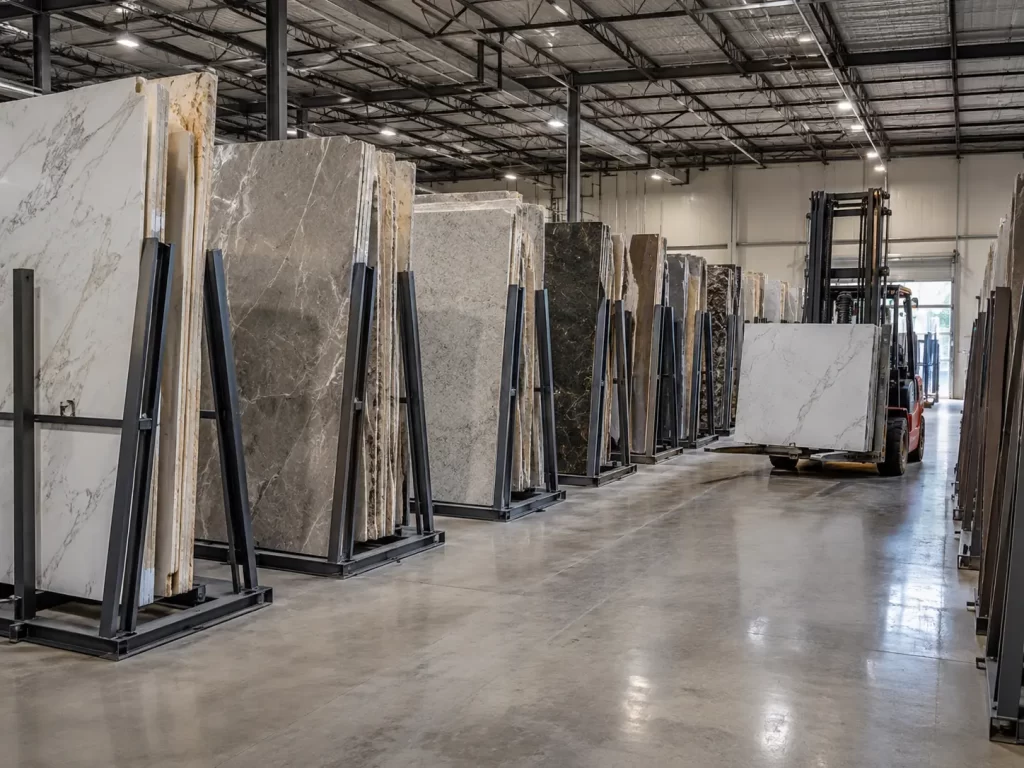
أرفف ألواح بالجملة
Client Background
A Mid-Sized Stone Distributor With Growing Inventory Pressure
The client in this case study was a mid-sized stone distributor supplying marble, granite, quartz, and sintered stone slabs to countertop fabricators, contractors, interior designers, and local construction companies. The warehouse covered approximately 1,300 square meters and stored around 800 slabs before the upgrade. Inventory had grown quickly, but the storage layout had not been redesigned to match the new volume.
The company did not have a serious shortage of total floor area. The real problem was that too much space was being used inefficiently. Some aisles were too wide, while other areas were too narrow for comfortable forklift movement. Fast-moving slabs were blocked by slow-moving inventory. Materials were grouped inconsistently. Workers often relied on memory rather than location codes.
Before the upgrade, management reviewed equipment options and supplier experience. Understanding the background of a slab rack manufacturer was important because the client needed more than steel racks; they needed layout thinking, material handling knowledge, and a practical storage improvement plan.
| Before Upgrade Metric | Estimated Situation | Operational Impact |
|---|---|---|
| Usable slab storage area | Around 60–65% of available zone | Space was not fully utilized |
| Average slab retrieval time | 12–18 minutes per slab | Slower order preparation |
| Forklift movement frequency | عالية | More handling risk |
| Customer viewing efficiency | منخفضة | Sales process slowed down |
Problem
Poor Storage Layout Was Reducing Warehouse Efficiency
The warehouse was not short of stone inventory. It was short of organized, usable, safe, and searchable storage space. Workers often had to move several slabs just to reach one selected piece. This increased labor time, forklift traffic, slab handling frequency, and the chance of edge damage.
The biggest hidden cost was retrieval time. If a worker spends 15 minutes finding and pulling one slab, and the warehouse retrieves 20 slabs per day, the team loses 300 minutes daily just on material access. That is five labor hours per day before considering customer waiting time, forklift fuel, handling risk, and delayed order preparation.
Safety Risks From Uncontrolled Slab Movement
Stone slabs are heavy and unstable when stored incorrectly. Poor support, overloaded leaning areas, unclear forklift routes, and random slab placement can increase the risk of shifting, sliding, tipping, or collision. In slab handling, safety cannot rely only on worker experience. The storage system must reduce risk by design.
The client needed a stronger stone slab storage solution with clear rack spacing, load support, organized access, and a better warehouse flow. Their team reviewed practical design ideas from a complete guide to Slab Rack systems for stone warehouses before finalizing the upgrade strategy.
Inventory Visibility Was Hurting Sales
Storage inefficiency also affected sales. Customers visiting the warehouse could not view slabs easily. Sales staff needed more time to locate specific materials. Popular slabs were sometimes hidden behind less active inventory. When customer viewing becomes slow, decision-making slows down too.
The team realized that slab storage was not only an operations problem. It was also a sales problem. A better layout could improve retrieval speed, warehouse safety, customer viewing, inventory accuracy, and order confidence at the same time.
الحل
Designing a Slab Rack Layout Based on Workflow
The solution started with a warehouse audit. The team measured floor space, forklift routes, slab sizes, material categories, movement frequency, and loading areas. Instead of placing racks randomly, they divided the warehouse into functional zones: fast-moving slabs, slow-moving inventory, customer viewing area, new arrival staging, outgoing order staging, and heavy material storage.
Fast-moving slabs were moved closer to loading and viewing areas. Slow-moving materials were placed in deeper storage zones. Rack bays were numbered clearly. Inventory records were updated with rack codes. The goal was to make every slab easier to find, safer to access, and faster to retrieve.
Choosing the Right Rack Types
The client used a combination of A-frame slab racks, vertical storage racks, and heavy-duty slab storage units. A-frame racks were used for staging and frequently accessed materials. Vertical rack zones were used for better category separation. Heavy-duty racks were selected for thicker stone, porcelain panels, and heavier slab groups.
For mobile storage and transportation needs, some companies may also evaluate a رف تخزين الألواح المستخدم في الشاحنة when slabs must be moved safely between warehouse, job site, or distribution points. In this case study, the main focus was indoor warehouse efficiency, but the same logic applied: the storage system must match the real handling workflow.
| Storage Need | Recommended Rack Type | Key Benefit | Buyer Warning |
|---|---|---|---|
| General slab storage | A-frame slab rack | Stable leaning support | Load must be balanced |
| High-density organization | Vertical slab rack | Better category separation | Requires aisle planning |
| Heavy slabs or panels | Heavy-duty slab rack | Higher load capacity | Rated load must be confirmed |
| Customer viewing | Display-friendly rack zone | Improves sales visibility | Not ideal for all bulk storage |
Implementation Steps
The upgrade followed a clear process: audit the warehouse, group inventory by category, measure forklift movement, select rack types by zone, install racks, label rack bays, update inventory records, train workers, and review results after implementation. This step-by-step method prevented the warehouse from becoming “new racks, same old chaos.”
For heavy panels and porcelain slab storage, the team also considered solutions similar to heavy-duty porcelain storage rack systems because porcelain and sintered stone panels often require surface protection, careful spacing, and controlled support to reduce panel collision and edge damage.
| Implementation Step | Main Task | Expected Benefit |
|---|---|---|
| Warehouse audit | Measure space and workflow | Identify hidden waste |
| Inventory grouping | Separate material types and fast movers | Faster search |
| Rack layout planning | Match rack type to zone | Higher storage density |
| Labeling system | Rack bay and material code | Better inventory control |
| Worker training | Safe loading and retrieval | Lower handling risk |
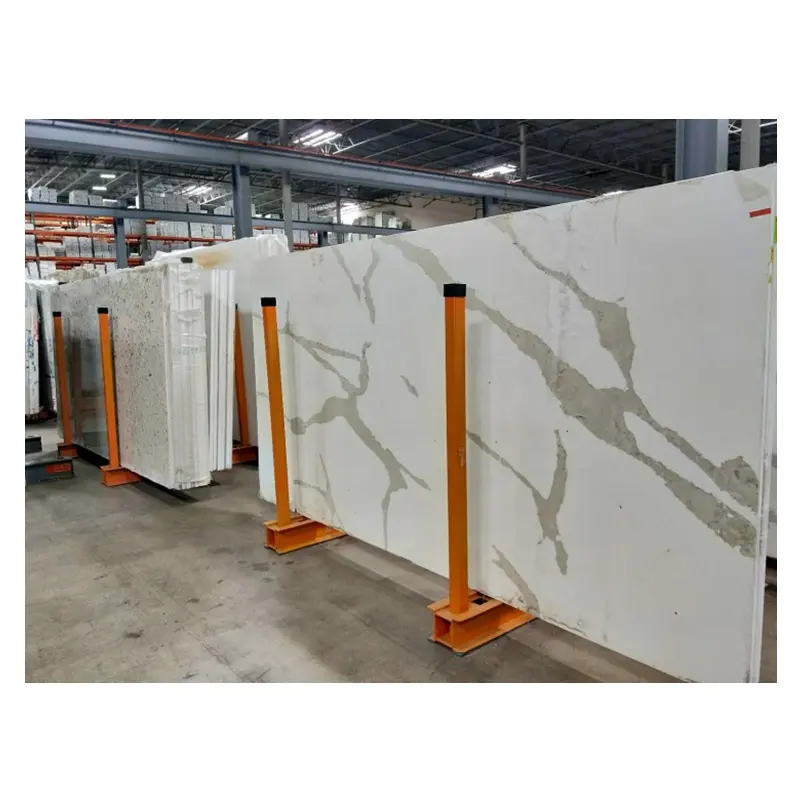
رفوف تخزين الألواح
Results
Storage Efficiency Improved by 40%
The 40% improvement came from better space utilization, not from squeezing slabs into unsafe positions. The warehouse increased usable capacity by combining vertical organization, clearer rack zones, reduced wasted aisles, and improved material grouping. Before the upgrade, the warehouse could store around 800 slabs in a controlled way. After the upgrade, it stored approximately 1,120 slabs within the same general storage area.
Retrieval time also improved. Average slab retrieval dropped from about 15 minutes to around 9 minutes. Forklift movements per retrieval decreased from roughly five movements to three. Inventory location accuracy improved because workers could search by rack bay rather than memory.
| Performance Metric | Before Slab Rack Upgrade | After Slab Rack Upgrade | التحسينات |
|---|---|---|---|
| Storage capacity | 800 slabs | 1,120 slabs | +40% |
| Average retrieval time | 15 minutes | 9 minutes | -40% |
| Forklift movements | 5 per retrieval | 3 per retrieval | -40% |
| Inventory location accuracy | 70% | 92% | +22 points |
| Customer viewing speed | Slow | Faster | Improved sales experience |
Reduced Handling and Better Safety Workflow
The new rack layout reduced unnecessary slab movement. Workers no longer needed to move several unrelated slabs to reach one selected material. Clear rack coding made slab location easier. Better aisle planning reduced forklift congestion. Fast-moving materials were placed near loading and customer viewing zones.
Reduced handling also lowered damage risk. Stone slabs are most vulnerable during movement, not while sitting safely in a properly designed rack. Every avoided movement reduces the chance of chipped corners, scratched polished faces, broken edges, and forklift contact.
Hidden Labor Savings
The labor savings were easy to calculate. If the warehouse handled 20 slab retrievals per day and saved 6 minutes per retrieval, the daily time saving reached 120 minutes. Across 22 working days, that equaled 2,640 minutes, or 44 labor hours per month. That is time the team could redirect to loading, customer support, inventory updates, and quality checks.
Slab Rack vs Traditional Leaning Storage
Traditional leaning storage may look simple, but it often creates hidden costs. It depends heavily on worker habits, creates inconsistent access, increases handling frequency, and makes inventory harder to manage. A slab rack system provides more structured support, clearer slab access, better visibility, and easier expansion.
| Factor | Traditional Leaning Storage | Slab Rack System |
|---|---|---|
| استخدام المساحة | Inconsistent | Higher and more controlled |
| Slab Access | Often blocked | More organized |
| التحكم في السلامة | Depends on worker habit | Better structured |
| Inventory Visibility | منخفضة | Higher |
| Breakage Risk | Higher from repeated movement | Reduced handling |
Common Mistakes When Buying Slab Racks
Buying Based Only on Price
Cheap racks may lack load capacity, base stability, weld quality, surface treatment, and long-term durability. A lower rack price is not a saving if it increases safety risk or fails under real warehouse loads.
Ignoring Slab Size and Weight
Granite, marble, quartz, porcelain, and sintered stone vary in weight, thickness, size, and fragility. Rack design should match actual slab dimensions and handling conditions.
Forgetting Forklift Aisle Width
A strong rack is not useful if forklifts cannot move safely around it. Aisle planning must be included before installation.
Mixing Fast-Moving and Slow-Moving Inventory
Popular slabs should be easier to access. Slow-moving inventory should not block daily operation. Storage layout should follow sales and retrieval frequency.
Not Training Workers
Even a good slab rack system needs correct loading, unloading, balancing, inspection, and forklift handling procedures. Equipment improves safety only when people use it correctly.
 حامل الألواح |
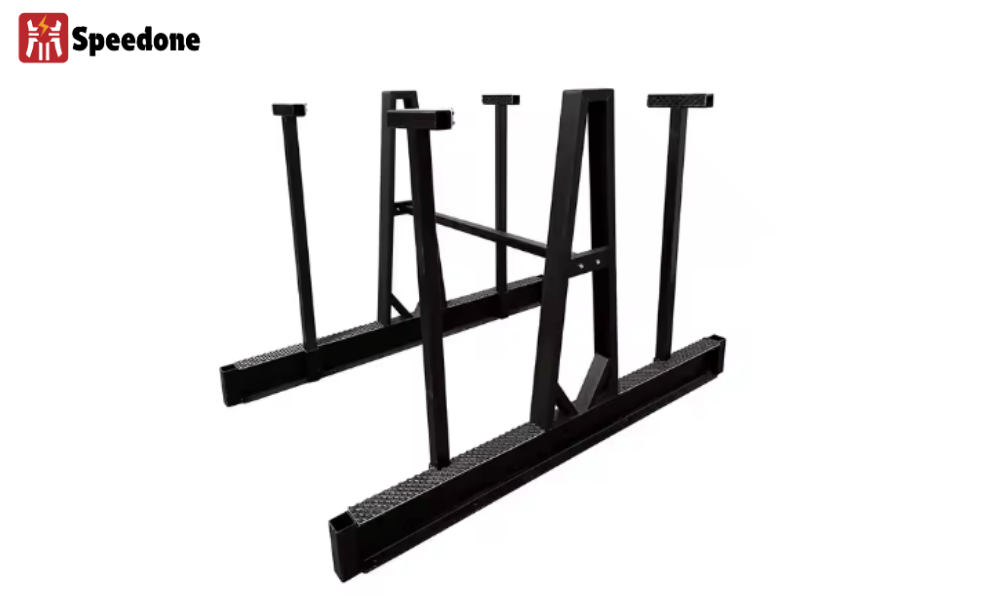 رف عرض الألواح |
How to Choose a Slab Rack Manufacturer or Supplier
What a Reliable Supplier Should Provide
A reliable supplier should provide load rating, steel specification, rack dimensions, surface treatment details, welding quality, layout support, customization options, installation guidance, safety notes, packing details, export experience, spare parts availability, and after-sales support.
For buyers who need custom rack sizes, warehouse layout support, or project-specific equipment recommendations, contacting a professional مورد رفوف الألواح early can help avoid buying racks that look acceptable on paper but fail to fit the real warehouse workflow.
| Evaluation Factor | الوزن | What to Check |
|---|---|---|
| سعة الحمولة | 25% | Rated weight, rack design, steel strength |
| Layout Support | 20% | Warehouse planning and aisle recommendations |
| Safety Design | 20% | Anti-slip, stability, support pins, anchoring |
| Manufacturing Quality | 15% | Welding, surface treatment, durability |
| التخصيص | 10% | Size, color, pin layout, rack type |
Practical Recommendation: Which Slab Rack Should You Choose?
For stone distributors, choose high-density storage racks with clear material grouping and customer viewing zones. For countertop fabricators, choose racks that support fast slab retrieval, safe handling, and easy access to project materials. For marble and granite warehouses, choose heavy-duty slab racks with strong load ratings and stable leaning support. For quartz and sintered stone suppliers, prioritize surface protection, careful spacing, and reduced panel collision risk.
The best Slab Rack system is not simply the strongest rack or the cheapest rack. It is the system that matches your warehouse layout, slab size, forklift movement, inventory category, customer viewing process, and future expansion plan.
Final Case Study Insight: Storage Efficiency Comes From Layout Discipline
This case study shows that a Slab Rack system can improve more than storage capacity. It can reduce retrieval time, lower handling frequency, improve inventory accuracy, support safer warehouse movement, and make customer viewing easier. The 40% storage improvement came from a better system, not a bigger building.
For stone companies, the key lesson is direct: do not rush to rent more space before fixing the layout you already have. A well-planned slab rack system may unlock hidden capacity inside the same warehouse. And hidden capacity is the nicest kind of warehouse expansion—it does not ask for more rent.
الأسئلة الشائعة
1. ما هو الغرض من استخدام رف الألواح؟
يُستخدم رف الألواح لتخزين ألواح الرخام والجرانيت والكوارتز والخزف والحجارة المتكلسة وغيرها من ألواح الحجارة الكبيرة بشكل آمن وفعال في المستودعات وساحات الألواح ومحلات التصنيع. وهو يساعد على ترتيب الألواح عموديًا أو بزاوية ميل متحكم بها، ويحسّن إمكانية الوصول إلى المواد، ويقلل من التكديس العشوائي، ويدعم الاستخدام الأمثل لمساحة المستودع. بالنسبة لموزعي وصناع الحجارة، فإن رف الألواح يسهّل أيضًا مشاهدة المخزون وتحديد مواقعه واسترجاعه.
2. كم من المساحة يمكن أن يوفرها رف الألواح؟
تعتمد كمية المساحة المحفوظة بواسطة رفوف الألواح على تخطيط المستودع وحجم الألواح وتخطيط الممرات ونوع الرفوف وتنظيم المخزون. في دراسة الحالة هذه، تمكّن المستودع من تحسين سعته التخزينية القابلة للاستخدام بنسبة 401 طن متري بعد إعادة تصميم التخطيط باستخدام رفوف الألواح ووضع علامات على ممرات الرفوف وتحسين تقسيم المواد. جاء التحسين من خلال تقليل المساحة الأرضية المهدرة، وتنظيم الألواح حسب فئاتها، وتحسين طرق الوصول، بدلاً من مجرد تكدس المزيد من الألواح في نفس المنطقة فقط.
3. هل رفوف الألواح ذات الإطار على شكل حرف A آمنة؟
يمكن أن تكون رفوف الألواح ذات الإطار على شكل A آمنة إذا تم تصميمها بشكل مناسب، وتم تحديد حمولتها بشكل دقيق، وتم تحقيق التوازن فيها، وتم تركيبها وفحصها واستخدامها وفقًا لإجراءات المناولة الصحيحة. ينبغي على المشترين التأكد من سعة تحميل الرفوف، وجودة الفولاذ، واستقرار القاعدة، وزاوية الدعم، وحماية السطح، والتوافق مع عمليات تشغيل الرافعات الشوكية أو الرافعات. كما أن تدريب العمال أمر مهم جدًا، لأن حتى نظام الرفوف القوي قد يصبح غير آمن إذا تم تحميل الألواح فوق طاقتها أو إذا كانت غير متوازنة أو تم التعامل معها بقلة اهتمام.
4. كيف تقلل رفوف الألواح من كسر الألواح؟
تقلل رفوف الألواح من الكسر عن طريق تحسين الدعم، وتقليل حركة الألواح غير الضرورية، وخلق مسارات وصول أكثر وضوحًا، وتقليل احتمال حدوث تصادم أثناء الاسترجاع. عندما يتم تخزين الألواح بشكل عشوائي، قد يضطر العمال إلى تحريك عدة قطع للوصول إلى لوح واحد مختار، مما يزيد من خطر تعرض الزوايا للتشقق أو الحواف للتصدع أو حدوث خدوش على السطح. يساعد التخطيط الجيد لوضع رفوف الألواح العمال في العثور على المادة الصحيحة واسترجاعها بخطوات أقل في المناولة.
5. ما الذي يجب عليّ التحقق منه قبل شراء رف الألواح؟
قبل شراء رفّ الألواح، تحقق من سعة التحميل المقدرة، ومواصفات الفولاذ، وجودة اللحام، واستقرار القاعدة، وأبعاد الرف، وتوافق حجم الألواح، ومعالجة السطح، والحماية ضد الانزلاق، وهيكل الدعم، وعرض ممرات الرافعات الشوكية، ومتطلبات التركيب، ودعم المورّد. كما ينبغي على المشترين أن يأخذوا في الاعتبار ما إذا كان تصميم الرف يدعم المخزون سريع الحركة، ورؤية العملاء، والمنتجات الجديدة، والطلبيات الصادرة، والتوسع المستقبلي للمستودع. يجب أن يتناسب رف الألواح المناسب مع سير العمل الفعلي، وليس فقط مع المساحة الأرضية المتاحة.
المراجع
1. Hazards of Transporting, Unloading, Storing and Handling Granite, Marble and Stone Slabs, Occupational Safety and Health Administration, Safety and Health Information Bulletin.
2. Material Handling and Storage, Occupational Safety and Health Administration, Workplace Safety Guidance.
3. Warehouse Planning and Design: A Practical Guide, Edward Frazelle, Logistics Resources International.
4. Warehouse Management: A Complete Guide to Improving Efficiency and Minimizing Costs, Gwynne Richards, Kogan Page.
5. Material Handling Equipment, Michael G. Kay, North Carolina State University, Industrial Engineering Reference.
6. Ergonomic Guidelines for Manual Material Handling, National Institute for Occupational Safety and Health, Workplace Ergonomics Publication.
7. Dimension Stone Design Manual, Natural Stone Institute, Natural Stone Technical Reference.
8. Forklift Safety Guide, Washington State Department of Labor & Industries, Industrial Safety Publication.
Strategic Insight: How Buyers Should Evaluate Slab Rack Systems
What problem does a Slab Rack solve?
A Slab Rack helps stone warehouses store marble, granite, quartz, porcelain, and sintered stone slabs more safely and efficiently. It reduces random leaning, improves slab access, increases storage density, and supports clearer inventory management.
Why did storage efficiency improve by 40%?
The improvement came from better vertical organization, reduced wasted aisles, clearer material grouping, rack bay labeling, and faster retrieval routes. The warehouse stored more slabs in the same area without simply overcrowding the floor.
How does a Slab Rack reduce hidden costs?
Better slab access reduces retrieval time, forklift movements, worker fatigue, and unnecessary slab handling. Fewer movements also reduce the chance of edge damage, surface scratches, and broken corners.
What should buyers check before ordering?
Buyers should check load rating, steel quality, welding strength, rack dimensions, base stability, slab size compatibility, forklift aisle width, surface protection, installation guidance, and supplier customization support.
Buyer consideration: A reliable slab rack system should be planned around real workflow, not only storage capacity. For distributors, fabricators, and stone warehouses, the best rack layout improves space use, safety, inventory visibility, and customer viewing at the same time.

هنري
مرحبًا، أنا كاتب هذا المنشور، وأنا أعمل في هذا المجال منذ أكثر من 16 عامًا. إذا كنت بحاجة إلى خدمة تصنيع المعدات الأصلية وتصنيع التصميم الشخصي للأدوات الحجرية، فلا تتردد في طرح أي أسئلة عليّ.