أنجز عملك بكفاءة!





What Is a Slab Display Rack?
A رف عرض الألواح is a purpose-designed structure used to present stone slabs or samples in showrooms, stone shops, distribution centers, design centers, and other customer-facing environments. Unlike a bulk storage rack, its primary purpose is not simply to store as many slabs as possible. It is designed to make stone easier to view, compare, access, and select.
For granite, marble, quartz, porcelain, and sintered stone suppliers, presentation can directly influence the buying experience. A well-planned display rack helps customers see color, veining, surface finish, pattern variation, and material differences without requiring staff to repeatedly move unrelated slabs.
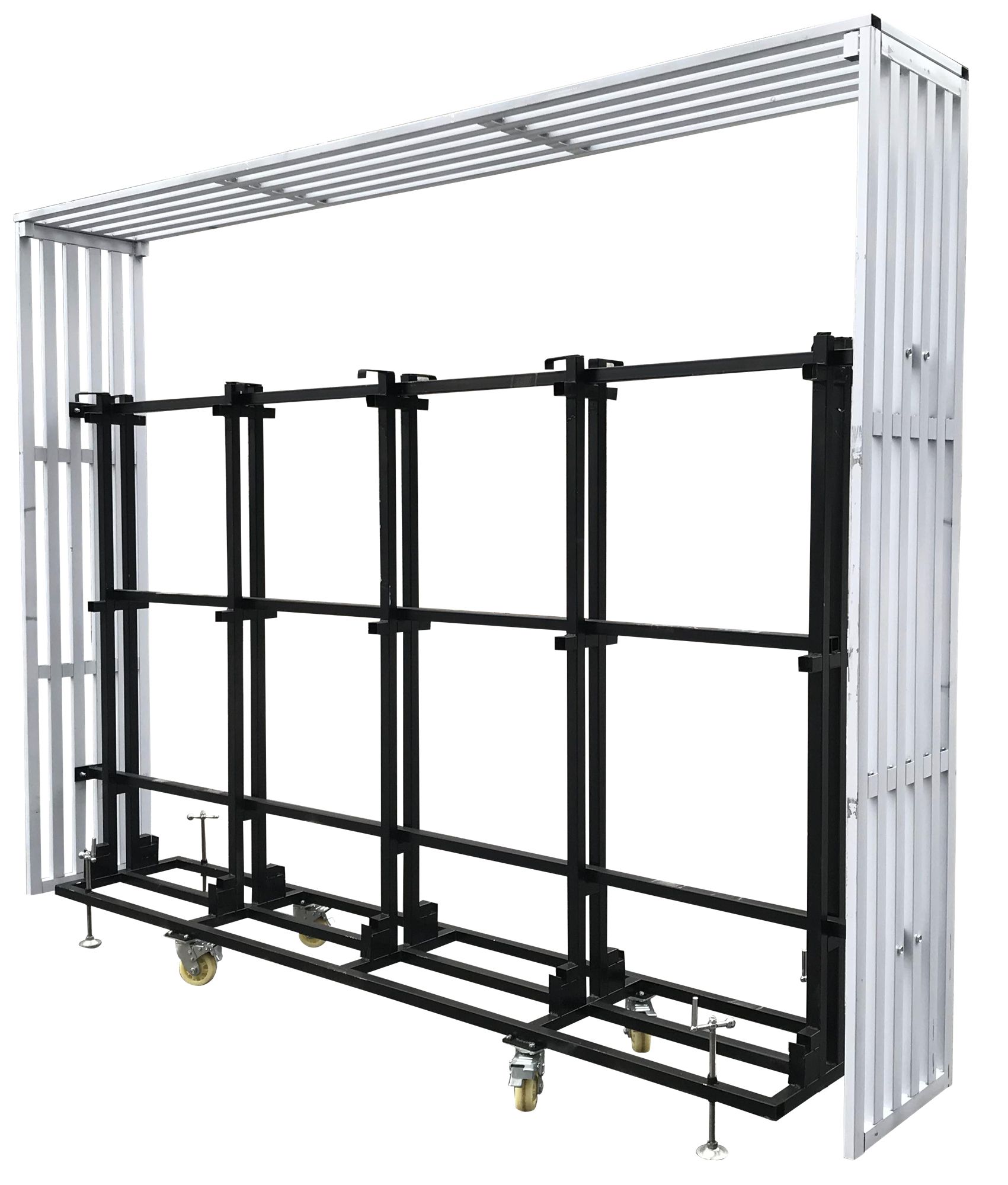
رف عرض الألواح
Slab Display Rack vs Slab Storage Rack
One of the most common buying mistakes is treating a display rack and a storage rack as the same product. They can look similar, but they solve different problems.
| Factor | رف عرض الألواح | Slab Storage Rack |
|---|---|---|
| Primary Purpose | Customer presentation and material selection | Bulk slab storage and organization |
| Viewing Frequency | عالية | Usually lower |
| Visual Presentation | High priority | Secondary priority |
| Capacity Priority | Balanced with accessibility | Usually higher priority |
| Best Location | Showroom, design center, stone shop | Warehouse, slab yard, fabrication facility |
| Customer Selection | Designed around easy viewing | Not the main objective |
Main Types of Slab Display Racks
The correct display method depends on the stone size, showroom layout, number of materials, and how customers normally browse the collection.
رف عرض ألواح عمودي
A vertical rack presents slabs in an upright or near-upright position and is suitable for showrooms that want to display large granite, marble, quartz, or engineered stone panels while keeping the material visible.
Wall-Mounted Slab Display Rack
A wall-mounted رف عرض الألواح can be useful where floor space is limited and the display needs to remain close to a wall. The final design should be selected according to wall structure, slab dimensions, load requirements, viewing access, and installation conditions.
Freestanding Display Rack
Freestanding racks provide more flexibility in showroom planning because they do not always depend on a wall installation. Depending on the structure, they may allow customers to view materials from one or more sides.
Mobile Display Rack
A mobile design can be useful when the showroom layout changes frequently or when material needs to be repositioned for customer presentations. Wheel capacity, locking method, floor condition, rack weight, and loaded stability should all be evaluated before selecting a mobile rack.
A-Frame Display Rack
A-frame structures can support slabs on one or both sides and may be useful where larger stone materials need to be displayed, staged, or organized. Their suitability depends on whether the main requirement is customer presentation, storage, or a combination of both.
Which Slab Display Rack Should You Choose?
| Showroom Requirement | Display Direction to Consider |
|---|---|
| Limited floor space | Wall-mounted or compact vertical rack |
| Display large full-size slabs | Heavy-duty vertical or A-frame display rack |
| Frequent showroom layout changes | Mobile rack where load and floor conditions permit |
| Customer needs to compare many colors | High-access display configuration |
| Double-sided showroom presentation | Freestanding or A-frame configuration |
| Combination of display and temporary storage | Heavy-duty freestanding or A-frame rack |
How to Calculate the Required Rack Capacity
Display-rack capacity should be based on the real weight of the materials that will be placed on the rack. Buyers should not estimate capacity only from the number of rack positions.
Number of slabs × average slab weight = estimated total slab load
For example:
= 960 kg estimated slab load
This is only a basic weight calculation. Final rack selection should also consider load distribution, individual slab dimensions, rack configuration, number of active positions, material center of gravity, installation method, and the manufacturer’s rated capacity.
What Slab Sizes Will You Display?
Before selecting a display rack, record the maximum dimensions of the material that will actually be shown.
Important measurements include:
- Maximum slab length
- Maximum slab height
- Slab thickness
- Individual slab weight
- Number of display positions required
- Total expected display load
Granite, marble, quartz, porcelain, and sintered stone can vary significantly in dimensions, thickness, density, and fragility. The rack should therefore be selected around the actual material mix rather than a generic “stone slab” specification.
How to Plan a Stone Showroom Around Display Racks
A good display rack does not work in isolation. Its position should support customer movement, staff access, material viewing, and safe operation inside the showroom.
Before finalizing the layout, check:
- Overall rack width and depth
- Space required to access or move displayed slabs
- Customer viewing distance
- Main showroom aisle width
- Door and entrance clearance
- Wall clearance where applicable
- Ceiling height
- Emergency and pedestrian routes
- Forklift or material-handling access if required
- Space needed for future display expansion
A rack that looks compact on a drawing may still need substantial operating space once slabs are loaded and customers begin viewing them. Layout planning should therefore consider both the rack footprint and the space required around it.
Why Accessibility Matters in a Stone Showroom
A display system should make stone easier to inspect without creating unnecessary material movement. Customers often want to compare color, veining, finish, texture, and pattern before making a decision.
If frequently viewed slabs are blocked behind other materials, staff may need to move several slabs for every customer. This increases handling time and can also increase opportunities for surface or edge damage.
For this reason, showroom layout should consider:
- fast-moving materials,
- premium collections,
- new arrivals,
- customer viewing frequency,
- material category,
- and slab size.
Fixed vs Mobile Slab Display Racks
| Factor | Fixed Display Rack | Mobile Display Rack |
|---|---|---|
| Showroom Layout | Stable permanent position | Greater layout flexibility |
| Relocation | Requires more effort | Easier when wheel system and load permit |
| Floor Requirements | Depends mainly on installation | Wheel and floor compatibility is important |
| الأفضل لـ | Permanent showroom zones | Frequently changing displays |
Key Structural Features to Evaluate
قدرة التحميل المقننة
The rated capacity should match the actual slab load and rack configuration. Buyers should ask for clear technical specifications rather than relying on appearance alone.
Frame Material
Industrial slab racks commonly use steel structures because stone materials can create significant loads. The actual steel profile, dimensions, weld quality, and structural design should match the intended use.
Surface Protection
Where polished or finished stone contacts the rack, suitable protective materials may help reduce direct metal-to-stone contact and surface marking.
Base Stability
The base should be compatible with the rack height, slab dimensions, load distribution, and floor conditions. Stability should be evaluated according to the complete loaded rack rather than the empty frame.
Mobility Components
If the rack uses wheels, buyers should check wheel load rating, wheel diameter, brake or locking configuration, floor compatibility, and how the rack behaves when fully loaded.
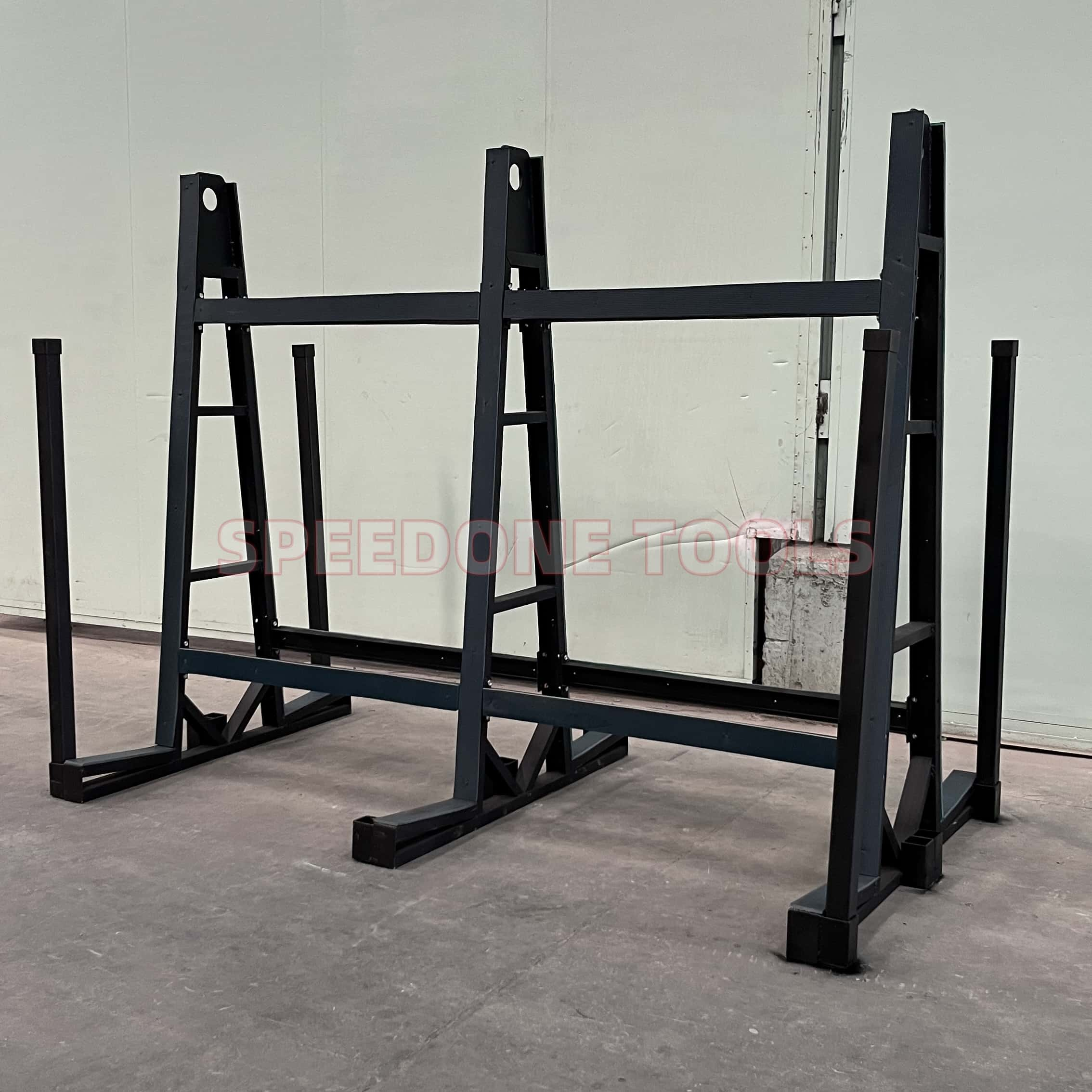
Slab Display Rack vs A-Frame Rack
Display racks and A-frame racks can both support stone materials, but their primary roles may be different.
| Factor | رف عرض الألواح | حامل الإطار A- الإطار |
|---|---|---|
| Main Goal | Presentation and selection | Storage, staging, display or transport depending on design |
| Customer-Facing Use | عالية | Depends on configuration |
| الوصول إلى المواد | Designed around viewing | Designed primarily around stable slab support |
| Best Location | صالة العرض | Warehouse, yard, staging or display area |
For businesses that need a heavier A-frame structure for storage and display, you can also review the رفوف عرض الألواح solution designed for granite and other slab materials.
Common Mistakes When Buying a Slab Display Rack
Choosing Only by Appearance
A showroom rack should look professional, but visual design should not replace structural requirements. Slab weight, dimensions, rack capacity, and stability remain the first considerations.
Ignoring the Actual Slab Weight
Two slabs with similar dimensions can have different weights depending on material type and thickness. Always calculate based on real products.
Trying to Display Too Many Slabs
Higher display density is not always better. If customers cannot comfortably view individual materials, increasing the number of positions may reduce the quality of the showroom experience.
Ignoring Customer Movement
A rack placed too close to another display, wall, desk, or aisle can make viewing difficult even if the rack itself fits physically into the space.
Using Storage Equipment as Showroom Equipment Without Planning
A heavy storage rack may hold slabs successfully but still provide poor customer visibility or access. Display and storage objectives should be evaluated separately.
Not Planning for Future Collections
Stone showrooms frequently add new colors, finishes, and materials. Leave enough flexibility for future display expansion where possible.
What Information Should You Send a Slab Display Rack Supplier?
Providing accurate information at the beginning makes it easier to recommend or customize a suitable rack.
| Required Information | What to Provide |
|---|---|
| نوع المادة | Granite / marble / quartz / porcelain / other |
| Maximum Slab Size | Length × height × thickness |
| Individual Slab Weight | كجم |
| Display Quantity | Number of slabs or samples |
| Showroom Area | Available width × depth × height |
| Display Style | Fixed / mobile / wall-mounted / freestanding / A-frame |
| التخصيص | Color, dimensions, structure, branding or other requirements |
خيارات التخصيص
Stone showrooms can have very different layouts and product ranges, so customization may be useful when a standard rack does not match the project.
Depending on the actual product configuration and engineering requirements, customization can include:
- overall rack dimensions,
- number of display positions,
- rack layout,
- frame structure,
- surface finish,
- color,
- mobility configuration,
- and branding requirements.
The correct customization should begin with slab dimensions, weight, display quantity, and available showroom space rather than appearance alone.
Why Good Display Planning Matters
A stone showroom is not simply a storage area with better lighting. It is a customer decision environment. The layout should help visitors compare materials while allowing staff to present products without unnecessary handling.
For distributors, fabricators, and stone suppliers, a well-organized display system can support:
- clearer material classification,
- faster customer selection,
- easier access to popular products,
- better showroom organization,
- reduced unnecessary slab handling,
- and a more professional presentation of the product range.
الأسئلة الشائعة
ما هو الغرض من استخدام رف العرض للألواح؟
A slab display rack is used to present granite, marble, quartz, porcelain, sintered stone, and other slab materials in showrooms or customer-facing environments. Its primary purpose is to make materials easier to view, compare, and select.
ما الفرق بين رف عرض الألواح ورف تخزين الألواح؟
A display rack prioritizes customer viewing and material access, while a storage rack primarily prioritizes capacity and warehouse organization. Some rack designs can support both functions, but the main operating objective should be identified before selecting a product.
كم عدد الألواح التي يمكن أن يحملها رف العرض؟
The correct quantity depends on the rated rack capacity, individual slab weight, slab dimensions, number of display positions, load distribution, and rack configuration. Buyers should not select a rack only by the number of available slots.
How do I calculate the required rack capacity?
A basic estimate is the number of slabs multiplied by the average weight per slab. Final selection should also consider slab dimensions, load distribution, rack configuration, and the manufacturer’s rated capacity.
Which slab display rack is best for a small showroom?
A compact vertical or wall-mounted display configuration may help reduce floor-space requirements, but the correct choice depends on slab dimensions, load, wall structure, customer viewing space, and access requirements.
Should I choose a fixed or mobile display rack?
A fixed rack is suitable for a permanent showroom layout. A mobile rack can provide more flexibility when displays change frequently, but wheel capacity, loaded stability, floor condition, and locking arrangements should be evaluated carefully.
هل يمكن تخصيص رف عرض الألواح؟
Yes. Depending on the product and project requirements, dimensions, number of positions, structure, finish, color, mobility, and other details can be discussed before production.
What information should I provide before requesting a quotation?
Provide the material type, maximum slab dimensions, slab weight, number of slabs to display, available showroom area, preferred display method, and any customization requirements.

هنري
مرحبًا، أنا كاتب هذا المنشور، وأنا أعمل في هذا المجال منذ أكثر من 16 عامًا. إذا كنت بحاجة إلى خدمة تصنيع المعدات الأصلية وتصنيع التصميم الشخصي للأدوات الحجرية، فلا تتردد في طرح أي أسئلة عليّ.
Expert Commentary & Analysis
The most common mistake in showroom rack selection is starting with appearance rather than workflow. A rack may look attractive when empty but still perform poorly if the displayed slabs are difficult to access, customer aisles are too narrow, or the structure is not matched to the actual slab weight.
Another important distinction is between display density and display quality. Adding more positions can increase the number of materials shown, but if customers cannot clearly view individual slabs, a higher-capacity rack may actually make selection more difficult.
For stone distributors, the best showroom layout normally places frequently requested colors and premium collections in easier-to-access positions while using deeper or less prominent display areas for slower-moving materials.
Buyer takeaway: select a slab display rack according to the complete showroom system—slab dimensions, slab weight, number of materials, customer viewing distance, available space, access frequency, and future product expansion—not simply appearance or rack capacity.