






Stone Block Splitter Manufacturer for Granite & Paving | Speedone
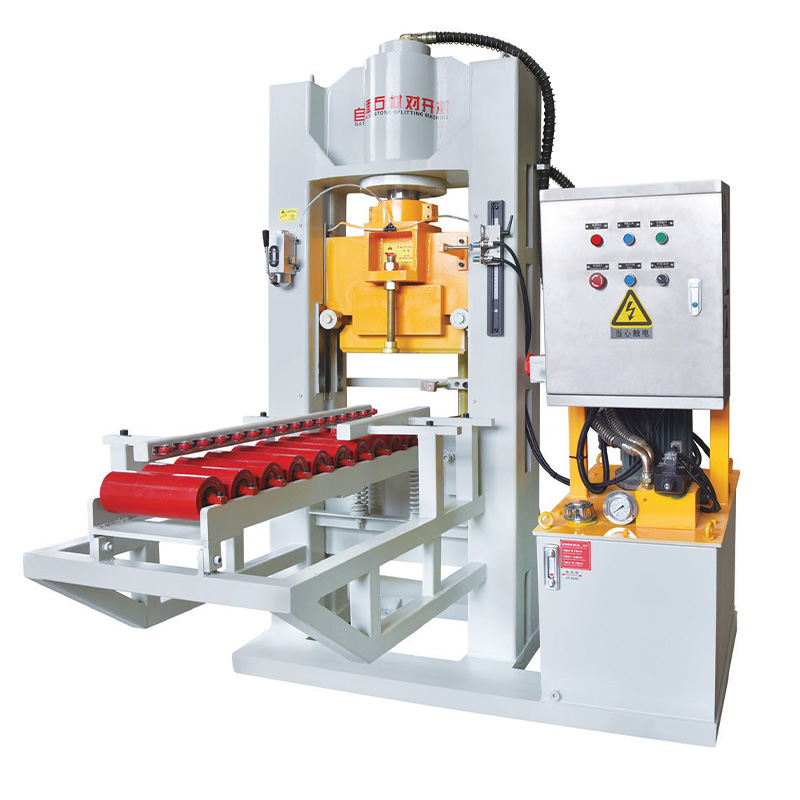
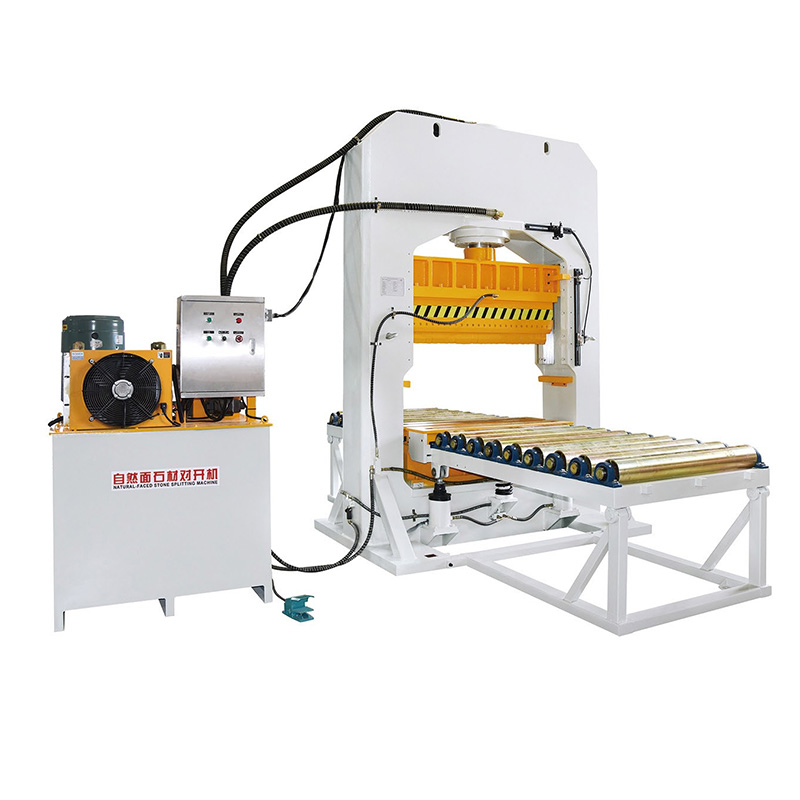
- Peso : 0.8T
- Pressure : 40T
- Power : 4KW
Descripción del producto
Automatic Stone Block Splitter for Granite Cubes & Paving Stone
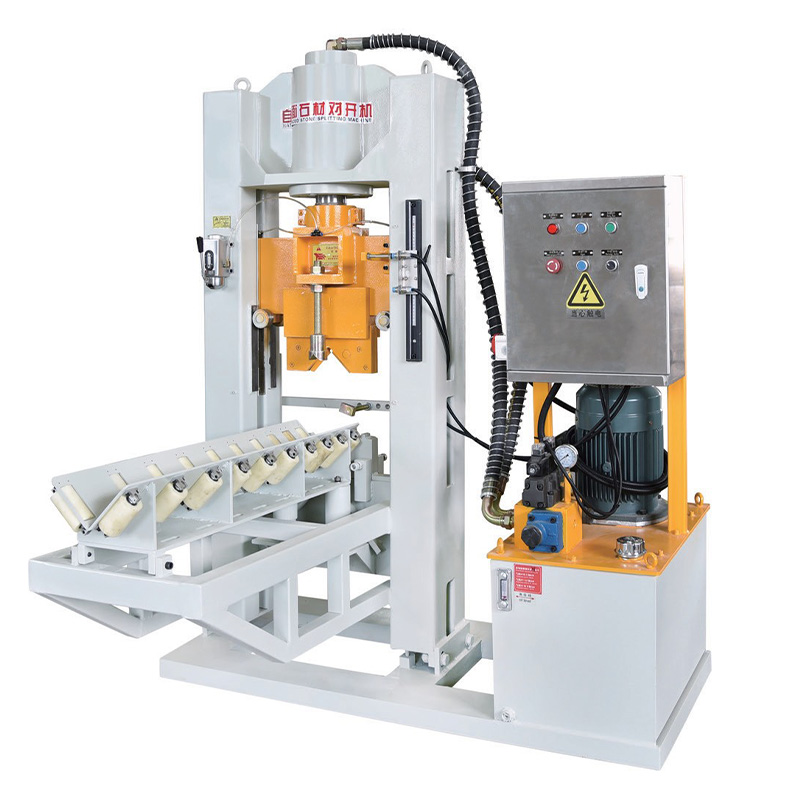
El Speedone stone block splitter is designed for professional stone factories producing granite cubes, cobblestones, paving stone and other natural split products from prepared stone bars or blocks. The KSL-24Z uses a two-blade automatic working system with a self-sliding feed structure, helping reduce repeated manual repositioning during cube-stone production. Exact working dimensions, hydraulic force, feeding speed and output depend on the selected machine configuration.
What Is a Stone Block Splitter?
|
 |
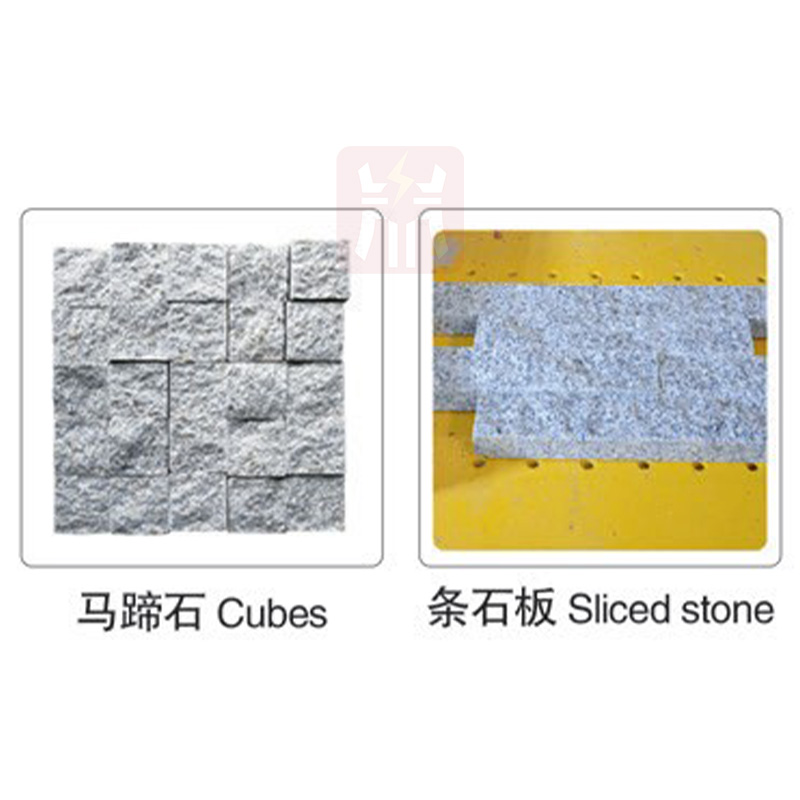
| Product display and finished product display | |
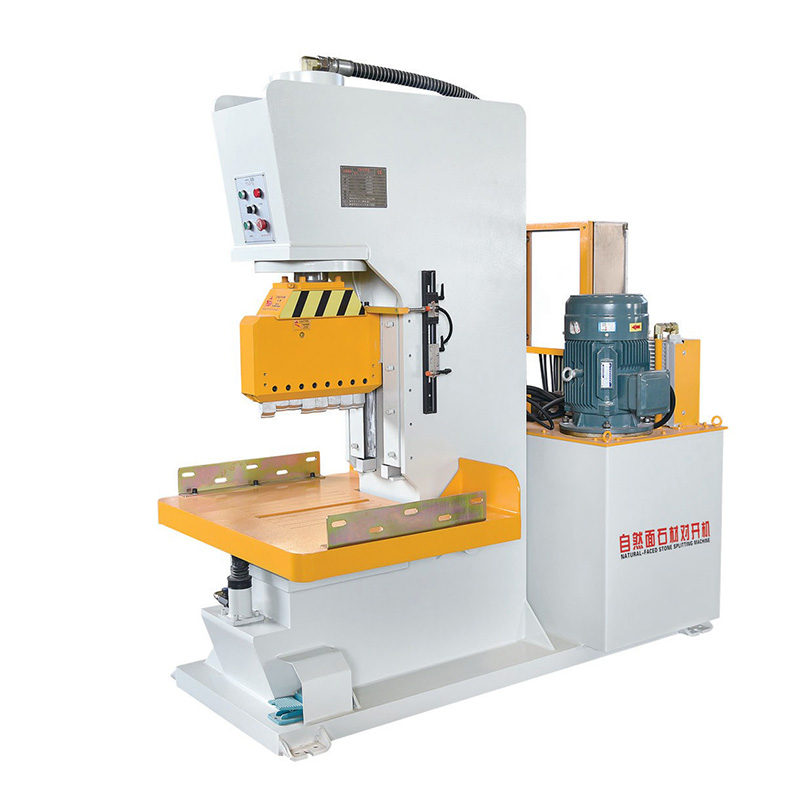
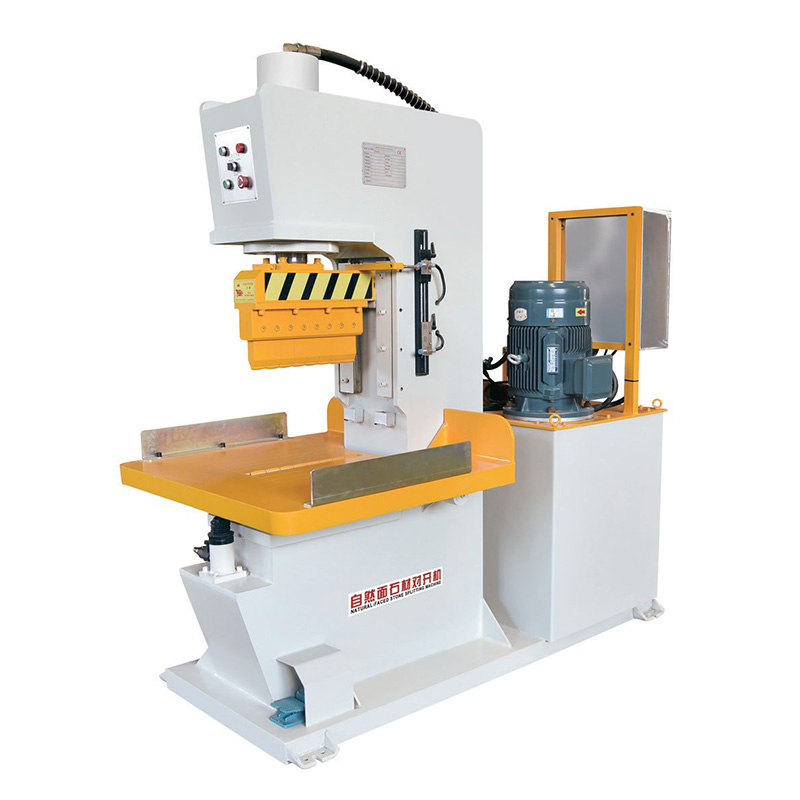
A stone block splitter is industrial stone-processing equipment that uses hydraulic force and splitting tools to fracture prepared natural stone along a selected line.
Unlike a diamond saw, the machine does not cut through the entire stone with an abrasive blade.
Instead, concentrated force enters the stone until a natural fracture develops.
This process is especially suitable for products that need natural broken edges or split surfaces, including:
- Granite cubes
- Cobblestones
- Paving setts
- Natural-face paving stone
- Building stone
- Wall stone
- Stone strips
- Landscape stone products
The Speedone KSL-24Z is particularly suitable for repeated processing of prepared stone bars into smaller cubes and paving products.
Speedone KSL-24Z Automatic Stone Block Splitter
The KSL-24Z is designed for cube stone and stone slicing con un two-blade automatic configuration.
The “Z” version is also identified as a self-sliding configuration.
Its basic production concept is:
Prepared Stone Bar → Self-Sliding Feed → Position → Hydraulic Split → Cube / Block → Continue Feeding
This gives the machine a different role from a manual-feed splitter.
Instead of manually repositioning the stone after every split, the feed structure helps move the remaining stone bar forward for the next cycle.
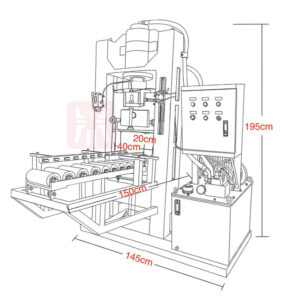 |
 |
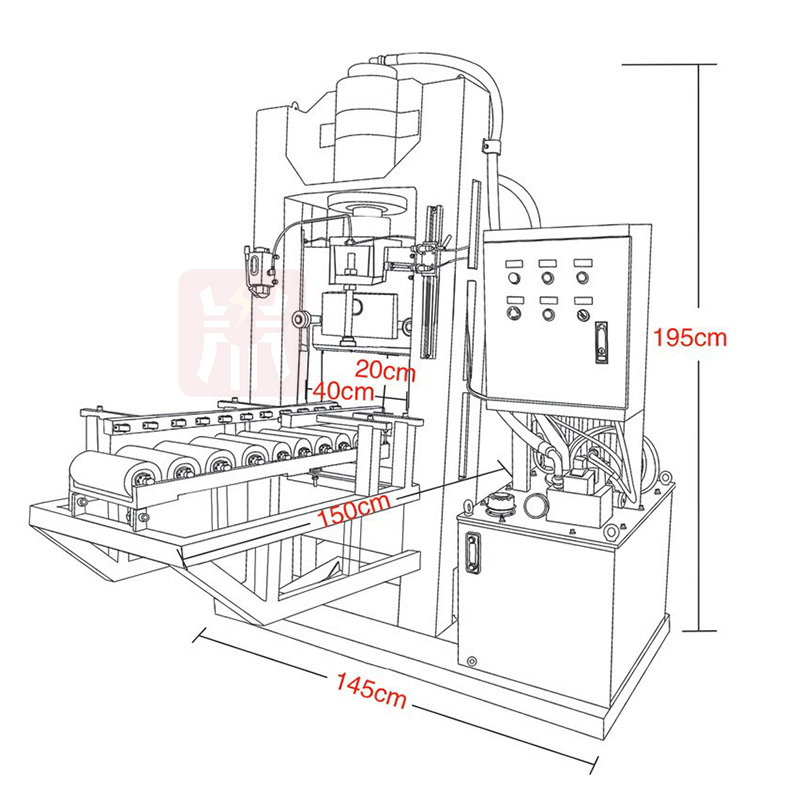
| Product size specifications and information parameters table | |
Main Structure of the Speedone Stone Block Splitter
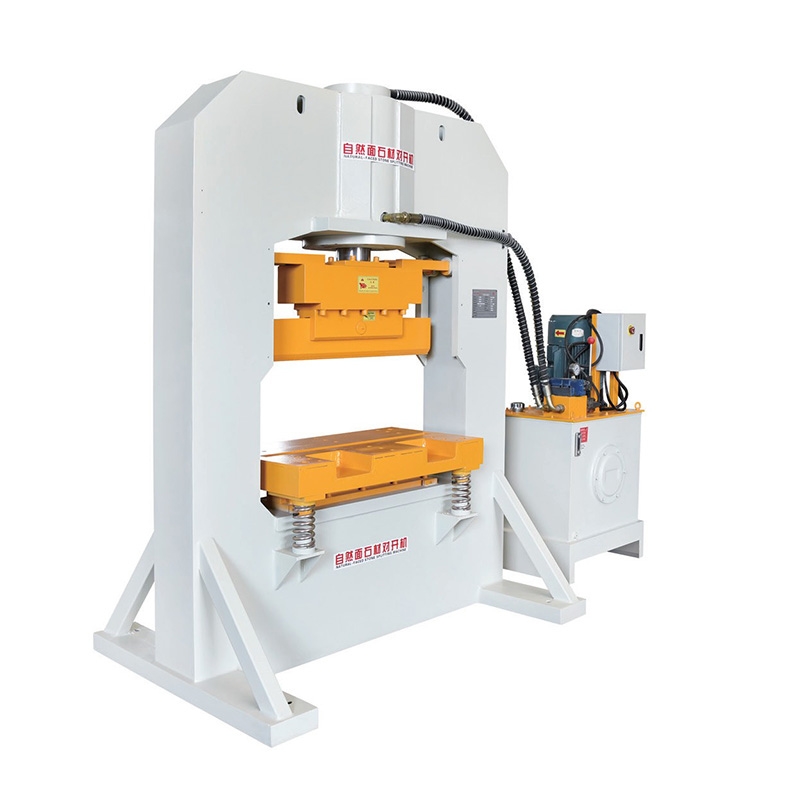
Rigid Vertical Machine Frame
The main machine body forms a strong vertical frame around the splitting area.
This structure supports the hydraulic working assembly and helps maintain alignment between the splitting tools and stone.
Frame stability is especially important when the machine completes repeated splitting cycles during cube-stone production.
Automatic Self-Sliding Feed Structure
The KSL-24Z includes a front feeding section with multiple rollers.
This structure helps move longer stone bars toward the splitting area and reduces repeated manual repositioning.
It is particularly useful for:
- Long granite strips
- Prepared paving bars
- Repeated cube production
- Cobblestone production
- Stone slicing applications
The exact feeding movement and sequence should follow the operating instructions for the selected machine.
Two-Blade Splitting System
The KSL-24Z uses a two-blade splitting configuration.
The splitting tools concentrate hydraulic force into the stone and help start the fracture along the intended line.
Tool condition and alignment can affect:
- Fracture direction
- Edge condition
- Finished cube dimensions
- Stone breakage
- Production repeatability
Hydraulic Working Assembly
The upper hydraulic structure provides the movement and force required for stone splitting.
Required hydraulic capacity depends on:
- Stone material
- Stone-bar width
- Stone-bar height
- Stone strength
- Required finished block size
Maximum hydraulic force alone should not be used as the only machine-selection criterion.
Independent Hydraulic Power Unit
The machine includes a separate hydraulic power section beside the main frame.
The system provides the pressure required for the splitting cycle.
Exact motor power, pump capacity, oil volume and operating pressure depend on the selected machine configuration.
Electrical Control Cabinet
A separate electrical cabinet provides centralized control for the approved machine cycle and automatic functions.
The exact automation sequence is model-dependent.
How Does an Automatic Stone Block Splitter Work?
A typical production cycle is:
Prepare Stone Bar → Inspect → Load → Feed → Position → Hydraulic Split → Release → Advance Material → Repeat
1. Prepare the Stone Bar
The raw stone is first cut into a suitable rectangular strip or bar.
2. Inspect the Material
Check for serious cracks, loose sections or unstable defects.
3. Load the Stone
Place the prepared stone bar onto the feeding structure.
4. Feed the Workpiece Forward
The stone moves toward the splitting position according to the approved machine sequence.
5. Position the Split
The required fracture line is aligned with the splitting tools.
6. Apply Hydraulic Force
The tools apply concentrated pressure until the stone fractures.
7. Remove the Finished Piece
The newly split cube or block is removed from the working area.
8. Advance the Remaining Stone
The remaining stone bar moves forward for the next splitting cycle.
This repeated workflow makes the machine particularly suitable for cube-stone, cobblestone and paving production.
Why Use an Automatic Stone Block Splitter?
A manual-feed splitter can be flexible, but repeated cube production requires frequent stone movement and positioning.
An automatic or self-sliding feeding structure can help organize this process.
Potential benefits include:
- Reduced repetitive manual feeding
- More organized stone-bar movement
- Repeatable hydraulic splitting cycles
- Improved workflow for cube production
- Natural split stone surfaces
- Better suitability for prepared stone strips
- More efficient repeated paving production
The actual output still depends on stone preparation, product dimensions, feed settings, splitting characteristics and finished-product handling.
Stone Block Splitter for Granite
Granite is one of the main materials used with hydraulic block splitting equipment.
Typical products include:
- Granite cube stone
- Cobblestones
- Paving setts
- Landscape paving
- Building stone
- Natural split products
A typical granite production process is:
Granite Block → Saw Cutting → Granite Bar → Automatic Splitting → Granite Cubes → Sorting
Granite varies according to quarry source, grain size and mineral composition.
The machine should therefore be selected according to the actual stone and workpiece dimensions.
Stone Block Splitter for Cube Stone
Cube stone is one of the strongest applications for the KSL-24Z.
The factory first prepares relatively consistent rectangular stone bars.
These bars can then be fed through the machine and repeatedly divided into smaller cubes.
A typical workflow is:
Stone Block → Stone Bar → Automatic Feed → First Cube Split → Advance → Next Cube Split
Typical finished products include:
- Square granite setts
- Natural paving cubes
- Landscape blocks
- Small masonry units
Stone Block Splitter for Cobblestones
Cobblestone production often requires repeated splitting at relatively consistent intervals.
An automatic feed system can be especially useful when longer prepared stone bars are processed continuously.
Typical cobblestone applications include:
- Pedestrian streets
- Historic-style paving
- Garden paths
- Courtyards
- Landscape projects
- Commercial plazas
Hydraulic splitting helps preserve a more natural appearance than fully saw-cut paving products.
Stone Block Splitter for Paving Stone
Paving stone can be produced using several different methods.
When a natural fractured appearance is required, a hydraulic block splitter can be an effective production stage.
A typical process is:
Raw Block → Sawing → Stone Bar → Automatic Hydraulic Splitting → Paving Stone → Inspection → Packing
If the paving product instead requires a mould-defined decorative pattern, Speedone’s paving stone stamping machine uses a different processing method.
Stone Block Splitter for Marble
Suitable marble can also be processed with hydraulic splitting equipment.
However, natural veins may affect the fracture direction.
Important factors include:
- Marble variety
- Vein direction
- Stone-bar width
- Stone thickness
- Required finished block size
- Stone orientation
Testing representative material can be useful before larger production begins.
Stone Bar Splitting for Continuous Cube Production
The KSL-24Z’s automatic feed structure makes stone-bar preparation an important part of the complete production process.
Consistent bar dimensions can improve:
- Feeding stability
- Positioning repeatability
- Split spacing
- Production organization
- Finished-product consistency
For higher-volume cube production, the saw-cutting stage and splitting stage should be planned together.
Automatic Stone Block Splitter vs. Manual Stone Splitter
| Factor | Automatic Stone Block Splitter | Manual-Feed Splitter |
|---|---|---|
| Feeding | Self-sliding / automatic | Operator positioned |
| Repeated Cube Production | Strong application | More manual handling |
| Mixed Product Sizes | Configuration-dependent | Highly flexible |
| Material Flow | More organized | More operator-dependent |
| Best Suited To | Repeated stone bars and blocks | Mixed sizes and smaller batches |
For buyers comparing the wider automatic splitting category, Speedone’s automatic stone splitter for granite and marble provides another overview.
Stone Block Splitter vs. Mushroom Face Stone Splitter
Both machines may use hydraulic fracture, but the finished products are different.
| Característica | Stone Block Splitter | Mushroom Face Splitter |
|---|---|---|
| Main Purpose | Divide stone into blocks or cubes | Trim decorative edges |
| Stone-Bar Production | Strong application | Secondary |
| Wall Stone | Possible | Strong application |
| Material Movement | Repeated feeding | Repeated repositioning |
For mushroom-face and natural wall-stone applications, buyers can review Speedone’s natural stone splitter and mushroom-face trimming alternative.
Stone Block Splitter vs. Granite Stamping Machine
Granite cube splitting and granite stamping use different production methods.
A block splitter creates a natural fracture.
A granite stamping machine uses mould-defined tooling to create a controlled decorative shape or pattern.
For patterned pavers, Speedone’s granite stamping machine for pavers is the more suitable option.
Stone Block Splitter vs. Stone Pressing Machine
Both machine types can use hydraulic force, but the tooling and finished product are different.
| Característica | Stone Block Splitter | Stone Pressing Machine |
|---|---|---|
| Process | Natural fracture | Mould-based pressing |
| Cube Stone | Strong application | Not primary |
| Finished Appearance | Natural variation | Tool-defined |
Factories producing mould-defined decorative products can review Speedone’s stone pressing machine for granite and marble.
Stone Block Splitter vs. Hydraulic Stone Stamping Machine
A hydraulic stamping machine applies force through moulds to create a defined product.
A stone block splitter uses force to create a natural fracture.
The splitter is therefore more suitable for:
- Cube stone
- Cobblestones
- Natural pavers
- Stone bars
- Natural-face products
For decorative mould-based production, Speedone’s hydraulic stone stamping machine covers that application separately.
Stone Block Splitter vs. Diamond Saw
A diamond saw and stone block splitter are often used together.
The saw prepares accurate bars.
The splitter creates the final natural fracture.
| Característica | Stone Block Splitter | Diamond Saw |
|---|---|---|
| Process | Fracture | Cutting |
| Surface | Natural split | Saw-cut |
| Stone-Bar Preparation | Secondary role | Strong application |
| Final Cube Splitting | Strong application | Different finished surface |
A practical production concept is:
Diamond Saw for Consistent Stone Bars → Automatic Stone Block Splitter for Natural-Face Cubes
Why Two-Blade Splitting Matters
The two-blade configuration is an important part of the KSL-24Z working concept.
The splitting tools determine how hydraulic force enters the stone.
They can influence:
- Fracture initiation
- Fracture direction
- Edge condition
- Finished block dimensions
- Production repeatability
Tooling should therefore be inspected regularly and matched to the approved machine configuration.
Why Automatic Feeding Matters for Cube Production
Repeated cube production requires the remaining stone bar to move forward after each split.
If every movement is performed manually, positioning can take a significant part of the total cycle.
A self-sliding feed system can help organize:
- Stone advancement
- Repeated positioning
- Operator workflow
- Continuous cube production
Actual feeding accuracy and output still depend on the machine configuration, stone preparation and operating setup.
Why Stone Bar Dimensions Matter
Consistent incoming stone bars are easier to feed and split repeatedly.
Before machine selection, buyers should define:
- Typical bar width
- Maximum bar width
- Typical bar height
- Maximum bar height
- Typical bar length
- Approximate workpiece weight
The required finished cube dimensions should also be defined.
How Much Hydraulic Force Does a Stone Block Splitter Need?
There is no single force rating suitable for every stone.
The required hydraulic capacity depends on:
- Stone material
- Stone strength
- Bar width
- Bar height
- Natural grain
- Tool geometry
- Required finished dimensions
A practical selection process is:
Stone Material → Bar Dimensions → Finished Block Size → Tooling → Required Force → Machine
Higher nominal hydraulic force does not automatically mean better finished products.
Planning an Automatic Stone Block Splitting Workflow
A professional production workflow may include:
Raw Stone Storage → Saw Cutting → Stone Bar Preparation → Staging → Automatic Feeding → Hydraulic Splitting → Product Removal → Sorting → Packing
The complete workflow determines actual factory productivity.
Possible bottlenecks include:
- Slow saw cutting
- Inconsistent stone-bar dimensions
- Poor feeding organization
- Frequent product-size changes
- Finished-product removal
- Sorting
- Embalaje
The splitter should therefore be evaluated as one part of the full production process.
How to Choose the Right Stone Block Splitter
1. Define the Stone Material
Specify granite, marble, limestone, sandstone or another suitable natural stone.
2. Define Stone Bar Dimensions
Provide the typical length, width and height of the incoming stone.
3. Define Maximum Workpiece Size
The working opening and feeding system must accommodate routine maximum pieces.
4. Define Finished Block Dimensions
Specify the required cube, cobblestone or paving size.
5. Define the Product Type
Clarify whether you produce cubes, cobblestones, paving setts, natural blocks or another split product.
6. Define the Required Automation Level
Determine whether self-sliding feeding is sufficient or whether a larger integrated line is required.
7. Evaluate Two-Blade Tooling
The tooling should match the stone and required fracture.
8. Evaluate Hydraulic Capacity
Required force should be based on the actual stone and dimensions.
9. Evaluate Feeding Stability
Long stone bars require adequate support during repeated feeding.
10. Define Production Target
Estimate realistic pieces per shift rather than relying only on hydraulic cycle time.
11. Consider Wear Parts
Discuss splitting tools, hydraulic components and feed-system wear parts before purchasing.
12. Evaluate Supplier Support
Technical documentation, spare parts and application support are important for professional stone machinery.
Information to Send Speedone for a Quotation
To help Speedone evaluate a suitable stone block splitter, provide:
- Stone material
- Raw-stone photographs
- Typical stone-bar length
- Typical stone-bar width
- Typical stone-bar height
- Maximum workpiece dimensions
- Approximate workpiece weight
- Required cube or block dimensions
- Finished-product photographs
- Required production volume
- Number of product sizes
- Required automation level
- Factory voltage and frequency
- Available installation area
- Current stone-processing workflow
Raw-material and finished-product photos are especially useful because they help define the real splitting requirement more clearly than dimensions alone.
Common Stone Block Splitting Problems
Stone Fractures Away from the Intended Line
Natural grain, bedding, veins or existing cracks may redirect the fracture.
Cube Dimensions Vary Too Much
Check stone-bar preparation, feeding consistency and splitting position.
Edges Break Excessively
Review stone condition, tooling alignment and the approved machine setup.
The Stone Does Not Feed Smoothly
Inspect the feeding path, stone dimensions, stone support and roller area.
Uneven Tool Contact
Check stone shape, workpiece support and splitting-tool alignment.
Production Is Lower Than Expected
Measure bar preparation, feeding, splitting, product removal, sorting and packing separately to find the actual bottleneck.
Stone Block Splitter Maintenance
Routine inspection should include:
- Hydraulic oil
- Hydraulic cylinder
- Hydraulic pump
- Electric motor
- Hydraulic hoses
- Fittings
- Control valves
- Pressure controls
- Two-blade splitting tools
- Tool guides
- Feed rollers
- Stone support structure
- Main machine frame
- Electrical control cabinet
- Safety systems
Hydraulic leaks should be investigated promptly.
Damaged tools, hoses or feeding components should not remain in production.
Maintenance should follow the documentation supplied with the selected Speedone machine.
Stone Block Splitter Safety
An automatic hydraulic stone block splitter generates substantial mechanical force and also includes moving feeding components.
- Only trained personnel should operate the machine.
- Inspect stone bars before processing.
- Keep hands away from the splitting tools.
- Keep clear of moving feeding components.
- Do not manually reposition stone during the splitting cycle.
- Do not bypass guards or safety controls.
- Inspect hydraulic hoses regularly.
- Wear appropriate personal protective equipment.
- Keep unauthorized personnel away from the machine.
- Use suitable handling equipment for heavy stone bars.
- Follow lockout procedures during maintenance.
- Do not exceed approved workpiece dimensions.
- Do not exceed manufacturer-rated hydraulic settings.
- Replace damaged tooling before continued operation.
Who Uses Automatic Stone Block Splitters?
This type of equipment may be suitable for:
- Granite paving factories
- Marble processing factories
- Cube stone manufacturers
- Cobblestone producers
- Paving stone factories
- Landscape stone suppliers
- Natural stone quarries
- Architectural stone processors
- Stone machinery distributors
¿Por qué elegir Speedone?
Speedone supplies professional equipment for stone processing, handling and installation.
When selecting a stone block splitter, buyers should evaluate the complete production process rather than simply comparing hydraulic-force ratings.
A practical machine-selection process is:
Stone Material → Stone Bar Dimensions → Finished Block Size → Two-Blade Tooling → Hydraulic Requirement → Automatic Feed → Production Target
Important purchasing factors include:
- Main-frame rigidity
- Hydraulic system
- Two-blade configuration
- Self-sliding feed structure
- Feed roller support
- Working opening
- Electrical control system
- Tooling availability
- Maintenance requirements
- Spare-parts support
- Technical documentation
- Supplier communication
The correct stone block splitter should be selected around the incoming stone bar and required finished block rather than maximum hydraulic force alone. The Speedone KSL-24Z two-blade automatic, self-sliding configuration is especially suitable for repeated production of cube stone, cobblestones and natural paving products where organized material feeding is an important part of factory efficiency.
Preguntas frecuentes
What is a stone block splitter?
A stone block splitter uses hydraulic force and splitting tools to fracture prepared natural stone bars or blocks into cubes, cobblestones, paving stone and other natural split products.
What is the Speedone KSL-24Z used for?
The KSL-24Z is designed for cube stone and stone slicing applications using a two-blade automatic working system with a self-sliding feed configuration.
Can a stone block splitter produce granite cubes?
Suitable equipment can split prepared granite bars into cube stone when the material and dimensions remain within the approved working range.
Can it produce cobblestones?
Yes. Repeated splitting of suitable prepared stone bars is a common production method for natural cobblestone and paving products.
What does two-blade stone splitting mean?
A two-blade configuration uses coordinated splitting tools to concentrate hydraulic force into the stone and initiate a fracture along the intended line.
What does self-sliding mean?
For the KSL-24Z configuration, self-sliding refers to a more automated material-feeding workflow that helps move prepared stone bars through repeated splitting cycles.
Can the machine split marble?
Suitable marble can be processed, although natural veins may influence fracture direction and finished appearance.
What is the difference between a stone block splitter and a stone stamping machine?
A block splitter creates a natural fracture, while a stamping machine uses mould-defined tooling to create a controlled decorative shape or pattern.
Why should stone bars be prepared before splitting?
Consistent stone-bar dimensions can improve feeding stability, positioning repeatability and production flow during repeated cube splitting.
How much hydraulic force is required?
The required force depends on stone type, strength, bar width, bar height, natural grain, tooling and required finished block dimensions.
Is automatic feeding always better than manual feeding?
Not necessarily. Automatic feeding is particularly useful for repeated production from relatively consistent stone bars, while manual feeding may offer greater flexibility for mixed sizes and smaller batches.
What information should I provide for a quotation?
Provide the stone material, raw-material photos, stone-bar dimensions, maximum workpiece size, finished block dimensions, production target, required automation level and factory power supply.