

Heavy Duty Fixed Suction Cup for Glass & Stone
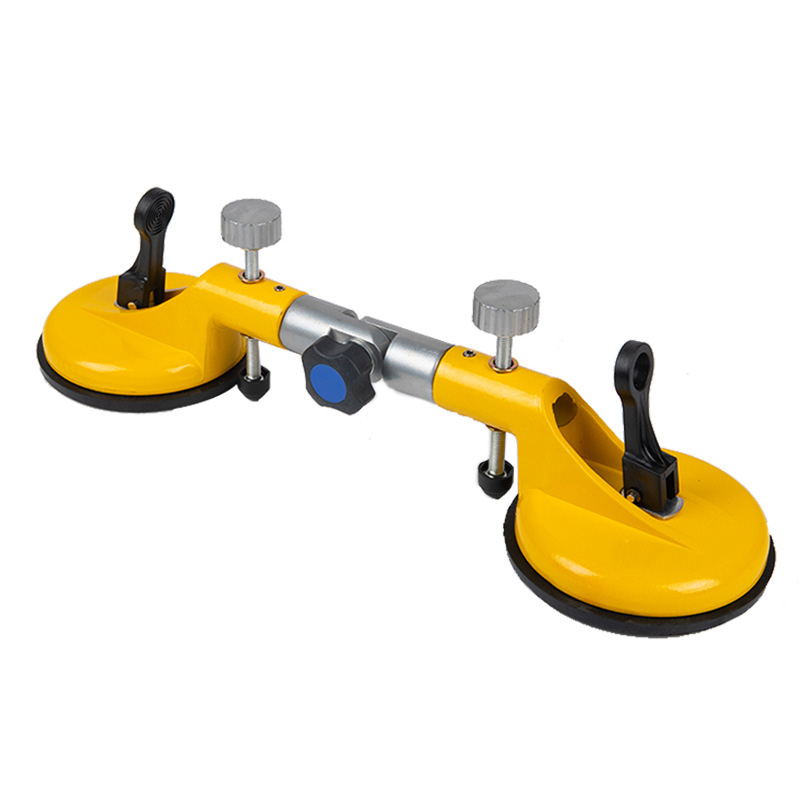
Fixed suction cup
- Model : RS-002
Product Description
Professional Fixed Suction Cup for Glass, Stone & Porcelain Slab Handling
What Is a Fixed Suction Cup?
|
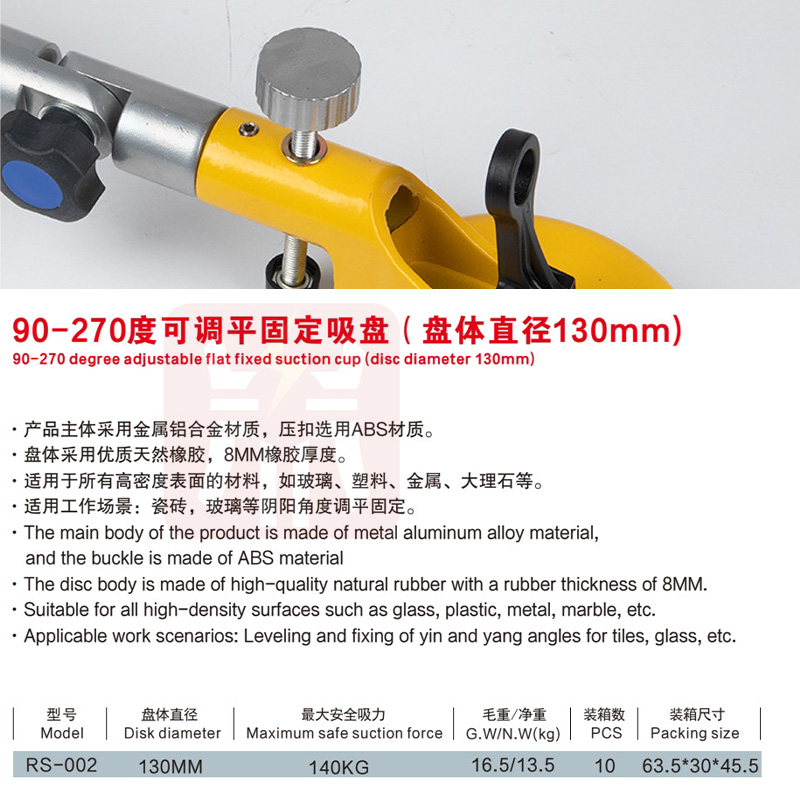 |
| Product Parameters Introduction | |
A Fixed suction cup is a vacuum gripping device designed to maintain a secure connection with a smooth surface during lifting, positioning, or installation.
When the suction pad forms a tight seal against the material, the vacuum system removes air from the contact area. Atmospheric pressure then creates the holding force needed to keep the material in position.
Depending on the design and application, fixed suction cups can be used for:
- Glass panels
- Granite slabs
- Marble slabs
- Quartz surfaces
- Porcelain slabs
- Large-format tiles
- Ceramic panels
- Architectural stone
- Smooth metal sheets
The actual lifting capacity depends on the suction pad size, surface condition, vacuum level, material weight, and direction of the load. Always select equipment according to the manufacturer’s rated capacity.
Why Use a Fixed Suction Cup?
Large glass, stone, and porcelain panels can be difficult to move by hand. A properly selected vacuum gripping system provides a stable contact point and makes repeated handling easier and more controlled.
Stable Material Positioning
A fixed suction configuration helps keep the material securely in position during movement, installation, inspection, or fabrication.
Less Manual Effort
Vacuum gripping takes much of the holding force away from the operator, reducing the physical effort required to handle large panels.
Better Handling Control
For smooth materials such as glass, polished stone, and porcelain, vacuum gripping makes it easier to move and position panels accurately.
Ideal for Repetitive Work
Factories and installation teams that handle similar materials every day can benefit from a dedicated vacuum configuration that provides consistent handling performance.
 |
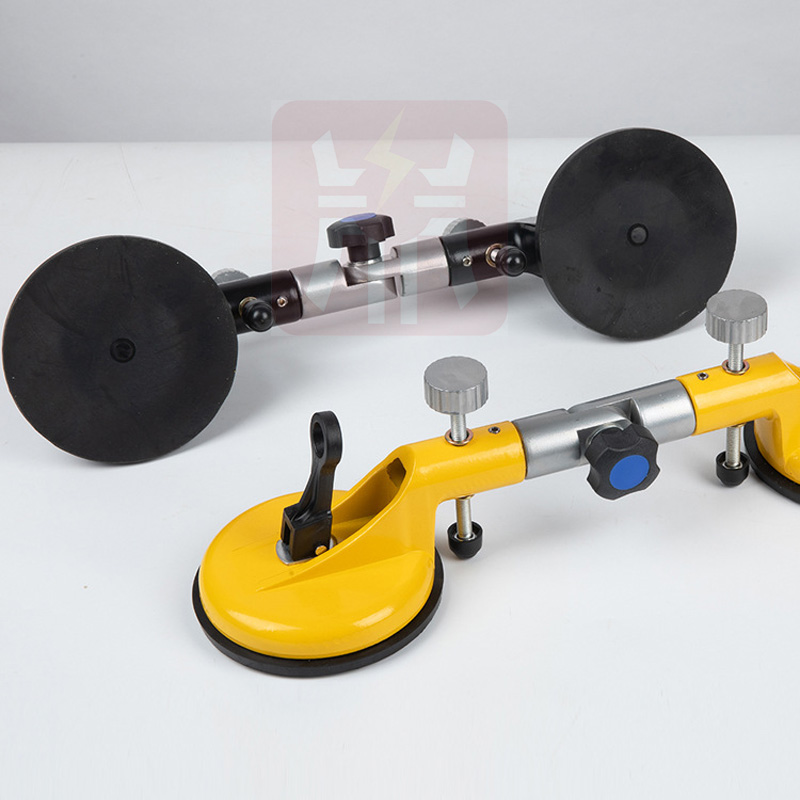 |
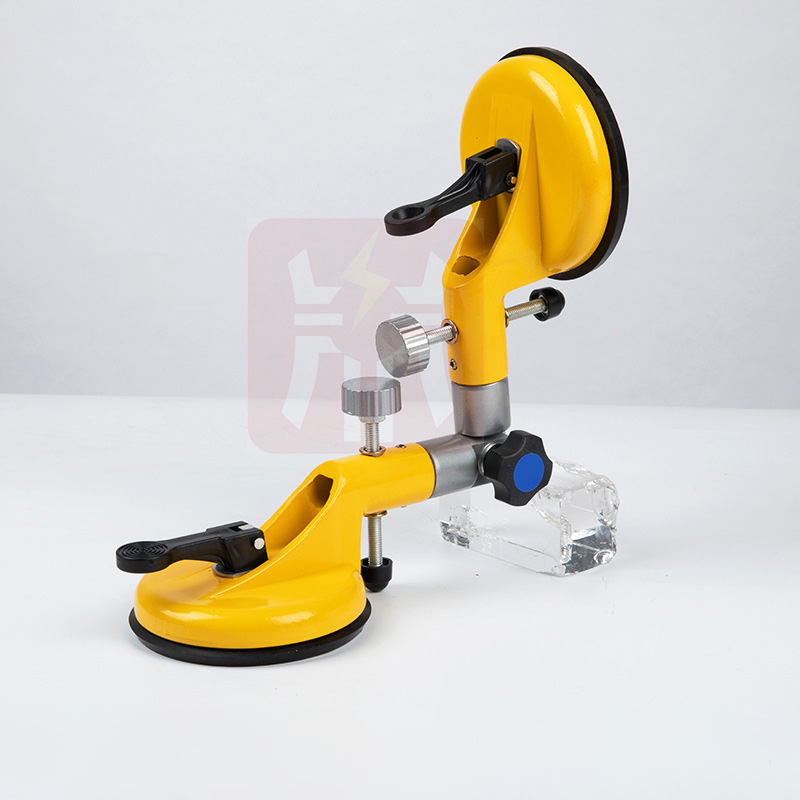
| Product multi-angle display | |
Fixed Suction Cup vs. Handheld Suction Cup
Both fixed and handheld suction cups use vacuum pressure to grip a material surface, but they are designed for different working situations.
A handheld suction cup is compact and convenient for short-distance manual handling. A fixed suction cup is more commonly connected to a lifting frame, electric vacuum system, robot, or other handling equipment where stable positioning and repeatable operation are important.
| Feature | Handheld Suction Cup | Fixed Suction Cup |
|---|---|---|
| Portability | Excellent | Moderate |
| Installation | Simple | Usually system-mounted |
| Repetitive handling | Good | Excellent |
| Large panel handling | Suitable models only | More suitable |
| Lifting equipment integration | Limited | Excellent |
| Positioning stability | Good | High |
| Typical application | Small and medium jobs | Professional handling systems |
The best option depends on the material, weight, surface condition, lifting direction, and overall handling method.
Speedone Fixed Suction Cup Solutions
Speedone develops professional vacuum handling equipment for glass, stone, porcelain, tiles, and construction applications.
For porcelain slabs, glass panels, and other smooth materials, the Professional Electric Tile Suction Cup with Automatic Vacuum Control provides a convenient electric vacuum solution for professional handling tasks.
For projects involving different types of glass, stone, and porcelain products, the Professional Electric Suction Cup for Glass, Stone and Porcelain Slab Handling offers a flexible solution for daily fabrication and installation work.
How Does an Electric Fixed Suction Cup Work?
Electric vacuum systems use a pump to create negative pressure between the suction pad and the material surface. Once the required vacuum level is reached, the suction pad creates the gripping force needed for handling.
A typical operating process includes:
- Place the suction pad on a clean, suitable surface.
- Make sure the pad is fully in contact with the material.
- Start the vacuum system.
- Allow the pump to establish the required vacuum.
- Check the vacuum indicator before lifting.
- Move or position the material carefully.
- Release the vacuum only after the material is safely supported.
Automatic vacuum monitoring can make operation easier by helping the operator check vacuum conditions during handling.
Fixed Suction Cup Applications
Glass Panel Handling
Glass is one of the most common materials used with vacuum lifting equipment because it normally has a smooth, non-porous surface that allows a good seal.
Fixed vacuum systems can be used for:
- Window installation
- Glass door installation
- Interior glass partitions
- Architectural glazing
- Curtain wall panels
- Factory glass handling
Stone Slab Handling
Polished granite, marble, and quartz can also be suitable for vacuum lifting when their surfaces are clean, smooth, and able to maintain a reliable seal.
A fixed suction configuration can help stone fabricators move slabs between processing, storage, inspection, and installation areas while reducing manual handling effort.
Porcelain Slab Handling
Large-format porcelain slabs are thin but often have a large surface area. Stable handling is important during transportation and installation to reduce unwanted movement.
A suitable vacuum lifting system can provide multiple gripping points and make large porcelain panels easier to control.
Large-Format Tile Installation
Vacuum suction equipment can also be used for positioning large-format tiles. The equipment should be selected according to the tile size, weight, surface texture, and installation direction.
Heavy-Duty Fixed Vacuum Lifting
For heavier or larger panels, a single suction cup may not provide the complete handling solution. In these cases, multiple suction points can be integrated into a larger lifting system.
Speedone’s Heavy Duty Suction Lifter for Glass, Stone and Porcelain Slabs is designed for professional handling applications involving larger and heavier materials.
Heavy-duty vacuum lifting systems can be used for:
- Large glass panels
- Granite slabs
- Marble slabs
- Quartz slabs
- Porcelain panels
- Large architectural stone
- Construction materials
Always match the lifting equipment to the actual load and follow the manufacturer’s rated capacity and operating requirements.
Fixed Suction Cup Accessories
A complete vacuum handling system may include suction pads, support bars, frames, handles, pumps, valves, vacuum gauges, hoses, and other components.
Aluminum Support Bars
Support bars can connect compatible suction cups and help create a larger or more stable handling configuration.
The Aluminum Bar for Grabo Suction Cup is one example of an accessory designed for compatible suction cup applications.
Before choosing an accessory, check its dimensions, connection method, rated capacity, and compatibility with the suction cup system.
Fixed Suction Cup for Curtain Wall Installation
Curtain wall installation often involves large glass panels that must be moved and positioned accurately. Manual handling can become difficult as panel size and weight increase.
For large architectural glazing projects, a fixed suction cup can serve as one part of a larger vacuum lifting system.
For more demanding glass installation work, Speedone’s Heavy Duty Glass Lift Robot for Glass Installation and Curtain Wall Lifting provides a more advanced handling solution.
A glass lift robot combines vacuum gripping with controlled movement, helping installation teams position large glass panels with less manual effort.
How to Choose the Right Fixed Suction Cup
Choosing the right vacuum gripping system requires more than checking the size of the suction pad. Consider the following factors before selecting equipment.
1. Material Surface
Vacuum suction works best on clean, smooth, and non-porous surfaces.
Glass usually provides an excellent surface for vacuum gripping. Textured, porous, dusty, cracked, or uneven surfaces may reduce the reliability of the seal.
2. Material Weight
Calculate the actual weight of the material before selecting the equipment.
Do not select equipment based only on panel dimensions. Thickness and material density also affect the total load.
3. Lifting Direction
Vacuum capacity can vary depending on whether the material is lifted vertically, horizontally, or exposed to sideways forces.
4. Suction Pad Size
The size and contact area of the suction pad affect the available gripping force. Large panels may require multiple suction points for stable handling.
5. Vacuum Monitoring
For professional applications, vacuum monitoring provides an additional way to check whether the system is maintaining the required pressure during operation.
6. Power Supply
Electric vacuum systems require a suitable battery or power source. Consider operating time, charging requirements, and the working environment when choosing a model.
7. Installation Configuration
Determine whether the suction cup will be used independently or connected to a lifting frame, robot, crane, or another handling system.
Safety Considerations
Proper operation is essential when using vacuum lifting equipment. Before every lifting task, inspect the suction cup and the complete system.
Keep the Contact Surface Clean
Dust, oil, moisture, and debris can prevent the suction pad from creating a reliable seal. Clean the contact area before attaching the suction cup.
Inspect the Rubber Pad
Check the suction pad regularly for cracks, deformation, hardening, or excessive wear. Damaged pads should not be used for lifting.
Check Vacuum Pressure
Confirm that the system reaches the required vacuum level before lifting the load.
Stay Within the Rated Capacity
Never exceed the manufacturer’s specified lifting capacity. The rated capacity should always be matched to the actual material and lifting direction.
Inspect the Complete System
Before use, check brackets, support bars, handles, pumps, hoses, valves, batteries, and other connected components.
Avoid Unsuitable Surfaces
Porous, heavily textured, cracked, or uneven surfaces may not provide enough sealing area for safe vacuum lifting.
Benefits of Speedone Vacuum Lifting Equipment
Speedone focuses on professional vacuum handling solutions for the glass, stone, porcelain, and tile industries.
- Professional vacuum lifting technology
- Electric vacuum systems
- Heavy-duty suction lifting options
- Multiple suction configurations
- Glass and stone handling solutions
- Porcelain and tile handling equipment
- OEM and ODM support
- Product customization
- Export-oriented manufacturing
This product range allows distributors, fabricators, contractors, and installation companies to choose vacuum equipment based on their material, load, working environment, and handling requirements.
Frequently Asked Questions
What is a Fixed Suction Cup?
A Fixed Suction Cup is a vacuum gripping component designed to maintain a stable connection with a smooth material surface during lifting, positioning, or handling.
Can a Fixed Suction Cup be used for glass?
Yes. Glass is generally well suited to vacuum lifting because it has a smooth and non-porous surface. The actual lifting capacity depends on the suction cup specifications, glass size, weight, and working direction.
Can Fixed Suction Cups lift stone?
Suitable vacuum systems can be used for smooth stone surfaces such as polished granite, marble, and quartz when the surface can maintain a reliable vacuum seal.
What is the difference between a Fixed Suction Cup and a handheld suction cup?
A handheld suction cup is mainly designed for portable manual handling, while a fixed suction cup is commonly integrated into a larger lifting or handling system for more stable and repetitive applications.
Are electric Fixed Suction Cups suitable for porcelain slabs?
Electric vacuum systems can be suitable for porcelain slabs when the slab surface, dimensions, weight, and equipment capacity are compatible. Always check the manufacturer’s specifications before lifting.
How do I maintain a Fixed Suction Cup?
Keep the suction pad clean, inspect the rubber for damage or wear, check the vacuum components regularly, and follow the manufacturer’s maintenance and inspection requirements.
Related Products
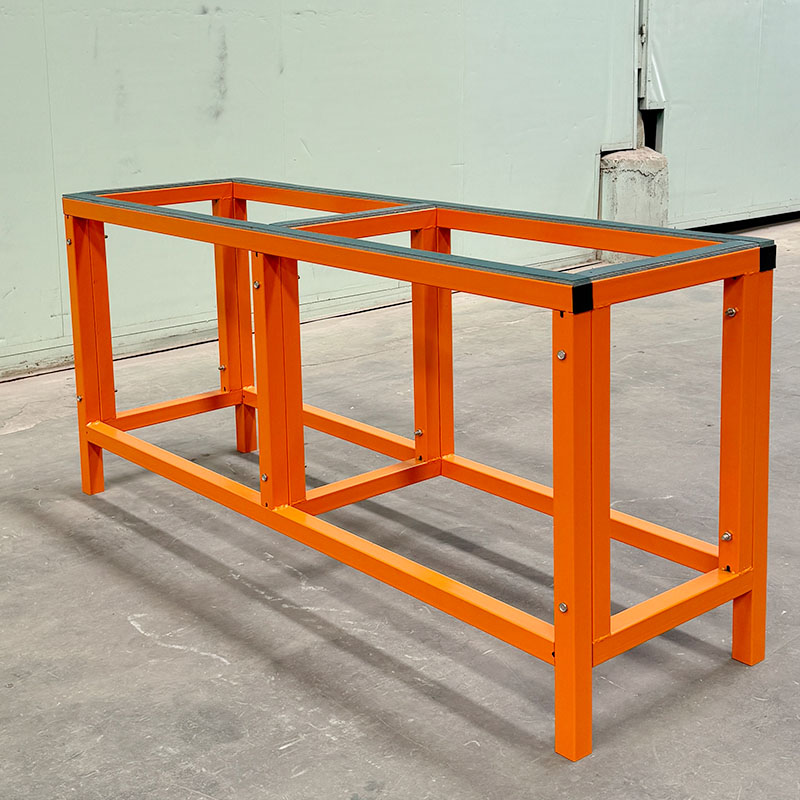
Heavy Duty Stone Fabrication Tables