





Heavy-Duty Galvanized Slab Storage Racks for Stone & Glass
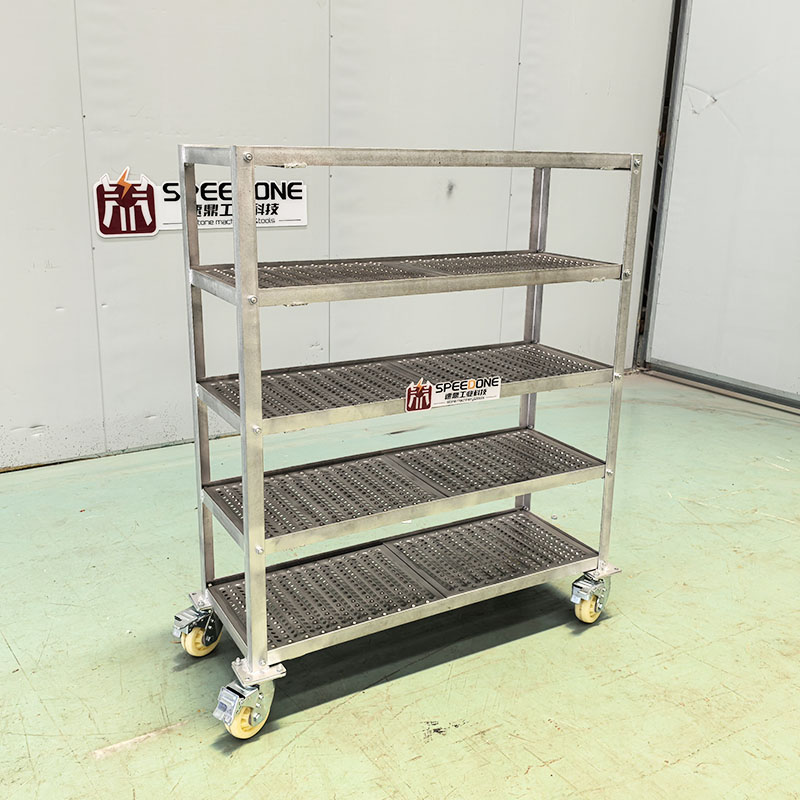
galvanized slab storage rack
- Model : SDHJ-A
Product Description
Heavy-Duty Galvanized Slab Storage Racks for Stone and Glass
Industrial slab storage is very different from ordinary warehouse shelving. Granite, marble, quartz, glass, countertops, and other large panels are heavy, fragile, difficult to access, and potentially hazardous if stored on unsuitable equipment.
Speedone galvanized slab storage racks are designed around these material-handling requirements. Instead of using conventional horizontal shelves, slab rack systems typically use structural base rails, removable or adjustable poles, A-frame components, or other vertical support arrangements to organize large panels while making them accessible for lifting and retrieval.
The galvanized finish adds another important feature: improved surface protection for steel components used in warehouses, fabrication shops, covered yards, and other environments where corrosion resistance is an important purchasing consideration.
|
 |
| Speedone galvanized slab rack configurations for industrial storage | |
What Is a Galvanized Slab Storage Rack?
A galvanized slab storage rack is a steel material-storage system with a galvanized protective surface designed for large slabs, sheets, bundles, or panels.
Depending on the model, the rack may use:
- base rails,
- vertical removable poles,
- adjustable pole positions,
- A-frame support structures,
- ground rails,
- rubber or other slab-contact protection,
- and different configurations for full slabs, countertops, glass, or fabricated pieces.
This is fundamentally different from conventional pallet shelving or multi-level warehouse shelving. The load is not simply placed horizontally onto a shelf. Large slabs require a purpose-designed structure that supports their weight, geometry, retrieval method, and restraint requirements.
Why “Galvanized Slab Rack” Is More Accurate Than “Galvanized Shelves”
The term galvanized shelves is very broad. It can describe shelving for cartons, tools, spare parts, pallets, or light industrial inventory.
Speedone’s relevant product family is more specifically focused on:
- granite slabs,
- marble slabs,
- quartz and quartzite,
- glass sheets,
- countertops,
- doors and large panels,
- and other heavy flat materials.
For SEO and buyer clarity, the page should therefore emphasize galvanized slab storage racks, stone slab racks, and heavy-duty panel storage rather than competing primarily for generic warehouse-shelving searches.
How Does a Slab Rack Support Heavy Panels?
A slab rack creates defined support points for heavy panels while allowing the spacing or support arrangement to match the stored material.
Stone or glass slab
↓
Vertical pole / structural support
↓
Base rail or frame
↓
Supporting floor
The actual load path depends on the rack model. Capacity should therefore be evaluated from the manufacturer’s rated configuration rather than from the visual size of the steel members.
What Does Galvanized Mean?
Galvanizing protects steel by applying a zinc-based protective layer to the surface. The zinc layer helps reduce direct exposure of the underlying steel to corrosive conditions.
For slab storage equipment, this can be useful where racks are exposed to humidity, repeated warehouse cleaning, changing temperatures, or other conditions where untreated steel would be less suitable.
Hot-Dip Galvanized vs Other Galvanized Finishes
Not every galvanized component uses the same process.
Common methods can include:
- hot-dip galvanizing,
- electro-galvanizing,
- pre-galvanized steel,
- or another zinc-based protective system.
These processes can produce different coating thicknesses, surface appearances, and corrosion performance.
The current generic page identifies the products as galvanized but does not provide enough information to define one universal galvanizing method for every Speedone model. Buyers requiring a specific coating process should confirm the exact model specification before ordering.
What Should Buyers Ask About the Galvanized Finish?
| Question | Why It Matters |
|---|---|
| What galvanizing process is used? | Different processes provide different surface characteristics. |
| What is the coating thickness? | Provides a measurable surface-protection specification. |
| Is corrosion testing available? | Useful where the operating environment is demanding. |
| Is the rack intended for indoor or outdoor use? | Environmental exposure can significantly affect service life. |
| How should damaged zinc surfaces be repaired? | Scratches, impacts, or modifications may expose underlying steel. |
Who Needs a Galvanized Slab Storage Rack?
Galvanized slab rack systems are particularly relevant to businesses storing heavy flat materials that require organized access and corrosion-resistant steel equipment.
Typical users include:
- stone fabrication workshops,
- granite and marble distributors,
- quartz and countertop fabricators,
- glass processing facilities,
- stone warehouses and slab yards,
- panel manufacturers,
- and industrial facilities handling compatible large sheet materials.
The equipment should be selected around the actual material rather than simply the industry name. Slab weight, height, thickness, bundle width, retrieval equipment, and floor conditions remain important.
What Materials Can Be Stored?
Suitable configurations can be used for compatible:
- granite,
- marble,
- quartz,
- quartzite,
- sintered stone,
- porcelain slabs,
- glass sheets,
- countertops,
- doors,
- and other large panels.
Material compatibility does not depend only on material type. Actual weight, dimensions, contact surfaces, structural condition, and the rated rack configuration must also be considered.
How Much Capacity Does a Galvanized Slab Rack Need?
There is no universal load rating for all galvanized slab racks.
Begin by determining the real total weight that will be stored in one rack position or bundle.
Slab 1 weight + Slab 2 weight + Slab 3 weight + …
= Total Stored Load
For similar slabs:
The calculated weight should then be compared with the rated capacity of the exact Speedone rack configuration.
How to Estimate the Weight of a Stone Slab
Where exact slab weight is unavailable, an initial estimate can be calculated using:
Use consistent units and material-specific density information. Granite, marble, quartz, glass, and sintered materials can have different densities.
Why Capacity Alone Is Not Enough
A headline tonnage figure is only one part of rack selection.
Buyers should also evaluate:
- slab height,
- bundle thickness,
- base-rail length,
- pole spacing,
- number of support positions,
- load distribution,
- contact protection,
- floor condition,
- and the loading and retrieval method.
A rack can have enough nominal load capacity while still being unsuitable for a particular slab geometry or storage layout.
 |
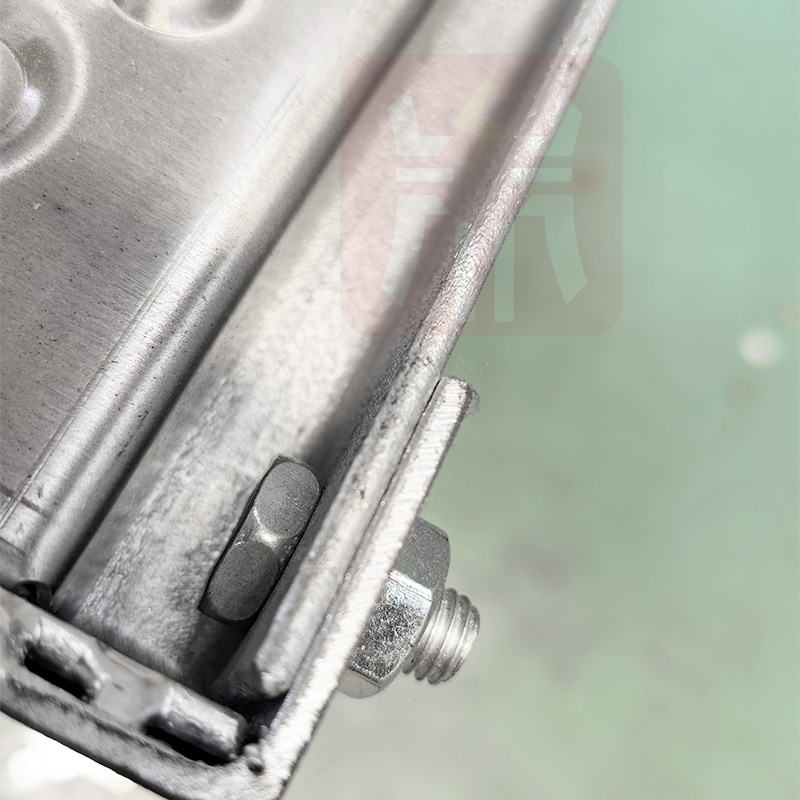 |
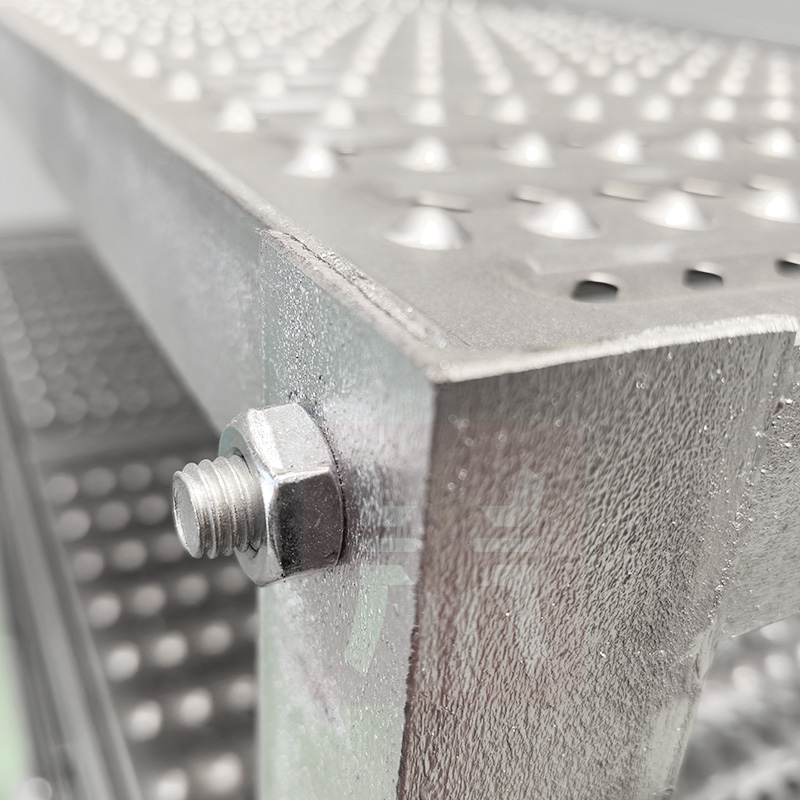
| Heavy-duty galvanized slab storage rack details | |
How Do Adjustable Pole Slab Racks Work?
Many slab rack systems use base rails with multiple pole positions. The spacing between poles can then be adjusted to suit different slab bundles or storage sections.
Base rail
↓
Selectable pole position
↓
Vertical support pole
↓
Bundle spacing adjusted to the slab group
↓
Slabs supported within the rated configuration
Exact hole spacing, pole size, pole capacity, and allowable loading should be taken from the technical information for the specific model.
Does Every Galvanized Slab Rack Include Rubber Protection?
No. Slab-contact protection is model-specific.
Some racks may use:
- steel contact surfaces,
- rubber on the base,
- rubber on both bases and vertical poles,
- timber-ready ground rails,
- or another protective interface.
This distinction matters for polished stone, glass, countertops, and finished surfaces.
Buyers should confirm exactly which components contact the material and whether protective strips or pads are included as standard equipment or as an option.
Related Speedone Galvanized Slab Rack Configurations
Speedone offers different slab storage configurations for different workflows. These pages should not be treated as identical products simply because they all use galvanized steel.
Truck-Mounted Slab Storage
For transportation and vehicle-based material storage, the
truck-mounted slab storage rack
provides a separate solution focused on movement between facilities and job sites.
Stone and Glass Frame Storage
Facilities handling both stone and glass can review the
steel marble slab frame for glass
for a different panel-storage configuration.
CXCC-GB Ground-Rail Configuration
The
CXCC-GB galvanized slab storage rack with timber-ready ground rails
is positioned around a ground-rail configuration for slab storage applications.
CXCC-GA Adjustable / Flip-Pole Configuration
The
CXCC-GA adjustable galvanized slab rack with flip pole system
provides another solution where adjustable access and pole configuration are important.
CXCC-G Heavy-Duty Slab Rack
Operations requiring a heavy-duty configuration can review the
CXCC-G heavy-duty galvanized slab rack
for stone and glass storage.
CXCC-F Countertop Rack
Fabricators handling finished countertops and lighter fabricated pieces can review the
CXCC-F countertop slab storage rack
.
Galvanized Slab Rack vs A-Frame Storage Rack
These product names describe different structural concepts and should not automatically be treated as synonyms.
| Factor | Adjustable Slab Rack | A-Frame Storage Rack |
|---|---|---|
| Primary Support | Base rails and vertical poles | Inclined A-shaped structural supports |
| Spacing Adjustment | Often adjustable through pole locations | Depends on model geometry |
| Typical Selection Basis | Bundle width, pole spacing, load and panel dimensions | Slab height, placement width, structural geometry, load and restraints |
Galvanized vs Powder-Coated Slab Storage Racks
| Factor | Galvanized Finish | Powder-Coated Finish |
|---|---|---|
| Protective System | Zinc-based metallic protection | Polymer powder coating over prepared steel |
| Appearance | Typical galvanized metallic surface | Available in different colors depending on specification |
| Best Choice | Depends on environment, required corrosion performance, appearance, maintenance, budget, and the actual coating specification. | |
Neither finish should be selected solely from marketing terms such as “best” or “ultimate.” Buyers should compare measurable coating specifications and the real operating environment.
Can Galvanized Slab Racks Be Used Outdoors?
Some galvanized steel systems may be suitable for outdoor or semi-outdoor applications, but “galvanized” alone is not enough to guarantee unrestricted outdoor service.
Outdoor suitability depends on:
- the galvanizing process,
- zinc thickness,
- coastal or salt exposure,
- industrial pollutants,
- water retention,
- surface damage,
- maintenance,
- and the structural specification.
For outdoor slab yards or corrosive environments, buyers should provide the actual site conditions before selecting the finish.
Warehouse Layout Considerations
A slab rack should not be evaluated only by how much material fits onto the steel structure.
Warehouse planning should also consider:
- aisle width,
- forklift or crane access,
- slab lifter clearance,
- bundle separation,
- operator position,
- retrieval sequence,
- floor capacity and condition,
- and emergency or pedestrian access.
A rack that fits physically into the building may still create a poor workflow if slab-removal equipment cannot approach safely or efficiently.
Pre-Loading Slab Rack Inspection Checklist
- Confirm the rack model and rated capacity.
- Confirm the actual slab or bundle weight.
- Inspect base rails for bending or deformation.
- Inspect poles and support members.
- Check load-bearing welds where applicable.
- Confirm adjustable poles are inserted or secured correctly.
- Inspect A-frame or additional structural components where fitted.
- Check rubber, timber, or other contact protection where included.
- Inspect the galvanized surface for major damage or exposed steel.
- Confirm the floor can support the loaded rack.
- Maintain clearance around the storage area.
- Keep personnel clear of areas where slabs could topple or fall.
Common Buyer Mistakes
Buying “Galvanized Shelving” Instead of a Slab Storage System
Generic warehouse shelves are not automatically suitable for heavy slab materials. The rack should be specifically designed and rated for the material geometry and loading method.
Choosing by Capacity Alone
Rated tonnage does not replace checks for slab height, bundle thickness, pole spacing, base length, and load distribution.
Assuming Every Galvanized Rack Has the Same Corrosion Resistance
Galvanizing method, zinc thickness, environment, and maintenance conditions can vary significantly.
Ignoring Slab Contact Protection
Some rack models may have no rubber protection, while others use rubber on selected surfaces. Confirm the exact supplied configuration.
Assuming Every Model Is Suitable Outdoors
Outdoor use should be confirmed from the exact finish, structural design, and operating environment.
Ignoring the Difference Between Similar CXCC Models
CXCC-G, CXCC-GA, CXCC-GB, and CXCC-F are different configurations intended for different storage priorities. Select by real specifications rather than model family name alone.
What Information Should You Provide Before Ordering?
| Required Information | What to Provide |
|---|---|
| Material | Granite / marble / quartz / glass / countertop / other |
| Maximum Slab Size | Length × height × thickness |
| Maximum Individual Slab Weight | kg |
| Maximum Bundle Weight | kg or tons |
| Bundle Thickness | Total storage width required |
| Contact Protection | Steel / rubber / timber / other required interface |
| Handling Method | Forklift / crane / clamp / vacuum lifter / other |
| Environment | Indoor / outdoor / humid / coastal / other |
| Galvanizing Requirement | Required process, thickness, or corrosion performance if specified |
Frequently Asked Questions
What is a galvanized slab storage rack?
It is a steel rack designed to support heavy slabs or panels while using a zinc-protected galvanized surface to improve corrosion resistance.
What is the difference between a galvanized slab rack and ordinary warehouse shelving?
Ordinary shelving is typically designed for boxes, pallets, tools, or horizontal inventory. Slab racks are designed around large upright or near-upright panels using base rails, poles, frames, or other dedicated support structures.
Can galvanized slab racks store granite and marble?
Yes, suitable models are used for granite, marble, quartz, quartzite, glass, countertops, and other compatible large panels, subject to actual size, weight, contact protection, and the rack rating.
How much weight can a galvanized slab rack hold?
Capacity is model-specific. Buyers should use the rated load of the exact rack configuration and confirm load distribution, pole spacing, and slab dimensions.
How do adjustable slab rack poles work?
Selected rack designs use multiple pole positions in the base rail so the spacing can be adjusted to match different slab bundles. Exact pole spacing and capacity should be confirmed for the model.
Does every slab rack include rubber protection?
No. Contact protection is model-specific. Some configurations may use bare steel, rubber on bases, rubber on poles and bases, timber-ready rails, or another protective interface.
Is galvanized better than powder coating?
Neither finish is universally better for every application. Selection depends on the required corrosion performance, environment, appearance, maintenance, budget, and actual coating specification.
Can galvanized slab racks be used outdoors?
Some configurations may be suitable for outdoor or semi-outdoor use, but suitability depends on galvanizing method, zinc thickness, environmental exposure, maintenance, and the specific rack design.
What should I inspect before loading slabs?
Inspect base rails, poles, structural connections, welds where applicable, contact protection, galvanized surfaces, and any signs of bending, damage, corrosion, or previous overload.
What information should I provide before requesting a quotation?
Provide material type, maximum slab dimensions, individual slab weight, total bundle weight, bundle width, handling method, contact-protection requirements, warehouse environment, and any specific galvanizing requirement.
Expert Commentary & Analysis
The most important SEO correction for this page is product classification. Speedone’s relevant equipment is better understood as galvanized slab storage racks rather than generic galvanized shelving. This aligns the page with granite, marble, quartz, glass, countertop and large-panel storage instead of competing with conventional warehouse shelving.
The second important point is that “galvanized” is a surface-treatment category rather than one universal corrosion specification. Buyers making engineering or outdoor-use decisions should request the actual galvanizing method, coating thickness and environmental suitability for the exact rack model.
Finally, rack capacity should never be evaluated alone. A professional selection also considers slab dimensions, bundle thickness, pole spacing, support geometry, contact protection, loading method and warehouse layout.
Buyer takeaway: choose the specific Speedone galvanized slab rack according to the actual slab or panel application—not simply because several models share galvanized steel construction.