






Stone Vibrating Screen Manufacturer for Aggregate | Speedone
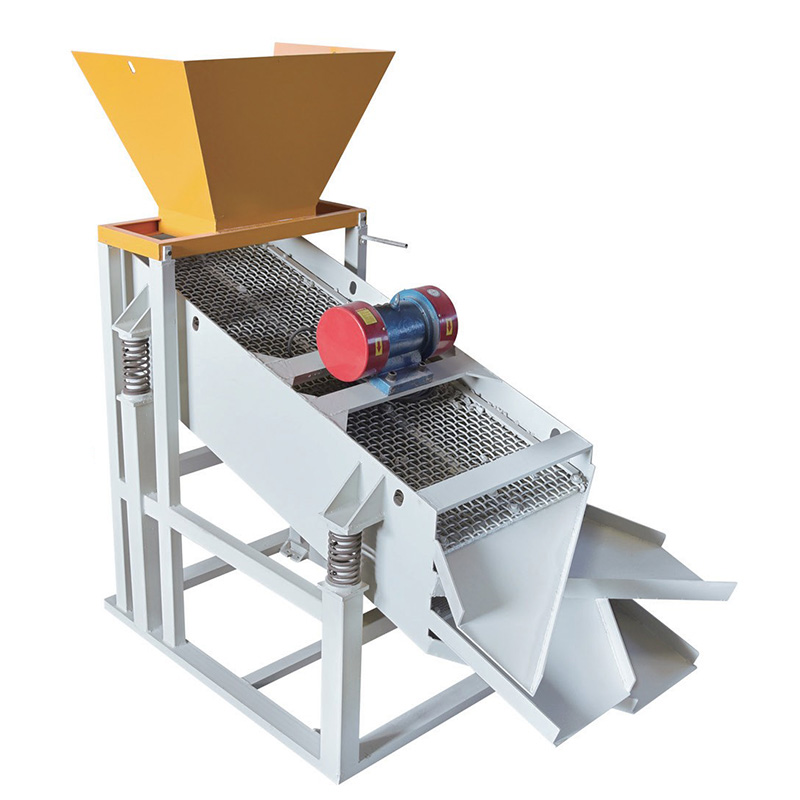
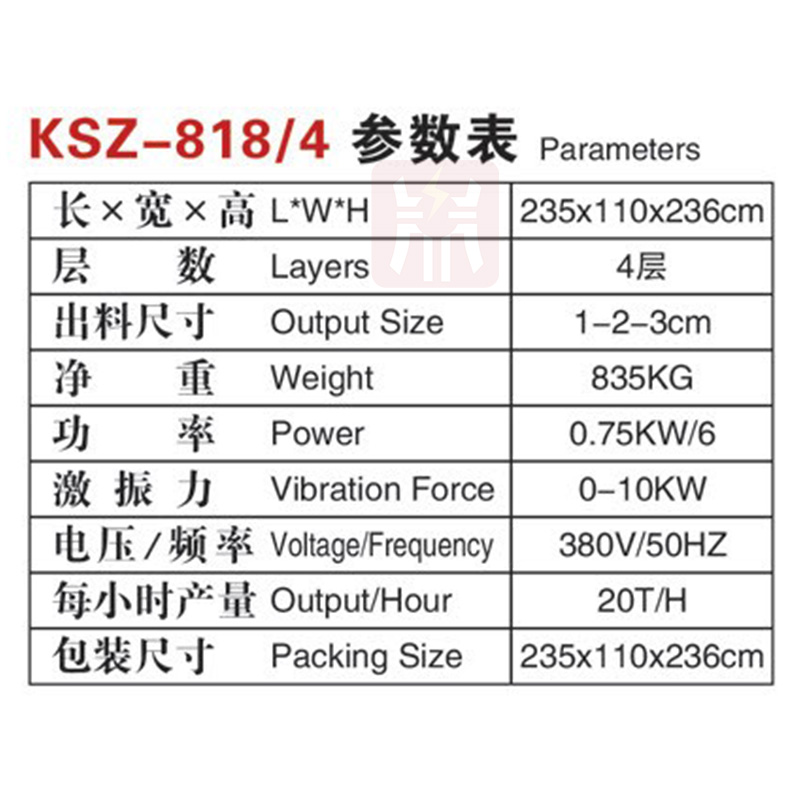
- Layers : 4
- Output Size : 1-2-3cm
- Gewicht : 835KG
- Power : 0.75KW
- Voltage/Frequency : 380V/50HZ
- Output/Hour : 20T/H
Product Beschrijving
Stone Vibrating Screen for Crushed Stone, Gravel & Aggregate
De Speedone stone vibrating screen is designed to separate crushed stone, gravel and aggregate into different particle-size groups after crushing. The machine uses a large feed hopper, inclined screening deck, vibration system, spring-supported screen body, steel frame and separate discharge paths. It can work as an independent screening station or as part of a complete stone crushing line. Screen opening, processing capacity, motor configuration and final aggregate sizes should be selected according to the actual material and production requirement.
What Is a Stone Vibrating Screen?
|
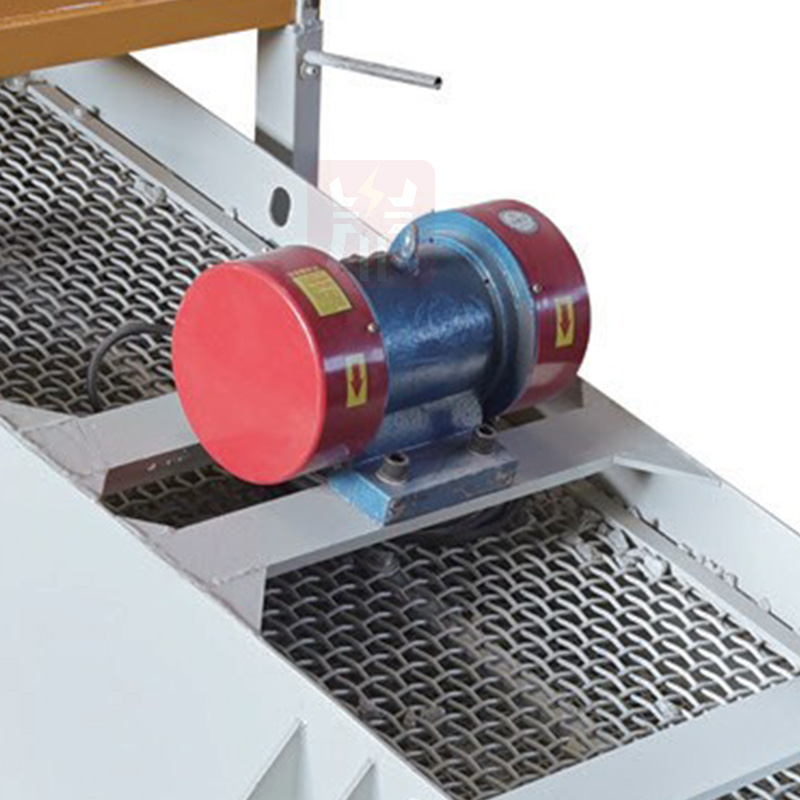 |
| Product display and detail presentation | |
A stone vibrating screen is industrial screening equipment used to separate crushed stone, gravel, rock and aggregate according to particle size.
It normally works after crushing.
The crusher reduces larger stone into smaller material. The vibrating screen then separates that crushed material into useful size groups.
A typical stone-processing workflow is:
Raw Stone → Crushing → Conveying → Vibrating Screening → Size Classification → Aggregate Collection
This makes vibrating screening equipment useful for:
- Stone crushing lines
- Granite aggregate production
- Limestone screening
- Gravel classification
- Rock aggregate processing
- Stone factory recycling
- Construction-material production
What Does a Stone Vibrating Screen Do?
Stone coming out of a crusher normally contains many different particle sizes.
The material may include:
- Fine crushed stone
- Medium aggregate
- Coarse stone
- Oversized particles
- Mixed gravel sizes
The vibrating screen moves this material across a screening surface.
Particles smaller than the screen openings can pass through, while larger material continues toward another discharge path.
The result is a more organized separation of crushed stone into different size groups.
Main Structure of the Speedone Stone Vibrating Screen
Large Feed Hopper
The upper hopper receives crushed stone before it enters the screening deck.
It helps guide material toward the screening surface instead of allowing stone to enter randomly from different directions.
A stable feed can help improve material distribution across the screen.
Inclined Screening Deck
The screening body is installed at an incline.
During operation, vibration and gravity work together to move crushed stone forward.
Smaller particles pass through the selected openings while larger particles continue along the screen.
Vibration Motor System
The vibration system provides the movement required to transport and classify material across the screening deck.
Exact motor power, vibration frequency and operating settings depend on the selected machine configuration.
Spring-Supported Screen Body
The vibrating screen body is supported by multiple coil springs.
These springs allow the screen body to move while helping separate the vibrating section from the stationary steel support frame.
Spring condition should therefore be included in regular inspection.
Screening Surface
The screening surface determines which particles can pass through.
This is one of the most important parts of the machine because the selected opening directly affects the finished aggregate size.
A factory producing several aggregate specifications may require a different screen arrangement from a factory that only needs to remove oversized stone.
Separate Discharge Paths
The machine includes separate discharge areas for classified material.
This allows different particle sizes to move toward different collection points instead of mixing together again after screening.
Heavy Steel Support Frame
The vibrating assembly is supported by a welded steel frame.
The installation area should be level and suitable for the machine’s operating load and vibration.
 |
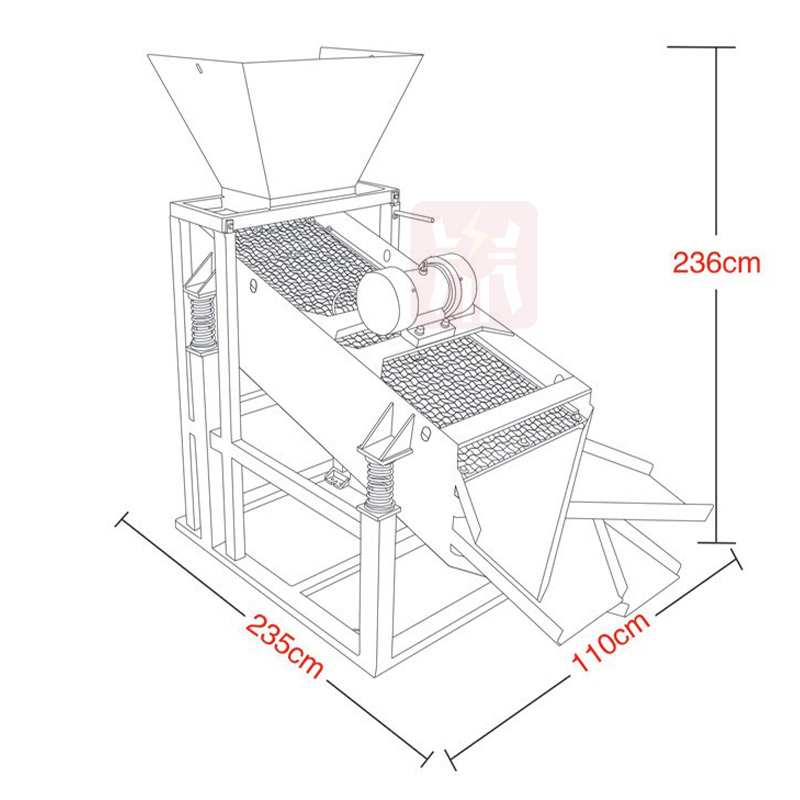 |
| Product information parameters and dimensions display | |
How Does a Stone Vibrating Screen Work?
A typical screening process is:
Crushed Stone Feeding → Vibration → Material Movement → Particle Separation → Separate Discharge
1. Feed the Crushed Stone
Material enters through the upper hopper.
2. Start the Vibration System
The vibration system moves the screening body according to the machine’s designed working motion.
3. Move Material Across the Screen
Crushed stone travels along the inclined screening surface.
4. Separate the Particle Sizes
Smaller particles pass through the screen openings while larger particles remain above the screening surface.
5. Discharge the Classified Material
Different size groups leave through their corresponding discharge paths.
6. Collect the Finished Aggregate
The screened material can then be stored, packed, transferred or sent to another processing stage.
Stone Vibrating Screen for Crushed Stone
Crushed stone is one of the main materials processed with vibrating screening equipment.
A crusher may produce a wide range of particle sizes in one discharge stream.
Screening helps separate this material for applications such as:
- Construction aggregate
- Road-base stone
- Landscape gravel
- Drainage stone
- Secondary building materials
- Further processing
The required finished particle sizes should be defined before the screening configuration is selected.
Stone Vibrating Screen for Granite Aggregate
Granite crushing can produce a mixture of fine, medium and coarse particles.
A vibrating screen can separate suitable crushed granite into different aggregate groups.
A typical granite-processing workflow is:
Granite Offcuts / Rock → Jaw Crushing → Conveying → Vibrating Screening → Classified Granite Aggregate
Factories that also need primary stone size reduction can combine the screening stage with Speedone’s 15 T/H stone crusher machine when the material and production capacity are suitable.
Stone Vibrating Screen for Limestone
Limestone is widely used in construction and aggregate applications.
After crushing, a vibrating screen can separate suitable limestone into different particle-size groups.
Possible applications include:
- Construction aggregate
- Road foundation material
- Landscape stone
- Drainage material
- Secondary building material
Material moisture and particle shape should be considered because they can affect screening performance.
Stone Vibrating Screen for Gravel
Mixed gravel can also be classified with vibrating screening equipment.
The screening surface separates smaller and larger particles according to the selected openings.
This is useful when buyers need more consistent gravel sizes instead of one mixed material pile.
Stone Vibrating Screen for Rock Aggregate
Rock aggregate is used in construction, landscape and infrastructure projects.
Before choosing a screen, buyers should define:
- Rock material
- Maximum incoming particle size
- Required finished sizes
- Number of size groups
- Required throughput
- Material moisture
- Upstream crusher capacity
The screen should be matched to both the upstream crusher and downstream collection system.
Stone Vibrating Screen for Stone Factory Waste
Stone factories can generate broken stone and irregular offcuts during fabrication.
Selected clean material may be suitable for secondary crushing and screening.
A practical process is:
Stone Waste → Sorting → Pre-Sizing → Crushing → Screening → Classified Secondary Material
Foreign materials such as metal, plastic, wood, mesh and unsuitable contaminants should be removed before crushing and screening.
Larger useful stone pieces should also be evaluated before crushing because they may still have value as wall stone or landscape products.
For larger natural-stone pieces, buyers can compare Speedone’s natural stone splitting solution for wall and architectural stone.
Stone Vibrating Screen vs. Stone Crusher
A crusher and vibrating screen perform different jobs in the same aggregate-production process.
| Factor | Stone Vibrating Screen | Stone Crusher |
|---|---|---|
| Main Function | Classify particles by size | Reduce stone size |
| Material Change | Separates existing particle sizes | Creates smaller particles |
| Typical Position | After crushing | Before screening |
| Finished Product | Classified aggregate | Mixed crushed material |
Factories with lower crushing-volume requirements can also compare Speedone’s 4 T/H compact stone crusher.
Standalone Vibrating Screen vs. Complete Crushing Line
A standalone vibrating screen performs material classification only.
A complete crushing line combines several production stages.
| Factor | Standalone Screen | Integrated Crushing Line |
|---|---|---|
| Screening | Included | Included |
| Crusher | Separate | Can be integrated |
| Conveying | Separate handling | Can be integrated |
| Factory Layout | More flexible | Requires coordinated layout |
Buyers who need crushing, conveying and screening in one coordinated workflow can review Speedone’s small stone crusher machine crushing and screening line.
Stone Vibrating Screen vs. Stone Pressing Machine
A vibrating screen is bulk-material classification equipment.
A stone pressing machine is used to form or process individual stone products through controlled tooling.
The two machines therefore have completely different production purposes.
For mould-based granite and marble products, buyers can review Speedone’s stone pressing machine for granite and marble.
Stone Vibrating Screen vs. Hydraulic Stone Stamping
Hydraulic stone stamping is used to create decorative products from suitable stone blanks.
Vibrating screening is used after stone has already been crushed into smaller particles.
For decorative stone forming, Speedone’s hydraulic stone stamping machine covers that separate production process.
When Should Stone Be Screened Instead of Crushed Again?
Not every piece leaving a crusher needs another crushing cycle.
If part of the material already meets the required aggregate size, screening can separate it first.
A practical process is:
Crushed Material → Screening → Correct Size → Collect → Oversized Material → Evaluate for Further Crushing
This can prevent unnecessary repeated crushing of material that already meets the target size.
Why Screen Opening Size Matters
The screen opening determines which particles can pass through.
Therefore, one of the most important questions before selecting the machine is:
What finished aggregate sizes do you need?
Buyers should define:
- Minimum finished particle size
- Maximum finished particle size
- Number of aggregate groups
- Acceptable oversized material
- Required production capacity
The screening configuration can then be selected around the actual product requirement.
How Many Aggregate Sizes Do You Need?
A vibrating screen should not be selected only by machine size.
The buyer also needs to define how many finished material groups are required.
For example, one production process may require:
- Fine aggregate
- Medium aggregate
- Coarse aggregate
- Oversized material for reprocessing
The exact particle ranges depend on the screen configuration and downstream application.
Why Material Moisture Matters
Dry crushed stone normally moves differently from wet or sticky material.
Excess moisture can affect:
- Material movement
- Screen opening condition
- Separation efficiency
- Production throughput
- Screen cleaning frequency
Buyers should therefore provide normal material-moisture information when requesting a quotation.
Why Feed Distribution Matters
Material should be distributed across the screening surface as evenly as practical.
If all crushed stone enters one narrow section, that area may become overloaded while another section of the screen remains underused.
The feed hopper and upstream conveyor arrangement should therefore be planned together with the vibrating screen.
Why the Inclined Screen Design Matters
The Speedone machine uses an inclined screening body.
This design helps the stone move forward while the vibration system separates different particle sizes.
The operating angle should follow the approved machine design and should not be changed without confirmation.
Why Spring Supports Matter
The screen body must move continuously during operation while the supporting frame remains comparatively stable.
The spring system helps connect these two sections.
Routine inspection should check for:
- Broken springs
- Uneven spring compression
- Loose mounting points
- Abnormal vibration
- Visible structural damage
Stone Vibrating Screen for Aggregate Classification
Aggregate classification is one of the main reasons to install a vibrating screen after a crusher.
A factory may want several products from the same crushed-stone stream.
The screen can help separate:
- Fine aggregate
- Medium-size stone
- Coarse aggregate
- Oversized material
The exact size ranges should be confirmed according to the downstream market and selected screen configuration.
Stone Vibrating Screen in a Crusher Production Line
In a complete crushing line, the vibrating screen normally works downstream from the crusher.
A typical production system is:
Raw Stone → Feeding → Jaw Crusher → Conveyor → Stone Vibrating Screen → Aggregate Classification → Collection
Depending on the production plan, oversized screened material can also be evaluated for additional crushing.
How to Choose the Right Stone Vibrating Screen
1. Define the Material
Specify granite, limestone, gravel, crushed rock, marble or another suitable material.
2. Define Maximum Feed Size
Provide the largest particle size entering the screen.
3. Define Required Finished Sizes
List every aggregate size that needs to be separated.
4. Define Required Throughput
Estimate realistic tons per hour.
5. Define Material Moisture
Indicate whether the material is normally dry, damp or wet.
6. Define Upstream Crusher Capacity
The screen should be able to handle the incoming material without becoming an unnecessary production bottleneck.
7. Define Number of Size Groups
Clarify how many finished aggregate categories are required.
8. Define the Feeding Method
Specify whether material arrives by conveyor, hopper, loader or another method.
9. Plan Material Discharge
Determine where each finished particle size will be collected or transferred.
10. Confirm Factory Power
Provide voltage and frequency.
11. Consider Maintenance Access
Leave enough space around the screen body, vibration system and springs.
12. Evaluate Supplier Support
Screen configuration, spare parts and technical documentation are important for professional screening equipment.
Information to Send Speedone for a Quotation
To help Speedone recommend the right stone vibrating screen, provide:
- Material type
- Material photographs
- Maximum feed size
- Typical feed size
- Required finished particle sizes
- Number of size groups required
- Required tons per hour
- Material moisture condition
- Upstream crusher model or capacity
- Feeding method
- Required discharge arrangement
- Factory voltage and frequency
- Available installation area
- Any conveyor requirements
Representative crushed-stone photographs or samples can also help clarify the actual screening requirement.
Common Stone Vibrating Screen Problems
Material Does Not Separate Correctly
Check screen opening size, feed distribution, feed rate and material moisture.
Screen Openings Become Blocked
Wet, sticky or irregular material can increase blockage. Stop and isolate the machine before cleaning.
Material Accumulates Near the Hopper
The feed rate may be higher than the screen can process effectively.
Abnormal Vibration Develops
Inspect the springs, vibration system, fasteners and supporting frame.
One Discharge Has Too Much Material
Review the required particle distribution and selected screening configuration.
The Screen Becomes a Production Bottleneck
Compare the actual crusher output with the screening throughput and check whether the screen configuration matches the production line.
Stone Vibrating Screen Maintenance
Routine inspection should include:
- Screening surface
- Screen mounting points
- Vibration motors
- Motor fasteners
- Support springs
- Steel frame
- Feed hopper
- Discharge chutes
- Electrical components
- Protective guards
Loose components should be corrected before continued operation because repeated vibration can make mechanical looseness worse.
Damaged springs or screening surfaces should be inspected and replaced when required.
Stone Vibrating Screen Safety
A vibrating screen combines heavy stone, continuously moving material and vibrating mechanical components.
- Only trained personnel should operate the equipment.
- Keep hands away from the moving screen.
- Do not climb onto the screening deck while the machine is running.
- Keep approved guards installed.
- Do not manually clear blocked material while the machine is operating.
- Keep discharge areas clear.
- Inspect springs and mounting points regularly.
- Wear appropriate personal protective equipment.
- Control dust according to workplace requirements.
- Keep unauthorized personnel away from the machine.
- Follow lockout procedures before maintenance.
- Replace damaged components before returning the equipment to production.
Who Uses Stone Vibrating Screens?
This type of equipment may be suitable for:
- Stone fabrication factories
- Granite processors
- Limestone processors
- Aggregate producers
- Construction-material businesses
- Landscape stone suppliers
- Stone recycling operations
- Small crushing plants
- Quarries with secondary processing
- Stone machinery distributors
Waarom kiezen voor Speedone?
Speedone supplies professional equipment for stone processing, crushing, material handling and factory production.
When choosing a stone vibrating screen, buyers should evaluate the complete material-flow requirement instead of looking only at the screening surface.
A practical selection process is:
Stone Material → Crusher Output → Maximum Feed Size → Required Aggregate Sizes → Screen Configuration → Required Throughput → Discharge Layout
Important purchasing factors include:
- Screen opening requirement
- Screening area
- Required throughput
- Vibration system
- Spring support
- Feed hopper design
- Discharge arrangement
- Factory layout
- Crusher compatibility
- Maintenance access
- Spare-parts support
- Technical communication
The correct stone vibrating screen should be selected according to the actual crushed material, upstream crusher output and required finished aggregate sizes. The Speedone configuration uses a feed hopper, inclined screening surface, vibration system, spring-supported screen body and separate discharge paths, making it suitable as either an independent aggregate-screening station or part of a coordinated stone crushing and screening workflow.
Veelgestelde vragen
What is a stone vibrating screen?
A stone vibrating screen is equipment used to separate crushed stone, gravel or aggregate into different particle-size groups.
What is a stone vibrating screen used for?
It is commonly used after stone crushing to classify granite, limestone, gravel, crushed rock and other suitable aggregate materials.
Is a stone vibrating screen the same as a stone crusher?
No. A crusher reduces stone size, while a vibrating screen separates already-crushed material according to particle size.
Can it screen granite aggregate?
Suitable crushed granite can be screened when the incoming particle size, required finished sizes and throughput match the selected machine configuration.
Can it screen limestone?
Suitable crushed limestone can be classified by size using an appropriate screening configuration.
Can it screen gravel?
Yes. Suitable gravel can be separated into different particle-size groups according to the selected screen openings.
Can the machine be used after a jaw crusher?
Yes. Vibrating screening is commonly used downstream from a jaw crusher when classified aggregate is required.
Why does a vibrating screen use springs?
The spring-supported structure allows the screen body to vibrate while helping separate the moving screen assembly from the stationary support frame.
How do I choose the correct screen opening?
The screen opening should be selected according to the required finished aggregate sizes and the characteristics of the incoming crushed material.
Does wet stone affect screening?
Yes. Material moisture can affect flow, screen blockage and separation performance, so normal moisture conditions should be provided when selecting the machine.
Can a stone vibrating screen be integrated into a crushing line?
Yes. It can be combined with crushers and conveyors to create a coordinated crushing, conveying and aggregate-screening workflow.
What information should I provide for a quotation?
Provide material type, maximum feed size, required output sizes, number of size groups, required tons per hour, moisture condition, upstream crusher information, factory power supply and available installation area.