






Small Stone Crusher Machine Manufacturer & Crushing Line | Speedone
- Total Capacity : 15-20 T/H
- Discharge Size : 1-2-3cm
- Working Voltage : 380V/50HZ
- Total Installed Power : 21.5KW (3+3+15+0.75KW)
Product Description
Small Stone Crusher Machine Line for Granite, Limestone & Aggregate
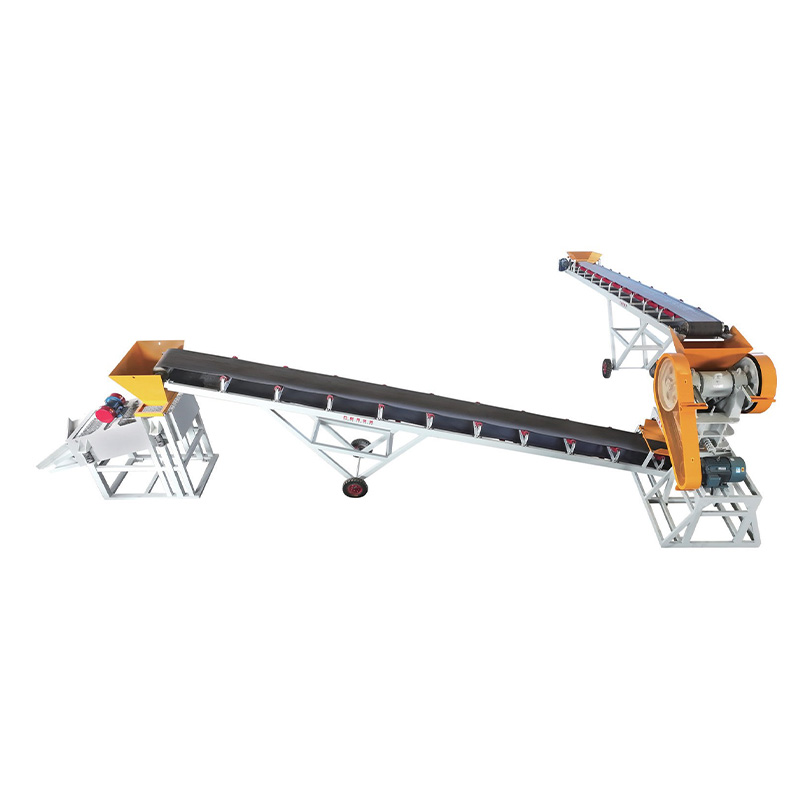
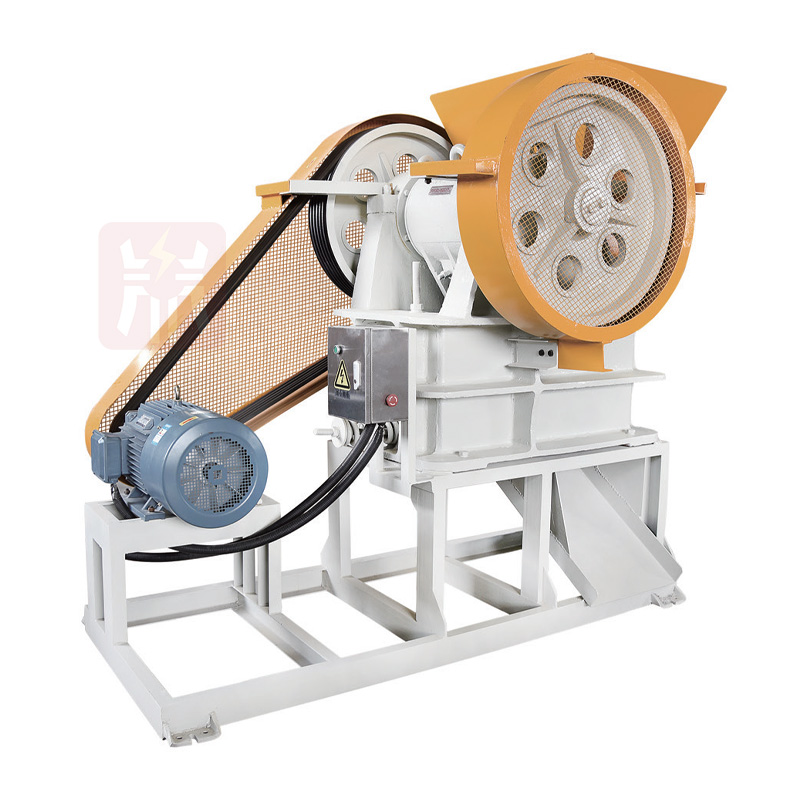
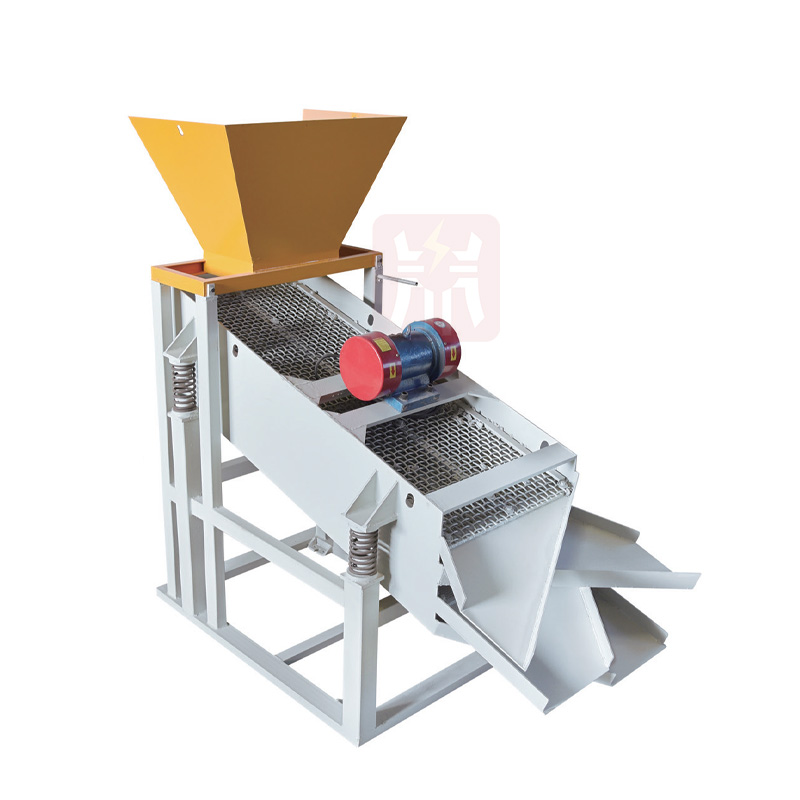
The Speedone small stone crusher machine KSP-2540LS is designed as an automatic stone crushing workflow line rather than a standalone crusher. The system combines a KSP-2540 stone crusher, belt conveyors and a KSZ-818/4 vibrating screen to connect crushing, material transfer and particle-size screening in one organized production process. It is suitable for granite, limestone, aggregate production and selected clean stone-waste processing where buyers need more than a single crushing machine.
What Is a Small Stone Crusher Machine Line?
|
 |
| Product display | |
A small stone crusher machine is used to reduce natural stone or rock into smaller aggregate-sized material.
In this application, “small” mainly refers to the production scale compared with large quarry crushing plants. It does not necessarily mean that the complete line has a very small physical footprint.
When a crusher is combined with conveyors and screening equipment, the system can handle several production stages:
- Stone feeding
- Primary crushing
- Crushed-material transfer
- Particle-size screening
- Aggregate classification
- Finished-material collection
The Speedone KSP-2540LS is built around this complete workflow rather than only the crushing stage.
Speedone KSP-2540LS Automatic Stone Crushing Line
The KSP-2540LS is identified as an automatic stone crushing line.
The “LS” designation refers to the workflow-line configuration.
The supplied line includes four main equipment sections:
- KSC-590X belt conveyor
- KSP-2540 stone crusher
- KSC-580X belt conveyor
- KSZ-818/4 vibrating screen
Together, these machines create a connected production route for crushing, conveying and screening stone.
A typical process is:
Stone Feeding → Crushing → Belt Conveying → Vibrating Screening → Size Classification → Aggregate Collection
 |
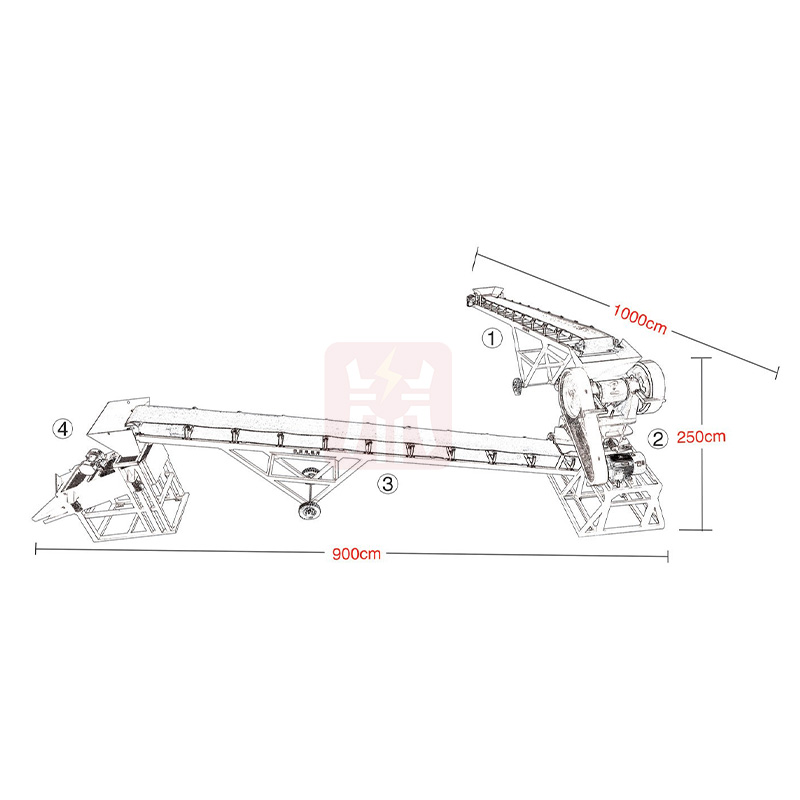 |
| Product display and size indication | |
Main Components of the Small Stone Crusher Machine Line
KSP-2540 Stone Crusher
The KSP-2540 is the main crushing unit in the line.
Its job is to reduce suitable incoming stone into smaller material before the aggregate moves to downstream conveying and screening.
If your factory only needs a crusher without conveyors and screening equipment, you can compare Speedone’s 15 T/H stone crusher machine.
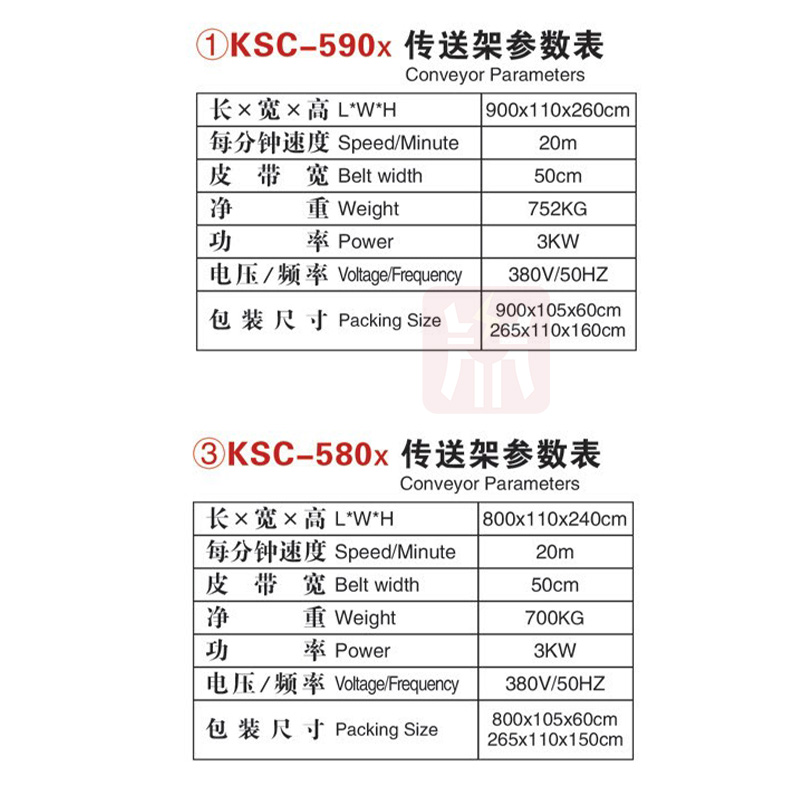
KSC-590X Belt Conveyor
The KSC-590X is part of the material-transfer system.
The supplied information lists a 50 cm belt width.
Its main purpose is to move stone or crushed material between different stages of the production line.
This reduces the need for repeated manual transfer.
KSC-580X Belt Conveyor
The KSC-580X provides another material-transfer section in the workflow.
The supplied plan also lists a 50 cm belt width.
Using dedicated conveyors helps connect the crusher, screen and finished-material area more efficiently.
KSZ-818/4 Vibrating Screen
The vibrating screen is used after crushing.
A crusher reduces stone size, but the discharged material normally contains different particle sizes.
The vibrating screen helps separate this material into different size groups for easier collection, storage or further processing.
 |
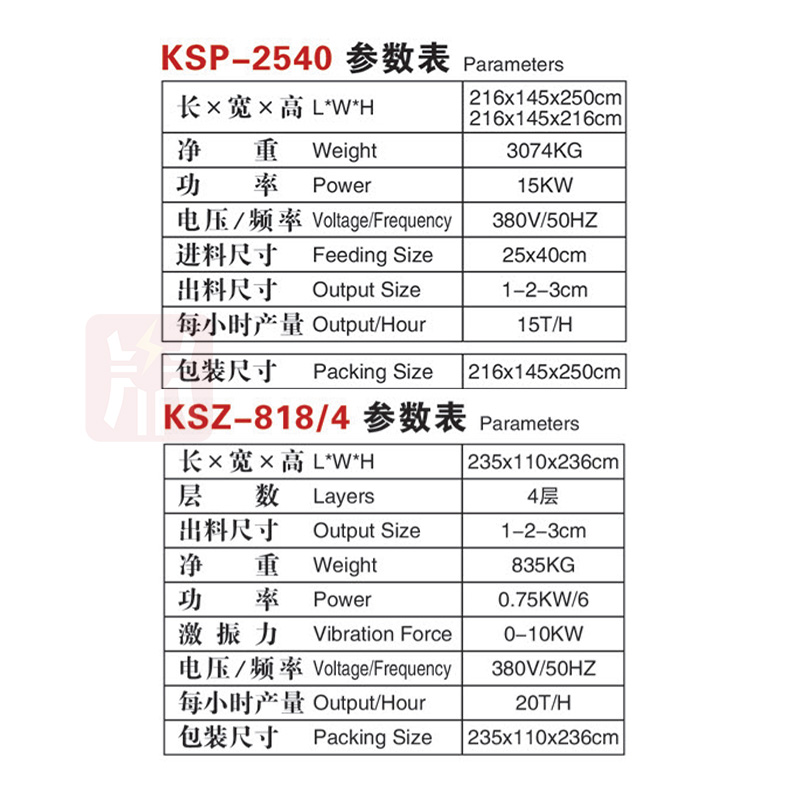 |
| Product information parameters | |
How Does a Small Stone Crushing Line Work?
1. Feed the Stone
Prepared natural stone enters the crushing system.
2. Crush the Material
The KSP-2540 applies mechanical crushing force to reduce the incoming stone.
3. Transfer the Crushed Stone
Belt conveyors move the discharged material away from the crusher.
4. Screen the Material
The crushed stone reaches the vibrating screen.
5. Separate Different Particle Sizes
The screen classifies material according to the configured screen arrangement.
6. Collect Finished Aggregate
Separated material can then move to different collection or storage areas.
Why Combine a Crusher, Conveyor and Vibrating Screen?
A standalone crusher can reduce stone size, but the factory still needs to move and classify the crushed material.
Connecting these stages into one workflow can make production easier to organize.
Potential advantages include:
- Reduced manual material transfer
- More continuous stone movement
- Organized crusher discharge
- Integrated particle-size screening
- Separation of different aggregate sizes
- Better use of factory labor
- Easier planning of finished-material collection
Actual efficiency still depends on the stone, feed preparation, required output sizes and complete line setup.
Small Stone Crusher Machine for Granite
Granite is one of the harder natural stones commonly processed with crushing equipment.
Suitable granite can be reduced into smaller material for applications such as:
- Construction aggregate
- Landscape gravel
- Road-base material
- Selected recycled granite
- Secondary stone processing
Granite hardness varies between quarry sources, so actual production should be evaluated using representative material.
Small Stone Crusher Machine for Limestone
Limestone is widely used in construction and aggregate production.
A crushing and screening line can process suitable limestone into classified crushed material.
Possible applications include:
- Construction aggregate
- Road-base stone
- Landscape material
- Secondary building materials
- General crushed stone
The screen configuration should be selected according to the required final particle sizes.
Small Stone Crusher Machine for Marble
Marble factories can generate irregular pieces during slab cutting and fabrication.
Selected clean marble offcuts may be suitable for secondary crushing after sorting.
Possible uses may include:
- Decorative aggregate
- Landscape material
- Selected construction applications
- Further mineral processing
Material containing backing mesh, resin, adhesives, metal or other foreign substances should be separated or evaluated before crushing.
Small Stone Crusher Machine for Stone Factory Waste
Stone factories often need a practical way to process offcuts that can no longer be used as normal dimensional stone products.
A possible workflow is:
Stone Offcuts → Sorting → Pre-Sizing → Crushing → Conveying → Screening → Aggregate Collection
However, larger usable stone pieces should be evaluated before they are crushed.
If an offcut can still become wall stone, landscape stone or another finished product, it may have more value in that form.
For suitable architectural pieces, buyers can compare Speedone’s natural stone splitter for wall and architectural stone.
Small Stone Crusher Machine for Aggregate Production
Aggregate production involves more than simply breaking stone.
Buyers should consider:
- Incoming stone size
- Stone hardness
- Required crushed size
- Required production capacity
- Number of finished particle sizes
- Screening requirements
- Conveyor distance
- Finished-material collection
The KSP-2540LS workflow combines crushing, conveying and screening to address these stages together.
KSP-2540LS vs. Standalone Stone Crusher
| Factor | KSP-2540LS Crushing Line | Standalone Crusher |
|---|---|---|
| Crushing | Included | Included |
| Material Conveying | Integrated | Separate handling required |
| Screening | Included in workflow | Separate equipment required |
| Factory Space | Requires complete line layout | Smaller installation area |
| Best Application | Crushing + aggregate classification | Independent crushing |
Small Stone Crusher Machine vs. 4 T/H Compact Crusher
Speedone offers different crusher configurations for different factory requirements.
The KSP-2540LS focuses on a connected production workflow.
A smaller standalone machine may be more suitable when:
- Production volume is lower
- Factory space is limited
- Screening is handled separately
- Stone can be loaded manually
- Finished crushed material can be collected directly
For this type of application, buyers can compare Speedone’s 4 T/H compact stone crusher.
Small Stone Crusher Machine vs. Stone Splitter
A crusher line and a stone splitter solve completely different production problems.
| Feature | Stone Crushing Line | Stone Splitter |
|---|---|---|
| Main Purpose | Reduce stone size | Create controlled stone pieces |
| Finished Product | Aggregate | Blocks, wall stone, pavers |
| Screening | Important downstream stage | Usually not required |
| Original Stone Shape | Not preserved | Partly preserved |
Crushing vs. Decorative Stone Processing
Before crushing larger stone offcuts, factories should consider whether the material can still become a higher-value finished product.
For suitable granite blanks, Speedone’s granite stamping machine for decorative pavers provides another processing option.
For mould-based granite and marble products, buyers can review the stone pressing machine for granite and marble.
For decorative hydraulic forming, Speedone also supplies a hydraulic stone stamping machine.
Why Belt Conveyors Matter
Stone and aggregate are heavy materials.
Moving crushed stone repeatedly by hand can slow the production process.
Belt conveyors help connect each stage of the line.
Potential benefits include:
- Reduced manual handling
- Continuous material transfer
- Better connection between crusher and screen
- More organized factory workflow
- Easier aggregate collection
Conveyor length and position should be matched to the actual factory layout.
Why the Vibrating Screen Matters
A crusher normally produces a mixture of particle sizes.
A vibrating screen helps classify this material.
This is useful when buyers need:
- More consistent aggregate sizes
- Several finished particle groups
- Separation of oversized material
- More organized storage
- Different aggregate products
The screen deck and mesh configuration should be selected according to the required finished material.
Planning the Crushing Line Layout
The KSP-2540LS is a complete workflow, so factory layout is an important part of machine selection.
Before installation, buyers should consider:
- Available factory floor area
- Raw-material entry point
- Crusher position
- Conveyor direction
- Screening position
- Finished-material collection areas
- Electrical supply
- Maintenance access
- Operator safety zones
The line should be planned around the actual factory rather than simply copying a standard layout.
How to Operate a Small Stone Crushing Line
1. Inspect the Complete Line
Check the crusher, conveyors, vibrating screen, guards and electrical components.
2. Inspect Incoming Stone
Remove foreign material and stone larger than the approved feeding range.
3. Check Conveyor Paths
Make sure belts and transfer points are free from obstruction.
4. Check the Vibrating Screen
Confirm the screen is correctly installed for the required particle-size separation.
5. Start the Line Correctly
Follow the operating procedure supplied for the complete Speedone workflow line.
6. Feed Stone Gradually
Avoid sudden or uncontrolled overloading of the crusher.
7. Monitor Crushing
Watch for unusual vibration, noise or material blockage.
8. Monitor the Conveyors
Check that material transfers correctly without excessive accumulation or belt misalignment.
9. Monitor Screening
Confirm that crushed material is being classified as required.
10. Manage Finished Material
Keep the aggregate collection areas clear.
11. Clear the Line Before Shutdown
Stop feeding and follow the approved shutdown sequence.
12. Isolate Power Before Maintenance
Lock out the relevant equipment before entering crusher, conveyor or screening areas.
How to Choose the Right Small Stone Crusher Machine Line
1. Define the Stone Material
Specify granite, limestone, marble, sandstone or another material.
2. Define Maximum Feed Size
Provide the largest routine incoming stone size.
3. Define Required Capacity
Estimate the tons-per-hour requirement based on normal factory production.
4. Define Final Particle Sizes
Specify the aggregate sizes that need to be separated.
5. Define Stone Hardness
Harder materials can affect crusher capacity and wear.
6. Define Screening Requirements
Determine how many finished particle-size groups are required.
7. Define Conveyor Distances
Measure the actual material-transfer distances inside the factory.
8. Confirm Factory Power
Provide voltage and frequency before ordering.
9. Plan Raw-Material Loading
Determine how stone will safely reach the crusher.
10. Plan Finished-Material Collection
Leave sufficient space for each separated aggregate product.
11. Consider Wear Parts
Maintenance planning should include crusher, conveyor and vibrating-screen wear components.
12. Evaluate Supplier Support
Layout support, technical documentation and spare-parts availability are important for a complete production line.
Information to Send Speedone for a Quotation
To help Speedone evaluate the correct small stone crusher machine line, provide:
- Stone material
- Raw-material photographs
- Typical feed size
- Maximum feed size
- Required tons per hour
- Required finished particle sizes
- Number of aggregate sizes required
- Daily operating hours
- Material moisture condition
- Factory voltage and frequency
- Available factory dimensions
- Raw-material loading point
- Finished-material collection positions
- Preferred conveyor layout
A simple factory floor plan is especially useful when configuring the crusher, conveyors and vibrating screen.
Common Small Stone Crushing Line Problems
Crusher Output Is Lower Than Expected
Check stone hardness, incoming size, feeding consistency and required output size.
Material Accumulates on the Conveyor
Check transfer points, belt condition, downstream capacity and material flow.
Conveyor Belt Runs Off Center
Stop the equipment and inspect belt alignment, rollers and tension.
The Vibrating Screen Does Not Separate Material Correctly
Check screen configuration, feed distribution and material condition.
Aggregate Accumulates Under the Screen
Improve finished-material collection and discharge planning.
The Complete Line Output Is Unstable
Check each stage separately: feeding, crushing, conveying, screening and collection.
Small Stone Crusher Machine Line Maintenance
Routine inspection should include:
- Crusher wear parts
- Crusher drive system
- Electric motors
- Drive belts
- Flywheel guards
- Conveyor belts
- Conveyor rollers
- Conveyor frames
- Vibrating screen
- Screen mesh
- Fasteners
- Electrical controls
- Transfer points
- Safety guards
Maintenance should be planned for the entire line rather than only the crusher.
A failed conveyor or blocked screen can stop production even when the crusher itself is operating normally.
Small Stone Crusher Machine Safety
An automatic crushing line combines crushing force, heavy stone, moving belts and vibrating equipment.
- Only trained personnel should operate the line.
- Keep hands away from the crusher feed opening.
- Do not remove crusher or drive guards during operation.
- Keep clear of moving conveyor belts and rollers.
- Do not climb onto conveyors while they are running.
- Do not clear blocked material while equipment is energized.
- Use suitable equipment for heavy stone loading.
- Keep loose clothing away from rotating equipment.
- Wear appropriate personal protective equipment.
- Control dust according to workplace requirements.
- Keep emergency-access areas clear.
- Follow lockout procedures before maintenance.
Who Uses Small Stone Crushing Lines?
This type of system may be suitable for:
- Stone fabrication factories
- Granite processors
- Marble factories
- Building-stone businesses
- Small aggregate producers
- Construction-material suppliers
- Landscape stone suppliers
- Stone recycling operations
- Quarries with secondary processing
- Stone machinery distributors
Why Choose Speedone?
Speedone supplies professional stone-processing and material-handling equipment for stone factories and industrial buyers.
When selecting a small stone crusher machine, buyers should evaluate the complete production process rather than comparing only crusher motor power or nominal capacity.
A practical selection process is:
Stone Material → Feed Size → Crushing Capacity → Required Aggregate Sizes → Screening → Conveyor Layout → Finished Material Collection
Important purchasing factors include:
- Crusher configuration
- Required production capacity
- Feed opening
- Conveyor belt width
- Conveyor distance
- Vibrating-screen configuration
- Required finished particle sizes
- Factory layout
- Wear-part availability
- Maintenance access
- Electrical compatibility
- Technical support
The Speedone KSP-2540LS should be evaluated as a complete automatic crushing workflow rather than only as a standalone crusher. Its combination of a KSP-2540 stone crusher, KSC-590X and KSC-580X belt conveyors, and KSZ-818/4 vibrating screen is especially suitable for factories that need crushing, material transfer and aggregate classification within one coordinated production line.
Frequently Asked Questions
What is a small stone crusher machine?
A small stone crusher machine reduces natural stone into smaller aggregate at a production scale below large quarry crushing plants. It can operate alone or as part of a crushing and screening line.
What is the Speedone KSP-2540LS?
The KSP-2540LS is an automatic stone crushing workflow line that combines crushing, material conveying and vibrating screening.
What equipment is included in the KSP-2540LS line?
The supplied configuration includes a KSP-2540 stone crusher, KSC-590X conveyor, KSC-580X conveyor and KSZ-818/4 vibrating screen.
Why are conveyors used in the crushing line?
Conveyors move stone and crushed aggregate between production stages and reduce repeated manual material handling.
Why is a vibrating screen used?
A vibrating screen separates crushed material into different particle-size groups for more organized aggregate production.
Can the line process granite?
Suitable granite can be crushed, although actual performance depends on stone hardness, feed size and required final aggregate.
Can it process limestone?
Suitable limestone can be processed when feed size and operating conditions remain within the approved machine configuration.
Can the line process stone factory waste?
Selected clean natural-stone offcuts may be suitable after sorting, removal of foreign material and suitable pre-sizing.
What is the difference between this line and the 4 T/H stone crusher?
The KSP-2540LS is an integrated crushing, conveying and screening workflow, while the 4 T/H crusher is a more compact standalone crushing solution.
Is a small stone crusher machine the same as a stone splitter?
No. A crusher reduces stone into aggregate, while a splitter creates larger controlled stone products such as wall stone, cubes and paving pieces.
How should I plan the conveyor layout?
The conveyor layout should be based on the factory floor plan, raw-material location, crusher position, screen position and finished-material collection areas.
What information should I provide for a quotation?
Provide the stone type, feed size, required capacity, required aggregate sizes, factory voltage, available floor dimensions, raw-material loading point and finished-material collection positions.
Related Products
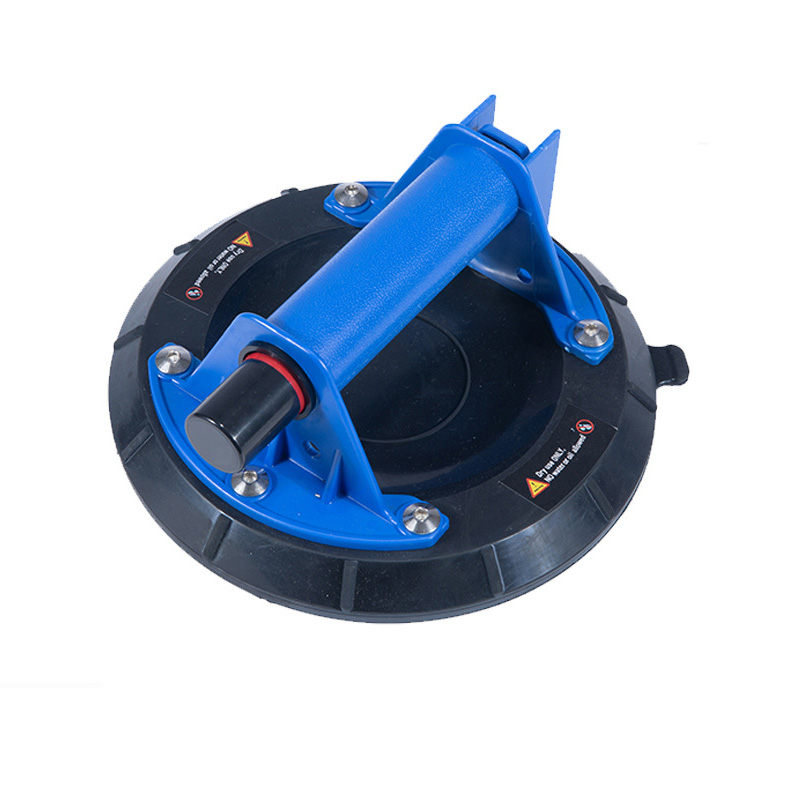
Vacuum Suction Cups for Glass, Tile & Stone
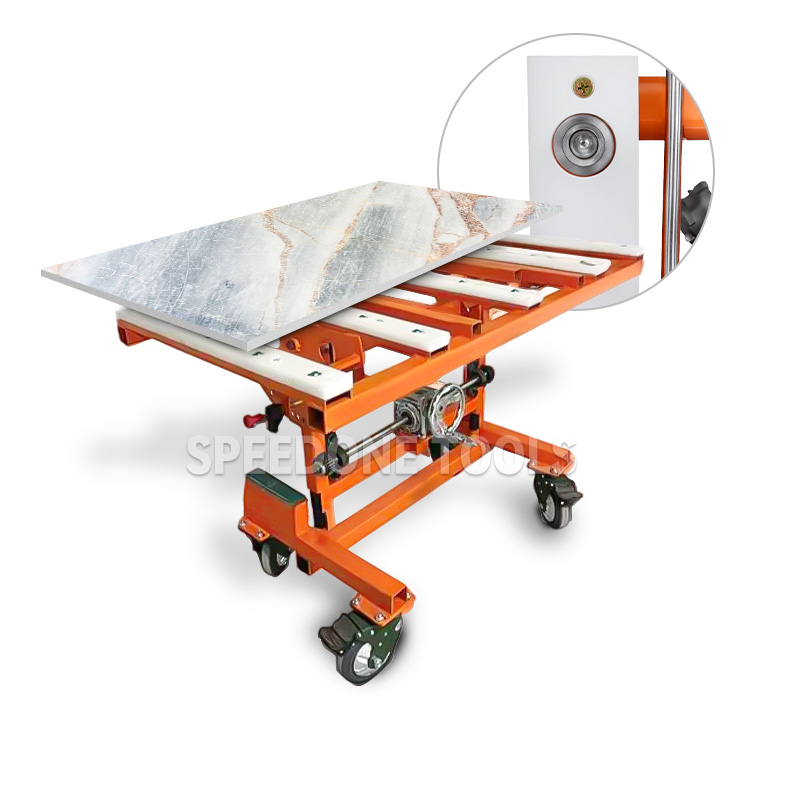
Manual Countertop Slab Installation Cart