






Small Stone Crusher Manufacturer with Automatic Screen | Speedone
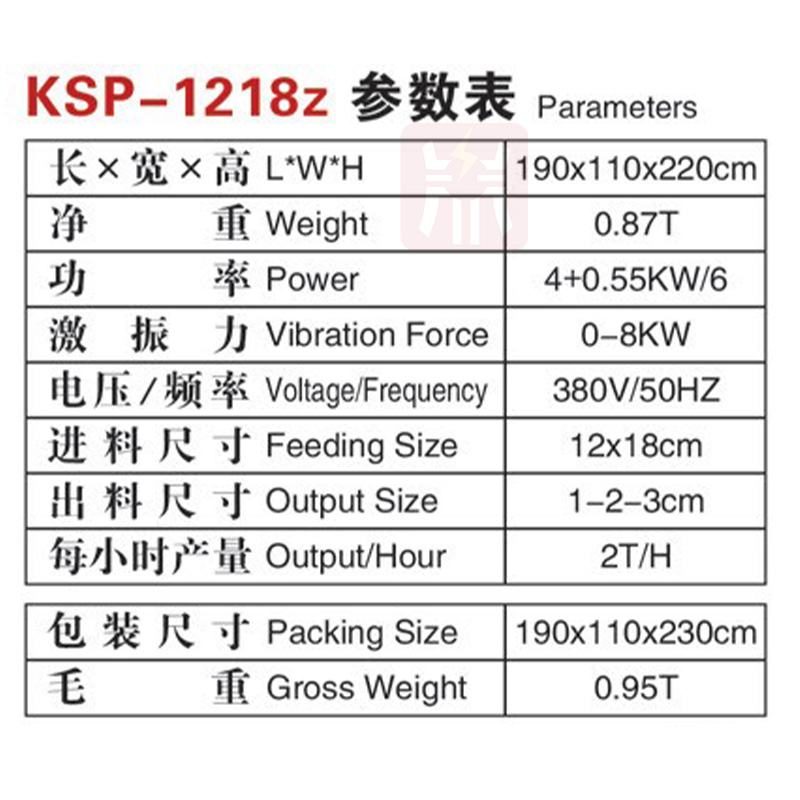
- Peso : 0.87 T
- Power : 4+0.55KW
- Vibration Force : 0-8KW
- Voltage/Frequency : 380V/50HZ
- Feeding Size : 12x18cm
- Output Size : 1-2-3cm
- Output/Hour : 2T/H
Descrição do produto
Small Stone Crusher with Automatic Screening for Granite & Limestone
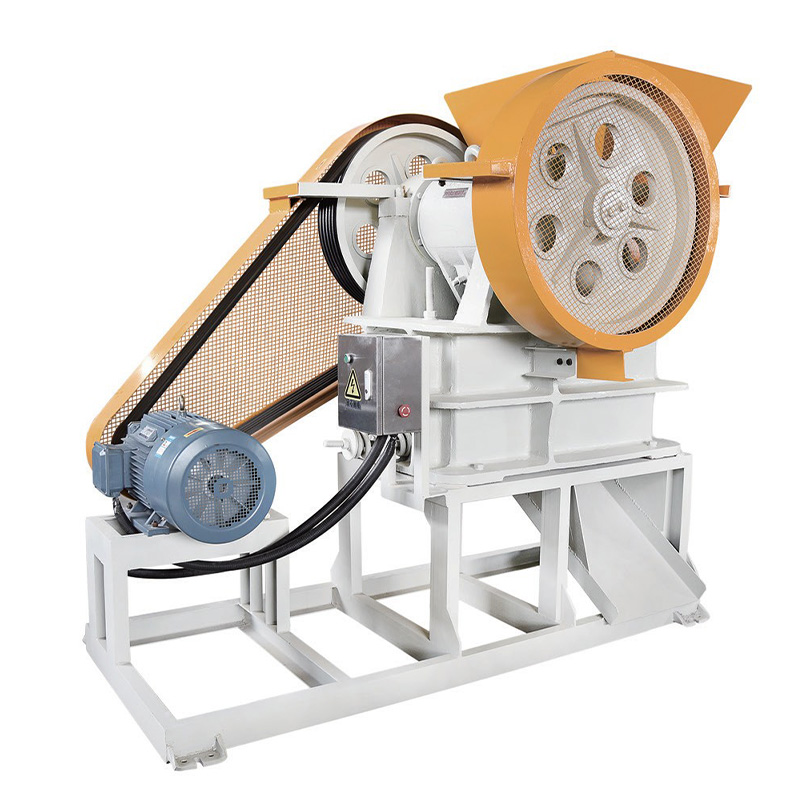
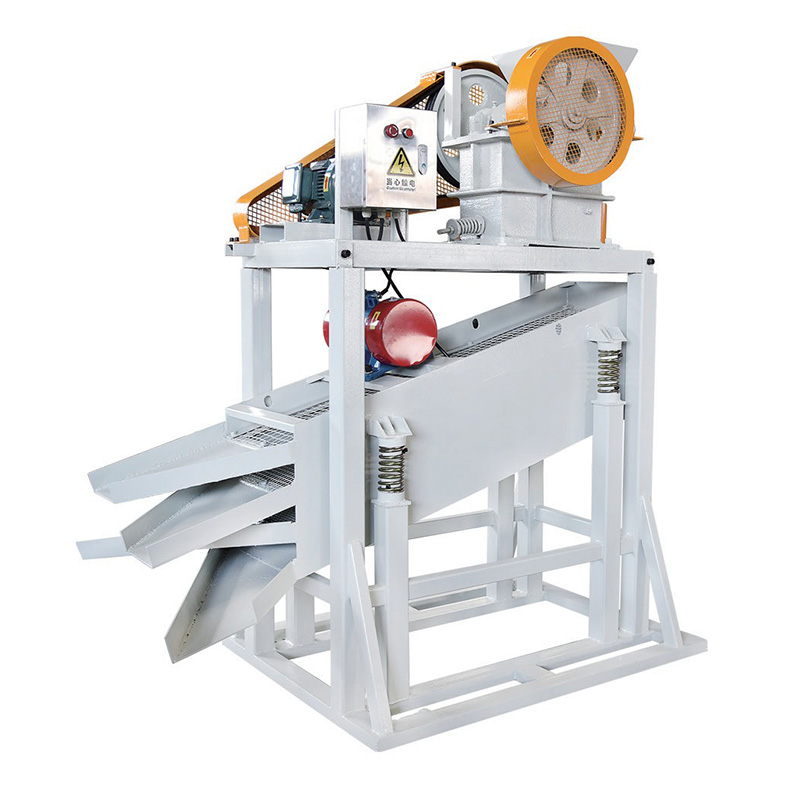
O Speedone small stone crusher KSP-1218Z combines stone crushing and automatic sieving in one compact machine. The supplied specifications list a 12×18 cm feeding size, 1 / 2 / 3 cm screened output sizes and an approximate production capacity of 2 T/H. The integrated vibrating screen and multiple discharge paths make it suitable for small stone factories, aggregate processing and selected stone-waste recycling where both crushing and particle-size classification are required.
What Is a Small Stone Crusher?
 |
|
| Product Application Demonstration | |
A small stone crusher is compact stone-processing equipment used to reduce natural stone or rock into smaller aggregate-sized material.
The Speedone KSP-1218Z goes one step further by adding automatic screening.
Instead of crushing stone and discharging everything into one mixed pile, the machine continues the process through a vibrating screen.
A typical workflow is:
Stone Feeding → Crushing → Automatic Sieving → Size Classification → Separate Discharge
This makes the machine suitable for buyers who need both crushing and screening but do not want to install a separate vibrating-screen machine.
Speedone KSP-1218Z Small Stone Crusher
The KSP-1218Z is designed for stone crushing and vibrating screening.
In this model designation, Z stands for automatic sieving.
This is the key difference between the KSP-1218Z and the standard KSP-1218 crusher.
The Z configuration is especially useful when buyers need:
- Compact stone crushing
- Automatic particle screening
- Several finished aggregate sizes
- Approx. 2 T/H production
- Less separate screening equipment
- Organized aggregate collection
KSP-1218Z Main Specifications
| Especificação | KSP-1218Z |
|---|---|
| Machine Type | Small Stone Crusher with Automatic Sieving |
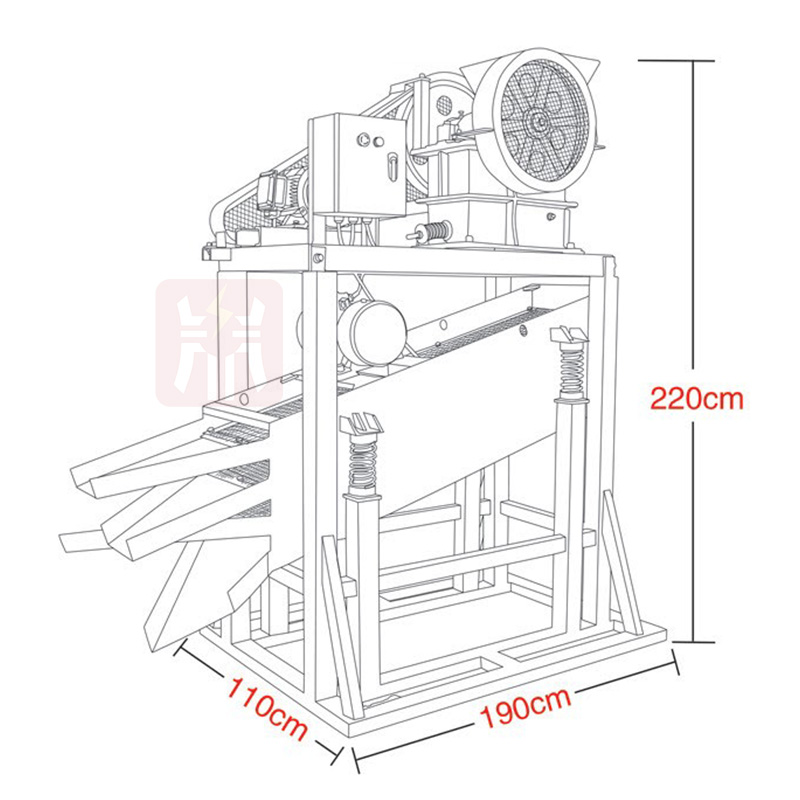
| Overall Size (L×W×H) | 190 × 110 × 220 cm |
| Peso líquido | 0.87 T |
| Voltage / Frequency | 380V / 50Hz |
| Feeding Size | 12 × 18 cm |
| Listed Output Sizes | 1 / 2 / 3 cm |
| Output | Approx. 2 T/H |
| Tamanho da embalagem | 190 × 110 × 230 cm |
| Peso bruto | 0.95 T |
The listed 2 T/H capacity is an approximate product specification. Actual crushing and screening performance can vary according to stone hardness, moisture, feed consistency, operating conditions and required finished particle sizes.
Integrated Crushing and Automatic Screening
The main advantage of the KSP-1218Z is that crushing and screening are combined in one machine structure.
A conventional setup may require:
- A stone crusher
- A transfer system
- A separate vibrating screen
- Several collection areas
The KSP-1218Z combines the main crushing and classification stages for relatively small production requirements.
This can simplify the workflow for factories that do not need a full crusher, conveyor and screening production line.
How Does the Small Stone Crusher Work?
A typical operating process is:
Stone Preparation → Feeding → Compression Crushing → Crushed Material Transfer → Vibrating Screening → Classified Output
1. Prepare the Stone
Remove unsuitable foreign material and make sure the incoming stone is within the approved feeding range.
2. Feed the Crusher
Stone enters the upper crushing section.
3. Crush the Material
Mechanical compression reduces the original stone into smaller pieces.
4. Transfer Material to the Screen
The crushed stone moves into the integrated screening section.
5. Separate Particle Sizes
The vibrating screen classifies material according to the selected screening arrangement.
6. Discharge the Finished Aggregate
Different particle sizes leave through separate outlets for collection.
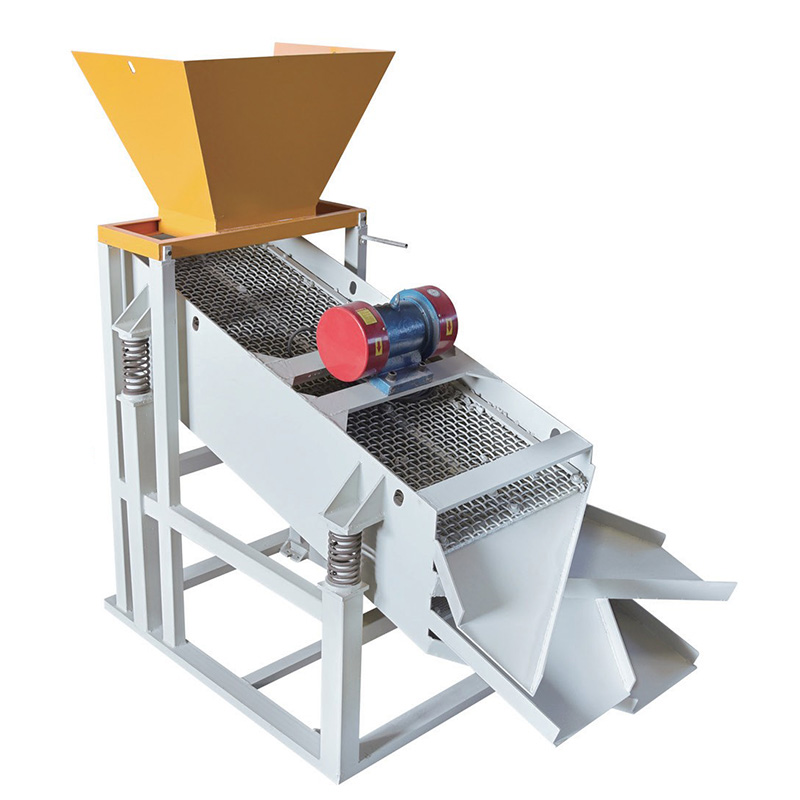
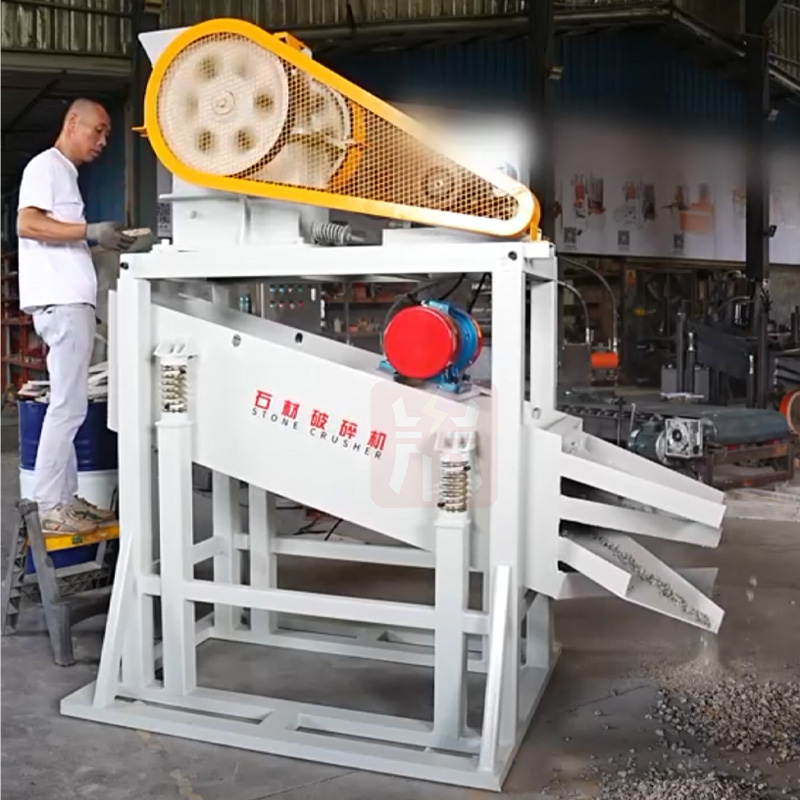
Automatic Sieving System
The KSP-1218Z is specifically identified as an automatic-sieving version.
The screening section is positioned below the crusher.
During operation, vibration moves the crushed material across the screen.
Different particle sizes can then follow separate discharge paths.
This turns mixed crusher output into more organized aggregate products.
 |
 |
| Product size specifications and information parameters | |
Why Multiple Discharge Outlets Matter
The machine uses several discharge paths from the screening section.
This allows different screened materials to leave separately instead of being mixed together again.
Potential benefits include:
- Separate aggregate sizes
- Less manual sorting
- Easier material collection
- More organized storage
- Better use of crushed material
The exact classification depends on the supplied screening configuration.
1 / 2 / 3 cm Screened Output
The supplied KSP-1218Z information lists 1 / 2 / 3 cm output sizes.
This is one of the main differences between this machine and a standard standalone crusher.
Instead of producing one mixed crushed-stone stream, the screening section helps organize material into different particle-size groups.
This can be useful for:
- Aggregate production
- Landscape stone
- Construction material
- Road-base material
- Secondary stone processing
Small Stone Crusher for Granite
Granite factories often generate irregular pieces during block cutting, slab production and fabrication.
Selected clean granite offcuts may be reduced into smaller aggregate.
Possible products include:
- Granite aggregate
- Landscape gravel
- Road-base material
- Construction stone
- Secondary recycled granite
The integrated screening section can separate crushed granite into more useful size groups after crushing.
Granite hardness varies, so actual production should be evaluated using the real material.
Small Stone Crusher for Limestone
Limestone is widely used for construction, landscape and aggregate applications.
The KSP-1218Z may be suitable where relatively small production volumes need both crushing and screening.
Potential products include:
- Limestone aggregate
- Road-base material
- Landscape stone
- Drainage material
- Secondary crushed limestone
Actual production depends on limestone hardness, moisture and incoming stone size.
Small Stone Crusher for Marble
Marble processing can generate broken pieces and offcuts during slab cutting and countertop fabrication.
Selected clean marble material may be crushed and screened for secondary use.
Possible applications include:
- Decorative marble aggregate
- Landscape material
- Secondary mineral material
- Selected construction applications
Material containing resin, mesh, metal, adhesives or other contaminants should be separated before crushing.
Small Stone Crusher for Rock
The KSP-1218Z can also be evaluated for suitable natural rock within its approved feeding range.
It is better positioned for compact factory or workshop processing than for large quarry-scale production.
Before selection, buyers should provide:
- Rock type
- Maximum feed size
- Required screened sizes
- Required tons per hour
Small Stone Crusher for Stone Factory Waste
Selected stone-factory waste is one of the strongest applications for compact crushing and screening equipment.
A practical process is:
Stone Offcuts → Sorting → Remove Foreign Material → Pre-Sizing → Crushing → Automatic Screening → Aggregate Collection
However, larger usable offcuts should be checked before they are crushed.
Some pieces may still have more value as wall stone or landscape products.
For these applications, factories can first compare Speedone’s natural stone splitting solution for architectural and wall stone.
2 T/H Small Stone Crusher
The KSP-1218Z has a listed production capacity of approximately 2 T/H.
This makes the machine suitable for relatively small crushing and screening requirements.
Typical users may include:
- Small stone fabrication factories
- Stone-waste recycling areas
- Small aggregate operations
- Landscape material producers
- Secondary factory-processing stations
The listed capacity should not be treated as guaranteed output for every material.
12×18 cm Feeding Size
The supplied specification lists a feeding size of 12×18 cm.
Stone larger than the approved feed range should be pre-sized before entering the machine.
Proper material preparation can help improve:
- Crushing stability
- Material flow
- Screening consistency
- Production organization
KSP-1218Z vs. Standard KSP-1218 Jaw Crusher
The KSP-1218 and KSP-1218Z are designed around the same compact production level, but their workflows are different.
| Caraterística | KSP-1218Z | KSP-1218 |
|---|---|---|
| Crushing | Included | Included |
| Automatic Screening | Integrated | Not integrated |
| Listed Output | 1 / 2 / 3 cm screened sizes | Crushed material output |
| Best Fit | Crushing + classification | Standalone crushing |
KSP-1218Z vs. 4 T/H Stone Crusher
The larger 4 T/H crusher focuses more on standalone crushing capacity.
The KSP-1218Z instead focuses on:
- Approx. 2 T/H production
- Compact installation
- Integrated screening
- Multiple aggregate sizes
Factories requiring more standalone crushing capacity can compare Speedone’s 4 T/H stone crusher.
KSP-1218Z vs. 15 T/H Stone Crusher
The difference is even greater when compared with a higher-capacity crusher.
The KSP-1218Z is more suitable when:
- Factory space is limited
- Crushing volume is relatively low
- Automatic screening is required directly below the crusher
- A large crushing station is unnecessary
For much higher crushing demand, buyers can review Speedone’s 15 T/H stone crusher machine.
Small Stone Crusher vs. Complete Crushing Line
The KSP-1218Z integrates crushing and screening into one compact structure.
A complete crushing line may additionally include:
- Long feeding conveyors
- Transfer conveyors
- Separate vibrating screens
- Multiple stockpile areas
- Continuous material transfer
| Factor | KSP-1218Z | Complete Crushing Line |
|---|---|---|
| Crusher | Integrated | Integrated |
| Screening | Integrated compact screen | Separate screening equipment |
| Conveyors | Not a full conveyor line | Can include multiple conveyors |
| Best Fit | Compact crushing + screening | Larger coordinated workflow |
For buyers who need a larger coordinated crusher, conveyor and screening system, Speedone’s small stone crusher machine crushing and screening line provides a different production configuration.
Small Stone Crusher vs. Stone Pressing Machine
A stone crusher and stone pressing machine use force for completely different purposes.
The crusher reduces stone into aggregate-sized material.
A pressing machine uses approved tooling to create a defined stone product.
Factories focused on mould-based granite or marble processing can review Speedone’s stone pressing machine for granite and marble.
Small Stone Crusher vs. Hydraulic Stone Stamping Machine
Hydraulic stamping keeps a suitable stone blank and forms it into a decorative product.
Crushing removes the original geometry and creates smaller aggregate.
For decorative stone production, buyers can compare Speedone’s hydraulic stone stamping machine.
Why Integrated Screening Matters
Without screening, crushed stone normally leaves the crusher as a mixture of particle sizes.
Integrated screening can classify the material before collection.
Potential advantages include:
- Reduced manual sorting
- Several aggregate size groups
- Better material organization
- Easier finished-product collection
- Less need for a separate vibrating screen
Why the Spring-Supported Screen Matters
The screening section uses multiple coil springs.
These allow the vibrating screen body to move while helping separate the vibrating section from the stationary machine frame.
Routine inspection should include:
- Spring condition
- Mounting points
- Uneven compression
- Visible cracks
- Abnormal vibration
Why Multiple Discharge Chutes Matter
Several discharge paths allow screened materials to leave the machine separately.
This can simplify collection of:
- Smaller aggregate
- Medium aggregate
- Larger aggregate
The actual particle sizes depend on the supplied screening configuration.
When Should Stone Be Crushed and Screened?
Stone factories should not automatically crush every offcut.
A practical material-use sequence is:
Stone Offcuts → Evaluate for Finished Product → Split / Press if Suitable → Crush Remaining Material → Screen Aggregate
This helps prevent potentially higher-value pieces from being unnecessarily reduced to aggregate.
Planning a Compact Crushing and Screening Station
A simple factory workflow may include:
Offcut Storage → Sorting → Pre-Sizing → KSP-1218Z → Separate Aggregate Collection Areas
Before installation, consider:
- Raw-stone storage
- Operator access
- Crusher feeding area
- Screen discharge positions
- Aggregate containers
- Dust-control requirements
- Electrical connection
- Maintenance access
How to Choose the Right Small Stone Crusher
1. Define the Stone Material
Specify granite, limestone, marble, sandstone or another suitable material.
2. Define Maximum Feed Size
Provide the largest routine incoming stone dimensions.
3. Define Required Crushing Capacity
Estimate realistic tons per hour.
4. Define Required Finished Sizes
Specify the aggregate sizes you need.
5. Define Material Hardness
Hard stone can influence crushing performance and component wear.
6. Define Material Moisture
Wet or sticky material can affect screening performance.
7. Determine Whether Screening Is Required
If several finished aggregate sizes are needed, the Z configuration may be more suitable than a standalone crusher.
8. Confirm Factory Power
Provide voltage and frequency before ordering.
9. Check Available Installation Space
Allow enough room for machine access, feeding and aggregate collection.
10. Plan Aggregate Collection
Each discharge outlet needs a suitable collection area.
11. Consider Crusher and Screen Wear Parts
Maintenance planning should include crusher wear components, screening surfaces, springs and vibration components.
12. Evaluate Supplier Support
Technical documentation and spare-parts support are important for professional stone equipment.
Information to Send Speedone for a Quotation
To help Speedone recommend the correct small stone crusher, provide:
- Stone material
- Raw-material photographs
- Typical feed size
- Maximum feed size
- Required tons per hour
- Required finished particle sizes
- Material moisture condition
- Daily operating hours
- Intended use of crushed material
- Factory voltage
- Factory frequency
- Available installation area
- Required number of screened size groups
- Preferred material collection method
Common Small Stone Crusher Problems
Crusher Capacity Is Lower Than Expected
Check stone hardness, feed size, feeding consistency and material condition.
Stone Blocks the Crusher
Oversized or irregular material may cause blockage. Stop and isolate the machine before checking it.
Screening Is Inconsistent
Review feed rate, material moisture, screening surface and material distribution.
Screen Openings Become Blocked
Wet or sticky material can reduce screening efficiency.
Abnormal Vibration Develops
Inspect springs, vibration equipment, fasteners and supporting structures.
Material Accumulates at an Outlet
Improve aggregate collection so each discharge path remains clear.
Small Stone Crusher Maintenance
Routine inspection should include:
- Crusher wear components
- Drive system
- Belts and pulleys
- Flywheel guard
- Crushing chamber
- Vibrating screen
- Screening surface
- Vibration system
- Support springs
- Discharge chutes
- Steel frame
- Electrical controls
- Fasteners
- Safety guards
Because the KSP-1218Z combines crushing and screening, maintenance should cover both parts of the machine.
Small Stone Crusher Safety
The KSP-1218Z combines high-force stone crushing with a moving vibrating screen.
- Only trained personnel should operate the machine.
- Keep hands away from the crusher feed opening.
- Do not enter the crushing area while power is connected.
- Keep all drive guards installed.
- Do not touch the vibrating screen during operation.
- Do not clear blocked material while the equipment is energized.
- Do not feed oversized material.
- Wear appropriate personal protective equipment.
- Control dust according to workplace requirements.
- Keep discharge areas clear.
- Keep unauthorized personnel away from the machine.
- Follow lockout procedures before maintenance.
Who Uses Small Stone Crushers with Screening?
The Speedone KSP-1218Z may be suitable for:
- Small stone fabrication factories
- Granite processors
- Marble workshops
- Building-stone factories
- Small aggregate producers
- Landscape stone suppliers
- Stone recycling operations
- Secondary quarry-processing stations
- Stone machinery distributors
Porquê escolher o Speedone?
Speedone supplies professional equipment for stone processing, crushing, screening and material handling.
When choosing a small stone crusher, buyers should first decide whether they need crushing only or crushing plus automatic particle-size classification.
A practical selection process is:
Stone Material → Feed Size → Required T/H → Required Aggregate Sizes → Crushing → Screening → Collection
Important purchasing factors include:
- Feed opening
- Crushing capacity
- Required output sizes
- Integrated screening requirement
- Screening surface
- Vibration system
- Spring supports
- Discharge arrangement
- Machine footprint
- Wear-part availability
- Maintenance access
- Technical support
The Speedone KSP-1218Z small stone crusher is positioned as a compact approximately 2 T/H crushing and automatic-screening solution. Its 12×18 cm listed feeding size, 1 / 2 / 3 cm screened outputs, integrated vibrating screen and multiple discharge paths make it especially suitable for buyers who need small-scale granite, limestone or stone-waste crushing together with automatic particle-size classification.
Perguntas mais frequentes
What is a small stone crusher?
A small stone crusher reduces natural stone or rock into smaller aggregate at a lower production scale than large quarry crushing plants.
What is the Speedone KSP-1218Z?
The KSP-1218Z combines stone crushing and vibrating screening, with the Z designation identified as automatic sieving.
What is the listed production capacity?
The supplied KSP-1218Z specification lists approximately 2 T/H output.
What is the feeding size?
The supplied specification lists a feeding size of 12×18 cm.
What output sizes does the KSP-1218Z produce?
The supplied product information lists 1 / 2 / 3 cm screened output sizes.
Can the machine crush and screen granite?
Suitable granite can be crushed and screened when its dimensions and material characteristics match the approved machine configuration.
Can it process limestone?
Suitable limestone can be processed, subject to feed size, material condition and required screened output.
What does automatic sieving mean?
Automatic sieving means the crushed material continues into an integrated vibrating-screening section for particle-size classification.
What is the difference between the KSP-1218 and KSP-1218Z?
The standard KSP-1218 focuses on compact stone crushing, while the KSP-1218Z adds an integrated automatic screening system.
Can it process stone factory waste?
Selected clean natural-stone offcuts may be suitable after sorting and pre-sizing. Foreign and contaminated material should be removed first.
Is 2 T/H guaranteed for every material?
No. Actual production can vary according to stone hardness, feed size, moisture, feeding consistency and screening requirements.
What information should I provide for a quotation?
Provide stone type, material photos, maximum feed size, required tons per hour, required aggregate sizes, moisture condition, daily operating hours, factory power supply and available installation area.