






Mini Stone Crusher Machine Alternative | Stone Tumbler | Speedone
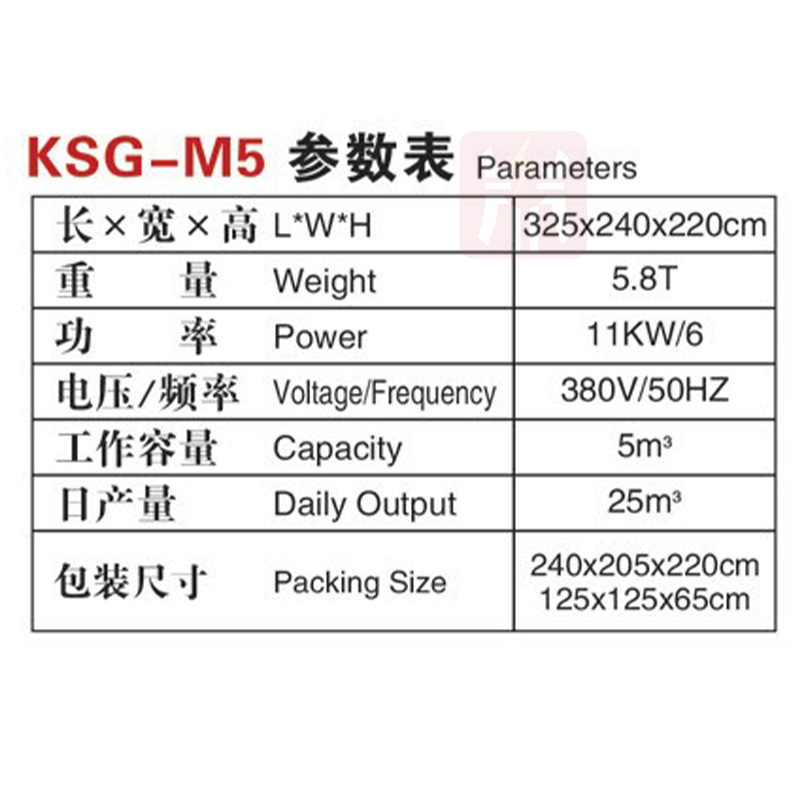
- น้ำหนัก : 5.8T
- Power : 11KW
- Voltage/Frequency : 380V/50HZ
- ความสามารถในการรับน้ำหนัก : 5m³
- Daily Output : 25m³
Product Description
Rotary Stone Tumbling Machine for Edge Rounding & Antique Finish
Speedone stone tumbling machine is designed for secondary finishing of suitable granite, marble, limestone, cube stone, paving stone and other natural stone products. Instead of crushing stone into aggregate, the rotary drum allows prepared stone pieces to tumble repeatedly so sharp edges can become softer and freshly processed surfaces can develop a more naturally aged appearance. Drum capacity, motor power, rotational speed and recommended stone load depend on the selected machine configuration.
What Is a Stone Tumbling Machine?
|
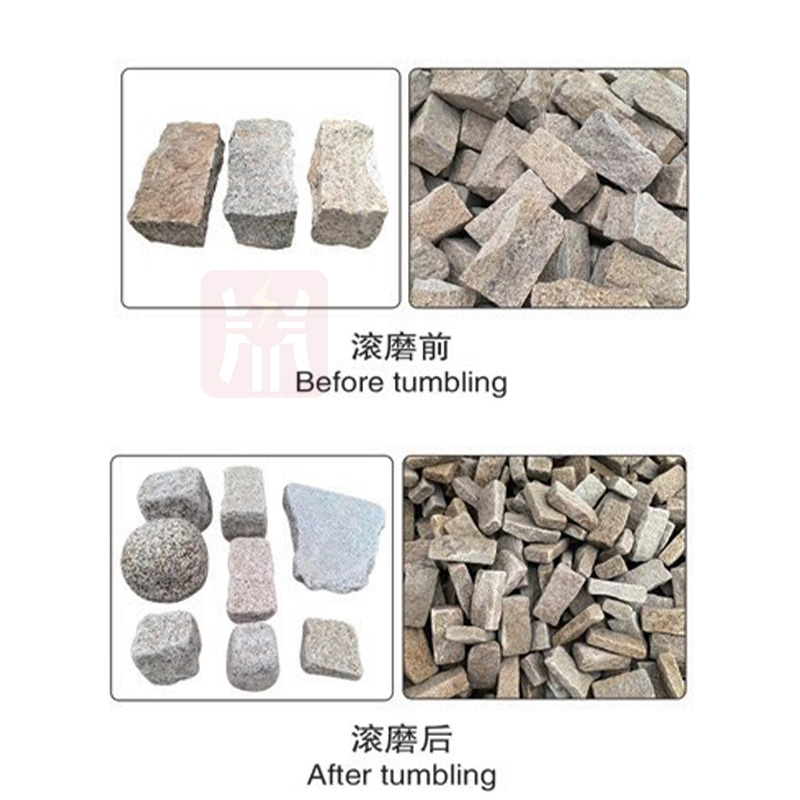 |
| Product display and product finished products | |
A stone tumbling machine is industrial finishing equipment that uses a rotating drum to process several stone pieces together.
The prepared stone is loaded into the drum. As the drum rotates, the pieces repeatedly roll, move and contact one another.
This mechanical action can help:
- Soften sharp stone edges
- Round freshly cut corners
- Create a naturally aged appearance
- Reduce the freshly machined look
- Condition split or cut stone surfaces
- Finish cube stone and paving products
- Turn suitable stone offcuts into decorative products
The main goal is to keep the stone product usable while changing its edges and surface appearance.
A typical production process is:
Stone Cutting / Splitting → Product Selection → Drum Loading → Rotary Tumbling → Inspection → Sorting → Packing
What Products Can Be Processed?
A rotary stone tumbler is most useful after the basic stone shape has already been created.
Suitable products may include:
- Granite cube stone
- Cobblestones
- Paving stone
- Landscape stone
- Garden stone
- Small architectural blocks
- Decorative natural stone
- Selected wall-stone pieces
- Suitable stone offcut products
The exact workpiece size and batch quantity should be confirmed according to the selected drum and machine configuration.
Main Structure of the Speedone Stone Tumbling Machine
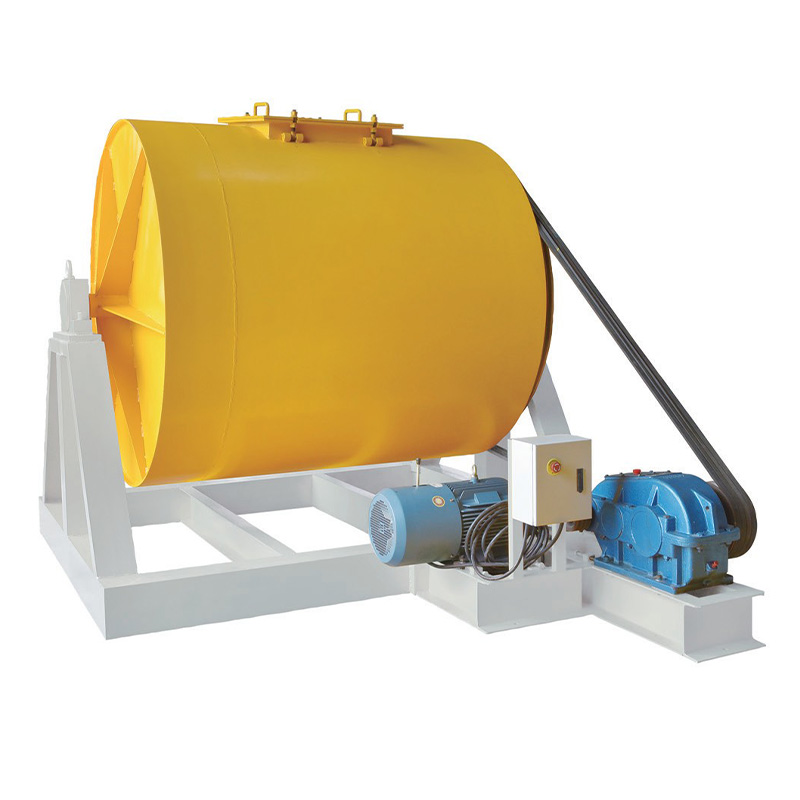
Large Steel Rotary Drum
The large cylindrical drum is the main working chamber.
Stone pieces are loaded inside the drum and move continuously as the drum rotates around its horizontal axis.
Drum size affects:
- Maximum workpiece dimensions
- Number of stones per batch
- Total working load
- Material movement inside the drum
- Overall machine footprint
Top Access and Loading Points
The upper part of the drum includes access areas for approved loading, inspection and unloading.
These openings should only be used after the drum has completely stopped and the machine is in the approved operating condition.
Electric Drive Motor
An electric motor provides the mechanical power required to rotate the drum.
Exact motor power depends on the selected machine and should be confirmed before ordering.
Gearbox and Reduction Drive
The transmission system includes a reducer between the motor and drum drive.
The reducer converts motor speed into the slower, higher-torque movement needed for a heavy rotary drum.
Stone tumbling does not require the high-speed action associated with many crushing machines.
Belt Transmission System
Drive belts form part of the power-transfer system.
Routine inspection should include:
- Belt condition
- Belt tension
- Pulley alignment
- Protective guards
Heavy Steel Support Frame
The rotary drum and transmission system are supported by a welded steel frame.
The foundation must support both the machine weight and the dynamic load created by moving stone inside the drum.
 |
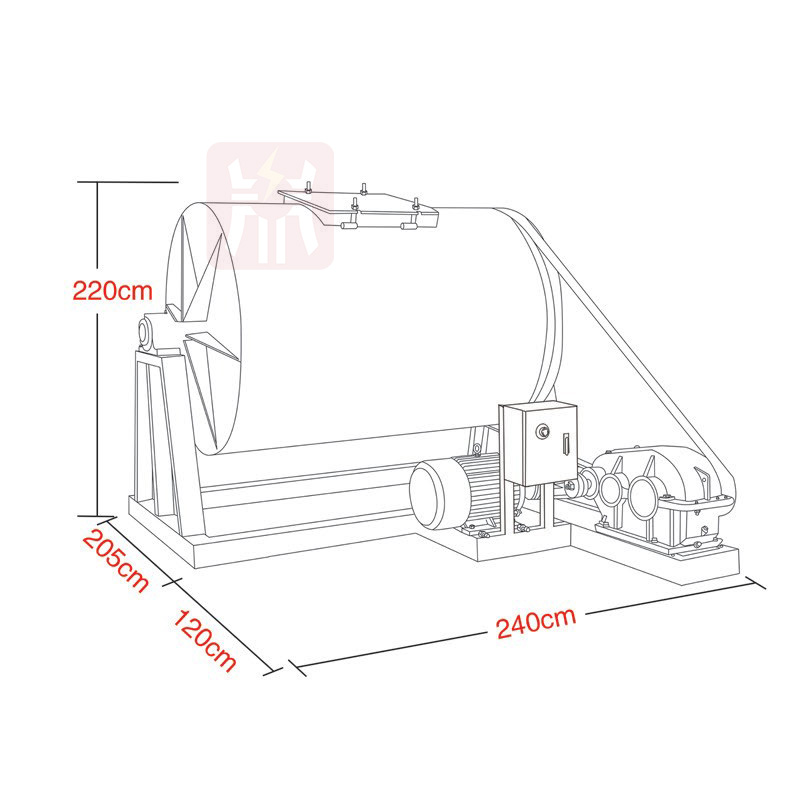 |
| Product information form and product size table | |
How Does Stone Tumbling Work?
A typical tumbling cycle can be summarized as:
Load Stone → Close Drum → Rotate → Stone-to-Stone Contact → Edge Conditioning → Stop → Inspect → Unload
1. Inspect the Stone
Check that the stone pieces are suitable for tumbling and remove unsuitable material.
2. Load the Drum
Load the stone according to the approved batch capacity.
3. Close the Drum
Confirm that access points and locking components are properly secured.
4. Start Rotation
The drum begins to rotate and the stone pieces move continuously inside.
5. Condition the Edges and Surfaces
Repeated movement and contact gradually reduce the sharp appearance of freshly processed edges.
6. Stop and Inspect
After the required process time, stop the drum completely and inspect the finished stone.
7. Continue or Unload
If the required appearance has been reached, unload the finished product. If not, additional processing may be required.
Stone Tumbling Machine for Granite
Granite is widely used for paving, landscaping, cube stone and architectural applications.
Freshly cut or split granite can have sharp corners and new-looking fracture surfaces.
Rotary tumbling can help create a more naturally worn appearance on products such as:
- Granite cube stone
- Granite cobblestones
- Landscape stone
- Garden paving
- Small decorative blocks
- Rustic architectural stone
Granite hardness can affect both processing time and the final amount of edge rounding.
Stone Tumbling Machine for Marble
Suitable marble can also be processed when a softer or more aged appearance is required.
Potential products include:
- Tumbled marble pieces
- Decorative paving
- Landscape marble
- Small architectural stone
- Antique-style marble products
Different marble varieties vary in hardness, veining and structural strength, so representative testing is useful before large-volume production.
Stone Tumbling Machine for Limestone
Limestone is commonly used for rustic architectural and landscape products.
Tumbling suitable limestone pieces can help reduce the sharp appearance of newly cut or split edges.
Potential applications include:
- Garden paving
- Landscape blocks
- Wall stone
- Decorative limestone
- Architectural stone
Stone Tumbling Machine for Cube Stone
Cube stone is one of the strongest applications for a rotary tumbler.
After cutting or hydraulic splitting, cube stones can have sharp corners and fresh fracture surfaces.
A secondary tumbling process can help create a more aged and weathered appearance.
A typical workflow is:
Stone Block → Cutting / Splitting → Cube Stone → Tumbling → Inspection → Packing
Stone Tumbling Machine for Paving Stone
Some paving products are designed to look aged rather than freshly manufactured.
In these applications, the tumbler works after the basic paving shape has already been produced.
The process can help create:
- Softer corners
- Less sharp edges
- A naturally weathered look
- A more rustic appearance
If the stone still needs to be formed into a paving product first, Speedone’s stone pressing machine for granite and marble covers that earlier production stage.
Stone Tumbling for Edge Rounding
Edge rounding is one of the clearest reasons to use a stone tumbler.
The goal is not to destroy the product shape.
Instead, tumbling gradually reduces the severity of sharp corners and freshly processed edges.
This can be useful when:
- Stone products are handled manually
- A rustic appearance is required
- Freshly cut corners look too sharp
- Paving products need a weathered visual effect
- Cube stone needs secondary finishing
Stone Tumbling for an Antique Appearance
Stone antiquing is intended to create a more naturally aged visual effect.
Mechanical tumbling changes the physical edges and exposed surfaces rather than relying only on coatings or color treatment.
Possible visual changes include:
- Softer corners
- Reduced sharp edges
- Irregular worn surfaces
- More natural-looking stone pieces
- Less freshly machined appearance
The final effect depends on the stone material, starting condition, drum load and processing time.
Stone Tumbling Machine vs. Mini Stone Crusher Machine
A tumbler and crusher may both process smaller stone pieces, but their purposes are completely different.
| Factor | Stone Tumbling Machine | Mini Stone Crusher Machine |
|---|---|---|
| Main Goal | Finish stone products | Reduce stone size |
| Stone Shape | Generally retained | Usually destroyed |
| Typical Result | Rounded / aged stone | Crushed aggregate |
| Edge Treatment | Important function | Not primary |
| Production Stage | Secondary finishing | Size reduction |
If the production goal is aggregate rather than finished stone products, buyers should instead consider Speedone’s 15 T/H stone crusher machine.
Should Stone Offcuts Be Crushed or Tumbled?
Not every stone offcut needs to become aggregate.
Suitable pieces may still be turned into:
- Landscape stone
- Decorative cubes
- Rustic paving
- Garden stone
- Small architectural products
A practical material-use sequence is:
Stone Offcut → Inspect → Can It Become a Finished Product? → Split / Shape → Tumble → Sell as Finished Stone → Crush Remaining Unsuitable Material
If aggregate is the required final product, Speedone’s 4 T/H compact stone crusher is a more suitable equipment category.
Stone Tumbler vs. Stone Splitter
A stone splitter normally works before tumbling.
The splitter creates the basic product shape or natural fracture.
The tumbler then changes the edges and final surface appearance.
| Feature | Stone Splitter | Stone Tumbler |
|---|---|---|
| Main Function | Create shape / fracture | Finish edges and surfaces |
| Typical Stage | Earlier processing | Secondary finishing |
| Natural Surface | Created by fracture | Can be softened or aged |
Factories producing wall stone or architectural split products can first use a natural stone splitter for controlled stone shaping before adding a tumbling stage.
Stone Tumbler vs. Stone Stamping Machine
A stamping machine creates a defined decorative shape using approved tooling.
A tumbler does not normally create a precise mould-defined pattern.
Instead, it produces a more irregular aged effect through repeated stone movement.
For mould-defined decorative stone, Speedone’s hydraulic stone stamping machine serves a different production purpose.
Stone Tumbler vs. Complete Crushing Line
A rotary tumbler is finishing equipment.
A stone crushing line is designed to reduce stone into aggregate and classify different particle sizes.
A complete crushing system may include:
- Stone crusher
- Belt conveyors
- Vibrating screen
- Aggregate collection areas
If the goal is to turn stone waste into classified aggregate, buyers can review Speedone’s small stone crusher machine crushing and screening line.
Why Drum Size Matters
The rotary drum is the main working chamber.
Its dimensions influence:
- Suitable stone size
- Number of pieces per batch
- Total working load
- Stone movement
- Factory space requirement
Buyers should provide actual workpiece dimensions instead of choosing a machine only from the external drum size.
Why Batch Load Matters
The drum contains a moving load during operation.
Stone should be loaded according to the approved machine capacity.
An unsuitable or severely unbalanced load may contribute to:
- Abnormal vibration
- Irregular drum movement
- Higher mechanical load
- Uneven finishing
Why Rotational Speed Matters
Drum speed changes how stone moves inside the working chamber.
Faster is not automatically better.
An unsuitable speed can change how the stone lifts, rolls and falls during processing.
The correct speed should follow the selected machine configuration and stone-finishing requirement.
Why Tumbling Time Matters
Tumbling is a gradual finishing process.
A short cycle may make only a small change to the stone edges.
A longer cycle may create a stronger rounded or aged appearance.
The correct processing time depends on:
- Stone hardness
- Starting edge condition
- Workpiece dimensions
- Desired finish
- Batch load
Representative product testing is useful when establishing the correct cycle for a new stone type.
How to Choose the Right Stone Tumbling Machine
1. Define the Stone Material
Specify granite, marble, limestone or another suitable natural stone.
2. Define Workpiece Dimensions
Provide typical length, width and thickness.
3. Define Workpiece Weight
Provide approximate individual stone weight and expected total batch weight.
4. Define the Starting Surface
Explain whether the stone is sawn, split, stamped or processed in another way.
5. Define the Required Finish
Provide photographs showing the desired rounded, tumbled or aged appearance.
6. Define Production Volume
Estimate required finished quantity or batches per shift.
7. Define Batch Size
The drum and drive configuration should match the expected working load.
8. Confirm Factory Power
Provide available voltage and frequency.
9. Plan Loading
Determine how heavy stone will be safely loaded into the drum.
10. Plan Unloading
Consider how finished products will be removed and transferred to the next stage.
11. Consider Wear and Service Parts
Discuss the drum, belts, bearings, reducer and related service components.
12. Evaluate Supplier Support
Application guidance is important because different stones can require different tumbling conditions.
Information to Send Speedone for a Quotation
To help Speedone recommend the right stone tumbling machine, provide:
- Stone material
- Raw or prepared stone photos
- Typical workpiece dimensions
- Maximum workpiece dimensions
- Approximate individual stone weight
- Expected batch quantity
- Desired finished appearance
- Finished-product photographs
- Required daily production
- Current stone-processing method
- Factory voltage and frequency
- Available installation area
Common Stone Tumbling Problems
Edges Are Not Rounded Enough
Check stone hardness, process time, drum load and operating conditions.
Stone Becomes Too Rounded
The tumbling cycle may be longer or stronger than required for the target finish.
Finished Pieces Look Different
Large differences in stone material, size or starting condition can create inconsistent results.
Drum Vibration Becomes Abnormal
Stop the machine and inspect load distribution, transmission components, bearings and structural supports.
Drive Belts Wear Too Quickly
Check belt tension, pulley alignment and transmission condition.
The Machine Produces Unusual Noise
Stop and investigate the source before continuing production.
Stone Tumbling Machine Maintenance
Routine inspection should include:
- Rotary drum
- Drum access points
- Electric motor
- Gear reducer
- Drive belts
- Pulleys
- Bearings
- Steel support frame
- Fasteners
- Safety guards
- Electrical controls
Drive components should be checked regularly because the machine operates with a substantial rotating stone load.
Abnormal vibration, structural movement or unusual transmission noise should be investigated before continued operation.
Stone Tumbling Machine Safety
A rotary stone tumbler contains a large moving drum and heavy stone workpieces.
- Only trained personnel should operate the machine.
- Never open the drum while rotation is possible.
- Keep guards installed around belts and transmission parts.
- Do not exceed the approved working load.
- Do not operate with an obviously unbalanced batch.
- Use suitable handling equipment for heavy stone.
- Keep loose clothing away from moving components.
- Keep unauthorized personnel outside the working area.
- Wear appropriate personal protective equipment.
- Follow lockout procedures before maintenance.
- Wait for the drum to stop completely before loading or unloading.
- Inspect structural and drive components regularly.
Who Uses Stone Tumbling Machines?
This type of equipment may be suitable for:
- Granite processing factories
- Marble factories
- Paving stone manufacturers
- Cube stone producers
- Landscape stone suppliers
- Architectural stone factories
- Stone offcut recycling workshops
- Natural stone processors
- Stone machinery distributors
ทำไมต้องเลือก Speedone?
Speedone supplies professional equipment for stone processing, handling and factory production.
When choosing a stone tumbling machine, buyers should first define the finished product rather than focusing only on machine size.
A practical selection process is:
Stone Material → Existing Product Size → Desired Appearance → Edge-Rounding Requirement → Batch Size → Drum Configuration → Machine
Important purchasing factors include:
- Stone material
- Workpiece dimensions
- Batch weight
- Drum size
- Rotational speed
- Drive system
- Required finish
- Loading method
- Unloading method
- Maintenance access
- Spare-parts support
- Technical communication
The Speedone equipment shown on this page should be selected as a rotary stone tumbling and finishing machine rather than a primary stone crusher. It is most relevant when granite, marble, limestone, cube stone, paving stone or other suitable natural stone products need edge rounding, tumbling or an aged appearance while keeping their usable product form.
Frequently Asked Questions
What is a stone tumbling machine?
A stone tumbling machine uses a rotating drum to process suitable stone pieces so their edges and surfaces can be mechanically conditioned through repeated movement and contact.
Is this machine a mini stone crusher?
No. It is better classified as a rotary stone tumbler because it is designed to retain the general stone-product form rather than reduce the material into aggregate.
Can it process granite?
Suitable granite products such as cubes, paving pieces and landscape stone can be evaluated according to their dimensions and required finish.
Can it process marble?
Suitable marble pieces can be tumbled, although marble structure, veining and strength should be considered before production.
Can it process limestone?
Suitable limestone can be processed when its dimensions and structural characteristics match the selected machine configuration.
Can the machine make stone edges rounder?
Yes. Rotary tumbling can soften sharp corners and edges, although the final result depends on stone hardness, batch conditions and processing time.
Can it create an antique stone appearance?
Tumbling can help create a more naturally worn appearance by mechanically modifying freshly cut or split edges and surfaces.
Can stone offcuts be processed?
Selected suitable offcuts may be processed into decorative, paving or landscape products when their size and structure are appropriate.
What is the difference between a stone crusher and a stone tumbler?
A crusher intentionally reduces stone into smaller aggregate. A tumbler generally keeps the stone piece and changes its edges and surface appearance.
Should stone waste be crushed or tumbled?
If the material can still become a usable finished stone product, splitting, shaping or tumbling may provide more value. Crushing is more suitable when aggregate is the required final product.
How do I choose the correct tumbling time?
Processing time depends on stone hardness, workpiece dimensions, starting edge condition, batch load and the desired finished appearance.
What information should I provide for a quotation?
Provide stone type, workpiece dimensions and weight, product photos, desired finished appearance, expected batch quantity, required production volume, factory power supply and available installation area.