İşinizi Verimli Bir Şekilde Yapın!





Learn how to choose the right Slab Rack in 2026, compare rack types, load capacity, materials, safety design, cost factors, and supplier options.
Hızlı Özet:A Slab Rack is not just a storage frame; it is a safety, workflow, and warehouse efficiency system for marble, granite, quartz, sintered stone, and large-format panels. Buyers should evaluate rack type, steel structure, load capacity, surface treatment, forklift access, anti-tip design, slab size, warehouse layout, and long-term cost before choosing a stone slab storage solution.
A stone warehouse receives mixed marble, granite, quartz, and sintered stone slabs from different suppliers. Some slabs are 20 mm thick, some are 30 mm, and some oversized panels are fragile enough to chip during careless handling. The warehouse manager wants to improve storage density, but poor rack spacing blocks forklift movement. A showroom wants better slab display, but safety cannot be sacrificed for looks. A countertop fabricator loses money when slabs scratch, tilt, crack, or become difficult to retrieve.
This is exactly why choosing the right Döşeme Rafı matters in 2026. A slab rack is not only a steel frame that holds stone. It directly affects worker safety, slab breakage rate, warehouse space utilization, forklift workflow, inventory visibility, and long-term handling cost. If the rack is too weak, too narrow, poorly protected, or badly positioned, the result is not just inconvenience. It can mean damaged slabs, blocked aisles, dangerous tipping, and expensive downtime.
For buyers who want to evaluate the company background, equipment experience, and stone handling capability before sourcing racks, the Slab Rack manufacturer profile can help review production positioning, solution experience, and support strength.
This guide explains the main slab rack types, material and load capacity factors, cost drivers, safety details, business applications, supplier evaluation logic, common buyer mistakes, and practical selection rules. The goal is simple: help stone factories, warehouses, showrooms, countertop fabricators, and importers choose a rack system that protects both people and slabs. Because when a stone slab falls, it does not “make a small mistake.” It makes a very expensive announcement.
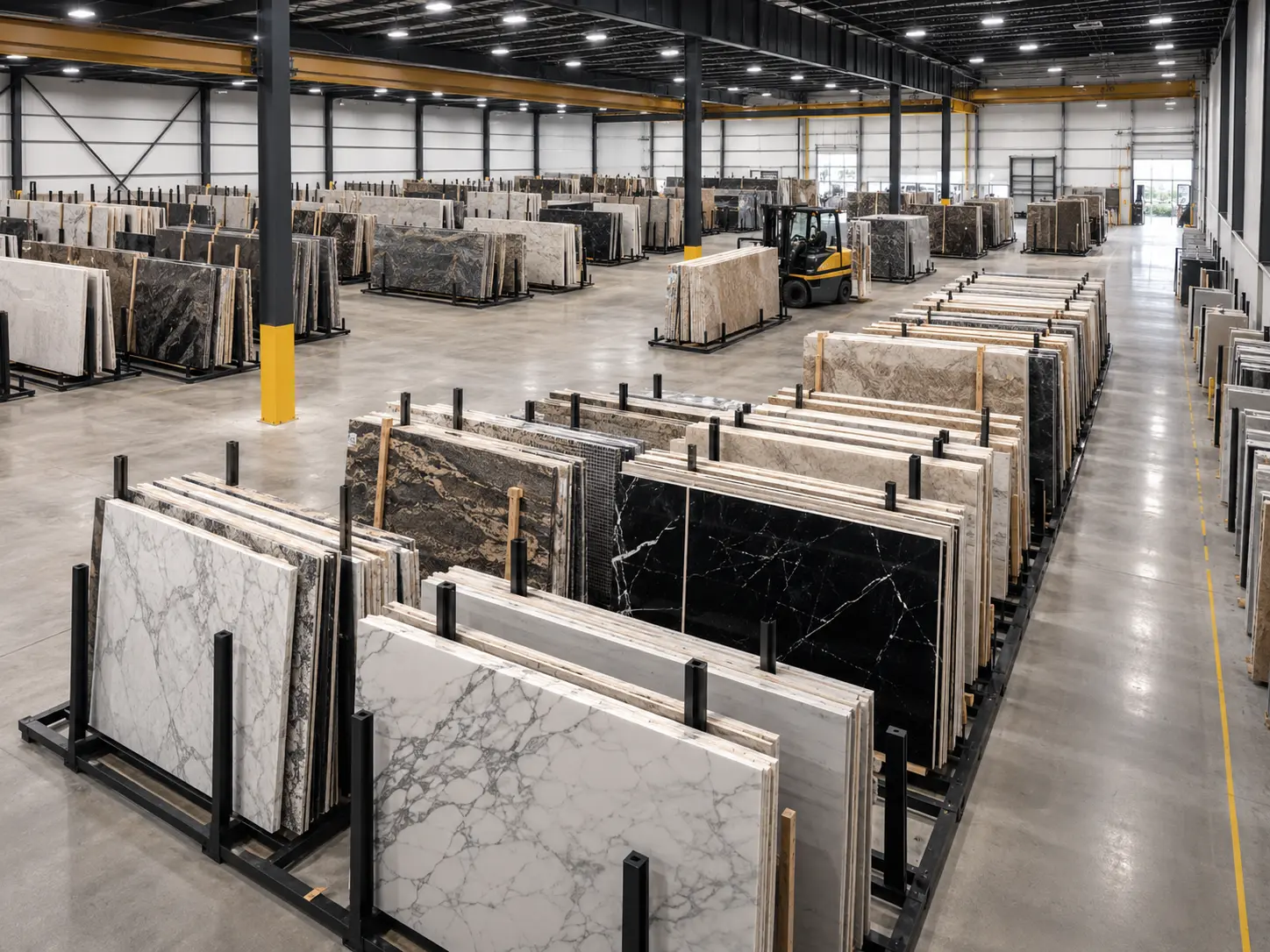
Döşeme Rafı Tedarikçisi
What Is a Slab Rack and Why Is It Used?
Basic Function of a Slab Rack
A Slab Rack is a storage structure designed to hold large stone slabs vertically or at a controlled angle. It is commonly used for marble, granite, quartz, sintered stone, porcelain slabs, engineered stone, and other large-format panels. Instead of leaning slabs randomly against walls, posts, or other slabs, a rack provides controlled support, safer separation, better organization, and easier material handling.
Professional stone warehouses use slab racks because slabs are heavy, fragile, and high-value. A single large natural stone or engineered stone slab can weigh hundreds of kilograms depending on size, thickness, and material density. Poor storage can cause edge chipping, surface scratches, cracking, tipping, and worker injury. Good storage is not fancy; it is survival with better steel.
Why Stone Slabs Need Specialized Storage
Stone slabs are not ordinary warehouse goods. They are flat, heavy, expensive, and vulnerable at the edges. Marble may chip, granite may be extremely heavy, engineered quartz needs surface protection, and thin sintered stone or porcelain panels may be brittle if poorly supported. A general-purpose rack is rarely enough. A proper taş levha rafı should match slab dimensions, slab weight, loading angle, forklift access, warehouse floor condition, and daily handling frequency.
Buyers looking for a direct product reference can review the taş levha rafı page to understand how slab storage equipment is positioned for stone warehouses, slab handling, and safer vertical panel storage.
Slab Rack as a Safety and Efficiency Investment
A good slab rack improves warehouse order. Workers can identify materials faster. Forklift drivers can retrieve slabs more safely. Inventory becomes easier to classify by material, color, batch, project, or thickness. Storage density improves when racks are matched to the actual slab size and workflow. The rack may look like simple steel, but in a stone business, it quietly protects revenue every day.
 Cam ve Taş Levhaların Perakende Depolanması için Standlı Ekstra Güçlü Taş A-Frame Raf |
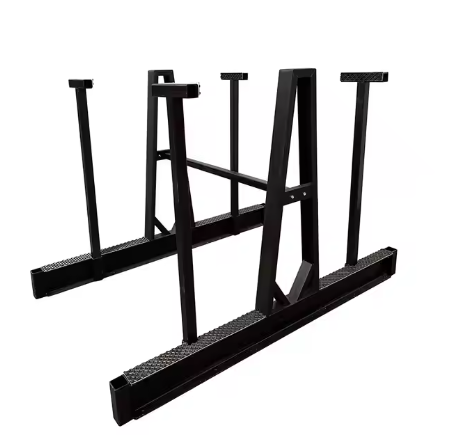 AJ-G-2000 rafı, mermer levhayı çevirmek için 15° eğimde sabitleyen T-top direkleri ile |
Types of Slab Racks
A-Frame Döşeme Rafı
An A-frame slab rack supports slabs from both sides at a stable angle. It is widely used in stone warehouses, fabrication shops, transport staging areas, and general slab storage zones. A-frame racks are simple, stable, and practical for moderate-volume storage. They are especially useful when slabs need temporary holding before cutting, inspection, loading, or fabrication.
When buying an A-frame rack, buyers should check base width, frame angle, steel thickness, welding quality, rubber protection, bottom support, and rated load capacity. A rack may look strong in photos, but if the base is narrow or the welds are weak, the real safety margin may be poor.
Vertical Slab Storage Rack
A vertical slab storage rack stores slabs in separated compartments. This format is useful for warehouses that need better inventory classification. Different materials, colors, batches, and project orders can be separated clearly. It is especially helpful for slab importers, distributors, and stone warehouses with frequent picking and dispatching.
Vertical racks require careful aisle planning because forklift access and slab retrieval paths must remain clear. If the rack layout is too dense, workers may save space on paper but lose time and safety in real operation. Warehouse storage is not Tetris. Forklifts need room to breathe.
Adjustable Slab Rack
Bir adjustable slab rack allows spacing between posts or divisions to be adjusted according to slab size, quantity, and inventory changes. This is useful for warehouses that store marble, granite, quartz, sintered stone, and porcelain slabs together. Adjustable systems reduce wasted space because the rack can adapt to different slab widths and project batches.
For buyers comparing layout performance and real storage improvement, this case study on how a Slab Rack improved storage efficiency shows why rack planning can directly affect warehouse productivity and storage density.
Heavy Duty Slab Rack
A heavy duty slab rack is designed for larger, denser, or higher-volume slab storage. It usually uses thicker steel, reinforced bases, stronger posts, and higher load ratings. This type is suitable for stone factories, import warehouses, granite wholesalers, and slab yards that handle heavy materials every day.
Buyers should not choose heavy-duty racks only because they sound stronger. They should choose them when slab weight, storage quantity, handling frequency, and safety requirements justify the structure. If the warehouse stores thick granite or large-format stone, the extra steel is not overkill. It is insurance wearing a frame.
Showroom Slab Rack
Showroom slab racks focus on display, accessibility, and customer viewing. They are suitable for selected premium slabs, luxury stone showrooms, countertop selection rooms, and retail spaces where buyers need to inspect colors and patterns. The rack should provide safe browsing, stable support, and protective contact surfaces to avoid scratching polished slabs.
Mobile or Transport Slab Rack
Mobile slab racks support internal movement or short-distance workshop handling. Some include wheels or forklift-compatible bases. They can improve fabrication workflow, but stability, braking safety, load balance, and floor condition must be checked carefully. A moving rack carrying heavy slabs is useful only when it remains controllable.
| Slab Rack Type | En İyi Kullanım | Main Advantage | Buyer Risk |
|---|---|---|---|
| A-Frame Döşeme Rafı | General slab storage | Stable and simple | Limited classification |
| Vertical Slab Rack | Warehouse organization | Easy inventory separation | Needs aisle planning |
| Adjustable Slab Rack | Mixed slab sizes | Flexible spacing | Locking system must be strong |
| Heavy Duty Slab Rack | Large slab warehouses | Yüksek yük kapasitesi | Higher upfront cost |
| Showroom Slab Rack | Customer display | Better presentation | Lower density |
Materials & Load Capacity
Steel Structure and Frame Strength
Most industrial Slab Racks are made from steel because stone slabs require high structural strength. Buyers should check steel grade, tube thickness, post size, base reinforcement, welding quality, rack angle, and load distribution. Poor steel quality can deform under repeated heavy loads. Weak welds can become failure points. Thin frames may look acceptable when empty but become risky when loaded with dense granite slabs.
The structure must be evaluated as a complete system. Base width, frame angle, post spacing, contact surface, anchoring options, and floor stability all affect real performance. A rack is only as safe as its weakest structural decision.
Surface Treatment: Painted, Powder-Coated, or Galvanized
Surface treatment affects durability, corrosion resistance, and long-term appearance. Painted racks are common and cost-effective. Powder coating can provide better surface durability and a cleaner look. Galvanized racks are more suitable for humid warehouses, semi-outdoor storage, or environments where rust is a long-term concern.
Buyers should not automatically choose the lowest-cost surface treatment. In humid storage environments, corrosion can shorten rack life, stain slab contact points, weaken appearance, and increase maintenance cost. Rust is slow, patient, and very rude.
Rubber Protection and Contact Points
Stone slabs should not rub directly against sharp steel edges. Rubber pads, protective strips, coated contact zones, or replaceable protection components reduce scratching, chipping, and edge damage. This is especially important for polished marble, quartz, engineered stone, sintered stone, and high-value slabs.
Buyers should ask whether rubber protection can be replaced. Contact points wear over time, especially in warehouses with frequent loading and unloading. A rack that protects slabs when new but scratches them after six months is not a complete solution.
Understanding Slab Rack Load Capacity
Slab rack load capacity depends on steel thickness, rack size, base design, post spacing, slab angle, floor condition, welding quality, load distribution, and loading sequence. Buyers should never guess rack capacity based on appearance. They should request rated load per rack, per side, or per compartment, and understand whether the rating includes a safety factor.
To choose safely, buyers must calculate the heaviest slab weight and the maximum number of slabs stored at one time. If the warehouse stores mixed materials, the densest and thickest slabs should be used for load planning. Granite may weigh more than many marble varieties. Engineered stone and large-format sintered slabs also require careful handling.
| Material Type | Approximate Density Range | Common Thickness | Buyer Storage Note |
|---|---|---|---|
| Mermer | 2,500–2,750 kg/m³ | 18–30 mm | Fragile edges need protection |
| Granit | 2,600–2,900 kg/m³ | 20–30 mm | Heavy and dense |
| Quartz / Engineered Stone | 2,300–2,500 kg/m³ | 20–30 mm | Needs flat support and protection |
| Sintered Stone | 2,300–2,600 kg/m³ | 12–20 mm | Large size, brittle handling risk |
| Porcelain Slabs | 2,300–2,500 kg/m³ | 6–12 mm | Thin slabs need careful support |
Simple Slab Weight Estimation
A practical weight estimate helps buyers avoid dangerous rack selection. The formula is simple: approximate slab weight equals length × width × thickness × density. For example, a 3200 mm × 1600 mm × 20 mm engineered stone slab with density around 2,400 kg/m³ weighs about 246 kg before packaging. Ten such slabs can already create a load of about 2.46 tons. Add thicker slabs, granite density, and uneven distribution, and the rack design becomes a serious engineering decision.
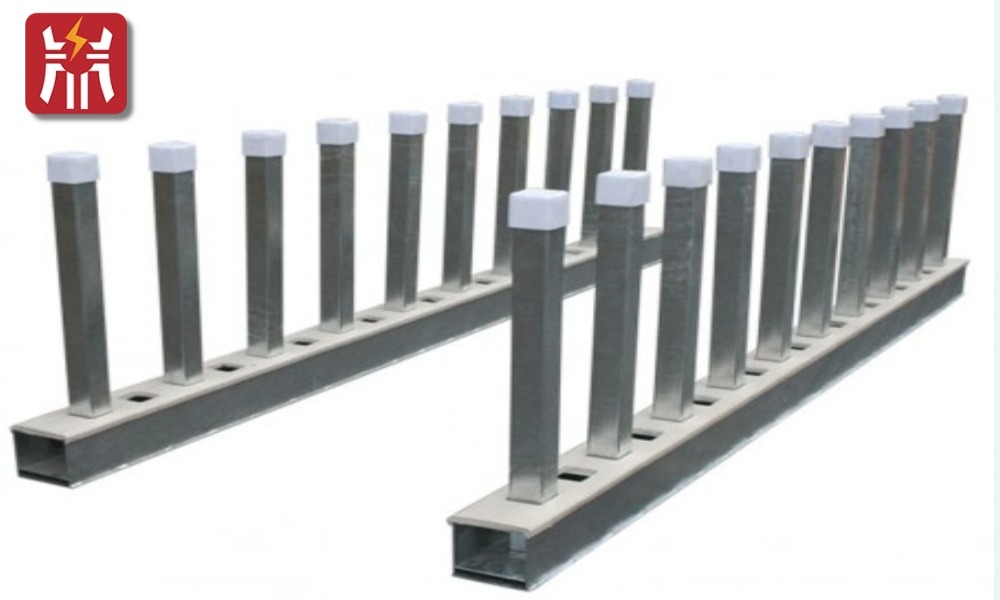
Döşeme Rafı
How to Choose the Right Slab Rack
Start with Slab Size and Material Type
Buyers should start by measuring the largest slab size, confirming thickness range, identifying material categories, and estimating maximum weight. Oversized slabs need larger rack depth, better side support, stronger bases, and safer forklift access. Mixed inventory needs flexibility. High-value polished slabs need protective contact surfaces.
For a deeper selection guide by slab dimensions and material differences, this article on choosing the right Slab Rack for different stone sizes gives useful decision logic for warehouses handling varied slab formats.
Match Rack Type to Warehouse Workflow
The rack type should match the workflow, not just the budget. For general slab storage, choose A-frame racks. For organized warehouse inventory, choose vertical racks. For mixed slab sizes, choose adjustable racks. For high-volume import warehouses, choose heavy-duty racks. For customer display, choose showroom racks. For fabrication staging, consider mobile or temporary support racks.
Check Forklift and Aisle Access
Slab storage is useless if forklifts cannot access racks safely. Buyers should plan aisle width, turning radius, loading direction, retrieval sequence, and safe operator visibility before purchasing racks. Poor aisle planning causes slab damage, rack impact, slow retrieval, and safety problems.
A warehouse may appear efficient on a layout drawing but fail in real operation if forklifts cannot turn, align, lift, or reverse safely. Good rack planning respects the forklift as much as the slab.
Consider Floor Load and Ground Condition
Heavy slab racks create concentrated floor loads. The warehouse floor must be level, strong, stable, and suitable for repeated forklift traffic. Outdoor or semi-outdoor areas require corrosion-resistant surface treatment and base design. Uneven floors increase tipping risk and should be corrected before rack installation.
Safety Design Features to Look For
Important safety features include reinforced base design, anti-tip structure, stable rack angle, thick support posts, strong locking pins for adjustable systems, rubber protection, welded reinforcement, clear load marking, anchoring options where needed, and safe access spacing. Buyers should ask how the rack prevents tipping, not just how many slabs it can hold.
For buyers planning a complete storage layout, this guide on safe and efficient Slab Rack layout explains how rack position, forklift movement, aisle width, and loading sequence affect factory storage performance.
If X → Choose Y Logic
If storing mixed slab sizes, choose an adjustable Slab Rack. If storing heavy granite slabs, choose a heavy duty Slab Rack. If displaying premium slabs to customers, choose a showroom Slab Rack. If warehouse classification matters, choose a vertical Slab Rack. If workshop staging is needed, choose an A-frame or mobile rack. If the environment is humid, choose galvanized or corrosion-resistant treatment.
Cost Factors
Rack Type and Structural Complexity
Rack type is one of the first cost drivers. Standard A-frame racks are usually more economical because the structure is simple. Adjustable racks cost more because they require stronger locking systems and repositionable components. Heavy duty racks cost more because of thicker steel, reinforced base design, and higher load ratings. Showroom racks may cost more because presentation, finish, and protective details matter.
Steel Thickness and Load Rating
Higher load capacity requires stronger steel, better welding, and more careful reinforcement. Lower-cost racks may use thinner steel to reduce price. That may be acceptable for light or temporary use, but dangerous for heavy slab warehouses. Buyers should never reduce cost by sacrificing load safety. A rack failure can destroy slabs, damage forklifts, injure workers, and create downtime. That is not saving money. That is buying a future accident at a discount.
Yüzey İşlemleri
Painted finish is usually more affordable. Powder coating improves appearance and durability. Galvanizing improves corrosion resistance and is valuable in humid or semi-outdoor conditions. The right surface treatment depends on warehouse environment, cleaning routine, expected service life, and exposure to moisture.
Özelleştirme
Custom slab rack options can include special dimensions, post spacing, rack height, rubber protection, color, logo, forklift base design, anchor holes, welded reinforcements, and special load requirements. Customization increases cost, but it can improve safety and storage efficiency when standard racks do not fit the warehouse workflow.
Nakliye ve Paketleme
Slab racks are heavy steel products. Freight depends on weight, volume, packaging format, destination, container loading method, and whether the rack is shipped assembled or knock-down. Knock-down designs may reduce shipping volume but require clear installation guidance. Export packaging should protect coatings, corners, edges, and accessories.
Long-Term Cost vs Purchase Price
The cheapest rack may become expensive if it rusts, bends, scratches slabs, wastes space, or slows forklift movement. Buyers should compare safety, durability, slab damage prevention, warehouse efficiency, and replacement cost. A good rack system pays back by reducing breakage, improving retrieval speed, and making storage safer.
| Cost Factor | Lower-Cost Option | Higher-Cost Option | Buyer Decision |
|---|---|---|---|
| Raf Tipi | Standard A-frame | Adjustable/heavy duty rack | Choose based on workflow |
| Steel Thickness | Thin frame | Reinforced steel | Do not compromise load safety |
| Yüzey İşlemleri | Boyalı | Galvanized/powder-coated | Match environment |
| Protection | Minimal padding | Rubber contact protection | Needed for polished slabs |
| Özelleştirme | Standard size | Custom spacing/dimensions | Worth it for mixed inventory |
Slab Rack Safety: What Buyers Must Not Ignore
Tipping and Falling Slab Risk
Stone slabs can cause severe injury if they fall. Rack angle, base design, slab loading direction, slab sequence, and floor level all matter. Workers should not overload one side, stand in danger zones, or retrieve slabs without proper handling equipment. A slab rack should control risk, not create a more organized-looking hazard.
Overloading and Uneven Weight Distribution
Uneven loading can create stress, bending, and tipping risk. Buyers should respect rated load limits and load slabs according to supplier guidance. Heavier slabs should be stored near stable support positions. Broken or unstable slabs should not be mixed randomly with good stock.
Forklift Handling Safety
Forklift drivers need clear aisles, enough turning space, proper visibility, and correct lifting equipment. Slab handling may require clamps, booms, A-frame transport carts, or other devices depending on the material. Poor retrieval angles can chip edges, hit rack posts, or destabilize stored slabs.
Worker Training and Visual Load Labels
Clear load capacity labels help workers avoid overload. Operators should understand rack limits, loading sequence, danger zones, and forklift approach rules. Training protects both people and inventory. Steel can support a warehouse only if humans stop asking it to do stupid things.
For more technical safety protection in vertical panel storage, the anti-tip safety system for vertical panel storage shows how corner wedges and safety accessories can reduce tipping risk in slab storage environments.
Slab Rack Applications by Business Type
Stone Factories
Stone factories need heavy duty storage for raw slabs, semi-finished slabs, and project materials. Racks must handle frequent forklift movement, heavy load cycles, and repeated retrieval. Load capacity, welding quality, and protective contact surfaces are more important than decorative appearance.
Slab Warehouses and Importers
Slab warehouses and importers need organized classification by material, color, batch, size, supplier, and customer project. Vertical or adjustable racks help manage inventory and improve retrieval speed. Storage density matters, but aisle access must remain safe and practical.
Countertop Fabricators
Countertop fabricators need quick slab access for cutting, edge processing, and project staging. A-frame racks and mobile racks can support workflow between storage, cutting, polishing, and packing zones. Surface protection matters because polished and engineered slabs can scratch during frequent handling.
Stone Showrooms
Stone showrooms need display-oriented racks for customer viewing. The rack should support safe browsing and easy slab inspection. Presentation matters, but so does stability. A showroom rack should make slabs easier to sell, not easier to tip.
Construction Material Distributors
Distributors often handle granite, marble, quartz, porcelain, and sintered stone together. Adjustable spacing is valuable because inventory changes frequently. The best rack system gives flexibility without sacrificing load safety.
| Business Type | Recommended Rack | Main Priority |
|---|---|---|
| Stone Factory | Heavy duty Slab Rack | Load capacity and durability |
| Slab Warehouse | Vertical / adjustable rack | Inventory organization |
| Countertop Fabricator | A-frame / mobile rack | Workflow and access |
| Stone Showroom | Display slab rack | Presentation and safety |
| Distributor | Adjustable Slab Rack | Mixed inventory flexibility |
Slab Rack vs Alternative Storage Methods
Slab Rack vs Leaning Against Walls
Leaning slabs against walls is risky and unprofessional. It increases falling risk, edge damage, retrieval difficulty, and worker danger. A Slab Rack provides controlled support angle, defined storage positions, and safer retrieval.
Slab Rack vs Wooden Support Frames
Wooden frames may be used temporarily, but they are not ideal for long-term industrial slab storage. Wood can deform, absorb moisture, weaken, or fail under heavy loads. Steel racks provide stronger and more durable support.
Slab Rack vs Ground Stacking
Ground stacking wastes space, reduces visibility, slows retrieval, and increases surface damage. It may be acceptable for low-value temporary storage, but it is not suitable for professional stone warehouses handling high-value slabs.
| Storage Method | Güvenlik | Alan Verimliliği | Inventory Visibility | En İyi Kullanım |
|---|---|---|---|---|
| Döşeme Rafı | High if designed properly | Yüksek | İyi | Professional storage |
| Wall Leaning | Düşük | Zayıf | Zayıf | Avoid |
| Wooden Frame | Medium-low | Orta | Limited | Temporary use only |
| Ground Stacking | Low-medium | Zayıf | Zayıf | Low-value temporary storage |
Common Buyer Mistakes When Buying Slab Racks
Choosing by Price Only
A low price may mean weak steel, poor welding, thin posts, weak surface treatment, limited load capacity, or no protective padding. The consequence is early deformation, slab damage, or safety risk. A rack is not the place to enjoy being “too clever with budget.”
Ignoring Actual Slab Weight
Buyers sometimes estimate slab weight too casually. This creates overloading, bending, tipping, slab breakage, and worker safety risks. Weight must be calculated by size, thickness, density, and stored quantity.
Not Measuring Warehouse Aisles
Forklifts need space to approach, turn, lift, and retrieve slabs safely. If the aisle is too narrow, the rack may technically store slabs but practically slow down the entire operation.
Forgetting Surface Protection
Polished marble, quartz, and engineered stone can be scratched or chipped by poor steel contact. Rubber protection and safe contact surfaces are essential for high-value slabs.
Buying Non-Adjustable Racks for Mixed Inventory
If inventory changes frequently, fixed rack spacing may waste storage space. Adjustable racks may cost more upfront but provide better long-term flexibility.
Not Considering Corrosion
Humid warehouses, semi-outdoor areas, and coastal environments need better corrosion protection. Rust shortens rack life and can stain slab contact zones.
No Safety Labels or Loading Rules
Without clear load labels and loading rules, workers may overload racks or load unevenly. Visual safety information should be part of the system.
How to Evaluate a Slab Rack Manufacturer
Production Capability
A reliable Slab Rack tedarikçisi should have steel cutting, welding, bending, forming, surface treatment, assembly, quality inspection, packing, and load-related engineering support. Buyers should ask about production process, steel thickness, welding inspection, coating quality, and packaging methods.
For a broader view of storage systems and warehouse structure planning, this article on Slab Rack systems for stone warehouses provides additional context on warehouse organization, rack types, and professional slab storage planning.
Engineering Support
Engineering support is important when warehouse layout, slab size, forklift route, or load requirement is not standard. A good supplier should help with custom rack dimensions, load calculation, aisle planning, material selection, surface treatment recommendation, and safe layout suggestions.
Quality Control
Quality control should include welding inspection, dimensional tolerance checks, surface treatment inspection, coating thickness review, load marking, rubber protection quality, and packaging inspection. Buyers should request production photos or inspection documentation for bulk orders.
Export and After-Sales Support
Export support matters because slab racks are large and heavy. Suppliers should provide export packaging, installation guidance, spare rubber pads, replacement parts, technical drawings, fast communication, and container loading optimization. Weak export packing can damage coatings, bend components, or create missing-part headaches after arrival.
For buyers following global procurement requirements, this article on global compliance and market trends of Slab Rack systems can help understand how safety, warehouse efficiency, and international buyer expectations are changing.
| Evaluation Factor | Ağırlık | What to Check |
|---|---|---|
| Steel Structure | 20% | Thickness, welding, reinforcement |
| Yük Kapasitesi | 20% | Rated load and safety factor |
| Yüzey İşlemleri | 15% | Painted, powder-coated, galvanized |
| Özelleştirme | 15% | Size, spacing, protection, layout |
| Safety Design | 15% | Anti-tip, load labels, stable base |
| Export Packing | 10% | Protection and container loading |
Practical Recommendation: Which Slab Rack Should You Choose?
Choose A-Frame Slab Rack If
Choose an A-frame rack if you need simple and stable general storage, slab quantity is moderate, workflow is flexible, budget control matters, and warehouse space is not extremely tight. It is a practical choice for stone factories and fabricators that need reliable staging.
Choose Adjustable Slab Rack If
Choose an adjustable rack if slab sizes vary frequently, inventory changes often, mixed materials are stored together, space optimization matters, and long-term flexibility is required. This is often the strongest choice for distributors and import warehouses.
Choose Heavy Duty Slab Rack If
Choose a heavy duty rack if slabs are large, thick, or very heavy; granite or dense stone is stored; storage volume is high; factory handling is intensive; or safety margin is a priority. Heavy slabs deserve heavy logic.
Choose Showroom Slab Rack If
Choose a showroom rack if customer viewing, premium slab presentation, safe browsing, and polished surface protection matter. It should balance display value and safety.
Choose Galvanized Slab Rack If
Choose galvanized or corrosion-resistant treatment if the warehouse is humid, semi-outdoor, coastal, or exposed to moisture. Long-term durability may justify the higher upfront cost.
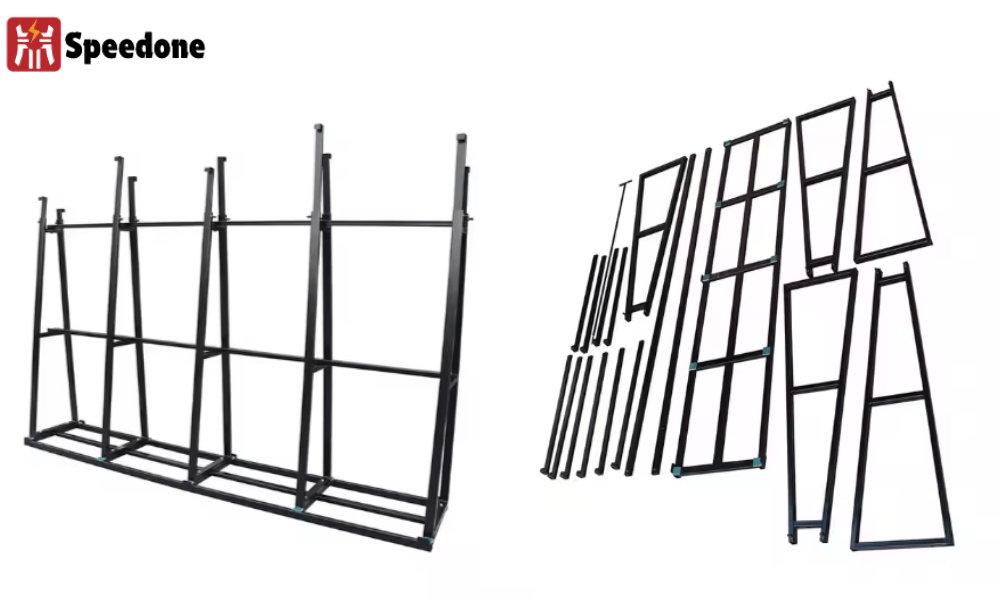
Slab Teşhir Rafı tedarikçisi
Final Recommendation: Buy the Rack That Protects the Slab, the Worker, and the Workflow
The right Slab Rack is not simply the cheapest rack that can hold stone today. It is the rack that can safely support your heaviest slabs, fit your warehouse layout, protect polished surfaces, allow forklift access, resist corrosion, improve inventory visibility, and support daily workflow for years. In stone storage, poor planning does not stay hidden. It appears as broken slabs, scratched surfaces, slow retrieval, blocked aisles, and safety incidents.
If you store mixed slab sizes, choose adjustable racks. If you store thick granite or large-format slabs, choose heavy duty racks. If you display premium materials to customers, choose showroom racks. If your warehouse is humid, choose better surface treatment. If forklift aisles are narrow, plan layout before buying racks. And if you are not sure which structure fits your operation, send slab size, thickness, material type, warehouse layout, forklift model, and storage goals to a Slab Rack factory for a project-based recommendation.
FAQ About Slab Rack Buying
1. What is a Slab Rack?
A Slab Rack is a storage structure designed to hold large stone slabs vertically or at a controlled angle. It is commonly used for marble, granite, quartz, sintered stone, porcelain slabs, engineered stone, and other large-format panels. A proper Slab Rack helps prevent slabs from leaning randomly, reduces tipping risk, improves warehouse organization, protects slab edges, and makes forklift handling safer and more efficient.
2. How much weight can a Slab Rack hold?
The weight capacity of a Slab Rack depends on steel thickness, frame design, welding quality, base width, post spacing, rack angle, floor condition, and load distribution. Buyers should not estimate capacity by appearance alone. They should ask the supplier for rated load per rack, per side, or per compartment, and calculate the weight of their heaviest slabs based on slab size, thickness, and material density before purchase.
3. What is the best Slab Rack for granite slabs?
The best Slab Rack for granite slabs is usually a heavy duty Slab Rack or reinforced A-frame rack with sufficient rated load capacity, strong base support, thick steel structure, stable angle design, and protective rubber contact points. Granite is dense and heavy, so buyers should calculate slab weight carefully and avoid light-duty racks. Forklift access, aisle width, and loading sequence should also be planned before installation.
4. Are adjustable Slab Racks worth it?
Adjustable Slab Racks are worth it when a warehouse stores mixed slab sizes, changing inventory, different materials, or project-based batches. Adjustable spacing helps reduce wasted storage space and improves flexibility for marble, granite, quartz, sintered stone, and porcelain slabs. Buyers should check the locking system, post stability, adjustment range, and rated load before choosing an adjustable rack.
5. How do I choose a Slab Rack supplier?
To choose a Slab Rack supplier, check steel structure quality, welding strength, load capacity data, surface treatment options, safety design, rubber protection, customization ability, export packing, technical drawings, and communication speed. A reliable supplier should understand slab size, material density, warehouse layout, forklift access, and safety requirements instead of only offering a standard rack price.
Referanslar
1. Dimension Stone Design Manual, Natural Stone Institute, Technical Design Resource.
2. Stone in Architecture: Properties, Durability, Siegfried Siegesmund and Rolf Snethlage, Springer.
3. Warehouse Management and Material Handling Handbook, James A. Tompkins, McGraw-Hill.
4. Occupational Safety and Health Guidance for Material Storage, Occupational Safety and Health Administration.
5. Industrial Storage Rack Safety and Inspection Guidance, Rack Manufacturers Institute.
6. Steel Structures Design and Behavior, Charles G. Salmon, John E. Johnson, Faris A. Malhas, Pearson.
7. Natural Stone: A Guide to Selection, Michael S. Lewis, Architectural Stone Reference.
8. Supply Chain Management: Strategy, Planning, and Operation, Sunil Chopra, Pearson.
Strategic Insight: How Buyers Should Evaluate Slab Rack Systems in 2026
What makes a Slab Rack valuable? A Slab Rack creates value by improving slab safety, warehouse density, forklift workflow, inventory visibility, and damage prevention. It should be treated as a storage safety system, not only as a steel frame.
Why does load capacity matter? Stone slabs can weigh hundreds of kilograms each. Load capacity depends on slab size, thickness, density, steel structure, base design, post spacing, and load distribution. Buyers should calculate slab weight before selecting rack type.
How should buyers choose the right rack? If inventory is mixed, choose adjustable Slab Rack. If slabs are heavy or thick, choose heavy duty Slab Rack. If the rack is for customer display, choose showroom rack. If the warehouse is humid, choose galvanized or corrosion-resistant treatment. If forklift aisles are tight, layout planning comes before rack purchasing.
What risks should buyers avoid? Avoid choosing by price only, ignoring actual slab weight, failing to measure aisles, forgetting rubber protection, buying fixed racks for mixed inventory, ignoring corrosion, and using racks without load labels or loading rules.
Buyer consideration: A reliable supplier should provide steel structure details, load capacity guidance, surface treatment options, customization support, safety design, export packing, technical drawings, and project-based layout advice.

Henry
Merhaba, ben bu yazının yazarıyım ve 16 yıldan fazla bir süredir bu alandayım. Taş aletler için OEM ve ODM hizmetine ihtiyacınız varsa, bana herhangi bir soru sormaktan çekinmeyin.