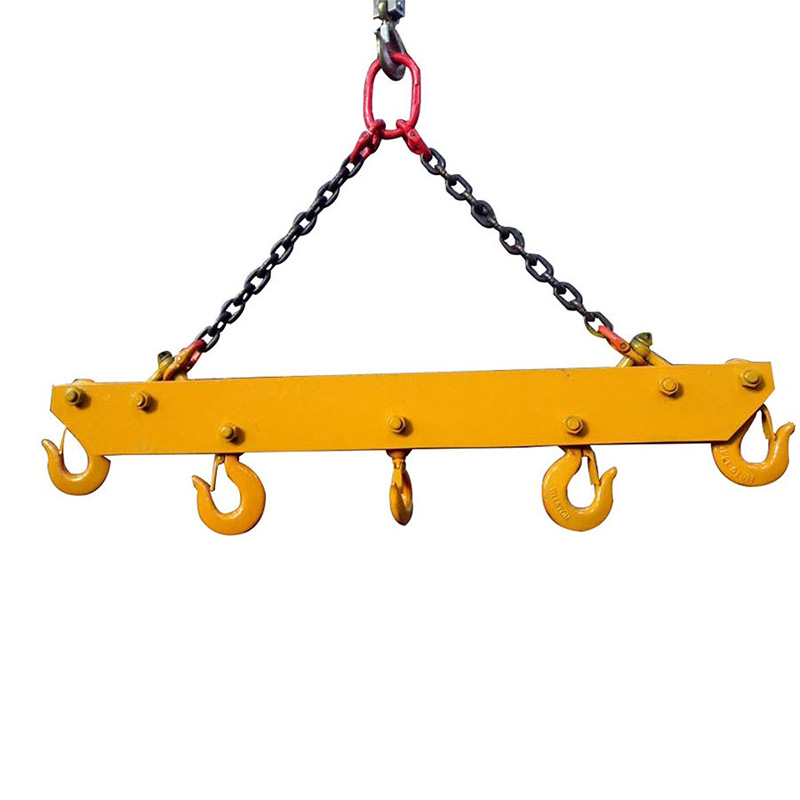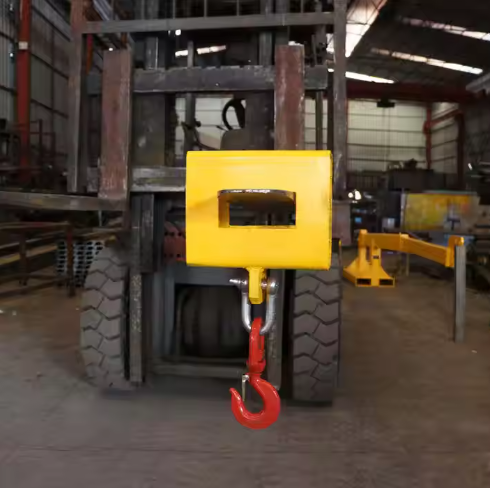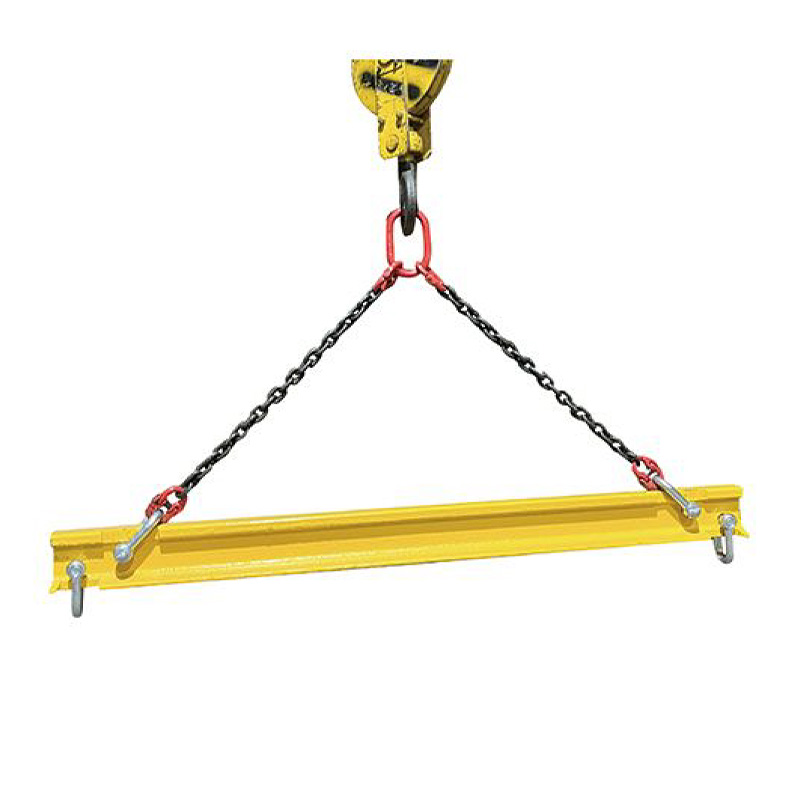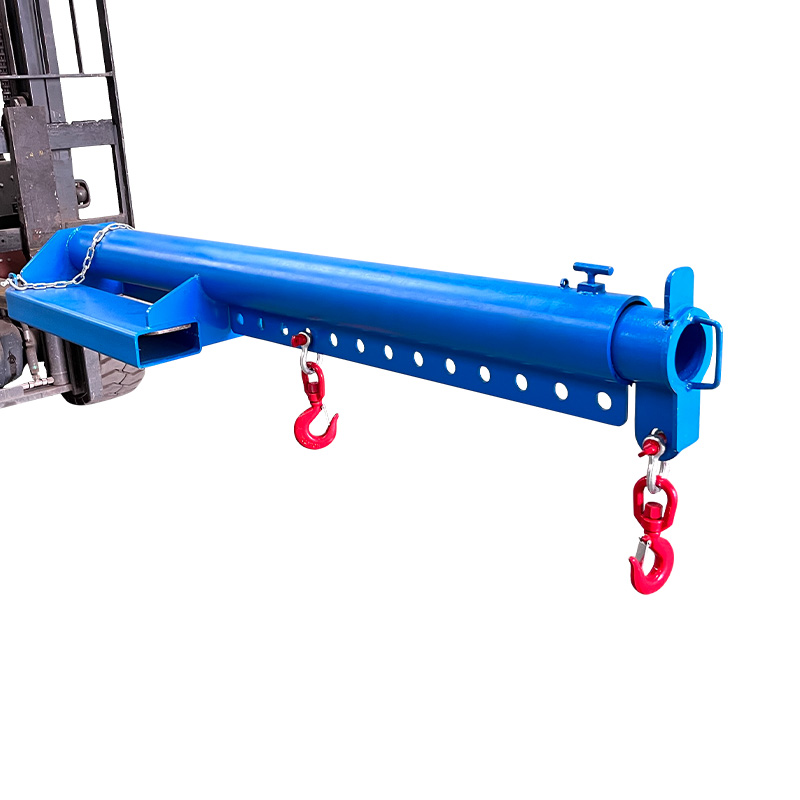


Balance Lifting Beam for Forklift and Crane Stable Slab Handling | Speedone
Who This Balance Lifting Beam Is For
 |
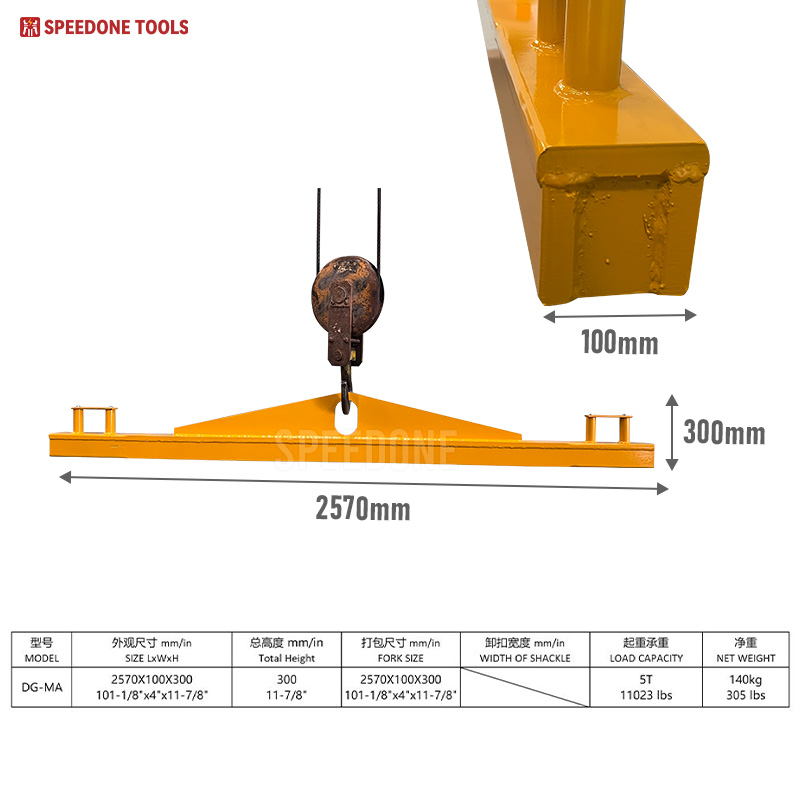 |
| Product size specification | |
| MODEL | SIZE (mm/in) L×W×H | Total Height (mm/in) | PACK SIZE (mm/in) | WIDTH OF SHACKLE (mm/in) | LOAD CAPACITY | NET WEIGHT |
|---|---|---|---|---|---|---|
| DG-MA | 2570X100X300 101-1/8″x4″x11-7/8″ |
300 11-7/8″ |
2570X100X300 101-1/8″x4″x11-7/8″ |
/ | 5T 11023 lbs |
140kg 305 lbs |
This Balance Lifting Beam is designed for industrial users who need stable lifting performance and reliable load balance during material handling operations.
It is widely used by:
- Steel processing and fabrication plants
- Stone slab and marble factories
- Warehouse and logistics operations
- Construction and infrastructure projects
- Manufacturing facilities handling oversized materials
If your operation requires balanced lifting, improved stability, and reduced load swing, this balance lifting beam is an excellent solution.
The Speedone lifting beam features an optimized structural balance system that distributes lifting force evenly across the load surface.
For many overseas buyers, lifting heavy materials safely is not only about lifting capacity. In real factory environments, poor load balance can create serious operational problems. Materials may swing during lifting, positioning becomes more difficult, and workplace safety risks increase.
A properly balanced lifting system helps operators maintain better control while reducing unnecessary movement during transport and positioning.
This is especially important when handling wide slabs, steel plates, marble sheets, or oversized industrial materials that require stable lifting conditions.
What Makes a Balance Lifting Beam More Stable
The key advantage of a Balance Lifting Beam is its ability to maintain stable load positioning throughout the lifting process.
Traditional lifting systems may create uneven force distribution, especially when handling wide or irregular loads. This can cause sudden movement, instability, and increased operational risk.
The balanced structural design helps distribute lifting force evenly across the material surface.
- Improves load balance during lifting
- Reduces slab swing and unwanted movement
- Enhances operational safety
- Improves positioning accuracy
- Protects materials from sudden impact
This makes balance lifting systems especially suitable for handling steel plates, stone slabs, and oversized flat materials.
In many industrial environments, operators need precise positioning when loading materials onto processing equipment, storage racks, or transport systems. A stable lifting beam makes this process much easier and safer.
Engineering Strength: Built for Balanced Heavy-Duty Lifting
The balance lifting beam is manufactured using reinforced structural steel to provide high load-bearing capability and long-term industrial durability.
Its optimized structural geometry distributes force evenly across the beam, helping reduce stress concentration during lifting operations.
Precision welding and reinforced lifting points improve resistance to fatigue, deformation, and heavy operational use.
Each lifting beam undergoes strict load testing before shipment to ensure reliable industrial performance and safety compliance.
From an engineering perspective, maintaining balance during lifting is extremely important. Uneven force distribution can increase stress on both the material and the lifting equipment.
The Speedone design helps maintain stable force distribution across the entire load area. This reduces unnecessary pressure on specific lifting points and improves overall operational control.
For industries handling valuable materials every day, this balanced structure helps improve long-term lifting reliability and reduces handling problems.
Balance Lifting Beam vs Standard Lifting Beam
| Feature | Balance Lifting Beam | Standard Lifting Beam |
|---|---|---|
| Load Stability | Excellent | Moderate |
| Load Swing Control | Better | Limited |
| Positioning Accuracy | High | Standard |
| Material Protection | Improved | Moderate |
| Operational Safety | Higher | Standard |
For operations requiring stable slab handling and improved safety, balance lifting systems provide clear advantages.
Real-World Applications
This balance lifting beam is widely used across industrial environments:
- Steel plate and slab lifting
- Stone slab and marble handling
- Warehouse heavy material transport
- Construction material positioning
- Manufacturing and fabrication operations
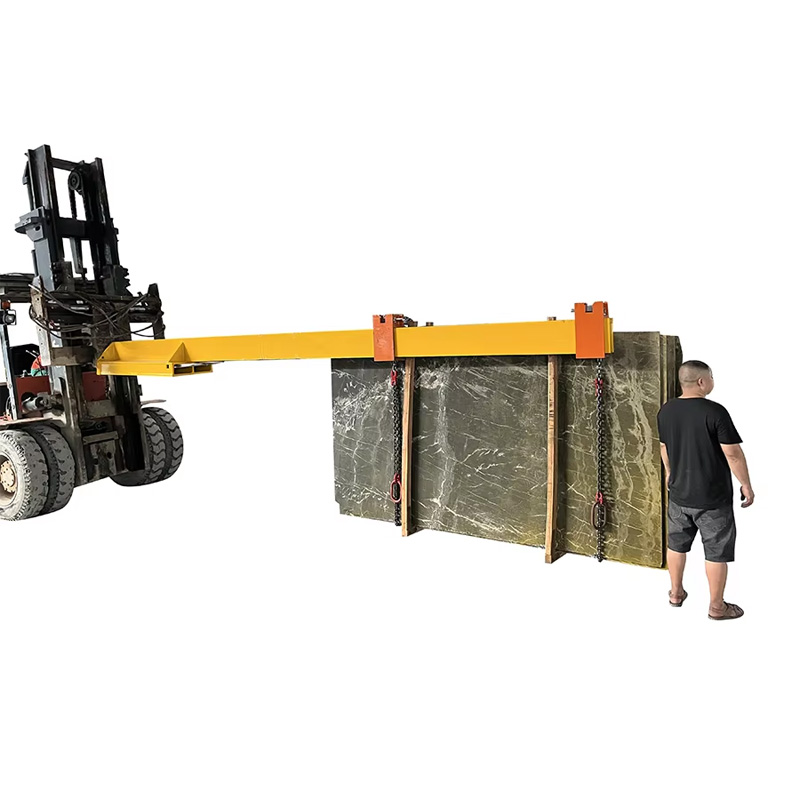
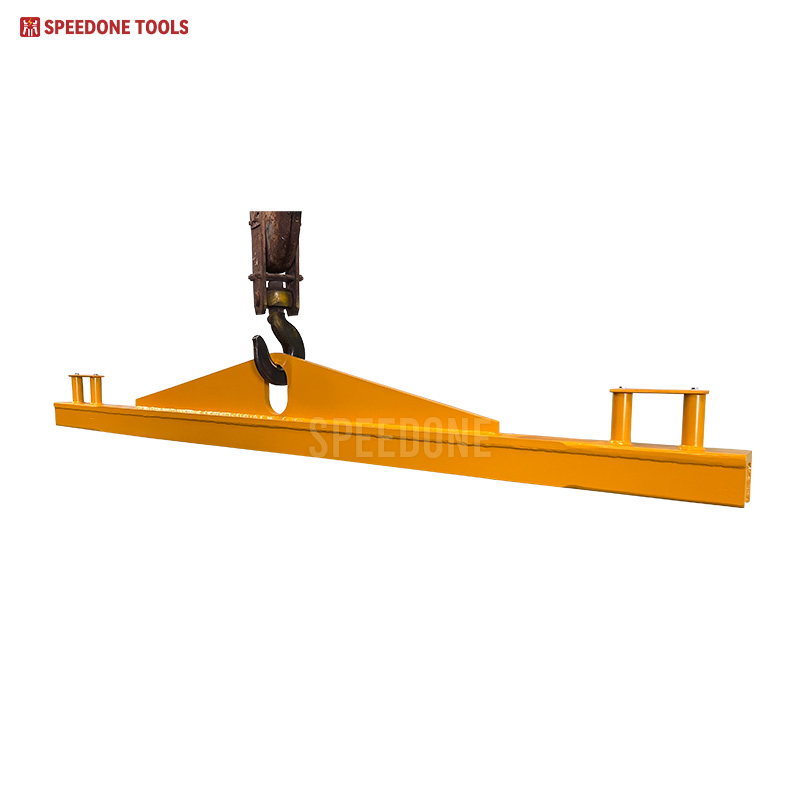
Its compatibility with forklifts and overhead cranes provides flexibility across different lifting systems and industrial applications.
In steel factories, it helps reduce plate swing during movement and improves handling stability.
In stone processing facilities, it supports safer transport of large granite and marble slabs.
In warehouses, it improves positioning control when moving oversized materials into storage areas.
In construction projects, it helps operators place heavy materials more accurately during installation.
 |
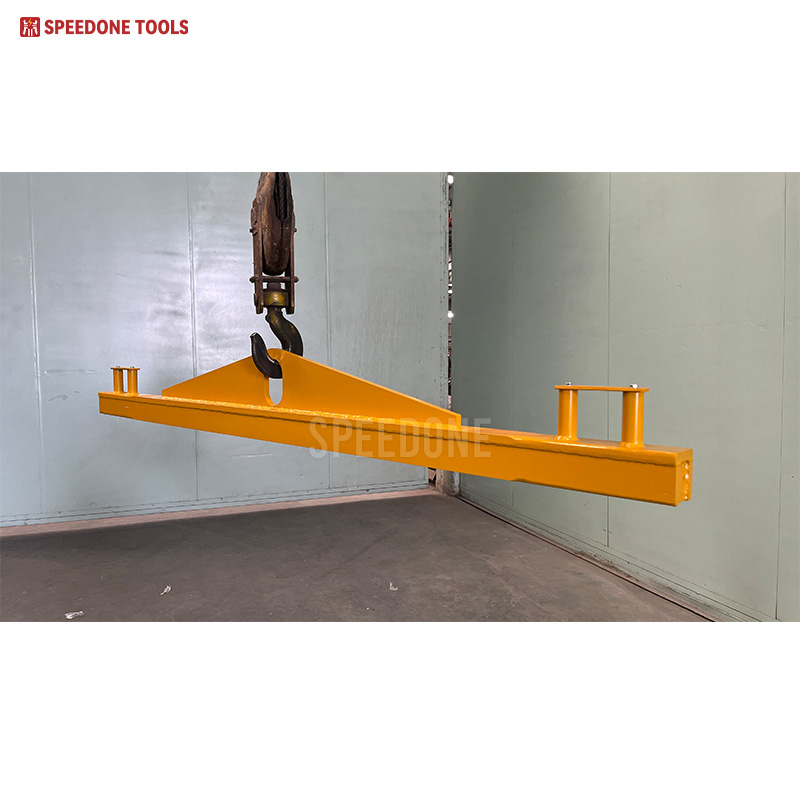 |
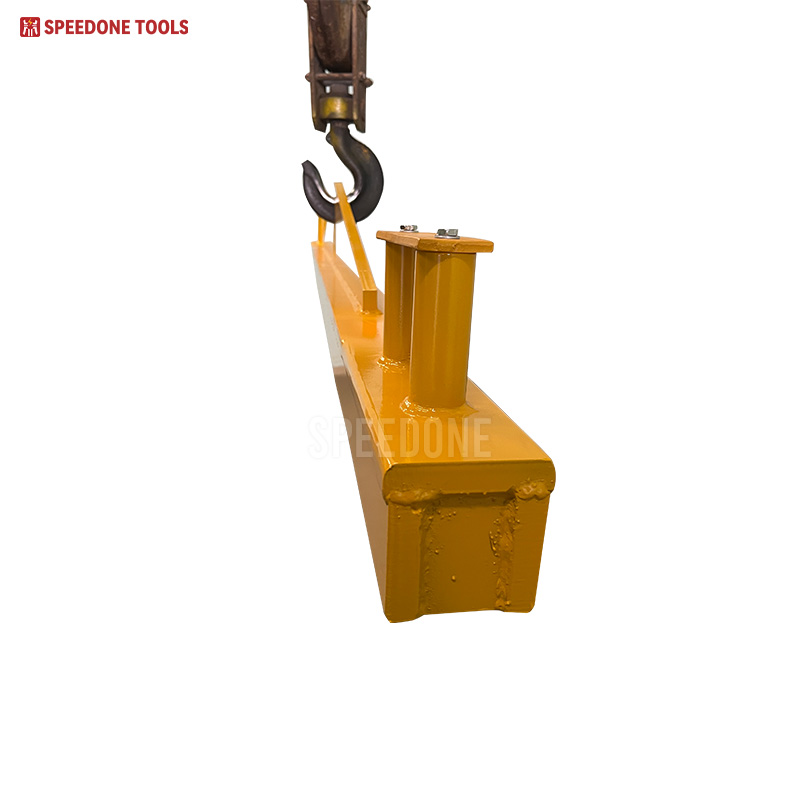
| Product real photo images | |
Why Balanced Lifting Improves Safety and Efficiency
Many lifting accidents and handling problems are caused by unstable loads.
When materials swing during lifting, operators lose positioning accuracy and workplace risks increase.
A Balance Lifting Beam improves operational performance by maintaining stable load alignment throughout the lifting process.
- Reduces sudden load movement
- Improves positioning precision
- Enhances workplace safety
- Reduces material handling damage
- Improves workflow efficiency
This is especially important in industrial environments where operators handle large materials repeatedly every day.
Better load balance not only improves safety, but also helps reduce operator fatigue and unnecessary handling time.
For businesses focused on improving production efficiency, stable lifting systems can provide significant long-term operational benefits.
Related Slab Lifting Equipment
For high-capacity slab handling, the
5T slab lifting system with beam
offers reliable heavy-duty lifting capability.
For enhanced operational stability, the
stable slab lifting equipment
ensures safer material handling.
For lighter slab applications, the
2T slab lifter solution
provides efficient lifting performance.
Additional Lifting Solutions
The
stabilizer slab lifting equipment
improves load control and operational safety.
The
adjustable lifting beam system
provides flexible slab lifting configurations.
The
hot-selling slab lifting equipment
is widely used in industrial slab handling operations.
Why Unbalanced Loads Create Operational Problems
Unbalanced lifting systems may create several operational issues during material handling.
- Increased slab swing during transport
- Reduced positioning accuracy
- Higher workplace safety risks
- Greater stress on lifting equipment
- More difficult handling for operators
In industries handling large steel plates or stone slabs, these problems can reduce efficiency and increase operational costs.
A balanced lifting system helps minimize these risks by improving load control throughout the entire lifting process.
Common Buyer Mistakes
Many buyers focus only on lifting capacity and ignore lifting balance.
Some common mistakes include:
- Choosing lifting systems without evaluating load stability
- Ignoring load swing during operation
- Overlooking positioning accuracy requirements
- Not considering workplace safety improvements
- Selecting equipment based only on price
Professional buyers usually evaluate the complete lifting process before selecting equipment.
The right lifting beam should improve operational safety, positioning accuracy, and handling efficiency at the same time.
How to Choose the Right Balance Lifting Beam
When selecting a Balance Lifting Beam, buyers should consider:
- Load size and weight
- Material dimensions and shape
- Forklift or crane compatibility
- Required lifting stability
- Daily operational frequency
- Factory and workspace conditions
Choosing the correct lifting system helps improve workflow stability and reduce long-term operational problems.
For factories handling heavy materials every day, investing in a balanced lifting system can improve both safety and productivity.
References
- ASME BTH-1 Below-the-Hook Lifting Devices – ASME Standard
- ASME B30.20 Below-the-Hook Lifting Devices Safety – ASME Committee
- ISO 12100 Safety of Machinery – International Organization for Standardization
- EN 13155 Non-Fixed Load Lifting Attachments – European Standard
- OSHA Overhead and Gantry Crane Regulations – U.S. Department of Labor
- LOLER 1998 Lifting Operations Regulations – UK Health and Safety Executive
- PUWER Work Equipment Regulations – UK Health and Safety Executive
- Rigging Handbook – Industrial Training International
Frequently Asked Questions
1. What is a balance lifting beam used for?
It is used for stable and balanced lifting of slabs, steel plates, and industrial materials.
2. Why choose a balance lifting beam?
It improves lifting stability, reduces load swing, and enhances workplace safety.
3. Can it be used with forklifts and cranes?
Yes, it supports both forklift and overhead crane lifting systems.
4. Is it suitable for heavy-duty industrial use?
Yes, it is designed for demanding industrial lifting environments.
5. Can it be customized?
Yes, specifications and configurations can be customized based on operational requirements.