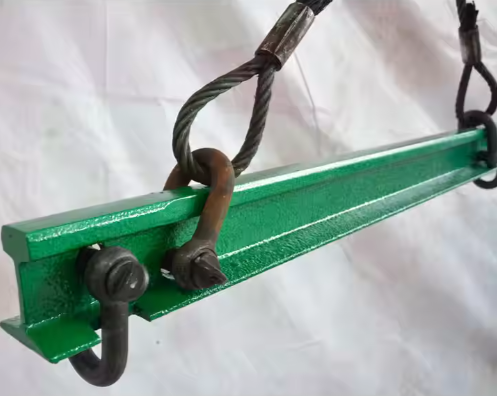


Multi Hook Steel Plate Lifting Beam for Forklift and Crane Heavy Duty Use | Speedone
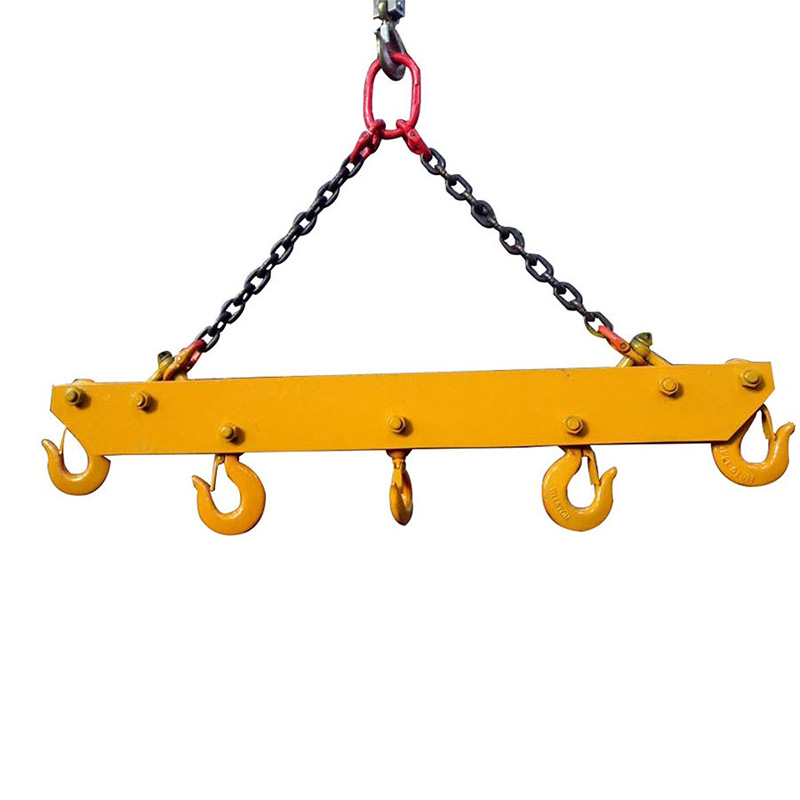 |
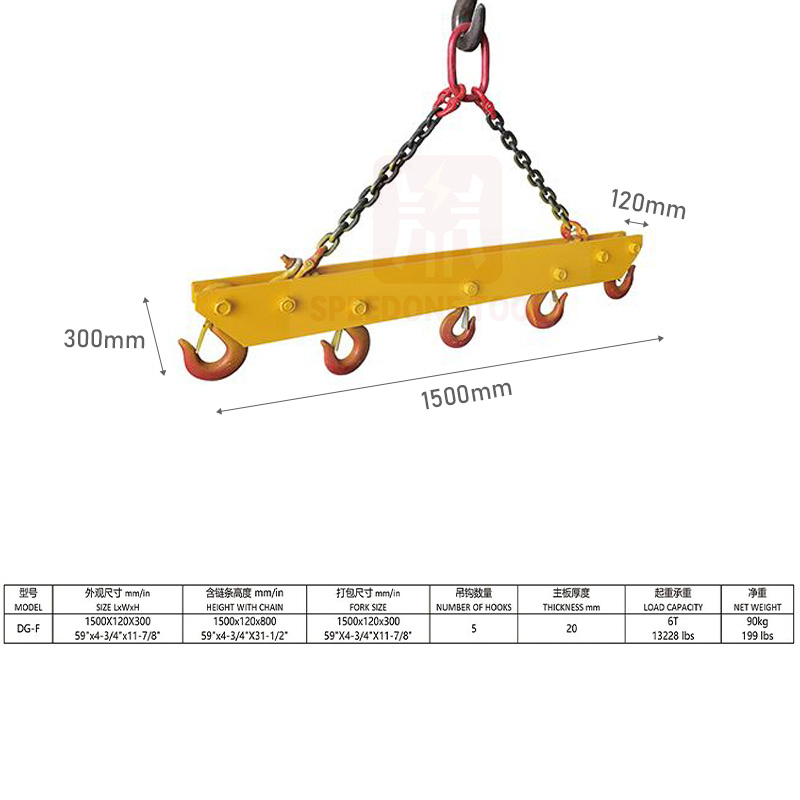 |
| Product dimensions diagram | |
| MODEL | SIZE (mm/in) L×W×H | HEIGHT WITH CHAIN (mm/in) | PACK SIZE (mm/in) | NUMBER OF HOOKS | THICKNESS (mm) | LOAD CAPACITY | NET WEIGHT |
|---|---|---|---|---|---|---|---|
| DG-F | 1500X120X300 59″x4-3/4″x11-7/8″ |
1500x120x800 59″x4-3/4″x31-1/2″ |
1500x120x300 59″x4-3/4″x11-7/8″ |
5 | 20 | 6T 13228 lbs |
90kg 199 lbs |
Who This Multi Hook Steel Plate Lifting Beam Is For
This multi hook steel plate lifting beam is designed for industrial users who need to lift wide, thin, or heavy plates without deformation. It is widely used by:
- Steel processing plants handling large thin plates
- Metal fabrication workshops requiring precision lifting
- Shipbuilding and heavy equipment industries
- Stone and slab processing factories
- Warehouses handling oversized flat materials
If your operation involves wide materials that bend or warp easily, this multi hook lifting beam provides a safer and more balanced solution.
The Speedone lifting beam is engineered with multiple lifting points to distribute load evenly across the material surface, reducing stress concentration and preventing damage.
As a factory-direct manufacturer, Speedone ensures precision engineering, reinforced structure, and consistent quality for long-term industrial use.
For overseas buyers, lifting equipment is not just a tool — it directly impacts production efficiency, material quality, and operational safety. Choosing the wrong lifting method often leads to hidden costs such as material deformation, damaged inventory, workflow delays, and safety risks. A properly engineered multi hook lifting beam minimizes these issues by providing consistent, stable lifting performance.
What Makes a Multi Hook Lifting Beam Superior
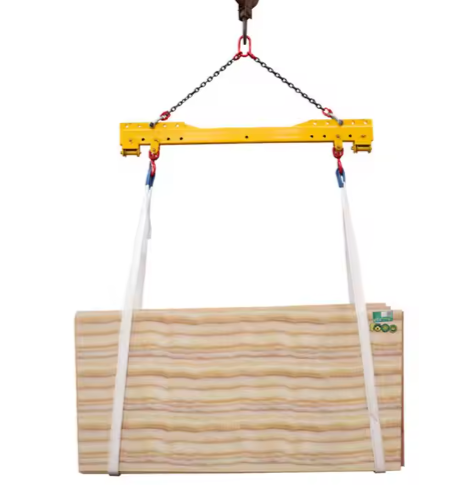
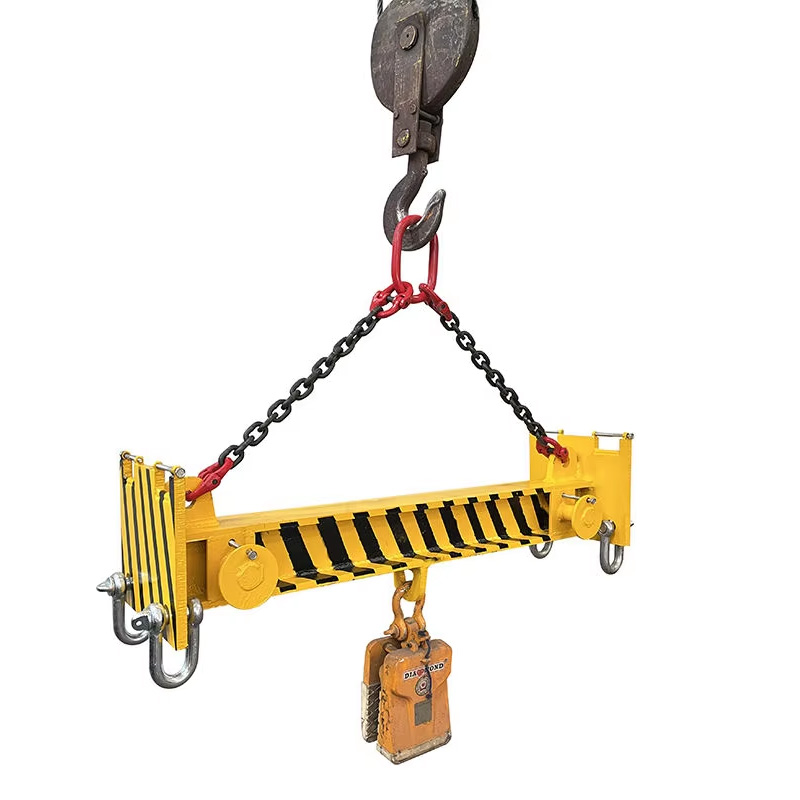
The key advantage of a multi hook steel plate lifting beam is its ability to distribute weight across several lifting points instead of relying on a single or dual hook system.
- Prevents bending of thin steel plates
- Improves load balance across the entire surface
- Reduces stress concentration at lifting points
- Enhances safety during lifting operations
- Allows handling of larger and wider materials
This makes it ideal for industries dealing with delicate, wide, or high-value materials where deformation must be avoided.
In real-world operations, wide steel plates behave differently than compact loads. When lifted unevenly, they can flex under their own weight. This is especially true for thin plates or large sheet metal. Multi hook systems solve this problem by creating multiple support points, effectively spreading the load and maintaining flatness during lifting.
Engineering Strength: Built for Precision and Durability
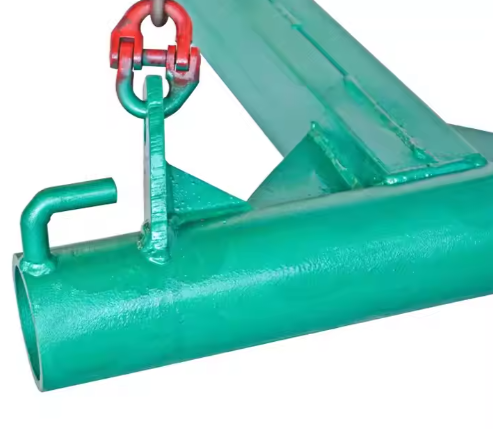
The multi hook lifting beam is constructed using high-strength structural steel, ensuring durability and reliability under heavy loads. Its reinforced frame design supports multiple lifting hooks without compromising structural integrity.
Each hook position is strategically designed to ensure even weight distribution, reducing the risk of imbalance. The beam maintains stability even when handling irregular or oversized loads.
Precision welding and reinforced stress points ensure long-term performance and resistance to fatigue. This makes the beam suitable for continuous industrial use.
All units undergo strict load testing before delivery, ensuring compliance with safety and performance standards.
From an engineering perspective, load path design is critical. Multi hook beams reduce concentrated stress by spreading force evenly across multiple points. This not only protects materials but also extends the lifespan of lifting equipment.
Multi Hook vs Single Hook Lifting Beam Comparison
| Factor | Multi Hook Beam | Single Hook Beam |
|---|---|---|
| Load Distribution | Even across multiple points | Concentrated |
| Material Protection | High | Low |
| Stability | Excellent | Moderate |
| Best Use | Wide plates and slabs | Compact loads |
For wide materials, multi hook lifting beams provide significantly better control and safety compared to traditional designs.
Real-World Applications
This multi hook steel plate lifting beam is widely used across industries:
- Steel plate and sheet metal lifting
- Thin plate handling where deformation must be avoided
- Stone slab and granite transport
- Shipbuilding and heavy fabrication
- Warehouse and logistics operations
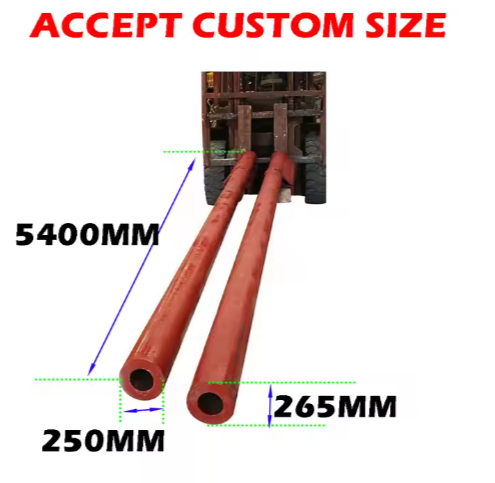
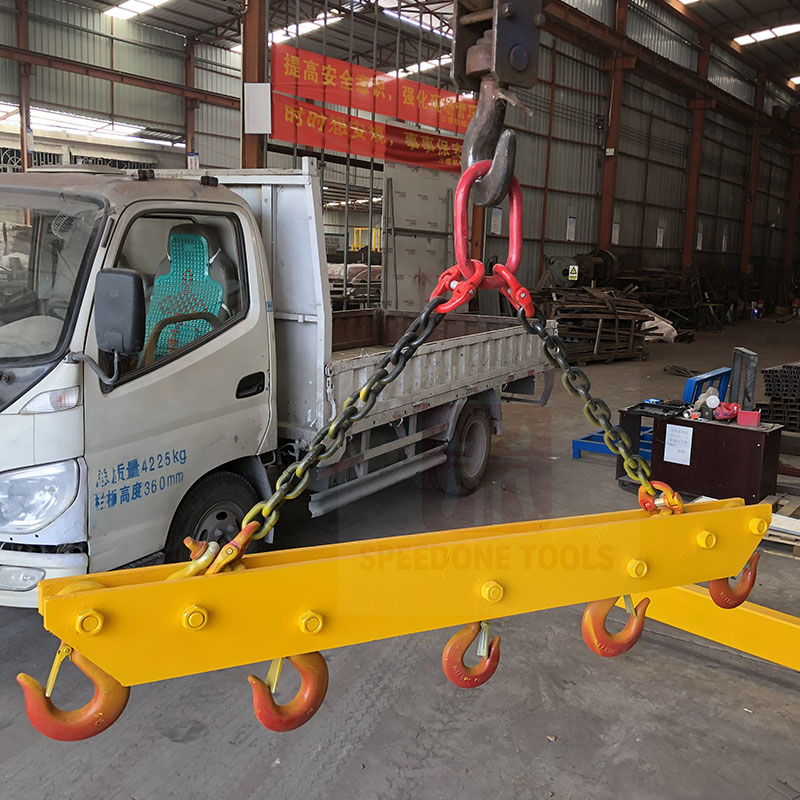
Its compatibility with forklifts and overhead cranes makes it a flexible solution for modern industrial workflows.
In steel factories, this beam ensures plates remain flat during transport. In stone industries, it prevents cracks and edge damage. In logistics, it improves efficiency when handling oversized cargo.
 |
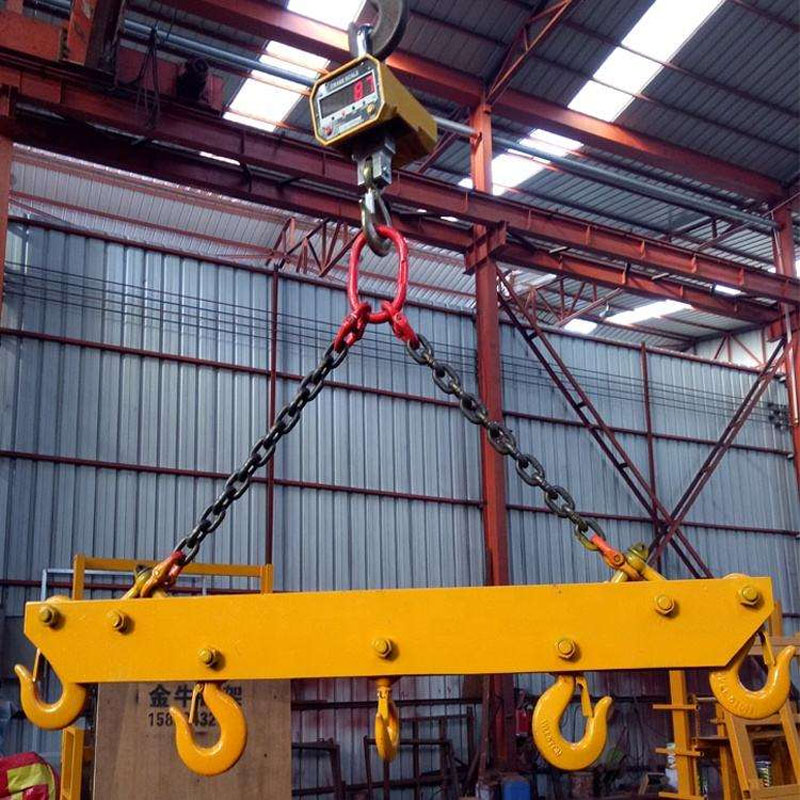 |
| Product scenario diagram | |
Related Slab Lifting Equipment
For smaller loads, the
slab lifter for forklift
offers an efficient solution.
For heavy-duty lifting, the
5T slab lifting equipment
is suitable for industrial applications.
If cost efficiency is required, the
economical slab lifter
provides reliable performance.
Additional Lifting Solutions
The
hot-selling slab lifter
is widely used for general lifting needs.
The
heavy-duty slab lifting system
ensures durability under continuous use.
For higher stability, the
stable slab lifter solution
provides improved control and safety.
Why Single Hook Lifting Beams Fail
Traditional single or dual hook lifting systems often fail when handling wide or thin materials. Common problems include:
- Material bending due to uneven load distribution
- High stress concentration at lifting points
- Increased risk of slipping or imbalance
- Damage to high-value materials
The multi hook lifting beam solves these problems by distributing weight evenly, ensuring safer and more reliable lifting operations.
These failures often lead to production delays, damaged inventory, and increased operational costs. Choosing a high-quality lifting beam reduces these risks and improves workflow efficiency.
Buyer Mistakes to Avoid
- Choosing based only on price
- Ignoring load distribution requirements
- Not verifying load capacity and testing
- Overlooking compatibility with equipment
Smart buyers focus on engineering quality, safety standards, and long-term performance.
References
- ASME BTH-1 Below-the-Hook Lifting Devices – ASME Standard
- ASME B30.20 Lifting Device Safety – ASME Committee
- ISO 12100 Machinery Safety – ISO Standard
- EN 13155 Lifting Attachments – European Standard
- OSHA Crane Regulations – U.S. Department of Labor
- LOLER Regulations 1998 – UK HSE
- PUWER Equipment Safety – UK HSE
- Rigging Handbook – Industrial Training International
Frequently Asked Questions
1. What is a multi hook lifting beam used for?
It is used to lift wide or thin materials by distributing load across multiple hook points.
2. Why choose a multi hook design?
It prevents bending and improves load balance when handling large plates.
3. Can it be used with forklifts and cranes?
Yes, it supports dual-use lifting operations.
4. Is it suitable for heavy-duty applications?
Yes, it is designed for industrial environments.
5. Can it be customized?
Yes, hook positions and specifications can be adjusted.