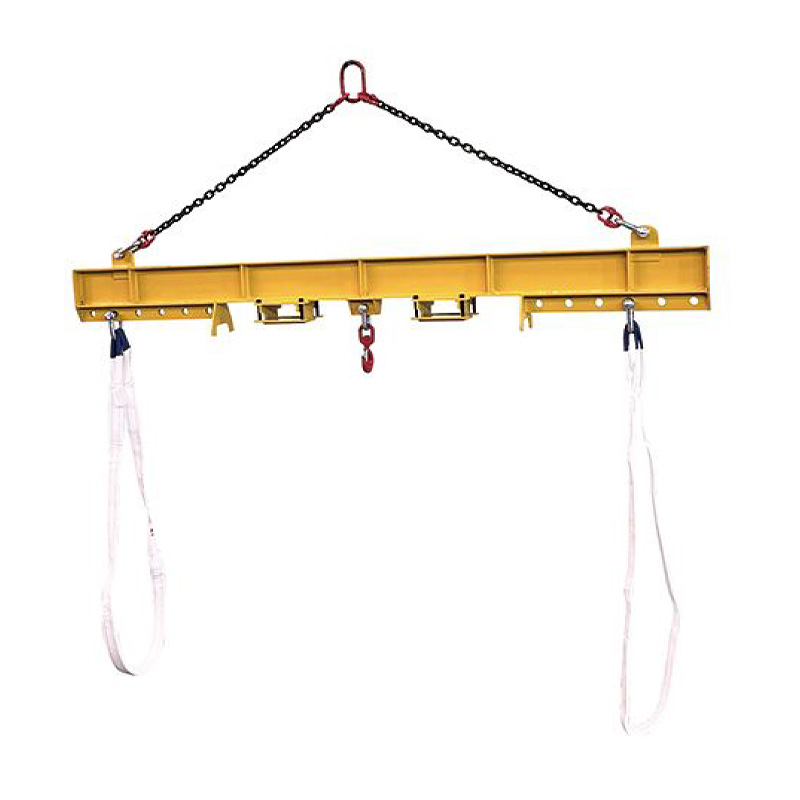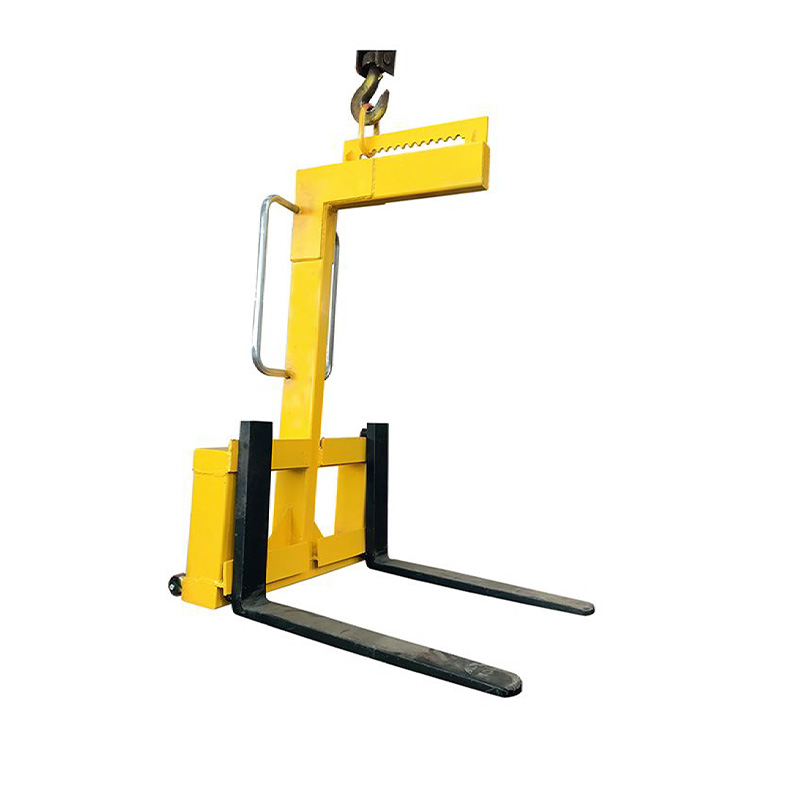


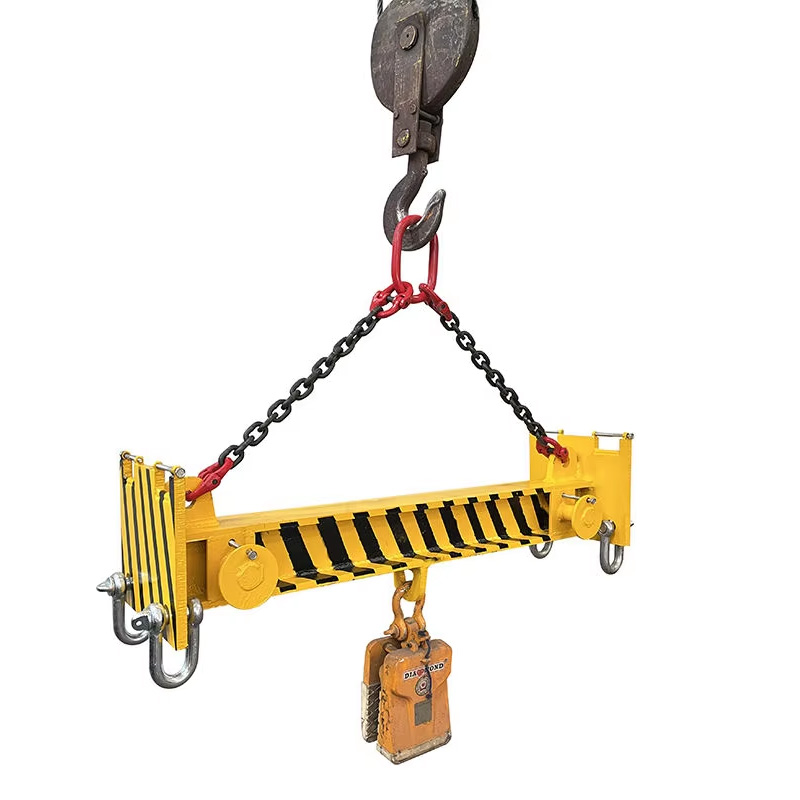
H Type Lifting Beam for Forklift and Crane Heavy Duty Lifting | Speedone
 |
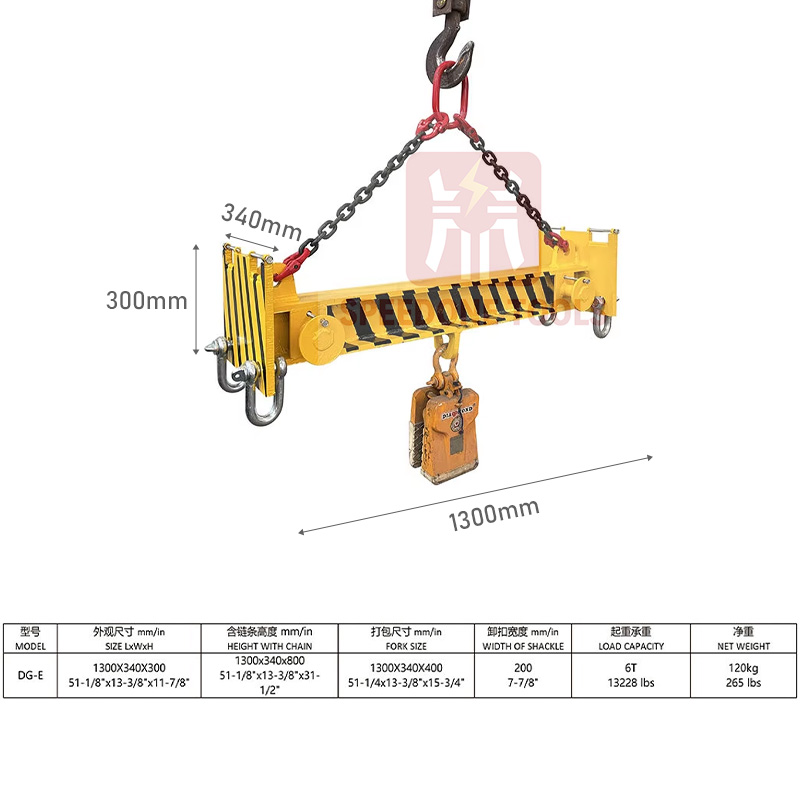 |
| Product size specification | |
| MODEL | SIZE (mm/in) L×W×H | HEIGHT WITH CHAIN (mm/in) | PACK SIZE (mm/in) | WIDTH OF SHACKLE (mm/in) | LOAD CAPACITY | NET WEIGHT |
|---|---|---|---|---|---|---|
| DG-E | 1300X340X300 51-1/8″x13-3/8″x11-7/8″ |
1300x340x800 51-1/8″x13-3/8″x31-1/2″ |
1300X340X400 51-1/4×13-3/8″x15-3/4″ |
200 7-7/8″ |
6T 13228 lbs |
120kg 265 lbs |
Who This H Type Lifting Beam Is For
This H Type lifting beam is designed for industrial users who require higher structural strength and stability when lifting large and heavy materials. It is widely used by:
- Steel processing plants handling wide and heavy plates
- Stone factories lifting marble and granite slabs
- Warehouses dealing with oversized flat cargo
- Construction companies handling structural materials
- Manufacturers using forklift and crane lifting systems
If your operation involves heavy loads, wide materials, and high safety requirements, this H frame lifting beam provides a more stable and reliable solution.
The Speedone lifting beam is engineered with an H-type structural design, offering enhanced rigidity compared to standard beams. This makes it ideal for demanding industrial lifting tasks where stability is critical.
As a factory-direct manufacturer, Speedone ensures strict quality control, high-strength steel construction, and precision welding to deliver long-lasting performance.
For overseas buyers, the decision to purchase an H Type lifting beam is usually connected to more than a single lifting task. It affects daily material handling efficiency, operator safety, product protection, and long-term maintenance cost. When steel plates, stone slabs, large sheets, or oversized structural materials are moved repeatedly, even a small instability problem can become expensive over time. A properly designed H Type beam helps reduce bending, swinging, twisting, and uneven lifting behavior, allowing the lifting process to become more predictable and controlled.
This is especially important for factories and warehouses that handle materials with high value or high damage sensitivity. A steel plate that bends during lifting may affect later processing. A polished stone slab that cracks or chips may become unsellable. A load that swings during movement can slow down production and increase safety risks. In this context, a reinforced H frame lifting beam is not only a lifting attachment. It is a risk-control tool for serious industrial buyers.
What Makes an H Type Lifting Beam More Stable
The key advantage of an H Type lifting beam lies in its structural design. The H-shaped frame increases strength and reduces deformation under load.
- Higher structural rigidity than standard beams
- Improved load distribution across multiple points
- Reduced bending when lifting wide materials
- Better resistance to twisting and stress
- Enhanced safety in heavy-duty operations
This makes it especially suitable for lifting steel plates, slabs, and large flat materials that require balanced support.
Compared with a simple straight beam, the H-shaped configuration provides a broader and more stable supporting structure. This helps the beam resist deformation when lifting long, flat, or heavy materials. In heavy-duty applications, deformation is not only a durability issue. It can also affect lifting angle, load balance, and operator control. A beam that flexes too much may create uneven stress on the material, increase swing, or make positioning more difficult.
The H Type structure is also useful when the material needs multiple supporting points. Instead of allowing force to concentrate in a narrow zone, the design helps distribute lifting stress across a wider frame. For buyers handling oversized flat cargo, this design logic is important because flat materials are often vulnerable to bending or uneven support. The more stable the lifting structure, the lower the chance of load distortion during movement.
Engineering Strength: Built for Industrial Reliability
The H Type lifting beam is constructed using high-strength structural steel to withstand continuous heavy-duty use. Its reinforced frame design ensures that the beam maintains its shape and strength even under maximum load conditions.
Critical stress points are strengthened to prevent fatigue and deformation over time. The full welding process ensures structural consistency and eliminates weak joints.
The H-type configuration improves overall load balance, minimizing swing and ensuring controlled lifting. This is particularly important when handling sensitive materials such as polished stone or processed steel plates.
Each unit undergoes strict load testing before delivery, ensuring it meets industrial safety standards.
From an engineering point of view, lifting beam performance depends on several factors working together. Steel quality provides the foundation. Beam geometry determines how the structure resists bending and twisting. Welding quality determines whether the frame can transfer load safely without weak connection points. Reinforcement design determines how the beam performs under repeated stress. Testing before delivery helps confirm that the product is suitable for actual industrial use.
High-strength structural steel is commonly used for heavy-duty lifting equipment because it provides reliable mechanical performance, good fabrication characteristics, and resistance to deformation under load. However, material strength alone is not enough. If the beam is poorly designed, even good steel can fail to perform properly. That is why an H Type structure is valuable: it combines material strength with a more stable frame layout.
Key Engineering Factors Buyers Should Evaluate
- Steel thickness and structural grade
- H frame reinforcement layout
- Welding consistency and joint quality
- Load distribution across lifting points
- Compatibility with forklift and crane systems
- Testing, inspection, and production quality control
For procurement managers, these factors should be evaluated before comparing prices. A low-cost beam may appear attractive at first, but if it lacks reinforcement, weld quality, or proper testing, the hidden cost can be much higher. Equipment failure can cause production downtime, material loss, repair expense, and safety concerns. A reliable H Type lifting beam should be selected based on practical performance, not price alone.
 |
 |
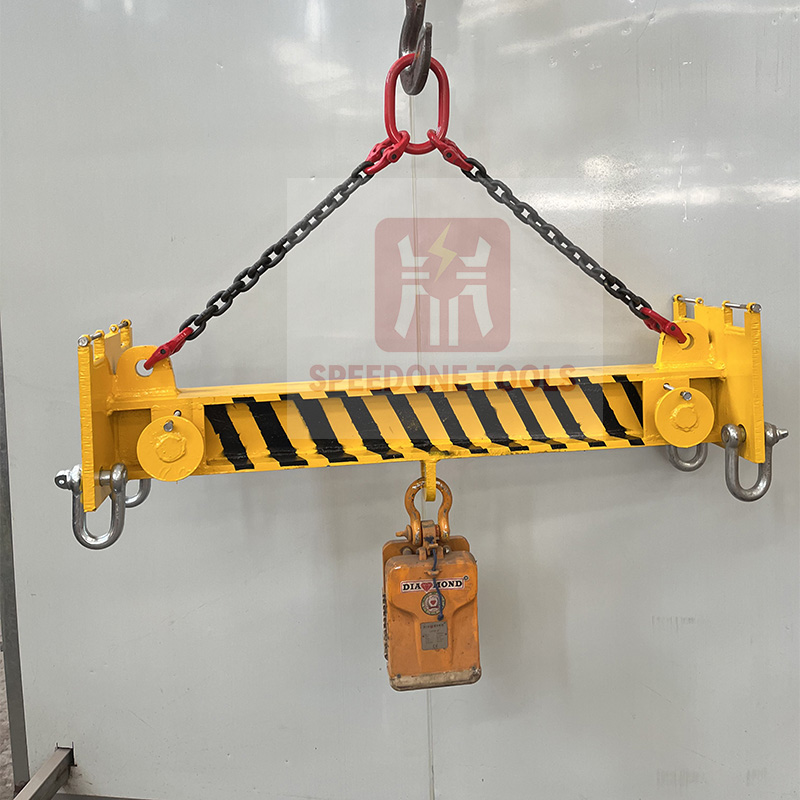
| Product scenario diagram and detail illustration | |
H Type Lifting Beam vs Standard Lifting Beam
Many buyers compare H Type lifting beams with standard lifting beams before making a purchase decision. Both can be used for lifting heavy materials, but the structural logic is different. A standard beam may be suitable for simpler lifting tasks, compact loads, or applications where load width is not a major concern. An H Type lifting beam is more suitable when the buyer needs better rigidity, wider support, and improved load control.
| Comparison Factor | H Type Lifting Beam | Standard Lifting Beam |
|---|---|---|
| Structural Rigidity | Higher rigidity due to reinforced H-shaped frame | Suitable for general lifting, but less resistant to twisting |
| Best Application | Wide, heavy, flat, or sensitive materials | More compact or simpler loads |
| Load Distribution | Improved distribution across multiple support areas | Depends strongly on beam design and lifting points |
| Resistance to Deformation | Better under heavy-duty conditions | May deform more easily if overloaded or poorly designed |
| Industrial Suitability | Ideal for demanding steel, stone, warehouse, and construction use | Suitable for lighter or less complex operations |
For buyers who handle wide plates, slabs, and oversized materials, the H Type beam is often the more practical choice. Its structural advantages help reduce bending, increase stability, and improve confidence during lifting. For operations where safety and repeatability matter, that extra rigidity can provide meaningful long-term value.
Forklift and Crane Compatibility: Why Dual Use Matters
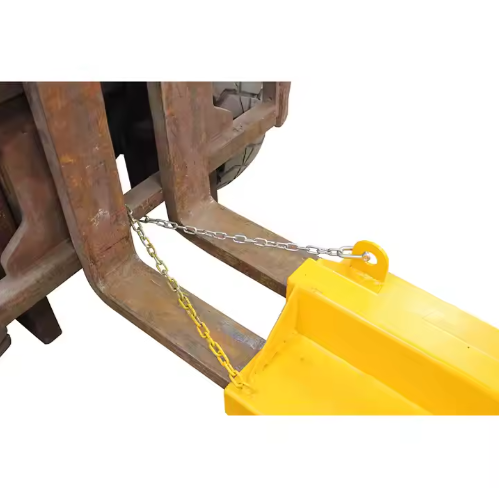
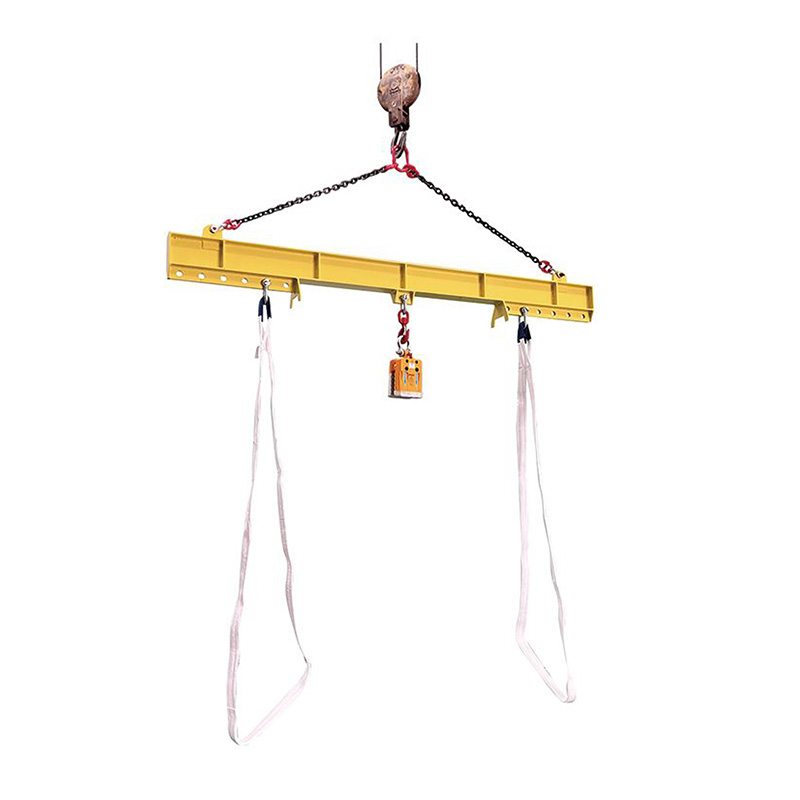
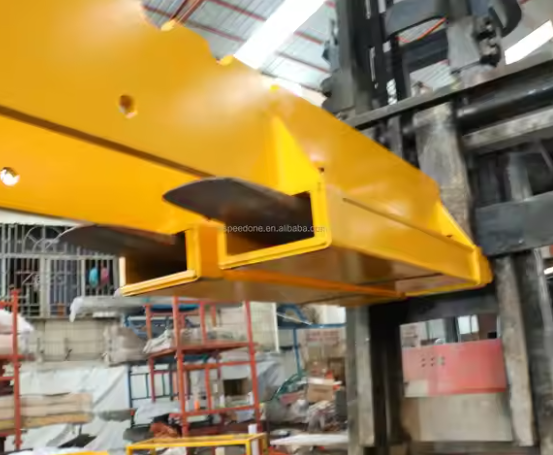
One major advantage of the Speedone H Type lifting beam is its suitability for both forklift and crane lifting systems. Many industrial facilities use more than one material handling method. A warehouse may rely on forklifts for horizontal movement, while a production area may use overhead cranes for controlled vertical lifting. A lifting beam that supports both methods can improve flexibility and reduce the need for multiple separate attachments.
For forklift use, buyers should consider attachment stability, load center, and safe movement distance. A beam used with a forklift changes how the load behaves. The operator must account for the beam weight, material size, and center of gravity. Proper design helps maintain safer handling and better control.
For crane use, buyers should focus on connection points, sling arrangement, load balance, and lifting clearance. Crane lifting often requires more precise vertical control, especially when placing large materials onto racks, machines, cutting tables, or transport platforms. A stable H Type beam helps reduce unwanted swing and makes positioning easier.
Dual compatibility does not mean the beam should be used without planning. It means the beam can be integrated into different lifting workflows when used correctly. Buyers should always confirm rated capacity, connection method, and safe operating conditions before use.
Real-World Applications
This H Type lifting beam is widely used in industrial environments:
- Steel plate and sheet lifting
- Stone slab and marble handling
- Heavy-duty warehouse logistics
- Construction material lifting
- Manufacturing and production operations
Its dual compatibility with forklifts and cranes allows it to adapt easily to different lifting systems.
In steel processing plants, the beam can support wide plates during transfer between storage, cutting, forming, and loading areas. These materials are often heavy and difficult to control with simple lifting methods. A reinforced H Type lifting beam helps maintain balance and reduce bending during movement.
In stone and marble factories, slab handling requires both strength and care. Stone slabs may be heavy but also fragile along certain edges or surfaces. Uneven lifting can cause cracks or chips. A stable beam helps distribute lifting forces and improves handling control.
In warehouses, oversized flat cargo can be difficult to move safely because of limited space and changing handling routes. A beam that can work with both forklifts and cranes gives operators more options and helps improve material flow.
In construction-related operations, structural components, panels, plates, and prefabricated materials often require controlled lifting. The H Type beam supports safer handling during loading, unloading, and site preparation tasks.
Technical Performance and Buyer Evaluation Table
| Evaluation Item | Why It Matters | Buyer Benefit |
|---|---|---|
| H-Shaped Frame | Improves structural rigidity and resistance to twisting | More stable lifting of wide materials |
| High-Strength Steel | Supports heavy-duty use and reduces deformation risk | Longer service life and better reliability |
| Precision Welding | Reduces weak joints and improves structural consistency | Lower risk of cracks or failure |
| Load Testing | Confirms performance before delivery | Higher confidence during procurement |
| Forklift and Crane Use | Allows flexible operation across different handling systems | Better equipment utilization |
| Customization Potential | Allows adaptation to project requirements | Better fit for specific industrial workflows |
Related Slab Lifting Equipment
For lighter lifting applications, the
slab lifter for forklift
provides an efficient and compact solution.
For heavy-duty operations, the
5T slab lifting equipment
is designed for high-capacity industrial use.
If cost efficiency is important, the
economical slab lifter
offers reliable performance at a competitive price.
These related products help buyers compare different lifting solutions based on capacity, budget, and application type. A lighter slab lifter may be more suitable for smaller handling tasks, while a higher-capacity system may be better for continuous industrial use. Buyers should choose based on actual material size, working environment, and long-term operating expectations.
Additional Lifting Solutions
The
hot-selling slab lifter
is widely used for general industrial lifting needs.
The
heavy-duty slab lifting system
ensures durability under continuous use.
For enhanced safety, the
stable slab lifter solution
provides improved lifting control and stability.
For B2B buyers, having access to multiple lifting solutions from the same manufacturer can simplify supplier evaluation. Instead of comparing unrelated products from many vendors, buyers can review a complete lifting equipment range and select the attachment that best fits their load type, capacity requirement, and operational environment.
Why Low-Quality H Type Beams Fail
Low-quality lifting beams often fail due to poor material selection and weak structural design. Common issues include:
- Insufficient steel thickness causing deformation
- Weak welding leading to structural cracks
- Poor load distribution increasing safety risks
- Lack of proper testing and quality control
Speedone eliminates these risks through reinforced H-type design, precision manufacturing, and strict testing standards.
The most dangerous problem with low-quality lifting beams is that failure may not appear immediately. A weak beam may perform acceptably during early use but gradually deform after repeated lifting cycles. Small cracks may begin at welded joints. Uneven stress may cause twisting. Over time, these problems can develop into serious safety risks.
For industrial buyers, this creates several consequences. First, material damage may increase. Second, equipment maintenance costs may rise. Third, production schedules may be interrupted. Fourth, safety inspections may become more complicated. Finally, the buyer may need to replace the beam sooner than expected, making the original low price less attractive.
Common Buyer Mistakes When Choosing an H Type Lifting Beam
Choosing only by price
Price matters in procurement, but lifting equipment should never be selected by price alone. A lower-cost beam that lacks proper reinforcement or testing may increase long-term risk.
Ignoring the real load shape
Some buyers focus only on weight capacity but forget load width, length, surface sensitivity, and center of gravity. Wide flat materials need stable support, not only sufficient rated capacity.
Overlooking forklift and crane compatibility
If the beam will be used with both forklifts and cranes, compatibility should be reviewed before purchase. Attachment method, lifting clearance, and operating process should all be considered.
Not asking about testing and inspection
Testing and quality control are important trust signals. Buyers should ask whether the beam is inspected before delivery and whether the supplier follows a consistent production process.
Using a general beam for a heavy-duty application
A standard beam may not provide enough rigidity for demanding industrial tasks. For wide, heavy, or sensitive materials, an H Type lifting beam may be a more reliable choice.
Market Trends in Heavy-Duty Lifting Equipment
The industrial lifting equipment market is moving toward safer, more application-specific solutions. Buyers increasingly want lifting attachments that match the actual workflow instead of using general-purpose equipment for all tasks. This trend is especially clear in steel processing, stone handling, construction logistics, and large-scale warehouse operations.
Another trend is stronger attention to supplier credibility. Overseas buyers want clearer product information, better engineering communication, and more reliable production quality. They are not only asking whether a beam can lift a certain load. They also want to know how it is built, why the structure is suitable, and whether the supplier can support specific project needs.
Customization is also becoming more important. Many buyers need lifting equipment that fits existing forklifts, cranes, warehouse layouts, or material sizes. A manufacturer that can support custom dimensions, capacity requirements, and application-specific design has a stronger advantage in B2B sourcing.
How to Evaluate an H Type Lifting Beam Supplier
When evaluating suppliers, buyers should look at both product quality and communication quality. A good supplier should be able to explain the beam structure, materials, production process, testing method, and application fit. If a supplier only provides basic sales claims without technical explanation, buyers should be cautious.
- Confirm whether the supplier manufactures directly or only trades products
- Ask about steel structure, welding, and reinforcement design
- Check whether customization is available for special projects
- Review whether the beam supports forklift and crane lifting systems
- Evaluate response speed and technical communication quality
- Ask about inspection and testing before shipment
For long-term sourcing, the best supplier is not always the cheapest. It is the supplier that can provide consistent quality, practical guidance, and reliable support when project requirements change.
References
- Design of Below-the-Hook Lifting Devices (ASME BTH-1)
Author: American Society of Mechanical Engineers
Institution / Source: ASME
Publication / Platform: Engineering Standard - Below-the-Hook Lifting Devices Safety Standard (ASME B30.20)
Author: ASME Committee
Institution / Source: American Society of Mechanical Engineers
Publication / Platform: Safety Standard - Cranes and Lifting Equipment Regulations (LOLER 1998)
Author: UK Health and Safety Executive
Institution / Source: HSE
Publication / Platform: Government Regulation - Provision and Use of Work Equipment Regulations (PUWER 1998)
Author: UK Health and Safety Executive
Institution / Source: HSE
Publication / Platform: Government Regulation - ISO 12100: Safety of Machinery – Risk Assessment and Reduction
Author: International Organization for Standardization
Institution / Source: ISO
Publication / Platform: International Standard - EN 13155: Non-Fixed Load Lifting Attachments
Author: European Committee for Standardization
Institution / Source: CEN
Publication / Platform: European Standard - OSHA 29 CFR 1910.179 – Overhead and Gantry Cranes
Author: Occupational Safety and Health Administration
Institution / Source: U.S. Department of Labor
Publication / Platform: Federal Regulation - Rigging Handbook
Author: Jerry Klinke
Institution / Source: Industrial Training International
Publication / Platform: Industry Manual
Frequently Asked Questions
1. What is an H Type lifting beam used for?
It is used for lifting heavy and wide materials with improved stability and load balance. The H-shaped structure helps distribute force more evenly, making it suitable for steel plates, slabs, oversized cargo, and demanding industrial lifting applications.
2. Why choose an H Type lifting beam?
It offers higher strength, better load distribution, and reduced deformation compared to standard beams. Buyers often choose it when they need more structural rigidity, safer lifting behavior, and better long-term performance in heavy-duty environments.
3. Can it be used with forklifts and cranes?
Yes, it supports dual-use lifting operations. This makes it practical for facilities that use forklifts for material movement and overhead cranes for controlled lifting, loading, or positioning tasks.
4. Is it suitable for heavy-duty industrial use?
Yes, it is designed for demanding lifting environments. Its reinforced H-type frame, high-strength steel construction, precision welding, and load-tested design make it suitable for continuous industrial applications.
5. Can it be customized?
Yes, specifications can be adjusted based on requirements. Buyers can evaluate customized dimensions, lifting points, capacity requirements, and application-specific features depending on the project and working environment.