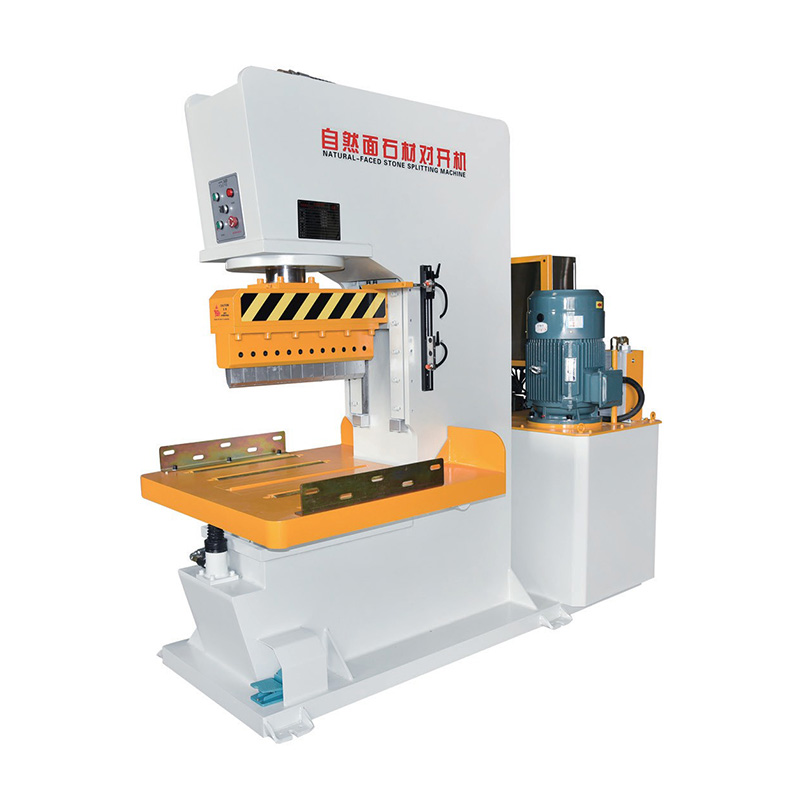







Stone Veneer Splitter Manufacturer for Wall Cladding | Speedone

- Weight : 1.56T
- Pressure : 40T
- Power : 4KW
Product Description
Automatic Stone Veneer Splitter Line for Natural Stone Wall Cladding
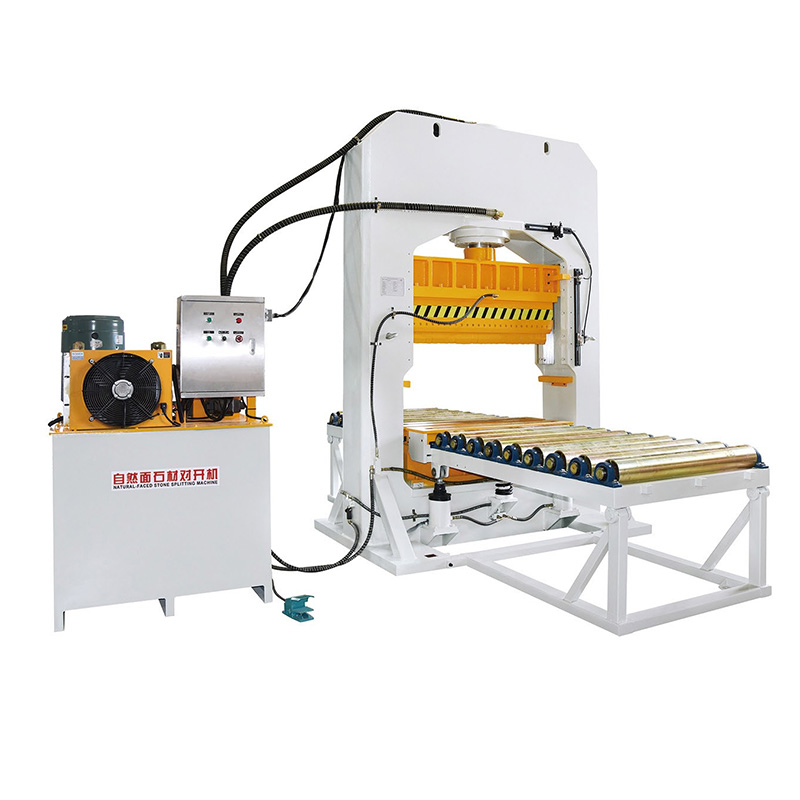
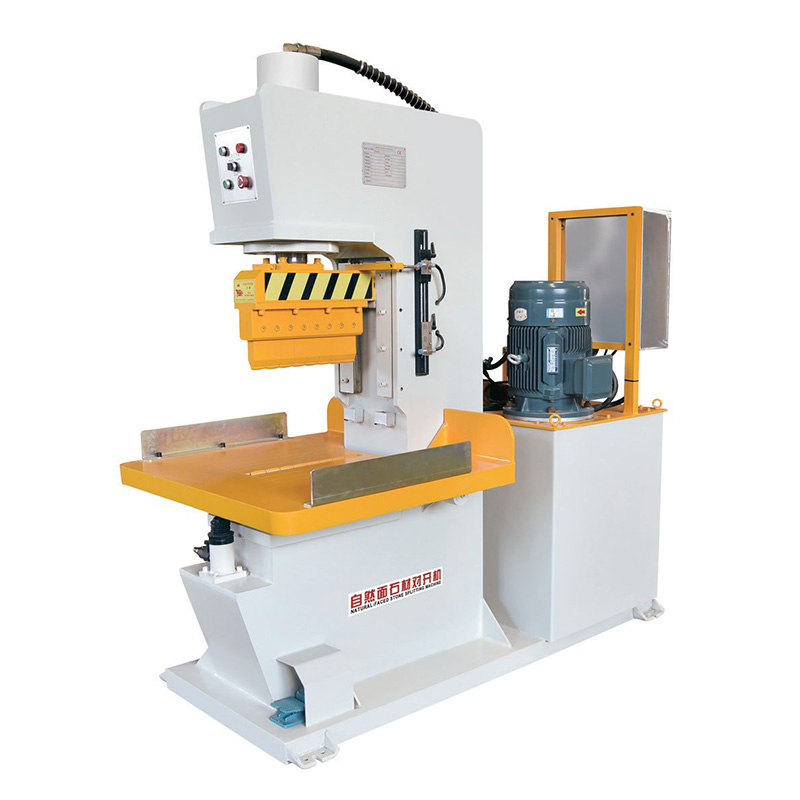
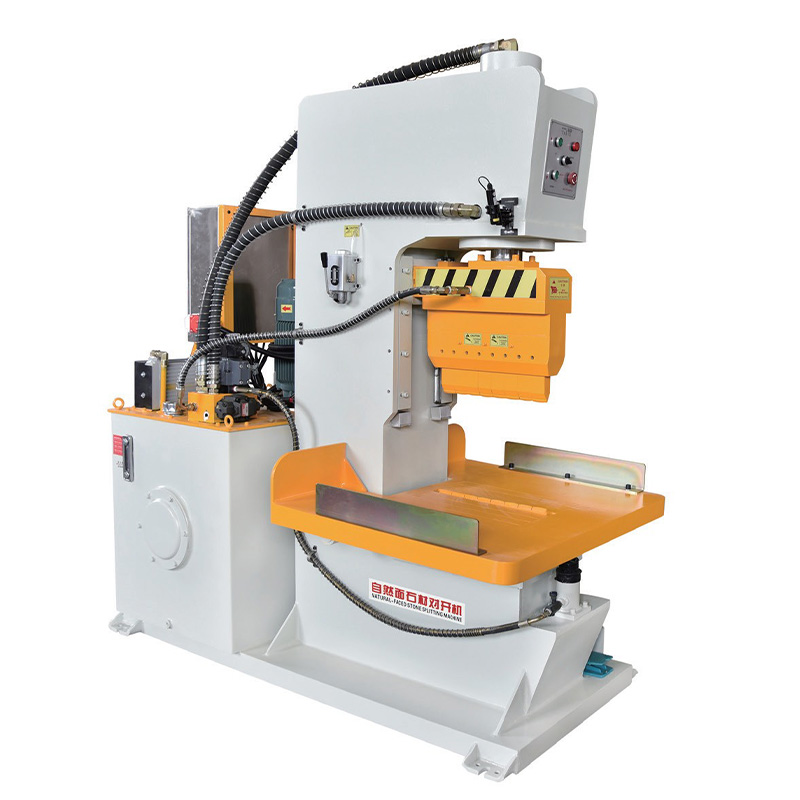
The Speedone stone veneer splitter is designed around an industrial automatic stone-splitting workflow for suitable natural stone products. The KSL-24SLS configuration combines a four-blade hydraulic splitter with feeding and discharge equipment. For wall stone, split-face cladding or veneer applications, the actual stone type, incoming dimensions, required finished thickness and tooling should be evaluated before the final machine configuration is confirmed.
What Is a Stone Veneer Splitter?
|
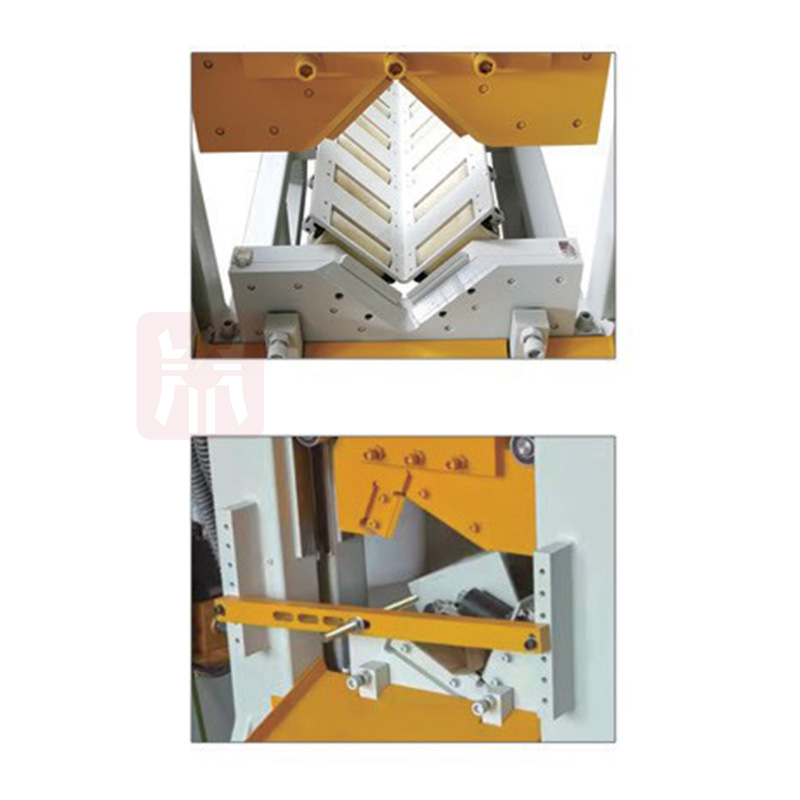 |
| Product display and product details | |
A stone veneer splitter is industrial stone-processing equipment used to create natural fractured surfaces on prepared stone pieces for wall cladding, architectural facing and decorative masonry.
The stone is normally prepared into bars, strips or dimensional blanks before it reaches the splitting machine.
Hydraulic force is then applied through splitting tools to fracture the stone and expose a natural surface.
Potential finished products include:
- Split-face wall stone
- Natural stone veneer
- Architectural cladding stone
- Granite wall facing
- Marble decorative stone
- Rustic facade stone
- Landscape wall stone
- Natural masonry products
The main purpose is different from producing a polished slab or fully saw-cut tile.
Instead of making the visible surface completely flat, splitting exposes the natural grain, mineral structure and relief of the stone.
Industrial Stone Veneer Splitter vs. Portable Veneer Cutter
The term stone veneer splitter can refer to very different types of equipment.
A portable veneer cutter is usually used by masons or installers who need to trim individual stone pieces near a jobsite.
The Speedone configuration shown here is an industrial factory-production system with hydraulic splitting and material-handling equipment.
| Factor | Industrial Stone Veneer Splitter | Portable Veneer Cutter |
|---|---|---|
| Main User | Stone factory | Mason / installer |
| Production Type | Repeated factory processing | Individual trimming |
| Material Flow | Feeding and discharge workflow | Manual handling |
| Machine Structure | Industrial hydraulic frame | Compact portable tool |
This page therefore focuses on professional B2B stone-factory production.
Speedone KSL-24SLS Automatic Workflow Line
The Speedone KSL-24SLS is identified as a four-blade automatic stone splitting workflow line.
The configuration combines a central hydraulic splitter with feeding and discharge sections around the machine.
A typical workflow is:
Prepared Stone → Infeed → Positioning → Four-Blade Hydraulic Splitting → Discharge → Inspection → Sorting
This type of setup is useful when a factory wants a more organized material flow instead of repeatedly lifting and repositioning each stone piece manually.
Four-Blade Hydraulic Splitting System
The KSL-24SLS uses a four-blade splitting concept.
Multiple splitting tools work around the active stone position rather than relying on a single contact point.
The tooling arrangement can influence:
- Fracture initiation
- Split direction
- Edge breakage
- Surface relief
- Finished stone shape
- Production repeatability
The correct tooling should be matched to the actual stone and required finished product.
A four-blade configuration does not automatically mean that every type of stone veneer can be produced. Material characteristics, dimensions and the required finished thickness still need to be evaluated.
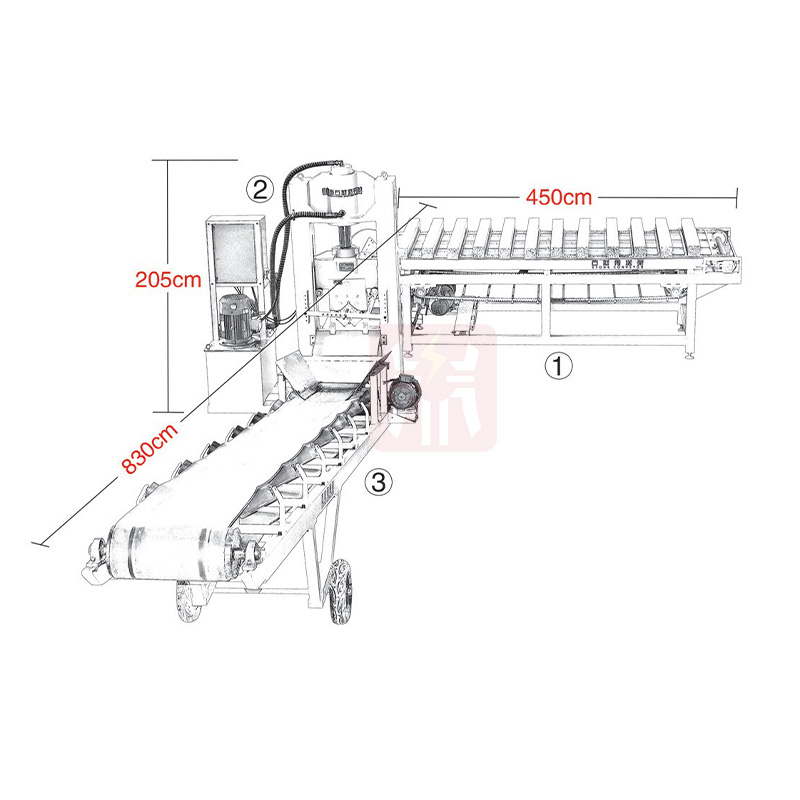 |
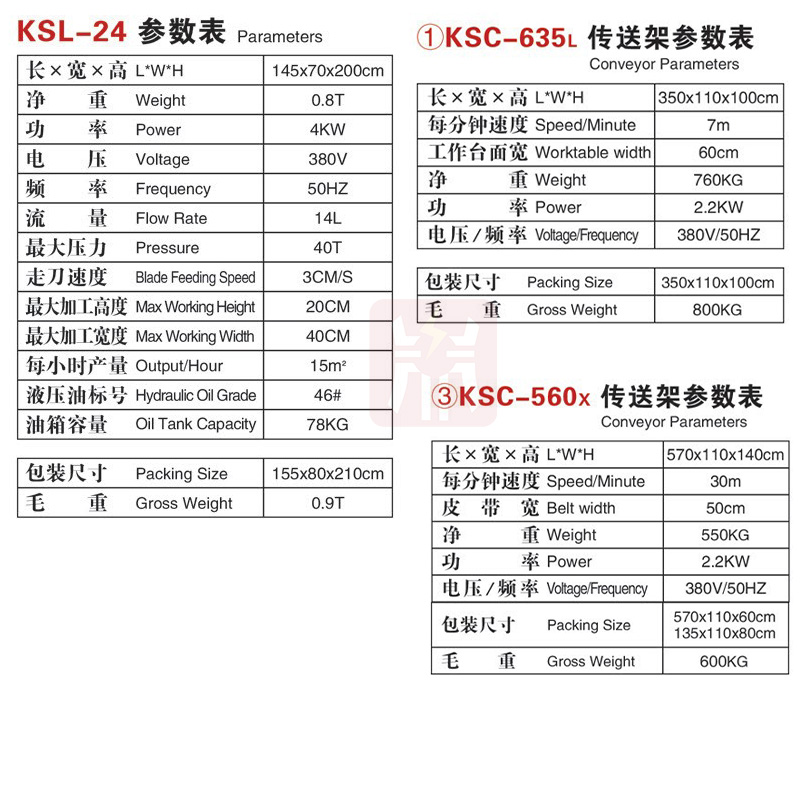 |
| Product size specifications and product information parameter table | |
Automatic Stone Feeding and Discharge
Material handling is one of the main differences between this workflow line and a basic standalone splitter.
The KSL-24SLS includes extended feeding and discharge sections around the hydraulic splitting station.
This can help organize:
- Stone infeed
- Workpiece positioning
- Hydraulic splitting
- Finished-piece discharge
- Inspection
- Sorting
Potential benefits include:
- Reduced repeated manual movement
- More organized stone flow
- Better production rhythm
- Easier integration between splitting and sorting
- Better suitability for repeated products
Exact feed speed, positioning method and automation sequence depend on the final machine configuration.
Stone Veneer Splitter for Wall Cladding
Wall cladding is one of the main applications for naturally split stone.
The stone is fractured to expose a rough natural face with visible depth and texture.
Potential applications include:
- Exterior building walls
- Villa facades
- Commercial buildings
- Garden walls
- Retaining walls
- Entrance features
- Interior feature walls
- Landscape structures
For wall-cladding production, buyers should define the required finished dimensions and thickness before selecting the machine and tooling.
Stone Veneer Splitter for Split-Face Stone
Split-face stone is created by natural fracture rather than grinding or polishing the final visible face.
The fractured surface may show:
- Natural mineral structure
- Stone grain
- Irregular relief
- Shadow depth
- Rustic surface texture
This natural variation is often part of the visual appeal of architectural wall stone.
The goal of the machine is therefore not to make every visible surface identical.
Instead, it provides a controlled factory process while allowing the natural stone to retain its own character.
Stone Veneer Splitter for Granite
Granite is widely used for architectural stone because of its durability and distinctive crystalline appearance.
Potential products include:
- Split-face granite veneer
- Granite wall stone
- Facade stone
- Landscape wall stone
- Architectural granite facing
A practical machine-selection process is:
Granite Type → Incoming Stone Dimensions → Required Wall Product → Split Direction → Tooling → Hydraulic Configuration
Granite from different quarries can respond differently to the same splitting setup.
Representative raw-material samples or photographs are useful when evaluating a new application.
Stone Veneer Splitter for Marble
Suitable marble can also be hydraulically split to create decorative natural surfaces.
Marble should be evaluated carefully because natural veins can influence the fracture direction.
Important factors include:
- Marble variety
- Vein direction
- Incoming stone dimensions
- Required finished size
- Required thickness
- Desired surface appearance
- Stone orientation
A production trial with representative material can help confirm whether the desired finished product is practical.
Prepared Stone Bars for Veneer Production
Industrial stone splitting is generally easier to organize when the raw material has already been prepared into relatively consistent bars, strips or blanks.
A typical upstream workflow is:
Raw Stone Block → Saw Cutting → Stone Bar Preparation → Automatic Splitting Line → Split-Face Product
Consistent incoming material can help improve:
- Feeding stability
- Tool alignment
- Production repeatability
- Material handling
- Finished-product sorting
Natural variation cannot be completely removed, but better preparation can make production easier to manage.
Stone Veneer Splitter vs. Automatic Stone Splitter
An automatic stone splitter is a broad equipment category that can be used for cubes, paving stone, blocks and other natural-stone products.
A stone veneer splitter has a more specific application focus:
- Wall cladding
- Split-face stone
- Architectural facing
- Prepared stone strips
- Natural visible surfaces
For a broader overview of automated splitting equipment, see Speedone’s automatic stone splitter for granite and marble.
Stone Veneer Splitter vs. Mushroom Face Trimming Machine
Split-face veneer and mushroom-face stone can both be used on architectural walls, but the finished appearance is different.
Veneer splitting focuses on creating a natural fractured face.
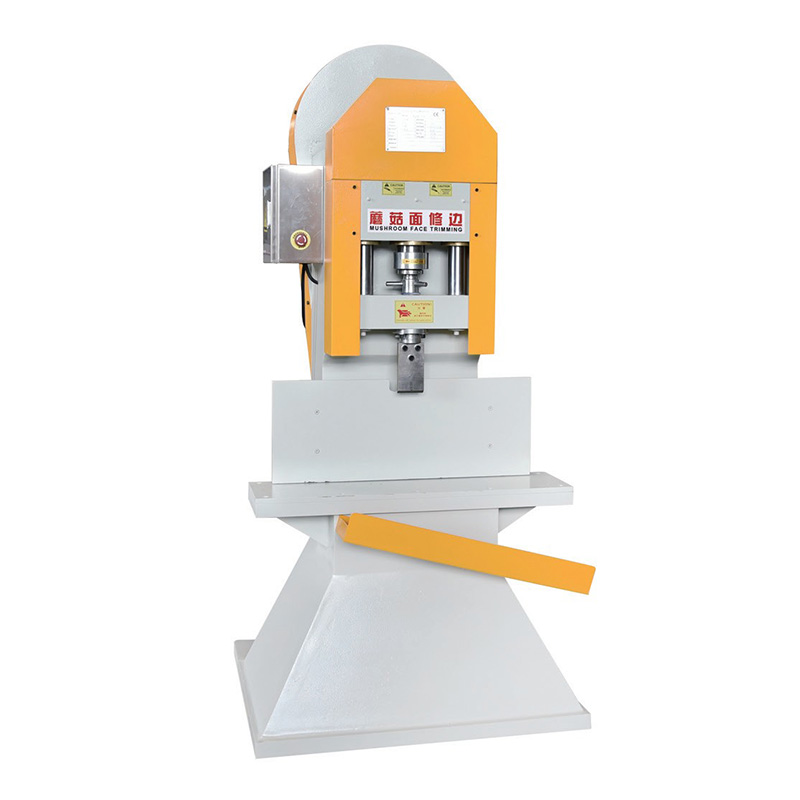
Mushroom-face processing focuses more on trimming the perimeter while keeping a pronounced raised center.
| Feature | Stone Veneer Splitting | Mushroom Face Trimming |
|---|---|---|
| Main Result | Natural split face | Raised center with trimmed edges |
| Wall Cladding | Strong application | Strong application |
| Repeated Edge Trimming | Not primary | Important |
| Visual Effect | Natural fractured texture | Strong three-dimensional relief |
For mushroom-face and wall-stone edge trimming, buyers can review Speedone’s natural stone splitter and mushroom-face trimming alternative.
Stone Veneer Splitter vs. Paving Stone Stamping Machine
These two processes use hydraulic force for different purposes.
Stone veneer splitting creates a natural fracture.
Paving-stone stamping uses mould-defined tooling to create a controlled paving shape or decorative pattern.
For patterned paving products, Speedone’s paving stone stamping machine is the more relevant equipment type.
Stone Veneer Splitter vs. Granite Stamping Machine
Granite veneer emphasizes the natural character of the stone.
Granite stamping instead uses a mould or defined pressing tool to create a more controlled shape or decorative pattern.
For mould-defined granite products, see Speedone’s granite stamping machine for pavers.
Stone Veneer Splitter vs. Stone Pressing Machine
| Feature | Stone Veneer Splitter | Stone Pressing Machine |
|---|---|---|
| Process | Natural fracture | Mould-based pressing |
| Visible Surface | Natural split | Tool-defined |
| Wall Cladding | Strong application | Application-dependent |
For mould-based stone forming, see Speedone’s stone pressing machine for granite and marble.
Stone Veneer Splitting vs. Hydraulic Stone Stamping
Hydraulic stone stamping uses approved moulds to create controlled decorative products.
Stone veneer splitting instead relies on the natural fracture characteristics of the material.
This means individual finished pieces can retain natural variation.
Factories focused on mould-defined decorative stone can compare Speedone’s hydraulic stone stamping machine.
Stone Veneer Splitter vs. Diamond Saw
A diamond saw and stone veneer splitter often work together rather than replacing one another.
The saw prepares the basic dimensions.
The splitter creates the natural visible face.
| Feature | Stone Veneer Splitter | Diamond Saw |
|---|---|---|
| Process | Fracture | Cutting |
| Visible Surface | Natural split texture | Saw-cut surface |
| Preparing Stone Bars | Secondary | Strong application |
| Split-Face Cladding | Strong application | Useful upstream process |
A practical factory workflow is:
Diamond Saw for Dimensional Preparation → Hydraulic Splitter for Natural Split-Face Stone
Why Four-Blade Splitting Matters
The KSL-24SLS uses a four-blade automatic configuration.
Multiple splitting tools provide contact around the active working area during the approved splitting cycle.
The tooling can influence:
- How the fracture starts
- How force enters the stone
- Edge breakage
- Finished surface appearance
- Production consistency
The correct tooling depends on the stone and required finished product.
Why an Automatic Workflow Line Matters
A standalone splitter may require operators to load, reposition and remove each stone piece manually.
An automatic workflow line can organize material movement around the central splitting station.
This is particularly useful when the factory processes repeated products from prepared stone pieces.
The production flow can include:
Infeed → Positioning → Splitting → Discharge → Inspection → Sorting
The machine should still be selected according to actual stone dimensions and finished-product requirements rather than automation level alone.
Can the KSL-24SLS Produce Thin Stone Veneer?
The KSL-24SLS information identifies the machine as a four-blade automatic stone-splitting workflow line.
However, a specific thin-veneer thickness range is not provided.
Suitability for a particular thin stone veneer product should therefore be confirmed according to:
- Stone type
- Incoming stone dimensions
- Required finished length and width
- Required finished thickness
- Natural fracture characteristics
- Tooling configuration
Buyers should provide raw-material photos and examples of the required finished product before finalizing the machine configuration.
How Much Hydraulic Force Is Required?
There is no single hydraulic-force value suitable for every stone veneer application.
The required force depends on:
- Stone type
- Material strength
- Incoming dimensions
- Stone thickness
- Tooling geometry
- Required finished product
A practical selection process is:
Stone Material → Incoming Dimensions → Finished Product → Required Thickness → Tooling → Hydraulic Requirement
Higher hydraulic force alone does not guarantee a better split-face product.
Planning a Stone Veneer Production Workflow
A professional factory workflow may include:
Raw Stone → Sawing → Stone Bar Preparation → Staging → Automatic Feeding → Hydraulic Splitting → Inspection → Sorting → Packing
Actual productivity depends on every stage.
Potential bottlenecks include:
- Slow stone preparation
- Inconsistent incoming dimensions
- Feeding delays
- Finished-product accumulation
- Inspection
- Sorting
- Packing
The splitting line should therefore be evaluated as part of the complete factory workflow.
How to Choose the Right Stone Veneer Splitter
1. Define the Stone Material
Specify granite, marble, limestone, sandstone, quartzite or another suitable natural stone.
2. Define Incoming Stone Dimensions
Provide typical length, width and thickness.
3. Define the Finished Product
Clarify whether you need split-face wall stone, cladding, architectural facing or another product.
4. Define Finished Dimensions
Provide the required length, width and thickness.
5. Provide Finished-Product Photos
Natural split appearance is difficult to describe using dimensions alone.
6. Evaluate the Four-Blade Tooling
Confirm whether the tooling arrangement suits the stone and required product.
7. Evaluate the Workflow Line
Determine whether automatic feeding and discharge match the planned production volume.
8. Evaluate Hydraulic Capacity
Required force should be based on actual stone characteristics and dimensions.
9. Evaluate Stone Support
Long, heavy or irregular workpieces require suitable support during movement and splitting.
10. Define Production Target
Estimate realistic output per shift rather than considering only one hydraulic cycle.
11. Consider Wear Parts
Discuss splitting tools, hydraulic parts and conveyor wear components before purchasing.
12. Evaluate Supplier Support
Technical documentation, spare parts and application support are important for industrial stone machinery.
Information to Send Speedone for a Quotation
To help Speedone evaluate a suitable stone veneer splitter, provide:
- Stone material
- Raw-stone photographs
- Incoming stone length
- Incoming stone width
- Incoming stone thickness
- Maximum workpiece dimensions
- Approximate stone weight
- Required veneer or wall-stone dimensions
- Required finished thickness
- Finished-product photographs
- Required production volume
- Required automation level
- Factory voltage and frequency
- Available installation area
- Current production workflow
For natural split-face products, actual stone samples or clear photographs are particularly useful because fracture behavior can vary between different materials.
Common Stone Veneer Splitting Problems
Stone Fractures Away from the Intended Area
Natural grain, bedding, veins or existing cracks may influence the fracture path.
The Split Face Is Too Irregular
Review stone quality, workpiece orientation and tooling configuration.
Too Much Edge Breakage Occurs
Check stone support, tool contact and the approved machine setup.
Finished Dimensions Vary Too Much
Review incoming stone preparation, feeding consistency and material characteristics.
The Material Does Not Move Smoothly
Inspect the feeding path, rollers, workpiece dimensions and stone supports.
Production Is Lower Than Expected
Measure preparation, feeding, splitting, discharge, inspection, sorting and packing separately to identify the actual bottleneck.
Stone Veneer Splitter Maintenance
Routine inspection should include:
- Hydraulic oil
- Hydraulic cylinder
- Hydraulic pump
- Electric motor
- Hydraulic hoses
- Fittings
- Pressure controls
- Four-blade splitting tools
- Tool guides
- Infeed system
- Discharge system
- Rollers and supports
- Main machine frame
- Electrical controls
- Safety systems
Hydraulic leaks should be investigated promptly.
Damaged tooling, rollers, conveyor components or hydraulic hoses should not remain in production.
Maintenance should follow the documentation supplied for the specific Speedone configuration.
Stone Veneer Splitter Safety
An automatic hydraulic splitting line combines substantial mechanical force with moving material-handling equipment.
- Only trained personnel should operate the system.
- Inspect stone before processing.
- Keep hands away from splitting tools.
- Keep clear of moving rollers and feeding equipment.
- Do not manually reposition stone during the automatic cycle.
- Do not bypass guards or safety controls.
- Inspect hydraulic hoses regularly.
- Use suitable handling equipment for heavy incoming material.
- Wear appropriate personal protective equipment.
- Keep unauthorized personnel away from the line.
- Follow lockout procedures during maintenance.
- Do not exceed approved workpiece dimensions.
- Do not exceed manufacturer-rated hydraulic settings.
- Replace damaged tooling before continued operation.
Who Uses Industrial Stone Veneer Splitters?
This type of equipment may be suitable for:
- Natural stone veneer factories
- Wall-stone manufacturers
- Stone cladding producers
- Granite processing factories
- Marble processing factories
- Building-stone manufacturers
- Landscape stone suppliers
- Stone quarries with secondary processing
- Architectural stone companies
- Stone machinery distributors
Why Choose Speedone?
Speedone supplies professional equipment for stone processing, handling and installation.
When choosing a stone veneer splitter, buyers should evaluate the complete production requirement rather than comparing hydraulic force alone.
A practical equipment-selection process is:
Stone Material → Incoming Dimensions → Wall Stone / Cladding Product → Required Thickness → Four-Blade Tooling → Hydraulic Requirement → Workflow Line → Production Target
Important purchasing factors include:
- Main-frame rigidity
- Four-blade tooling configuration
- Hydraulic system
- Infeed and discharge equipment
- Stone support
- Working opening
- Electrical control system
- Tooling availability
- Wear-part support
- Technical documentation
- Supplier communication
The correct stone veneer splitter should be selected around the actual stone and required finished wall-cladding product. The Speedone KSL-24SLS is a four-blade automatic stone-splitting workflow-line configuration. For split-face veneer or wall-stone production, the stone material, incoming dimensions, required thickness, tooling and finished-product appearance should be confirmed before the final machine configuration is selected.
Frequently Asked Questions
What is a stone veneer splitter?
A stone veneer splitter uses controlled hydraulic force to fracture prepared natural stone and create split-face products for wall cladding, architectural facing and related applications.
What is the Speedone KSL-24SLS?
The KSL-24SLS is a four-blade automatic stone-splitting workflow-line configuration with material feeding and discharge equipment. Suitability for a specific veneer product depends on the actual stone and required dimensions.
Can a stone veneer splitter process granite?
Suitable granite can be hydraulically split when its material characteristics and dimensions remain within the approved machine range.
Can it process marble?
Suitable marble can be processed, although natural veins may influence fracture direction and finished appearance.
What products can be made with a stone veneer splitter?
Potential products include split-face wall stone, natural stone cladding, facade stone, decorative masonry and architectural facing products.
What is the difference between stone veneer splitting and mushroom-face trimming?
Veneer splitting focuses on creating a natural fractured face, while mushroom-face trimming removes selected perimeter material to keep a pronounced raised center.
What does four-blade splitting mean?
A four-blade system uses multiple splitting tools around the working position to apply concentrated hydraulic force during the approved splitting cycle.
Why use an automatic workflow line?
An automatic workflow line helps organize material feeding, hydraulic splitting and discharge when a factory processes repeated stone products.
Can the KSL-24SLS produce thin stone veneer?
A specific thin-veneer thickness range is not provided for this configuration. Suitability should be confirmed according to the actual stone, required thickness, finished dimensions and tooling.
Why should the stone be prepared before splitting?
More consistent incoming dimensions can improve feeding stability, tool positioning, production repeatability and material flow.
How much hydraulic force is required?
The required force depends on stone material, strength, incoming dimensions, tooling configuration and the required finished product.
What information should I provide for a quotation?
Provide the stone material, raw-stone photos, incoming dimensions, maximum workpiece size, required veneer or wall-stone dimensions, required thickness, finished-product photos, production target and factory power supply.