İşinizi Verimli Bir Şekilde Yapın!





Bir Çerçeve Depolama Rafı Güvenlik Protokolleri: Devrilme ve Plaka Hasarını Önlemek
Master A Frame Storage Rack Safety with our 2026 guide. Learn about OSHA compliance, load distribution, and structural protocols to prevent tip-overs and slab damage.
Strategic Safety Standards for Industrial Slab Storage and Logistics
The storage of natural stone, quartz, and heavy glass slabs is one of the most hazardous operations in modern material handling. A single slab of 3cm granite can weigh upwards of 700 pounds; when stored in bundles, the cumulative weight on a single rack can exceed 20,000 pounds. Without a rigorous commitment to engineering integrity, the risk of a “domino effect” failure is ever-present. To mitigate these risks, industry leaders rely on the a-frame storage rack, a triangulated structure designed to transform lateral leaning pressure into manageable vertical loads. However, safety is not merely about the equipment—it is a comprehensive system of physics, maintenance, and operator discipline.
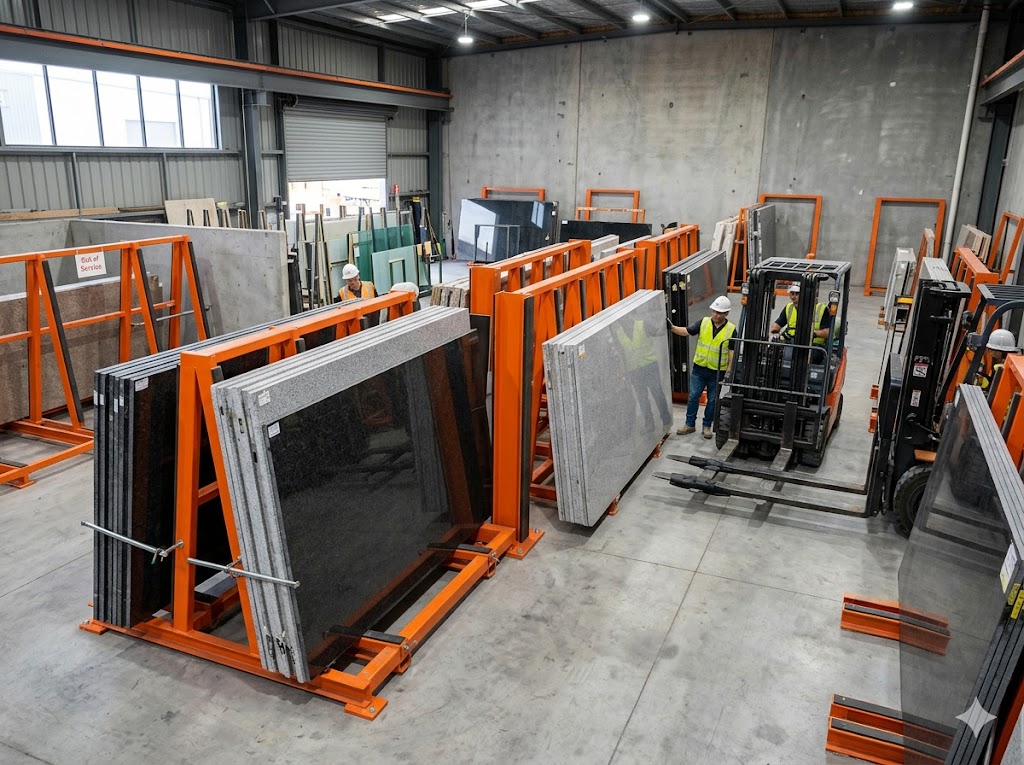
Bir Çerçeve Depolama Raflı
The Physics of Stability: Understanding Load Distribution
At the core of slab safety is the fundamental concept of the center of gravity (CoG). Unlike vertical pallet racking, which supports weight directly downward, an A-frame manages “leaning” loads. The ideal lean angle for stone slabs is typically between 4° and 6°. If the angle is too shallow, the slabs are prone to “kicking out” at the base; if it is too steep, the center of gravity shifts too far from the central support, putting immense stress on the structural welds.
Understanding how gravity acts on these materials is crucial for preventing tip-overs. Friction also plays a key role; polished surfaces like marble or glass have lower friction coefficients, requiring the rack base to have high-grip liners. When these physics are ignored, the result is often structural bowing or catastrophic failure. It is essential for facility managers to strictly follow the OSHA guidelines for a-frame storage rack systems, which specify that any racking unit must be able to withstand its rated load plus a safety factor of at least 2:1. This redundancy ensures that even during minor impacts from a forklift, the integrity of the storage zone remains intact.
OSHA-Compliant Safety Features for an A Frame Storage Rack
Compliance is more than a legal hurdle; it is a blueprint for survival in a high-risk warehouse environment. A safety-compliant rack must be constructed from high-tensile structural steel, such as Q235B or Q345B, which offers the necessary yield strength to resist deformation. Key features include cross-bracing to prevent “parallelogramming” and base plates that are wide enough to distribute weight across the concrete floor without causing subsidence.
Safety-conscious buyers should always seek out a detailed industrial a-frame storage rack guide from their vendor to verify weld penetration and powder coating quality. A high-visibility finish is not just for aesthetics; it allows operators to gauge the boundaries of the rack in low-light conditions. Furthermore, the inclusion of safety pins or locking bars is mandatory. These components prevent slabs from sliding forward during the loading and unloading process. Without these mechanical safeguards, the risk of a slab “kicking out” increases by over 60% according to industry incident reports.
Material Parameters and Engineering Data Comparison
To provide a clear understanding of the engineering requirements for different slab types, the following table outlines the load-bearing requirements for standard vs. heavy-duty racking systems.
| Material Type | Typical Thickness | Weight per sq. ft. | Required Rack Grade | Safety Factor |
| Porcelain Slabs | 6mm – 12mm | 3 – 6 lbs | Standard Structural | 1.5x |
| Quartz/Granite | 20mm (2cm) | 13 – 15 lbs | Heavy-Duty H-Steel | 2.0x |
| Marble/Onyx | 30mm (3cm) | 18 – 22 lbs | Industrial Reinforced | 2.5x |
| Jumbo Glass | 10mm+ | 5 – 12 lbs | Specialized Padded | 2.0x |
Comparative Analysis: Optimizing Warehouse Layouts
Choosing between single-sided and double-sided racks is a critical decision that impacts both safety and efficiency. Double-sided racks offer superior stability because the loads on each side counterbalance one another. However, many modern workshops struggle with limited floor space. In these scenarios, the space-saving workshop storage provided by single-sided H-steel frames is an excellent alternative. These units are specifically engineered to be anchored against structural walls, providing a rigid support system that maximizes every square inch of the facility while maintaining a high safety rating.
The “Domino Effect” is the primary risk factor in either configuration. This occurs when a single slab falls and gains enough kinetic energy to knock over the next, creating a chain reaction. To prevent this, the racking base must be perfectly level. Even a 1-degree slope on a warehouse floor can increase the lateral pressure on a rack’s uprights by 15-20%. Safety officers must ensure that all racks are shimmed and leveled during installation, particularly when dealing with mobile units equipped with casters.
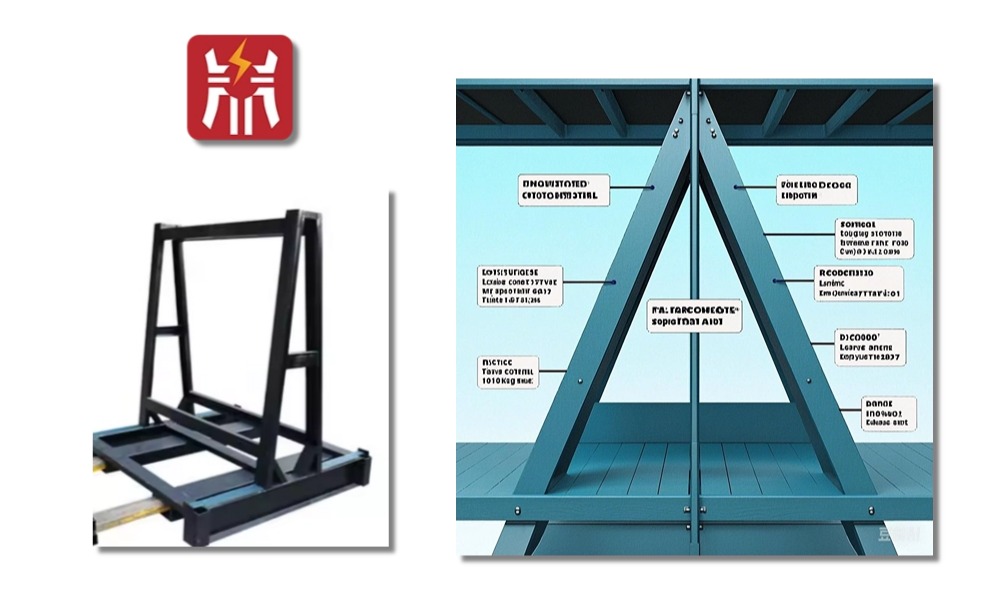
A-Frame Depolama Rafı
Daily Inspection Checklist for Warehouse Safety Officers
Consistency is the enemy of catastrophe. A robust safety protocol must include a daily inspection conducted by a trained warehouse officer. This audit should focus on identifying early warning signs of metal fatigue or mechanical loosening. When sourcing from reputable wholesale stone storage racks providers, you are often provided with maintenance schedules that outline specific torque requirements for bolts and inspection intervals for floor anchors.
The checklist should include:
-
Structural Alignment: Is the frame perfectly vertical and the base perfectly horizontal?
-
Weld Integrity: Are there any visible cracks, rust streaks, or paint flaking at the joints?
-
Hardware Check: Are all safety pins present and are all floor bolts tight?
-
Protective Liners: Is the timber or rubber backing worn down to the steel?
-
Load Compliance: Is the current weight on the rack within the specified Working Load Limit (WLL)?
If any of these points fail, the rack must be immediately cordoned off. Neglecting a loose bolt today can lead to a structural collapse tomorrow, especially in high-traffic zones where forklift vibrations are constant.
Strategic Sourcing and Compliance Trends in 2026
As we move further into the decade, the standards for material handling are becoming more stringent. Digital tracking and IoT-integrated racks are beginning to surface, allowing managers to monitor load weights via mobile apps. For those planning a warehouse overhaul, consulting the latest a-frame storage rack in 2026 buyer manuals is the best way to stay ahead of upcoming regulatory changes. These resources provide insight into how new steel alloys and robotic welding techniques are making racks lighter yet stronger than ever before.
Another emerging trend is the use of specialized shipping frames for international logistics. For companies importing or exporting high-value stone, the ocean-proof non-demountable 30t welded container frame is the industry’s answer to transit-related damage. These frames allow slabs to remain secured from the factory floor all the way to the final destination, eliminating the need for multiple, high-risk handlings. By reducing the number of times a slab is moved, the probability of an accident is drastically reduced.
Decision Logic for B2B Procurement and Risk Management
The procurement of warehouse racking is a long-term investment in risk management. Many buyers fall into the trap of prioritizing price over engineering specs, only to suffer from warped frames and damaged inventory within two years. A sophisticated B2B decision logic should prioritize the manufacturer’s track record, the gauge of the steel used, and the availability of technical support. If you are unsure about the specific requirements for your inventory, it is always advisable to contact a professional slab storage rack supplier for a customized load-bearing calculation.
Ultimately, a safe warehouse is a profitable warehouse. By implementing rigorous safety protocols, investing in high-quality A-frames, and fostering a culture of daily vigilance, businesses can protect their most valuable assets: their people and their products. Safety is not a one-time setup; it is a continuous process of improvement and adaptation to new materials and market demands.
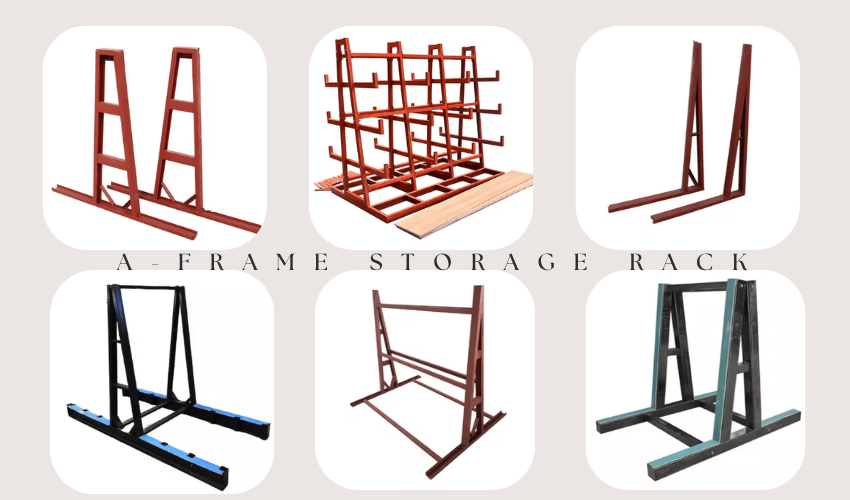
Toptan A-Frame Depolama Rafı
SSS
1. What is the most common cause of A-frame rack failure?
The most frequent cause of failure is “unbalanced loading.” This occurs when one side of a double-sided rack is heavily loaded while the other is empty, or when slabs are leaned at an angle that exceeds the rack’s designed center of gravity. This imbalance creates torque that the steel uprights were not designed to withstand, leading to a slow bend or a sudden collapse.
2. How do I know if my current racking is OSHA-compliant?
OSHA uyumluluğu, birkaç faktör aracılığıyla doğrulanır: Görünen bir yük kapasitesi plakasının bulunması, yapısal güvenlik pimlerinin kullanılması ve rafın üretici belgelerine uygun şekilde kurulduğuna dair kanıtlar. Rafınızın nominal ağırlık kapasitesi yoksa veya yapısal pas belirtileri varsa, muhtemelen uyumsuzdur ve önemli bir güvenlik riski taşımaktadır.
3. Can I use wood A-frames instead of steel for heavy slabs?
Eskiden ahşap A-çerçeveler yaygın olsa da, modern endüstriyel ortamlar için önerilmezler. Ahşap, çevresel stres altında çürümeye, eğilmeye ve çatlamaya yatkındır. Çelik A-çerçeveler öngörülebilir dayanım değerleri sunar ve yoğun taş ocaklarında sıkça rastlanan kazara çarpmalara karşı çok daha dayanıklıdır.
4. What is the “Safety Factor” in racking engineering?
The safety factor (usually 2:1 or 2.5:1) is a design buffer. If a rack is rated for 10,000 lbs, it is engineered to actually hold 20,000 lbs before structural failure. This buffer accounts for “dynamic loads,” such as the vibration of a forklift driving nearby or a minor bump during the loading process.
5. Are mobile A-frames on wheels safe for full-sized granite slabs?
Mobil A-çerçeveler, yalnızca mükemmel şekilde düz, takviyeli beton zeminlerde kullanıldığında ve ağır hizmet tipi kilitli tekerleklerle donatıldığında güvenlidir. Tamamen yüklü iken özellikle taşıma için tasarlanmadıkça asla hareket ettirilmemelidir. Jumbo levhaları uzun süre saklamak için sabit, zemine ankrajlı raflar her zaman daha güvenli bir seçenektir.
Referanslar
-
Occupational Safety and Health Administration (OSHA), “Standard 1910.176: Materials Handling – Storage.”
-
National Stone Institute (NSI), “Health and Safety: Slab Handling and Storage Best Practices.”
-
American National Standards Institute (ANSI), “ANSI/MHI16.1: Specification for the Design, Testing and Utilization of Industrial Steel Storage Racks.”
-
Structural Engineering Institute (SEI), “Analysis of Lateral Force in A-Frame Support Systems.”
-
ASTM International, “Standard Specification for Cold-Formed Welded Carbon Steel Structural Tubing (ASTM A500).”
-
Health and Safety Executive (HSE), “Storage of Stone Slabs: Preventing Accidents.”
-
European Federation of Materials Handling (FEM), “Section X: Design of Industrial Racking.”
-
International Organization for Standardization (ISO), “ISO 13284: Fork-lift trucks — Fork-arm extensions and telescopic fork arms — Technical characteristics and strength requirements.”
The Future of Slab Storage Safety
How Engineering Dictates Safety: Modern slab management has shifted from simple storage to high-stakes physics. The core risk in B2B stone logistics remains asymmetrical loading; even the most robust heavy-duty A-frame factory systems can fail if the center of gravity shifts beyond the base plate’s stability radius. Neden current trends favor steel over wood is simple: predictability. Steel allows for a calculated Safety Factor that absorbs the kinetic energy of forklift vibrations and minor impacts.
Key Options and Considerations:
- Option: Stationary floor-anchored racks are the recommended standard for high-volume wholesale stone storage racks to ensure permanent vertical alignment.
- Consideration: When sourcing, ensure your slab storage rack supplier provides hot-dip galvanized finishes for outdoor use to prevent “invisible” structural rot caused by internal oxidation.
- Compliance Trend: OSHA 1910.176(b) is becoming more strictly enforced; having visible, stamped load plates from an A-frame storage rack manufacturer is now a mandatory requirement for liability insurance in the stone industry.

Henry
Merhaba, ben bu yazının yazarıyım ve 16 yıldan fazla bir süredir bu alandayım. Taş aletler için OEM ve ODM hizmetine ihtiyacınız varsa, bana herhangi bir soru sormaktan çekinmeyin.