Hoàn thành công việc một cách hiệu quả!





Giá đỡ tấm đá: Thông tin chuyên gia, nghiên cứu tình huống và giải pháp lưu trữ đá hiệu quả
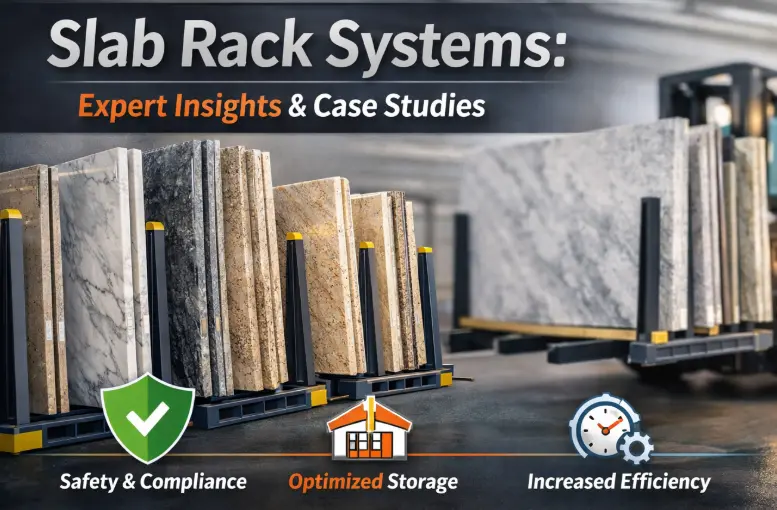
CNSpeedone continues to revolutionize stone storage with its innovative Kệ tấm systems. Designed for safety, durability, and efficiency, these racks help warehouses optimize space, reduce handling time, and prevent slab damage. Recent case studies show that factories implementing CNSpeedone racks can reclaim up to 2,000 sq. ft. of floor space and save 50 labor hours per month. Beyond functionality, the racks comply with global safety standards, ensuring liability protection and operational reliability. With modular and customizable designs, CNSpeedone’s solutions cater to various slab sizes and materials, making them a trusted choice for stone storage worldwide. Their commitment to engineering excellence demonstrates why professional Kệ tấm systems are more than just metal frames—they are a critical component for modern, efficient warehouses.
Một người thợ chuyên nghiệp Kệ tấm helps stone warehouses organize marble, granite, quartz, porcelain and sintered stone while supporting safer access, better use of floor space and more efficient material flow. The correct rack should be selected according to slab dimensions, actual load, storage density, retrieval frequency, floor condition and the cranes, forklifts or transport carts used in the facility. The best storage system is not simply the rack that holds the most slabs, but the one that balances capacity, accessibility and workflow.
Slab Rack Guide for Safe and Efficient Stone Warehouse Storage
A stone warehouse can contain hundreds of valuable slabs while still operating inefficiently.
The problem is often not the amount of available space. It is how that space is organized.
When granite, marble, quartz, porcelain and sintered stone are stored without a clear system, workers may spend unnecessary time locating material, repositioning slabs and waiting for lifting equipment to become available.
In this environment, a Kệ tấm becomes much more than a steel frame.
It becomes part of the warehouse’s inventory, material-handling and production-flow system.
A well-planned rack system can help a stone business:
- Organize inventory.
- Improve material accessibility.
- Reduce unnecessary slab movement.
- Support more predictable lifting operations.
- Separate fast-moving and slow-moving inventory.
- Create clearer forklift and crane routes.
- Use warehouse floor space more effectively.
Speedone provides stone-handling and storage equipment for factories, distributors, warehouses and fabrication workshops. Buyers who want to understand the company behind the equipment can learn more about Speedone’s manufacturing and stone-handling experience.
Why Investing in a Professional Slab Rack Matters
Slab storage influences far more than warehouse appearance.
An inefficient storage arrangement may create hidden operational costs through:
- Long slab retrieval times.
- Repeated crane movements.
- Additional forklift travel.
- Material repositioning.
- Blocked production aisles.
- Surface or edge contact.
- Lost production time.
These costs are easy to overlook because they do not normally appear as a single line item on a financial report.
Instead, they appear gradually through labor hours, warehouse congestion and reduced production flow.
Speedone’s Slab Rack product range is designed for stone-storage applications where buyers need to organize large slabs according to actual dimensions, load requirements and factory workflow.
The Three Main Goals of a Slab Rack System
| Goal | What It Means | Operational Benefit |
|---|---|---|
| Stable Storage | Support slabs according to the intended rack configuration | More controlled inventory storage |
| Accessibility | Allow workers and equipment to reach required materials | Less unnecessary slab movement |
| Hiệu Quả Không Gian | Organize inventory within the available footprint | Better warehouse utilization |
Storage Density Is Not the Same as Storage Efficiency
A common warehouse-planning mistake is trying to place the maximum possible number of slabs into the minimum floor area.
This may increase theoretical capacity while reducing practical accessibility.
If employees must move several slabs every time production needs one specific piece, the warehouse may technically contain more inventory while operating less efficiently.
A better target is usable storage capacity.
This means balancing:
- Number of slabs stored.
- Time required to locate material.
- Time required to retrieve material.
- Number of slabs moved unnecessarily.
- Crane and forklift access.
- Available production space.
Factories evaluating this issue can review Speedone’s article on the relationship between slab rack layout, storage space and handling time.
Understanding the Different Types of Slab Racks
There is no single rack configuration that is best for every stone warehouse.
The correct design depends on material type, slab size, inventory volume and how often individual slabs must be accessed.
1. Fixed Slab Storage Racks
Fixed slab racks are commonly used for organized permanent inventory storage.
They can be arranged in planned warehouse rows and divided into positions according to:
- Stone type.
- Color.
- Thickness.
- Supplier.
- Project.
- Inventory turnover.
This type of storage works particularly well when rack locations remain relatively stable over time.
2. A-Frame Storage Racks
A-frame racks support slabs against one or both sides of an angled central structure.
Typical applications include:
- Raw slab storage.
- Production staging.
- Finished countertop storage.
- Loading preparation.
A-frame systems can provide useful access where smaller groups of slabs need to remain available for active projects.
3. Modular Slab Racks
Modular systems can be useful where inventory requirements change over time.
Factories may need to reorganize storage because of:
- New slab sizes.
- Changing product mix.
- Seasonal inventory.
- Factory expansion.
- New production lines.
4. Mobile Slab Storage
Mobile storage equipment can provide greater flexibility for temporary staging or internal material movement.
However, mobile systems introduce additional considerations such as:
- Floor quality.
- Wheel capacity.
- Travel routes.
- Turning space.
- Load stability during movement.
5. Slab Display Racks
Showrooms and distributors may need customers to view slabs directly.
In these applications, visibility and controlled access can become more important than maximum warehouse density.
Slab Rack vs A-Frame Storage Rack
Slab racks and A-frame racks often serve different functions rather than competing for exactly the same application.
| Factor | Fixed Slab Rack | Giá đỡ khung chữ A |
|---|---|---|
| Typical Use | Main warehouse inventory | Storage, staging and finished pieces |
| Storage Layout | Planned permanent positions | Angled support on one or both sides |
| Accessibility | Depends on spacing and inventory grouping | Useful for active groups of slabs |
| Main Planning Issue | Density versus accessibility | Floor space and handling access |
Factories comparing these options can read this detailed Slab Rack vs A-Frame storage rack comparison.
Calculate Slab Weight Before Planning Rack Capacity
A professional storage system begins with actual load data.
Slab weight can be estimated using:
Weight = Length × Width × Thickness × Material Density
When length, width and thickness are expressed in meters and density is expressed in kg/m³, the result is approximately the slab weight in kilograms.
| Chất liệu | Example Density Range | Example Slab | Approx. Weight |
|---|---|---|---|
| Đá granit | 2.6–2.8 g/cm³ | 3200 × 1600 × 20 mm | Approx. 266–287 kg |
| Đá cẩm thạch | 2.5–2.7 g/cm³ | 3200 × 1600 × 20 mm | Approx. 256–276 kg |
| Quartz | 2.3–2.5 g/cm³ | 3200 × 1600 × 20 mm | Approx. 235–256 kg |
Note: Density varies by product. These values are illustrative. Actual material or supplier data should be used where available.
Why Slab Racks Are More Than Metal Frames
A rack may appear visually simple, but its performance depends on several interacting factors.
These include:
- Frame geometry.
- Base design.
- Material specification.
- Connections and weld quality.
- Load distribution.
- Slab support geometry.
- Contact protection.
- Floor condition.
This is why two products with similar external dimensions may not be interchangeable.
Speedone discusses this in more detail in its article explaining tại sao giá đỡ tấm lại hơn cả những khung kim loại đơn thuần.
Designing a Safe and Efficient Slab Rack Layout
A good rack cannot compensate for a poor warehouse layout.
Storage should be planned around the complete path of the material:
Receiving → Inspection → Inventory Storage → Slab Selection → Production Staging → Cutting → Fabrication → Finished Storage → Loading
Important layout factors include:
- Forklift turning radius.
- Crane coverage.
- Slab transport-cart routes.
- Pedestrian paths.
- Rack spacing.
- Door width.
- Columns and walls.
- Production staging space.
- Emergency access.
Factories redesigning their warehouse can review Speedone’s guide to designing a safe and efficient Slab Rack layout.

Keep Fast-Moving Slabs Easy to Access
Warehouse layout should reflect inventory turnover.
A popular quartz or granite color used every day should generally require fewer movements than a specialty material accessed only occasionally.
A practical inventory structure may separate:
- Fast-moving materials.
- Project-reserved slabs.
- Slow-moving inventory.
- High-value specialty materials.
- Remnants.
- Finished products.
This reduces unnecessary material handling and can make production planning easier.
Create a Production Staging Area
Main inventory storage and active production storage serve different purposes.
A staging zone near fabrication can hold slabs already selected for upcoming jobs.
This helps prevent:
- Repeated trips to main storage.
- Congestion around cutting equipment.
- Last-minute slab searches.
- Active-job materials being mixed with general inventory.
Separate Raw Slabs from Finished Products
Finished countertops should not automatically be stored like full raw slabs.
Finished pieces may contain:
- Polished edges.
- Sink cutouts.
- Cooktop openings.
- Narrow rails.
- Fragile corners.
Where practical, a dedicated finished-product storage zone can reduce unnecessary contact with heavy raw inventory.
Forklift Routes and Rack Protection
Forklifts are essential in many warehouses, but vehicle traffic should be considered during storage planning.
Managers should review:
- Turning radius.
- Blind corners.
- Rack-end exposure.
- Pedestrian interaction.
- Loading zones.
- Door and column positions.
If the same rack location is repeatedly struck or narrowly missed, the issue may not be driver behavior alone.
The route or rack position itself may need to be reviewed.
Global Compliance and Market Considerations
Storage-equipment requirements can vary according to country, installation, application and workplace rules.
Buyers should therefore avoid assuming that one certificate, one design or one rack configuration automatically satisfies every market.
Depending on the project, buyers may need to review:
- Applicable workplace-safety requirements.
- Manufacturer load information.
- Installation instructions.
- Anchoring requirements where applicable.
- Material specifications.
- Inspection and maintenance requirements.
- Technical documentation required by the destination market.
International buyers can review Speedone’s overview of global compliance considerations and slab rack market trends.
How to Measure Slab Rack Efficiency Without Inventing ROI Numbers
The financial value of a slab rack should be calculated using the factory’s own operating data.
Useful metrics include:
- Average slab retrieval time.
- Number of slab retrievals per day.
- Number of employees involved.
- Number of unnecessary slab movements.
- Storage footprint.
- Production waiting time.
- Storage-related material damage.
A simple operational-benefit formula is:
Annual Operational Benefit = Labor Savings + Avoided Damage/Rework + Reduced Downtime + Space/Logistics Savings − Additional Maintenance or Training Cost
If a payback calculation is required:
Estimated Payback Period = Incremental Project Cost ÷ Monthly Net Operational Benefit
This gives management a decision based on measurable factory performance rather than generic claims about percentage savings.
Illustrative Before-and-After Measurement Framework
| Hệ mét | Before Upgrade | After Upgrade | Value to Measure |
|---|---|---|---|
| Retrieval Time | Record current minutes | Record after layout change | Labor time saved |
| Slabs Moved per Retrieval | Measure current reshuffling | Measure new workflow | Handling reduction |
| Storage Footprint | Current warehouse area | New rack footprint | Usable space difference |
| Material Damage | Historical storage incidents | Track future incidents | Avoided material/rework cost |
If X, Choose Y: Slab Rack Decision Guide
- If you need permanent main inventory storage: consider fixed slab racks.
- If you need accessible support for active jobs: consider A-frame storage.
- If inventory changes frequently: evaluate modular storage.
- If customers need to view the stone: use a purpose-designed display system.
- If material must move with the storage unit: evaluate a suitable mobile system.
- If workers repeatedly move several slabs to reach one piece: prioritize accessibility rather than adding more density.
- If forklift access is difficult: redesign the aisle and rack layout before purchasing additional racks.
- If standard rack dimensions do not match the facility: consider a project-specific custom solution.
Common Slab Rack Purchasing Mistakes
| Mistake | Possible Result | Better Approach |
|---|---|---|
| Buying only by price | Poor application fit | Compare load, dimensions, access and lifecycle requirements |
| Guessing slab weight | Incorrect capacity selection | Calculate or confirm actual loads |
| Maximizing density only | Difficult material access | Balance capacity with retrieval efficiency |
| Ignoring forklifts and cranes | Poor handling access | Design around actual operating equipment |
| No future-capacity planning | Storage becomes inadequate as inventory grows | Include realistic expansion requirements |
Inspection and Maintenance
A slab rack should remain part of the warehouse inspection program throughout its working life.
Inspection requirements should reflect use, environment, manufacturer recommendations and company procedures.
Areas worth checking include:
- Visible frame deformation.
- Impact marks.
- Weld condition.
- Loose components.
- Corrosion.
- Damaged stone-contact surfaces.
- Floor deterioration.
- Unexpected rack movement.
If a forklift or other vehicle strikes a rack, the affected area should be evaluated before normal use continues.
How to Choose a Reliable Slab Rack Supplier
Một người thợ chuyên nghiệp Nhà cung cấp giá đỡ tấm đá should be able to discuss the application, not simply quote a standard size.
Before purchasing, ask the supplier about:
- Rated capacity.
- Rack dimensions.
- Steel specifications where relevant.
- Support configuration.
- Stone-contact protection.
- Surface treatment.
- Indoor or outdoor suitability.
- Assembly or installation.
- Replacement components.
- Export packing.
- Customization options.
The supplier should also ask you about the largest slab, maximum load, handling equipment and available floor area.
If you need a project-specific recommendation, contact Speedone with slab dimensions, load requirements and warehouse-layout information.

China Slab Rack Manufacturer and OEM Considerations
Stone factories, distributors and equipment dealers sourcing slab racks from China may choose between standard products and OEM configurations.
Customization may include:
- Rack dimensions.
- Storage spacing.
- Intended load.
- Surface treatment.
- Color and branding.
- Indoor or outdoor configuration.
- Export-packing method.
However, OEM should begin with technical requirements rather than cosmetic customization.
The buyer should provide:
- Maximum slab height and width.
- Maximum expected weight.
- Number of slabs or bundles.
- Available floor space.
- Rack access direction.
- Forklift or crane information.
- Operating environment.
Country of origin alone does not determine whether a rack is suitable. Buyers should evaluate the individual manufacturer’s engineering communication, fabrication consistency, documentation and ability to understand the actual application.
Questions to Ask Before Buying a Slab Rack
- What stone materials will be stored?
- What are the maximum slab dimensions?
- What is the heaviest individual slab?
- What is the maximum intended rack load?
- How frequently will slabs be accessed?
- How many slabs are normally stored together?
- What lifting equipment will be used?
- What aisle width is available?
- What is the forklift turning radius?
- What is the floor condition?
- Will the rack be used indoors or outdoors?
- Will the warehouse expand in the future?
Soft CTA: Plan the Storage System Before Requesting a Quote
Before asking for a slab rack price, prepare the information that determines whether the rack will actually work.
Record the largest slab dimensions, maximum intended load, normal inventory quantity, available storage area, handling method, aisle dimensions and working environment.
A basic warehouse drawing or several photos can also help the supplier understand how the rack will interact with cranes, forklifts, carts and surrounding equipment.
This allows Speedone to discuss a storage solution based on your real workflow instead of simply recommending the closest standard rack size.
References and Safety Resources
- Occupational Safety and Health Administration — material storage and handling requirements.
- Occupational Safety and Health Administration — Hazards of Transporting, Unloading, Storing and Handling Granite, Marble and Stone Slabs.
- Natural Stone Institute — stone slab handling and warehouse safety resources.
- Equipment manufacturers’ rated-capacity, installation, inspection and operating instructions.
- Applicable local workplace, material-handling and building requirements.
Lời Kết / Điểm Quan Trọng Thực Tế
Một người thợ chuyên nghiệp Kệ tấm should be selected as part of the complete stone-storage workflow rather than as an isolated piece of steel equipment. The best system balances load capacity, accessibility, storage density, lifting equipment and warehouse layout. Instead of relying on generic percentage claims about space or labor savings, managers should measure their own retrieval times, slab movements, storage footprint and material damage. This creates a much stronger basis for choosing a rack and evaluating whether the investment improves the warehouse.
Frequently Asked Questions About Slab Racks
1. What is a slab rack?
A slab rack is storage equipment designed to support large sheet or slab materials such as marble, granite, quartz, porcelain and sintered stone. Different rack configurations are available for main inventory storage, staging, display and other applications.
2. How do slab racks improve warehouse efficiency?
A well-planned rack system can organize inventory, improve slab accessibility and reduce unnecessary material movement. The actual benefit depends on the warehouse layout, retrieval frequency, handling equipment and inventory-management process.
3. Is a slab rack better than an A-frame?
Neither is universally better. Fixed slab racks are often suitable for organized main inventory, while A-frame racks can be useful for accessible storage, staging and finished products. Many stone facilities use both.
4. How do I know what capacity slab rack I need?
Calculate or confirm the maximum intended load based on slab dimensions, thickness, density and the number of slabs stored in each section. Then compare that requirement with the documented rated capacity of the exact rack configuration.
5. How much warehouse space can a slab rack save?
There is no universal percentage or square-foot value. Space improvement depends on the existing layout, slab dimensions, aisle requirements, rack configuration and required accessibility. Compare the current storage footprint with a proposed layout to calculate the actual difference.
6. Can slab racks be customized?
Yes. Depending on the manufacturer, custom options may include dimensions, storage spacing, load requirements, surface treatment, color and other project-specific details. Customization should be based on verified application requirements.
7. How often should slab racks be inspected?
The inspection schedule should reflect usage, environment, manufacturer recommendations, internal procedures and applicable local requirements. Racks should also be evaluated after impacts, unusual loading events or whenever visible damage is discovered.
8. What information should I send a slab rack supplier?
Provide maximum slab dimensions, maximum intended load, material type, inventory quantity, available floor area, aisle width, forklift or crane information, indoor or outdoor conditions and any future expansion requirements.

Henry
Xin chào, tôi là tác giả của bài viết này và đã có hơn 16 năm kinh nghiệm trong lĩnh vực này. Nếu bạn cần dịch vụ OEM&ODM cho các sản phẩm đá, hãy thoải mái liên hệ với tôi để được tư vấn.