





Electric Jib Crane for Industrial Material Handling
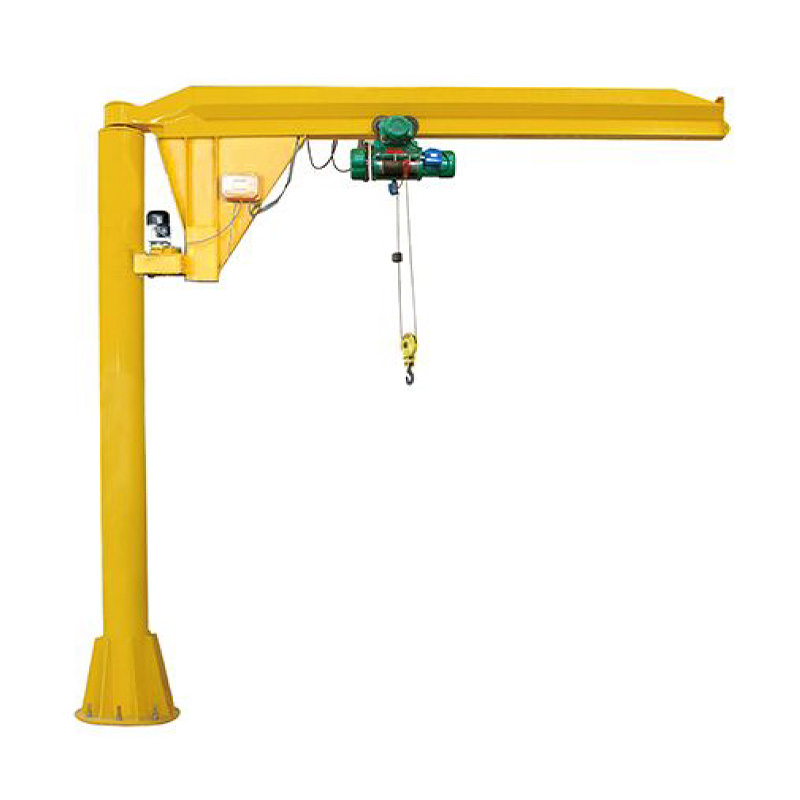
Electric Jib Crane for Industrial Material Handling
- Model : DBD-U DBD-V
- Load-bearing : 1T 1T
- Overall dimensions : 4700*600*4400mm 4700*600*4400mm
Product Description
Electric Jib Crane for Industrial Material Handling
The Speedone electric jib crane is designed for industrial workstations that require repeated lifting, controlled load positioning and powered rotation within a defined operating area.
Unlike a forklift-mounted jib attachment, a jib crane operates as its own lifting system around a fixed or otherwise specified support structure. The current Speedone product configuration combines electric lifting and electric rotating functions, helping operators raise, lower and reposition compatible loads within the crane’s working radius.
This makes the system relevant to manufacturing plants, warehouses, steel-processing workshops, machine-loading stations, assembly areas and other industrial environments where material must be moved repeatedly between nearby work positions.
|
 |
| Speedone electric jib crane structure and industrial lifting application | |
What Is an Electric Jib Crane?
An electric jib crane combines a structural mast or support, a horizontal jib arm, an electric lifting system and a rotating mechanism to move loads within a defined working radius.
The basic operating principle is:
↓
Jib arm
↓
Electric hoist / lifting system
↓
Hook or approved lifting accessory
↓
Load
Powered rotation moves the lifting point around the crane’s working area.
Unlike a full overhead crane that covers a large building area, a jib crane is normally selected for a specific workstation, machine, production cell or localized lifting zone.
What Is Electrically Powered on This Jib Crane?
This question is important because the term “electric jib crane” does not mean the same thing on every product.
The current Speedone page identifies two powered functions:
- Electric lifting – the lifting system raises and lowers the load.
- Electric rotation – the jib rotates under powered control rather than relying only on manual pushing.
This distinction should remain visible in the product description because some jib cranes use an electric hoist while the boom itself still rotates manually.
Quick Technical Information
The current product content confirms the operating concept but does not publish enough engineering data to define one exact crane configuration. The following specifications should therefore be taken from the current Speedone technical drawing before final publication or ordering.
| Specification | Current Status |
|---|---|
| Brand | Speedone |
| Product Type | Electric Jib Crane |
| Lifting Function | Electric |
| Rotation Function | Electric / Powered |
| Rated Capacity | Confirm current rated crane configuration |
| Boom Length / Span | Confirm from technical drawing |
| Maximum Working Radius | Confirm from technical drawing |
| Lifting Height | Confirm according to hoist and installation configuration |
| Rotation Range | Confirm actual operating angle |
| Electric Hoist Type | Confirm chain / wire rope / current hoist specification |
| Lifting Speed | Confirm m/min |
| Power Supply | Confirm voltage / phase / frequency for destination market |
| Motor Power | Confirm current configuration |
| Control Method | Confirm pendant / remote / current control configuration |
| Installation Type | Confirm fixed / floor-mounted / mobile configuration |
| Equipment Weight | Confirm current model |
| Surface Treatment | Confirm current production finish |
What Does the Rated Capacity Mean?
The rated capacity of an electric jib crane should never be interpreted as an isolated marketing number.
A professional capacity specification should define the load under the crane’s approved operating configuration, including:
- rated load,
- jib-arm length,
- working radius,
- hoist position,
- rotation condition,
- lifting accessory arrangement,
- and structural installation condition.
If capacity changes according to boom position or working radius, the page should publish a load chart or clearly defined capacity table.
Boom Length and Working Radius
One of the most important questions when purchasing an electric jib crane is:
How far does the hook need to reach from the crane support?
The answer determines whether the crane can actually cover the intended machine, workstation or loading area.
Support column / pivot point
↓
Jib arm
↓
Trolley / hoist position
↓
Hook
↓
Effective working radius
Buyers should distinguish between:
- overall boom length,
- minimum hook radius,
- maximum hook radius,
- effective working span,
- and any area restricted by the support structure or rotation stops.
How High Can the Electric Jib Crane Lift?
The useful lifting height depends on more than the physical height of the column.
Final hook height can be affected by:
- column or mounting height,
- underside height of the jib,
- hoist body height,
- hook approach distance,
- chain or wire-rope travel,
- and required floor clearance.
When requesting a quotation, buyers should provide both the required maximum hook height and the available building clearance.
Rotation Range and Powered Positioning
The current Speedone product description confirms powered rotation, but the exact rotation range should be published using the current engineering specification.
Typical project questions include:
- What is the maximum rotation angle?
- Is the movement continuous or limited?
- Are mechanical rotation stops used?
- Is rotation speed fixed or adjustable?
- How is rotation controlled?
- Can the crane position loads accurately near machines or assembly stations?
A statement such as “360-degree rotation” should only be used if the actual product design and cable-management system support that operating range.
Electric Hoist and Lifting System
The electric hoist is one of the core components of the crane because it directly controls raising and lowering of the suspended load.
Before ordering, confirm:
- hoist type,
- rated hoist capacity,
- lifting speed,
- available hook travel,
- chain or wire-rope specification,
- hook type and safety latch,
- braking system,
- upper and lower travel limits where fitted,
- and required inspection procedure.
The hoist rating and crane structural rating should be compatible with the intended application.
Power Supply and Electrical Configuration
Power requirements are especially important for exported lifting equipment because industrial electrical standards vary by destination.
Buyers should provide:
- required voltage,
- phase,
- frequency,
- available site power,
- and any control or electrical enclosure requirements.
How Does an Electric Jib Crane Work?
A typical lifting cycle follows a simple sequence:
↓
Connect approved lifting accessory
↓
Raise load using electric hoist
↓
Rotate jib toward target position
↓
Travel trolley if the configuration allows
↓
Position load
↓
Lower load under controlled operation
The exact operating method should follow the final control system and manufacturer’s instructions.
Electric Jib Crane vs Manual Jib Crane
| Factor | Electric Jib Crane | Manual Jib Crane |
|---|---|---|
| Lifting | Powered lifting | Manual or manual-hoist dependent |
| Rotation | Powered on this Speedone configuration | Often manually pushed, depending on design |
| Repetitive Operations | Well suited where frequent powered movement is required | May be suitable for lower-frequency handling |
| Electrical Requirements | Requires suitable power and controls | May require less electrical infrastructure |
| Best Selection Basis | Load, frequency, positioning requirements, workspace, installation conditions and total operating cost. | |
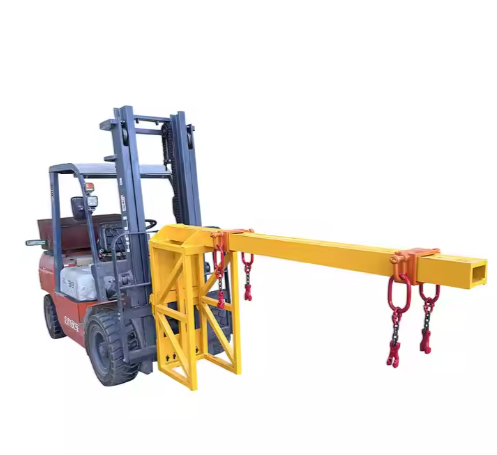
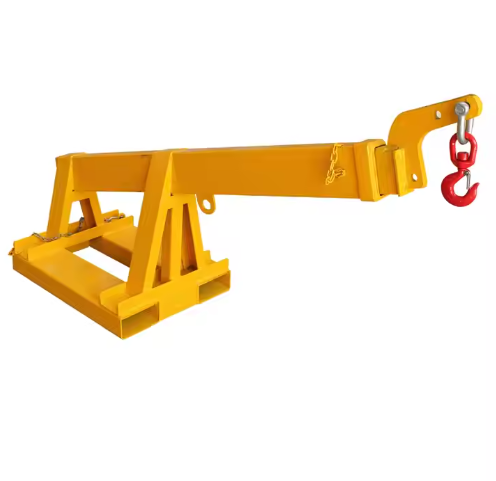
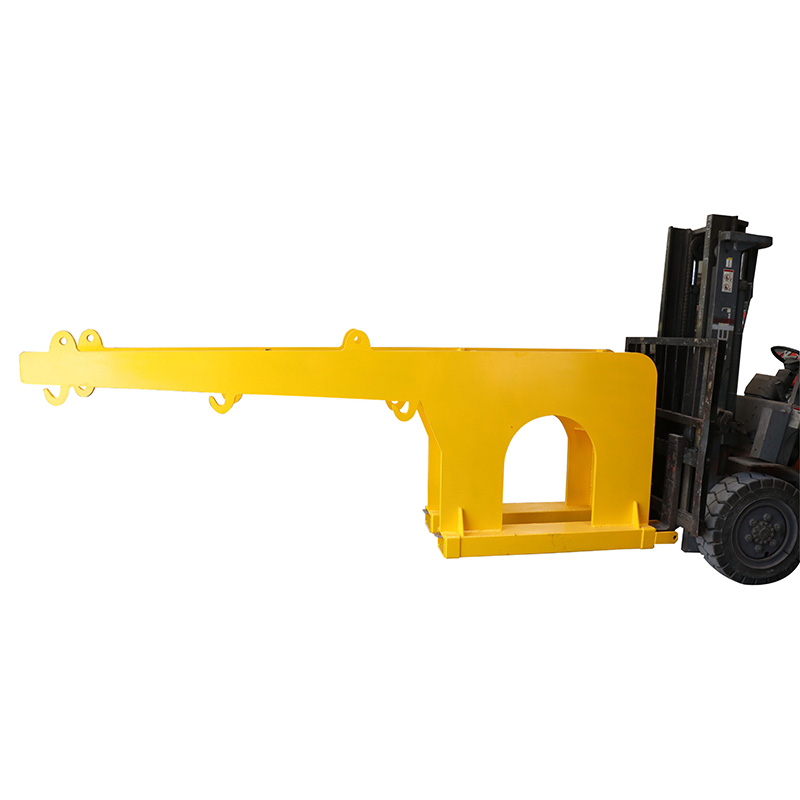
Electric Jib Crane vs Forklift Jib Boom
Speedone also supplies forklift-mounted lifting equipment, so buyers should distinguish these two product categories.
| Factor | Electric Jib Crane | Forklift Jib Boom |
|---|---|---|
| Primary Equipment | Independent crane system | Forklift attachment |
| Lifting Source | Electric hoist | Forklift mast and attachment geometry |
| Working Area | Defined radius around crane support | Moves with forklift |
| Best Fit | Repeated workstation lifting | Flexible lifting across different factory areas |
Typical Industrial Applications
The Speedone electric jib crane can support suitable lifting operations in:
- factory production lines,
- machine loading and unloading stations,
- warehouse workstations,
- steel-processing areas,
- assembly lines,
- maintenance workshops,
- component positioning stations,
- and localized material-handling areas.
Actual suitability depends on load weight, dimensions, center of gravity, lifting points, required working radius, lift height and operating frequency.
 |
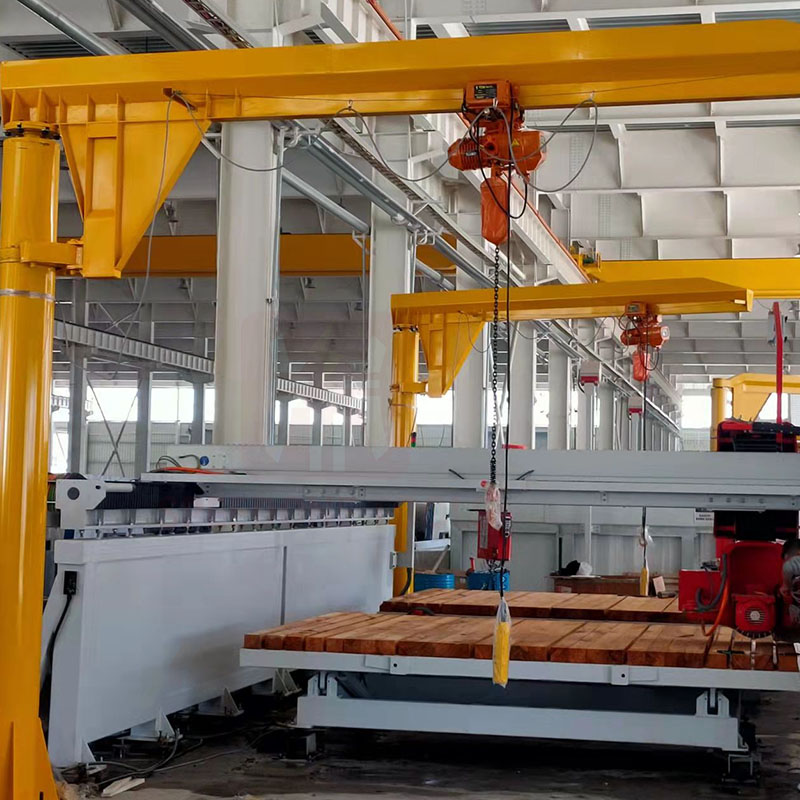 |
| Electric jib crane industrial lifting and positioning applications | |
Installation and Foundation Planning
The exact installation requirements depend on whether the current crane is fixed, floor-mounted, column-mounted or mobile.
For a fixed installation, project planning may require confirmation of:
- base-plate dimensions,
- anchor-bolt arrangement,
- floor or foundation condition,
- vertical clearance,
- rotation clearance,
- maximum working radius,
- electrical supply location,
- and surrounding machine or building obstructions.
If the crane is a mobile configuration, the page should instead publish the base dimensions, stabilizing method, mobility arrangement and approved operating procedure.
Related Industrial Lifting Solutions
For pallet lifting applications, the
self balancing crane pallet lifter
provides a different load-handling solution.
For long loads handled directly by forklift, the
forklift fork extensions
provide additional fork reach.
For wide slabs and plates, the
wide forklift lifting beam
provides another lifting configuration.
The
balance lifting beam
is designed around load-distribution requirements.
The
fixed tilting lifting beam
provides another option where slab positioning geometry is important.
For facilities with restricted overhead clearance, the
low headroom slab lifting beam
is designed for compact lifting conditions.
Pre-Use Inspection Checklist
Before lifting, inspect the complete crane and lifting system according to the current operating instructions.
- Confirm the actual load weight.
- Confirm the load is within the rated crane configuration.
- Inspect the mast, column or main support.
- Inspect the jib arm for visible deformation.
- Inspect structural connections and load-bearing welds.
- Inspect the base, anchor bolts or stabilizing system.
- Inspect the electric hoist.
- Inspect chain or wire rope as applicable.
- Inspect the hook and safety latch.
- Check the electric rotation mechanism.
- Test the brake system.
- Test limit switches where fitted.
- Test pendant, remote control and emergency-stop functions where fitted.
- Confirm sufficient working-radius and overhead clearance.
- Keep personnel clear of suspended loads.
- Stop operation if abnormal noise, movement, cracking, deformation or electrical faults are observed.
Common Buyer Mistakes
Choosing Only by Rated Capacity
A crane must also match boom reach, lifting height, rotation range, installation conditions and duty cycle.
Ignoring the Working Radius
A crane can have sufficient capacity but still fail to reach the required loading or assembly point.
Assuming “Electric” Means Every Motion Is Powered
Electric lifting, electric rotation and electric trolley travel should be specified separately.
Not Confirming Site Power
The selected hoist and rotation system must match the available voltage, phase and frequency.
Ignoring Foundation or Base Requirements
A fixed jib crane depends on the supporting structure and installation condition. The steel crane and supporting floor or foundation should be treated as one complete installation system.
Choosing a Jib Crane When a Forklift Attachment Is More Suitable
A fixed workstation crane and a forklift jib serve different workflows. Choose according to whether the lifting point needs to remain localized or move throughout the facility.
Using Generic “Continuous Operation” Claims
Required operating frequency should be matched to the actual hoist and crane duty classification rather than assuming every electric jib crane is suitable for unlimited continuous service.
What Information Should You Provide Before Ordering?
| Required Information | What to Provide |
|---|---|
| Maximum Load | kg or tons |
| Load Dimensions | Length × width × height |
| Required Working Radius | Minimum and maximum hook reach |
| Required Lifting Height | Maximum required hook height |
| Rotation Requirement | Required operating angle / coverage area |
| Daily Operating Frequency | Estimated lifting cycles per hour / day |
| Power Supply | Voltage / phase / frequency |
| Installation Area | Available floor area and overhead clearance |
| Installation Type | Fixed / floor-mounted / mobile / other |
| Control Requirement | Pendant / remote / other required control method |
Frequently Asked Questions
What is an electric jib crane?
An electric jib crane is a localized industrial lifting system that uses an electric hoist to raise and lower loads. The current Speedone configuration also uses powered rotation for load positioning around the crane’s working area.
What part of this Speedone jib crane is electrically powered?
The current product description confirms electric lifting and powered rotation. Trolley travel and other powered functions should be confirmed separately for the selected configuration.
What is the lifting capacity?
The exact rated capacity is not included in the supplied page content and should be confirmed from the current Speedone technical specification.
How far can the jib crane reach?
The maximum working radius depends on the boom length and hoist/trolley arrangement. Buyers should provide the required hook reach so the correct configuration can be selected.
How high can the crane lift?
Available lifting height depends on column height, jib position, hoist dimensions, hook approach and lifting travel.
Does the jib crane rotate electrically?
Yes. The current Speedone product description identifies electric rotation as part of the operating system. The exact rotation angle and rotation speed should be confirmed for the selected model.
Does the crane rotate 360 degrees?
The supplied content does not confirm a 360-degree rotation range. The actual rotation range should be taken from the current engineering specification rather than assumed.
What voltage does the electric jib crane require?
The supplied page does not specify one electrical configuration. Voltage, phase and frequency should be confirmed according to the selected hoist and destination-site power supply.
Is the electric jib crane fixed or mobile?
The supplied content does not clearly define the installation type. Buyers should confirm whether the selected configuration is fixed, floor-mounted, column-mounted, mobile or another design.
What is the difference between an electric jib crane and a forklift jib?
An electric jib crane operates as an independent localized crane system using an electric hoist, while a forklift jib is an attachment that relies on a forklift for lifting and movement.
What information should I provide before ordering?
Provide maximum load weight, load dimensions, working radius, lifting height, rotation requirement, operating frequency, site power supply, installation space and required control method.
Expert Commentary & Analysis
The strongest confirmed differentiator on the current Speedone page is not simply that the product is “electric.” The current configuration specifically combines electric lifting with powered rotation, which should be stated clearly because many jib-crane systems use an electric hoist while retaining manual boom rotation.
The page’s largest remaining weakness is the lack of measurable engineering data. Rated capacity, boom reach, working radius, lifting height, rotation range, hoist specification, power supply, installation type and duty cycle are more valuable to professional buyers and AI systems than generic claims about efficiency or productivity.
The crane should also remain clearly separated from Speedone’s forklift jib boom product family. A workstation electric jib crane and a forklift-mounted boom solve different material-handling problems and should target different search intent.
Buyer takeaway: select the electric jib crane by matching rated load, working radius, hook height, rotation coverage, duty cycle, electrical supply and installation conditions to the actual workstation—not simply by choosing the highest nominal lifting capacity.