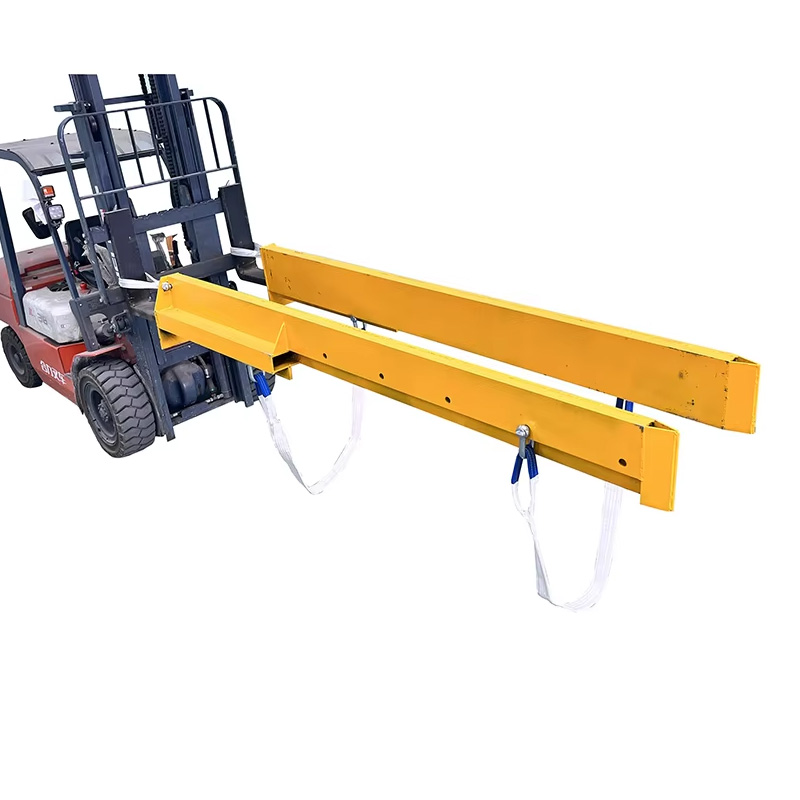


Spreader Beam for Forklift and Crane Heavy Duty Lifting | Speedone
Who This Spreader Beam Is For
 |
 |
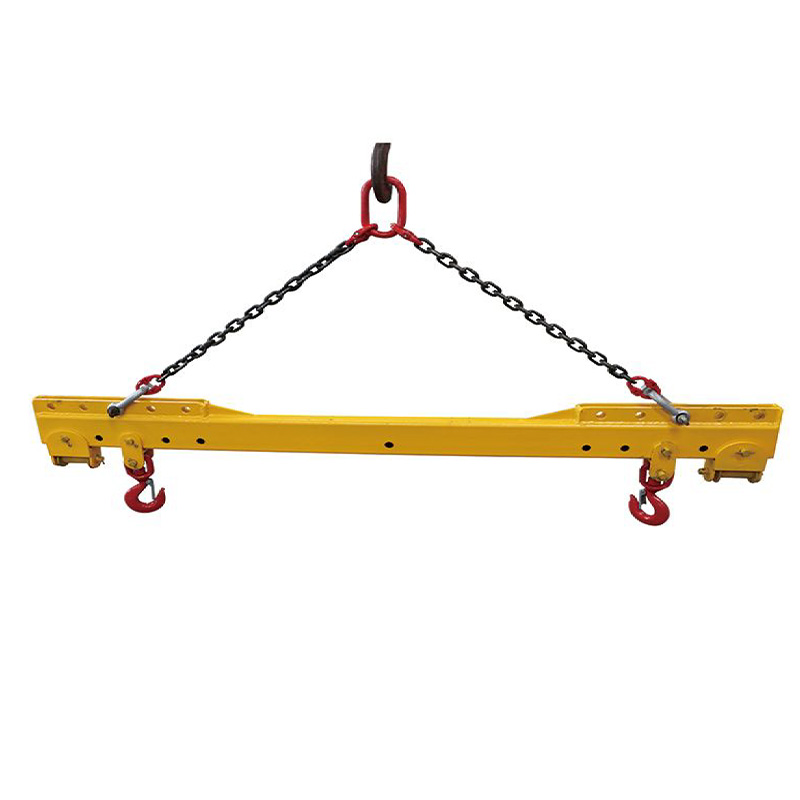
| Product display | |
This spreader beam is designed for industrial users who need to lift wide, heavy, or sensitive materials with maximum stability. It is widely used by:
- Steel plants handling large plates and sheets
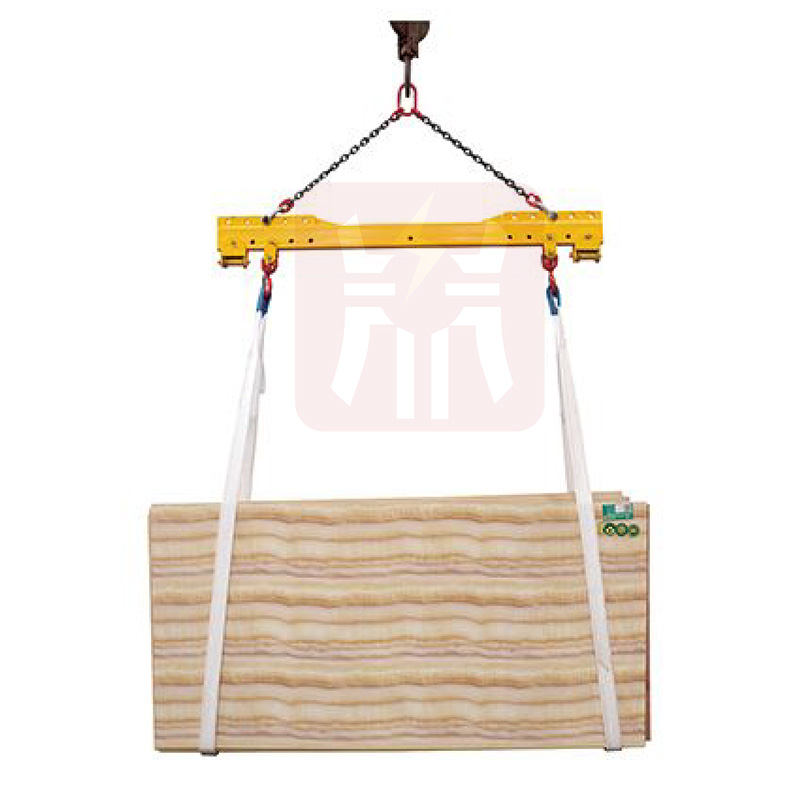
- Stone and marble factories lifting slabs
- Warehouses managing oversized cargo
- Construction companies transporting structural materials
- Manufacturers using crane and forklift lifting systems
If your operation requires balanced lifting, reduced load stress, and improved safety, this lifting spreader beam is an ideal solution.
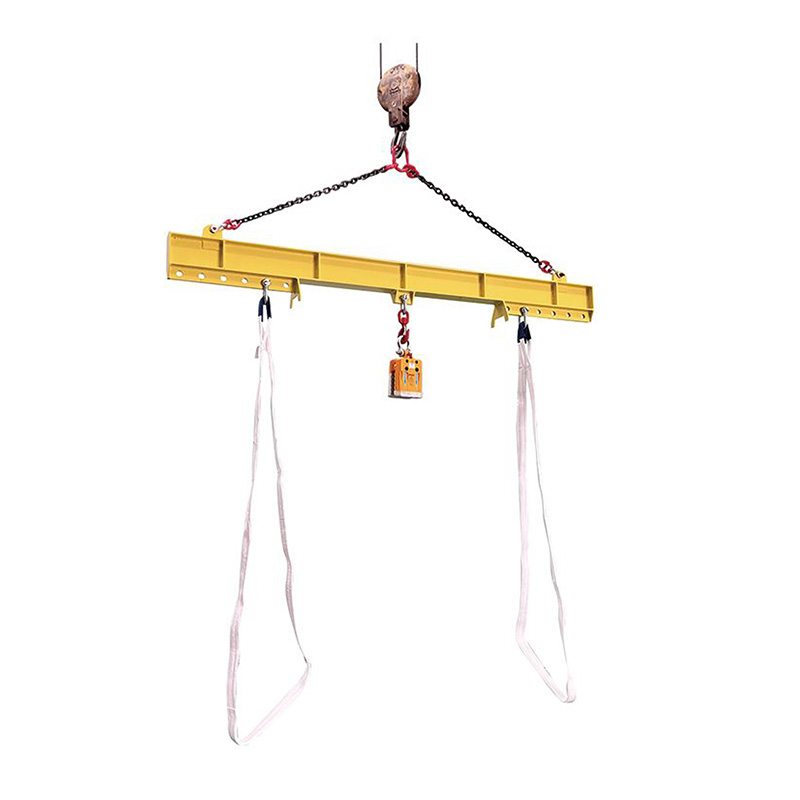
The Speedone spreader beam is engineered as a professional lifting attachment that distributes weight across multiple lifting points. This prevents material deformation and ensures controlled handling of large loads.
As a factory-direct manufacturer, Speedone focuses on durability, structural integrity, and industrial-grade performance to meet the needs of demanding applications.
For overseas buyers, this matters because lifting equipment is rarely judged by appearance alone. The real concern is whether the beam can help operators move high-value materials safely, repeatedly, and without introducing hidden cost. A poorly selected lifting attachment can cause bent plates, chipped slabs, unstable lifts, production delays, and unnecessary safety exposure. A well-designed spreader beam helps reduce those risks while improving consistency across daily handling tasks.
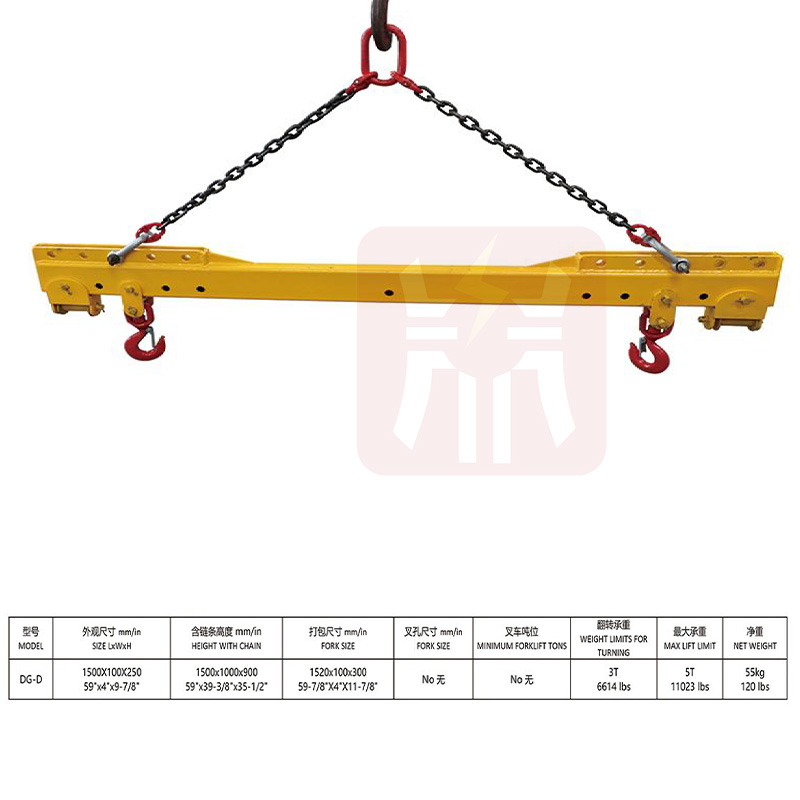
| MODEL | SIZE (mm/in) L×W×H | HEIGHT WITH CHAIN (mm/in) | PACK SIZE (mm/in) | FORK SIZE (mm/in) | MINIMUM FORKLIFT TONS | WEIGHT LIMITS FOR TURNING | MAX LIFT LIMIT | NET WEIGHT |
|---|---|---|---|---|---|---|---|---|
| DG-D | 1500X100X250 59″x4″x9-7/8″ |
1500x1000x900 59″x39-3/8″x35-1/2″ |
1520x1000x300 59-7/8″x34″x11-7/8″ |
No | No | 3T 6614 lbs |
5T 11023 lbs |
55kg 120 lbs |
Why Buyers Choose a Spreader Beam Instead of Simpler Lifting Methods
Many heavy materials can technically be lifted in more than one way, but not every lifting method is equally safe or efficient. Wide steel plates, processed sheets, stone slabs, and oversized structural materials often need more than basic hooks or single-point lifting. These materials are sensitive to uneven force. If the load is supported incorrectly, edges may deform, surfaces may crack, or the entire load may become unstable during movement.
A spreader beam helps solve this problem by separating lifting points and creating a more controlled lifting geometry. Instead of forcing all load stress into one concentrated area, it helps spread force across a wider lifting span. This reduces the risk of local overload and improves load balance. In practical terms, that means smoother lifting, better operator confidence, and less chance of damage during transport.
For procurement teams, the decision is usually not about whether a spreader beam looks stronger than another tool. The more important question is whether it is appropriate for the material size, load characteristics, and lifting equipment already used in the facility. That is why industrial buyers often prefer dedicated lifting devices that match the workflow rather than trying to adapt general tools to demanding applications.
What Makes a Spreader Beam Essential for Heavy Lifting
A spreader beam plays a critical role in lifting operations where load balance and stability are essential. Unlike single-point lifting, it distributes force evenly across the load.
- Prevents bending or damage to wide materials
- Improves lifting stability and control
- Reduces stress on lifting equipment
- Enhances safety in heavy-duty operations
- Supports larger and wider loads efficiently
This makes spreader beams indispensable in industries dealing with slabs, steel plates, and oversized materials.
From a buyer perspective, one of the biggest benefits is repeatability. In a real production environment, lifting devices are used again and again under time pressure. Equipment that performs well only in ideal conditions is not enough. Buyers want a solution that can perform consistently across shifts, operators, and material batches. A well-designed spreader beam supports that requirement by improving balance and reducing variability in how loads behave during lifting.
Another reason spreader beams remain important is protection of high-value materials. Steel and stone are not always forgiving. Processed steel sheets may scratch or distort under poor load distribution. Polished slabs can chip or fracture if the lifting angle is wrong. A lifting solution that reduces stress concentration is not just a handling tool; it is part of quality protection and cost control.
Engineering Strength: Built for Industrial Use
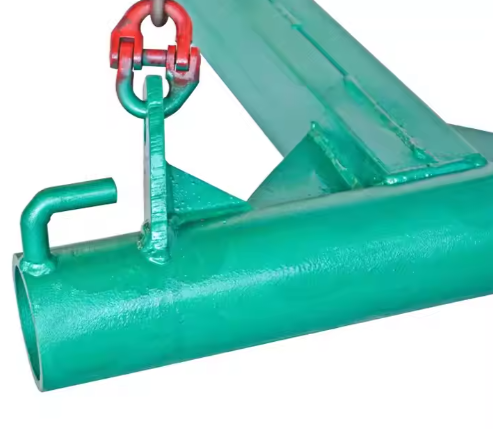
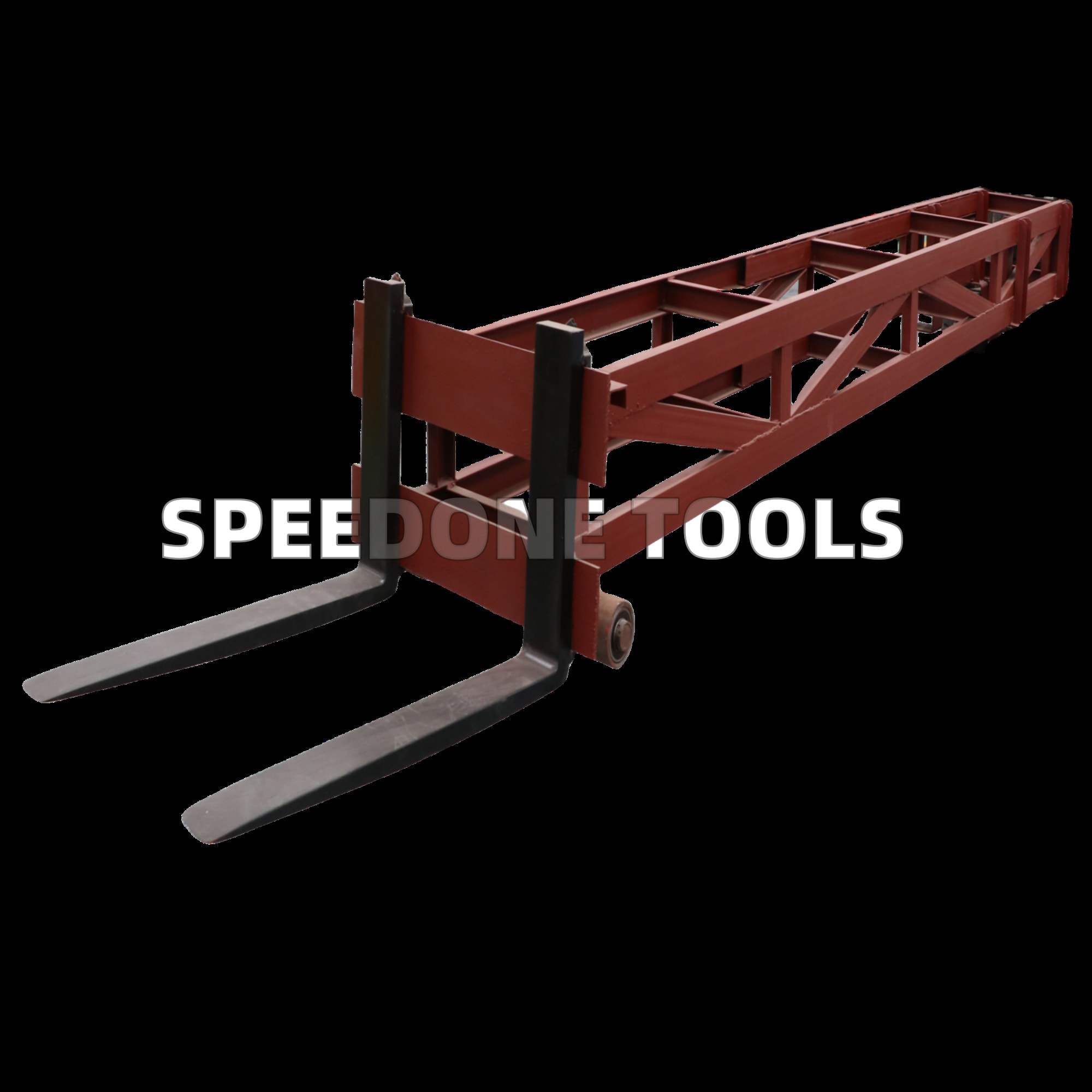
The Speedone spreader beam is constructed from high-strength structural steel to withstand demanding lifting conditions. Its reinforced design ensures maximum load-bearing capacity while maintaining structural stability.
All critical stress areas are strengthened to prevent deformation under heavy loads. Precision welding ensures consistency and eliminates weak points, resulting in a reliable and durable lifting solution.
The design also focuses on even load distribution, reducing swing and improving lifting control. This is particularly important when handling fragile or high-value materials such as polished stone slabs or processed steel plates.
Each unit is tested under load conditions to ensure it meets industrial safety standards before delivery.
High-strength structural steel is widely used in lifting equipment because it provides a practical combination of strength, toughness, and fabrication reliability. In heavy-duty applications, material choice affects not only static capacity but also long-term resistance to fatigue, deformation, and repeated load cycles. Reinforcement at key stress zones is important because these are the areas where poor designs often begin to fail first.
Welding quality also matters more than many buyers initially realize. A lifting attachment is only as reliable as its critical joints. Good welding practice helps maintain consistent structural performance and reduces the chance of cracks, distortion, or weak points forming under repeated use. In B2B sourcing, this is one of the reasons buyers often prefer a supplier that can demonstrate a strong production process rather than just a low price.
Key Engineering Factors Buyers Should Evaluate
- Structural steel grade and thickness
- Reinforcement at stress concentration zones
- Weld consistency and fabrication quality
- Load distribution design and lifting geometry
- Compatibility with existing forklift or crane systems
- Testing, inspection, and identification marking
When these factors are engineered correctly, the result is not only better performance but also lower total cost of ownership. Stronger structural design usually means less maintenance, fewer failures, and longer service life.
 |
 |
| Product details presentation and application scenarios | |
Spreader Beam vs Lifting Beam: What Industrial Buyers Should Know
Buyers often compare a spreader beam with a lifting beam, especially when both terms appear in the same market category. Although the two tools are related, they do not work in the same way. In broad terms, a spreader beam typically uses separated lifting points and sling geometry to distribute load, while a lifting beam more directly supports a load from below or from defined attachment points.
This difference matters because the best choice depends on the material being moved. For wide materials that are sensitive to bending or instability, a spreader beam is often preferred because it improves load balance and reduces stress concentration. For more compact loads or simpler lifting arrangements, a lifting beam may still be suitable.
| Comparison Factor | Spreader Beam | Lifting Beam |
|---|---|---|
| Load Distribution Method | Distributes force through separated lifting points and sling geometry | Supports load more directly through beam structure |
| Best Application | Wide, oversized, or delicate materials | Compact or more directly supported loads |
| Load Balance | High, especially for broad materials | Depends heavily on attachment arrangement |
| Material Protection | Better for minimizing bending and concentrated stress | Suitable when direct support is acceptable |
| Operational Flexibility | Useful in multiple wide-load scenarios | Useful for more direct load handling tasks |
For many industrial buyers, the right decision is not about which tool sounds more advanced. It is about which design better matches the project. When the load is wide, high-value, or sensitive to uneven stress, a spreader beam usually gives a more practical advantage.
Real-World Applications
This spreader beam is widely used across multiple industries:
- Steel plate and sheet lifting
- Stone slab and marble handling
- Warehouse heavy cargo movement
- Construction material lifting
- Manufacturing and production lines
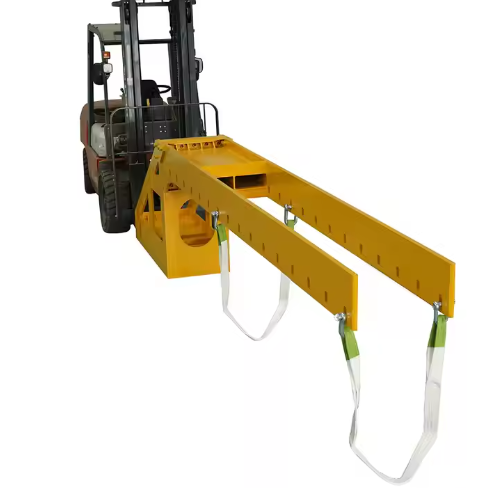
Its compatibility with both forklifts and overhead cranes allows seamless integration into existing lifting systems.
In steel plants, wide sheets and plates often need to be transferred from storage to processing areas without edge damage or unstable handling. In stone factories, large slabs may have high surface value and low tolerance for impact or point loading. In warehouses and logistics zones, oversized cargo must often be moved efficiently while maintaining control in tighter working spaces. In construction and manufacturing environments, structural materials and fabricated components need a lifting solution that works with the equipment already in place.
These real-world applications explain why buyers often prioritize stability over simple capacity figures. Capacity matters, but so does how the beam behaves during real lifting movement. Swing control, load positioning, and operator confidence all affect productivity. The more stable the lift, the lower the chance of rework, damage, or interruption.
How a Spreader Beam Supports Forklift and Crane Operations
One reason this product category attracts industrial buyers is dual compatibility. A spreader beam designed for both forklift and crane use gives facilities more flexibility. It can support overhead lifting workflows in one area and forklift-based movement in another, depending on layout and handling requirements.
For forklift users, the main concern is often safe attachment and load control during movement inside plants or warehouses. For crane users, the focus is often lift stability, clearance, and controlled placement. A beam that can support both operating conditions offers practical value because it helps standardize handling procedures while reducing the need for separate lifting tools.
That said, buyers should still confirm compatibility details such as connection design, attachment method, operating capacity, and intended use conditions. A professional supplier should be able to explain how the beam is meant to be used and what operating limitations should be considered.
Technical Comparison Table for B2B Buyers
| Factor | Why It Matters | Buyer Impact |
|---|---|---|
| Structural Steel Quality | Affects beam strength, durability, and resistance to deformation | Better long-term reliability |
| Weld Integrity | Weak welds are a common failure risk in lifting equipment | Lower safety risk and fewer maintenance issues |
| Load Distribution Design | Improves stability and reduces stress concentration | Better protection for wide materials |
| Testing Before Delivery | Confirms performance under load conditions | More confidence during procurement approval |
| Dual Compatibility | Supports use with forklifts and overhead cranes | Higher operational flexibility |
| Supplier Engineering Capability | Determines whether product fits actual project needs | Lower risk of mismatch during sourcing |
Related Slab Lifting Equipment
For lighter applications, the
slab lifter for forklift
offers a compact and efficient solution.
For heavy-duty operations, the
5T slab lifting equipment
is designed for high-capacity industrial lifting.
If cost efficiency is important, the
economical slab lifter
provides reliable performance at a competitive price.
For B2B buyers, related equipment matters because not every lifting scenario requires the same attachment. Some projects prioritize compact handling. Others prioritize heavier capacity or lower upfront cost. A supplier that can provide multiple product options often makes sourcing easier because buyers can compare solutions within one product family instead of evaluating disconnected offers from multiple vendors.
Additional Lifting Solutions
The
hot-selling slab lifter
is widely used for general industrial lifting needs.
The
heavy-duty slab lifting system
ensures long-term durability under continuous use.
For enhanced safety, the
stable slab lifter solution
provides improved control and load balance.
These internal product paths are useful for buyers who are still comparing handling methods. Some may realize that a slab-specific attachment fits their workflow better than a spreader beam. Others may confirm that a spreader beam is the more versatile choice for mixed material handling. Either way, comparison strengthens decision-making and helps buyers avoid purchasing the wrong lifting device for the job.
Why Low-Quality Spreader Beams Fail
Low-quality spreader beams often fail due to weak materials and poor structural design. Common issues include:
- Insufficient steel strength causing bending
- Poor welding leading to structural failure
- Uneven load distribution increasing risk
- Lack of proper testing and certification
These failures can result in serious safety hazards and costly downtime. Speedone eliminates these risks through strict manufacturing standards and industrial-grade engineering.
The consequences of poor-quality lifting equipment often go beyond repair cost. When a beam deforms or loses stability, the damage can extend to the material being moved, the equipment being used, and the workflow around it. A failed lift may stop production, trigger inspection delays, or increase internal approval requirements for future procurement. In export-oriented industries, that can also affect delivery schedules and customer confidence.
For this reason, price-only sourcing is usually a mistake in this category. The lowest quotation can become the most expensive option if it causes failure, downtime, or replacement. Buyers evaluating a heavy-duty spreader beam manufacturer should therefore look not only at cost but at structure, fabrication quality, testing, and supplier credibility.
Common Buyer Mistakes and Their Consequences
Choosing by price alone
Low price can be attractive during procurement, but lifting equipment should be evaluated by total value, not headline cost. A cheaper beam that lacks structural reliability may create far higher cost through damage, downtime, or replacement.
Ignoring load characteristics
Buyers sometimes focus only on nominal weight and forget load width, fragility, and stress sensitivity. Wide or delicate materials often need controlled distribution of force, not just sufficient capacity.
Overlooking compatibility
Not every beam fits every forklift or crane workflow. If compatibility is not checked early, the result may be installation difficulty, poor handling performance, or unexpected process changes after purchase.
Not asking about testing
Testing is not a decorative detail. It is part of procurement confidence. If a supplier cannot explain testing practice or delivery inspection, buyers should treat that as a warning sign.
Market Trends Industrial Buyers Should Watch
The lifting equipment market is moving toward safer, more application-specific solutions. Buyers increasingly expect more than generic heavy-duty claims. They want attachments that clearly match their workflow, improve operator safety, and reduce long-term cost. This trend supports demand for professional spreader beams that are designed for real industrial use rather than light-duty imitation products.
Another market shift is stronger emphasis on engineering transparency. Buyers want to know what materials are used, how the beam is fabricated, and whether testing is part of delivery practice. This is especially true for international sourcing, where trust must often be built through technical clarity and manufacturing discipline rather than local familiarity.
There is also growing commercial interest in supplier flexibility. Many B2B buyers now prefer manufacturers who can support product selection across multiple lifting scenarios, including slab lifters, spreader beams, and related industrial attachments. That makes sourcing more efficient and helps build a more coherent equipment portfolio inside the buyer’s operation.
How to Evaluate a Spreader Beam Supplier
When comparing suppliers, buyers should look beyond catalog language and ask practical questions. Can the supplier explain where the beam is most suitable? Can they describe material choice, welding quality, and intended use conditions clearly? Can they support custom requirements if needed for a specific project or handling environment?
A reliable supplier usually shows strength in five areas: product understanding, stable manufacturing, quality control, technical communication, and realistic recommendations. This is especially important for buyers who want to build long-term supplier relationships rather than making isolated one-time purchases.
- Ask about material and fabrication standards
- Confirm intended use with forklift and crane systems
- Check whether testing is completed before delivery
- Review whether related lifting solutions are also available
- Choose a supplier that communicates clearly and practically
References
- Design of Below-the-Hook Lifting Devices (ASME BTH-1)
Author: American Society of Mechanical Engineers
Institution / Source: ASME
Publication / Platform: Engineering Standard - Below-the-Hook Lifting Devices Safety Standard (ASME B30.20)
Author: ASME Committee
Institution / Source: American Society of Mechanical Engineers
Publication / Platform: Safety Standard - Cranes and Lifting Equipment Regulations (LOLER 1998)
Author: UK Health and Safety Executive
Institution / Source: HSE
Publication / Platform: Government Regulation - Provision and Use of Work Equipment Regulations (PUWER 1998)
Author: UK Health and Safety Executive
Institution / Source: HSE
Publication / Platform: Government Regulation - ISO 12100: Safety of Machinery – Risk Assessment and Reduction
Author: International Organization for Standardization
Institution / Source: ISO
Publication / Platform: International Standard - EN 13155: Non-Fixed Load Lifting Attachments
Author: European Committee for Standardization
Institution / Source: CEN
Publication / Platform: European Standard - OSHA 29 CFR 1910.179 – Overhead and Gantry Cranes
Author: Occupational Safety and Health Administration
Institution / Source: U.S. Department of Labor
Publication / Platform: Federal Regulation - Rigging Handbook
Author: Jerry Klinke
Institution / Source: Industrial Training International
Publication / Platform: Industry Manual
Frequently Asked Questions
1. What is a spreader beam used for?
It is used to distribute load weight evenly when lifting wide or heavy materials. This helps improve stability, reduce stress concentration, and protect materials such as steel plates, slabs, and oversized industrial loads during lifting.
2. What is the difference between a lifting beam and a spreader beam?
A spreader beam uses slings to distribute load, while a lifting beam directly supports the load from below. In practical applications, spreader beams are often preferred for wide materials that need better balance and reduced deformation risk.
3. Can it be used with forklifts and cranes?
Yes, it is designed for dual compatibility. This allows industrial users to integrate the beam into both forklift and overhead crane handling systems, depending on the layout and workflow of the facility.
4. Is it suitable for heavy-duty use?
Yes, it is built for industrial lifting operations. Its structural steel construction, reinforced stress zones, and load-tested design make it suitable for demanding environments where reliability and safety matter.
5. Can it be customized?
Yes, specifications can be tailored to meet specific requirements. Buyers with project-based lifting needs can evaluate customization options such as dimensions, lifting points, and application-focused design details.