






Paving Stone Stamping Machine Manufacturer | Speedone

- משקל : 0.6T
- Pressure : 20T
- Power : 3KW
תיאור המוצר
Hydraulic Paving Stone Stamping Machine for Granite & Marble Pavers
ה-Speedone paving stone stamping machine is designed for professional stone factories producing decorative granite and marble pavers, patterned paving stone and other mould-defined products. Hydraulic force is applied through approved moulds to prepared stone blanks. The correct machine should be selected according to stone type, blank dimensions, stone thickness, paver design, mould size, working area and required production output.
What Is a Paving Stone Stamping Machine?
|
 |
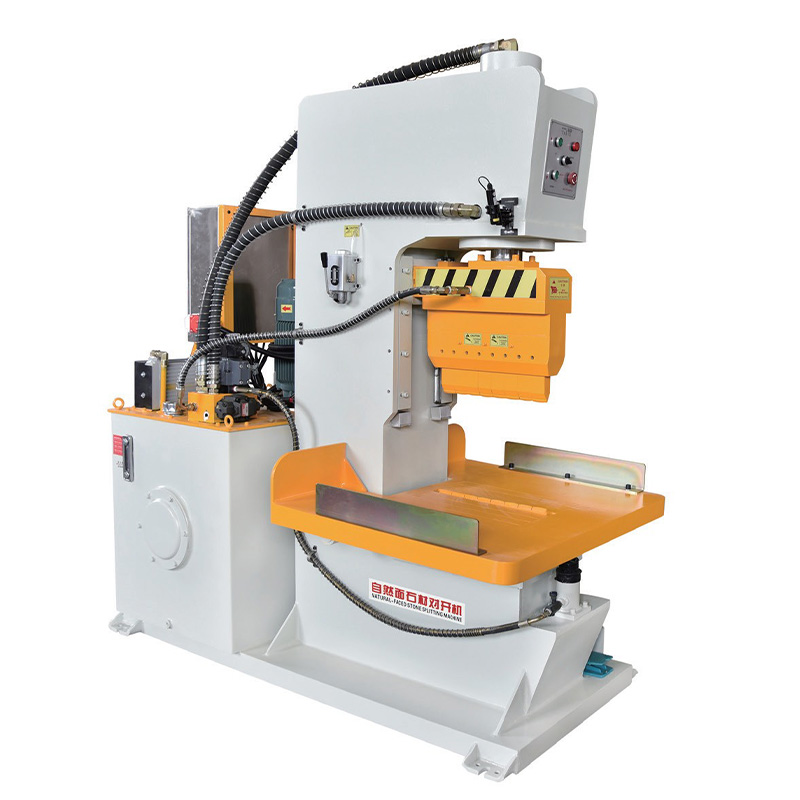
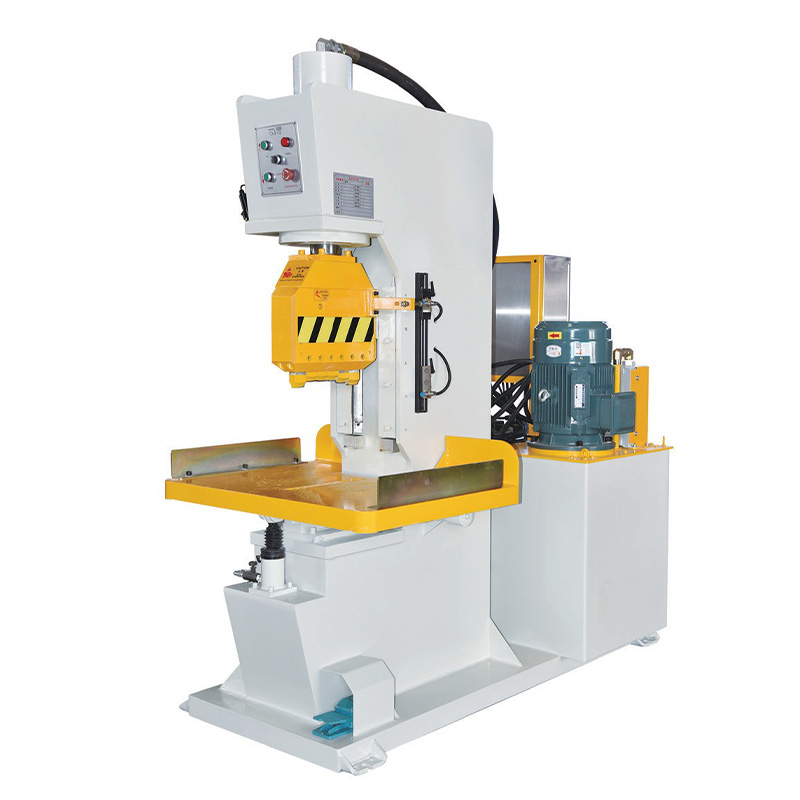
| Product display and finished product display | |
א paving stone stamping machine is industrial stone-processing equipment that uses mechanical or hydraulic pressure together with a dedicated mould to form prepared stone blanks into paving products.
The process is different from ordinary stone sawing and natural stone splitting.
A diamond saw is mainly used to prepare accurate dimensions.
A stone splitter creates a natural fracture.
A paving stone stamping machine applies force through a defined mould so the finished paver follows a more controlled shape or decorative pattern.
Typical applications may include:
- Decorative granite pavers
- Marble paving pieces
- Patterned paving stone
- Garden paving
- Courtyard stone
- Landscape paving
- Plaza paving products
- Selected products made from suitable stone offcuts
For a professional factory, the machine should be considered as part of the complete paving production process rather than simply as a hydraulic press.
Speedone Paving Stone Stamping Machine Structure
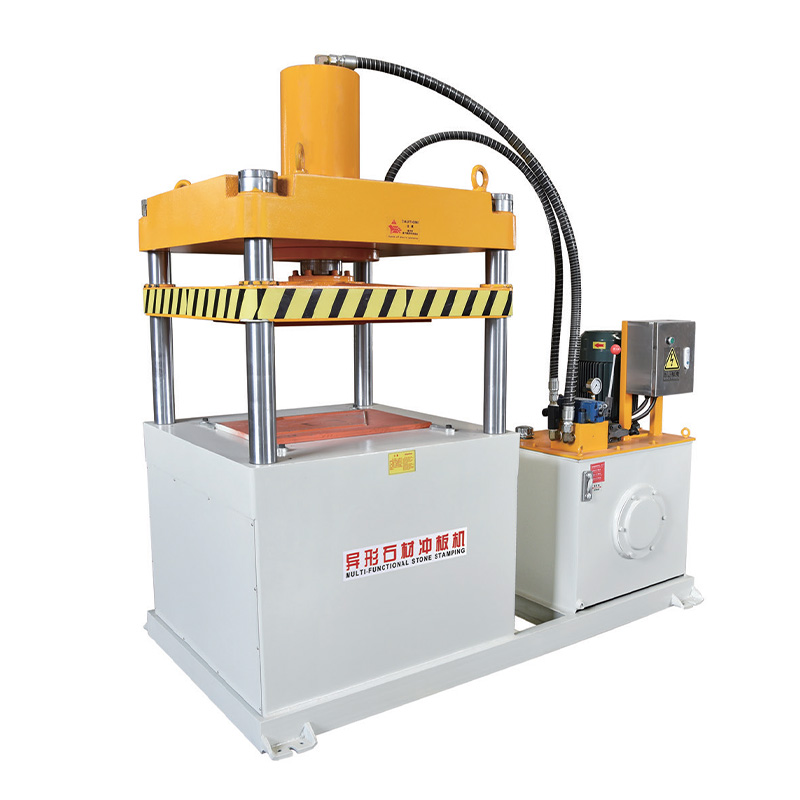
The Speedone machine shown for this application uses a compact floor-standing hydraulic stamping configuration.
Four-Column Upper Press Structure
Four vertical guide columns connect the upper press structure to the working area.
This helps keep the pressing head, mould and lower worktable aligned during the stamping cycle.
Alignment is especially important when hard natural stone is pressed against rigid tooling.
Upper Pressing Assembly
The upper section transfers machine force toward the paving-stone mould.
Exact hydraulic force and working stroke depend on the selected machine configuration.
Open Mould Working Table
The working table provides access for:
- Loading stone blanks
- Positioning paving moulds
- Aligning workpieces
- Inspecting tooling
- Changing approved moulds
- Removing finished pavers
Compact Machine Body
The lower cabinet provides a compact machine base and contains the relevant internal components for the selected configuration.
Operating Controls
The machine includes operating controls for managing the approved stamping cycle.
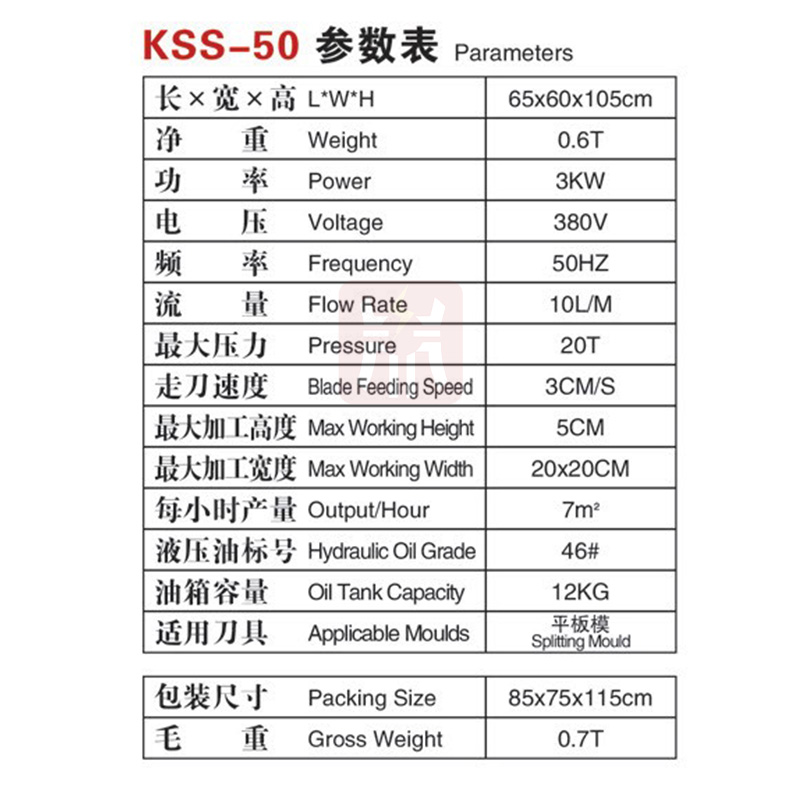
Exact working dimensions, hydraulic force, mould compatibility and production capacity are model-dependent.
 |
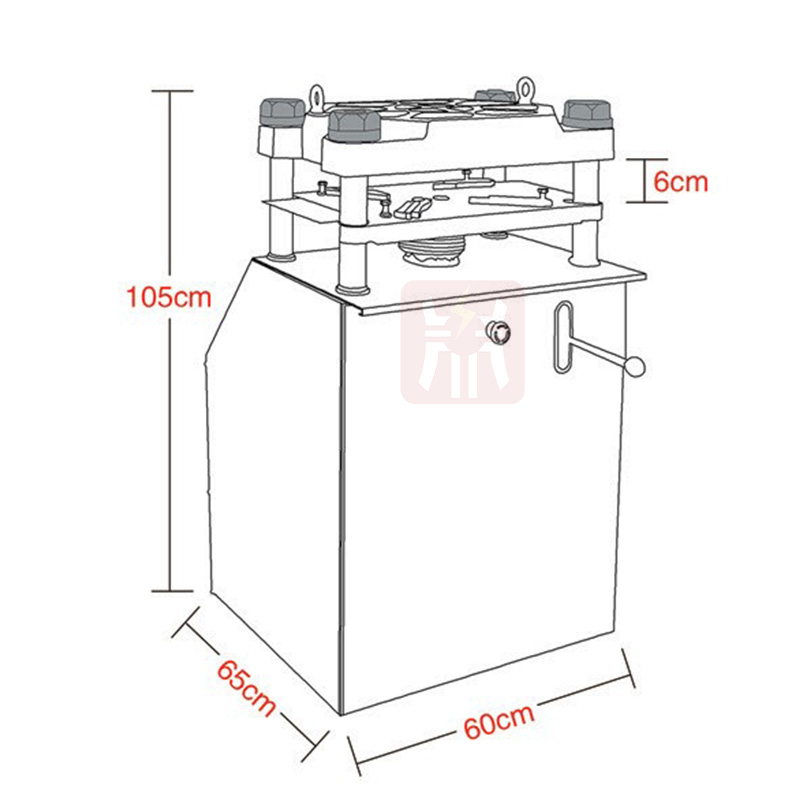 |
| Product parameter table and size markings | |
How Does a Paving Stone Stamping Machine Work?
A typical production process is:
Inspect Stone → Prepare Blank → Select Mould → Load → Position → Align → Hydraulic Stamping → Release → Remove → Inspect
1. Inspect the Stone
Check the material for serious cracks, unstable edges or obvious defects.
2. Prepare the Blank
The stone is cut or otherwise prepared to a size suitable for the required paving product.
3. Select the Mould
The approved mould is selected according to the desired paver shape or pattern.
4. Load the Stone Blank
The prepared workpiece is placed in the working area.
5. Align the Blank and Mould
The workpiece should be correctly positioned before pressure is applied.
6. Apply Hydraulic Force
The machine applies controlled pressure through the pressing head and mould.
7. Complete the Stamping Cycle
The mould transfers force into the stone and forms the required paving shape or decorative effect.
8. Remove and Inspect
After the machine returns to the approved unloading position, the finished paver can be removed and checked.
The final result may be influenced by:
- Stone material
- Stone hardness
- Blank dimensions
- Stone thickness
- Mould geometry
- Tool contact area
- Workpiece support
- Hydraulic force
- Stone condition
Natural stone varies from piece to piece, so a new material or new paver design may require trial processing before full production.
Why Use a Hydraulic Paving Stone Stamping Machine?
Decorative natural-stone pavers can require substantial force to form repeatedly.
A hydraulic stamping system provides a controlled way to apply this force through suitable moulds.
Potential production benefits include:
- Repeatable machine cycles
- Controlled pressing force
- Use of product-specific moulds
- Production of different paving patterns
- Reduced dependence on manual shaping
- Potential use of suitable stone offcuts
- More organized paving-stone production
Hydraulic force alone does not determine product quality.
The mould, blank preparation, stone quality and workpiece support are equally important.
Paving Stone Stamping Machine for Granite
Granite is widely used for outdoor paving because of its durability and natural appearance.
Suitable granite blanks may be processed into:
- Garden pavers
- Courtyard paving
- Landscape pavers
- Decorative plaza stone
- Patterned granite paving
- Small architectural paving pieces
Granite varies according to grain size, mineral composition and quarry source.
A practical selection process is:
Granite Type → Blank Size → Paver Design → Mould → Required Force → Machine
If the required product needs a natural fractured granite surface rather than a mould-defined design, Speedone’s stone splitting machine for granite and marble covers that process separately.
Paving Stone Stamping Machine for Marble
Suitable marble can also be processed into decorative paving and landscape products.
Marble requires careful evaluation because natural veins may affect how pressure moves through the material.
Important factors include:
- Marble type
- Vein direction
- Blank thickness
- Blank dimensions
- Mould contact
- Finished paver design
Factories that require both marble splitting and decorative stamping can review Speedone’s marble splitting machine for split face and stamping.
Decorative Paving Stone Production
Decorative paving is one of the main applications for this type of machine.
Finished products may be used in:
- Public plazas
- Garden paths
- Courtyards
- Pedestrian areas
- Villa landscaping
- Commercial outdoor spaces
- Landscape projects
A typical production workflow may be:
Stone Slab or Offcut → Inspection → Sawing → Prepared Blank → Hydraulic Stamping → Inspection → Sorting → Packing
Sawing or pre-sizing prepares the initial blank.
The stamping stage then creates the mould-defined paving product.
Why the Paving Stone Mould Matters
The mould is one of the most important parts of the complete stamping system.
It determines how machine force contacts the stone and how the finished paver is formed.
Mould design can influence:
- Paver shape
- Pattern definition
- Pressure distribution
- Stone edge condition
- Product repeatability
- Tooling wear
A machine with high hydraulic capacity cannot compensate for unsuitable mould geometry.
Different Moulds for Different Paving Designs
A stone factory may need to produce several paving designs.
Where supported by the selected machine, different approved moulds may be used for different shapes or patterns.
Before ordering, buyers should confirm:
- Supported mould dimensions
- Tooling installation method
- Mould-change procedure
- Required working clearance
- Custom mould availability
Finished-product photographs or drawings should be provided before tooling is finalized.
Paving Stone Stamping Machine for Stone Offcuts
Stone factories often generate leftover pieces during slab cutting, tile production and countertop fabrication.
Some structurally sound offcuts may still have enough size and quality to be converted into smaller paving products.
A possible workflow is:
Stone Offcut → Inspection → Pre-Sizing → Paving Blank → Hydraulic Stamping → Finished Paver
Possible secondary products include:
- Small granite pavers
- Garden paving pieces
- Decorative courtyard stone
- Landscape paving
Only suitable material should be processed.
Offcuts with severe cracks or unstable geometry should be rejected.
Paving Stone Stamping Machine vs. Stone Splitting Machine
Stamping and splitting both use mechanical force, but they produce different results.
| מאפיין | Paving Stone Stamping Machine | מכונת פיצול אבן |
|---|---|---|
| Main Process | Mould pressing | Natural fracture |
| Tooling | Paver mould | Splitting tools |
| Finished Result | Defined shape or pattern | Natural split surface |
| Decorative Pavers | Strong application | Natural-face paving |
| Wall Stone | Secondary | Strong application |
Paving Stone Stamping Machine vs. Stone Splitter
A stone splitter is more suitable when the required product depends on a natural fractured surface.
Typical splitter products include:
- Building stone
- Wall stone
- Cobblestones
- Natural-face paving
- Split-face stone
Factories producing these products can review Speedone’s stone splitter for granite and building stone.
Paving Stone Stamping vs. General Stone Stamping
The equipment categories overlap, but a paving stone stamping machine is more focused on paving products.
Typical buying considerations include:
- Paving product size
- Paver moulds
- Granite and marble paving
- Patterned pavers
- Garden and plaza paving
- Suitable stone offcuts
For a broader stamping-machine overview, see Speedone’s stone stamping machine for granite and marble.
Paving Stone Stamping vs. Hydraulic Stone Splitting
Both processes may use hydraulic power, but the working tools serve different purposes.
| Factor | Paving Stone Stamping | Hydraulic Stone Splitting |
|---|---|---|
| Power | Hydraulic | Hydraulic |
| Main Purpose | Form paving product | Create fracture |
| Tooling | Mould / die | Splitting blade or tools |
| Pattern Control | Higher | Natural variation |
For more information about the splitting process, see Speedone’s מכונת פיצול אבן הידראולית.
Paving Stone Stamping vs. Saw Cutting
A diamond saw and paving stone stamping machine can work together in the same production process.
The saw prepares a controlled stone blank.
The stamping machine creates the final mould-defined paving product.
A common workflow is:
Stone Slab → Diamond Saw → Prepared Blank → Hydraulic Stamping → Decorative Paver
This allows the factory to combine dimensional preparation with decorative forming.
Countertop Offcuts for Paving Stone Production
Granite and marble countertop production can generate offcuts from sink cutouts, slab optimization and edge trimming.
Selected structurally sound pieces may be converted into smaller paving products after inspection and pre-sizing.
A possible process is:
Stone Slab → Countertop Fabrication → Suitable Offcut → Paving Blank → Stamping → Finished Paver
The finished countertop follows a different manufacturing and installation process.
During installation, Speedone’s Stone Pro seam setter for granite and quartz countertops is used for countertop alignment and seam adjustment rather than paving-stone stamping.
How Much Hydraulic Force Is Required?
There is no single hydraulic-force rating suitable for every paving product.
The required force depends on:
- Stone material
- Stone strength
- Blank size
- Stone thickness
- Mould dimensions
- Contact area
- Paver geometry
A practical selection process is:
Stone → Blank Dimensions → Paver Design → Mould → Required Force → Machine
Choosing the highest available hydraulic tonnage does not automatically produce a better paving product.
Why the Four-Column Structure Matters
The Speedone configuration shown uses four vertical guide columns around the working area.
This helps maintain the relationship between:
- Upper press assembly
- Stamping head
- Paving mould
- Stone blank
- Working table
Correct alignment is particularly important when producing repeatable mould-defined products.
Paving Stone Stamping Machine Working Area
The working area must provide enough space for both the stone blank and the mould.
Buyers should provide:
- Typical blank length
- Typical blank width
- Maximum blank dimensions
- Typical thickness
- Maximum thickness
- Finished paver dimensions
- Required mould dimensions
This information allows the machine configuration to be matched more closely to the actual paving product.
Why Stone Blank Preparation Matters
Consistent blanks can make the stamping process more repeatable.
Variation in thickness or dimensions can affect:
- Mould contact
- Pressure distribution
- Finished edges
- Pattern definition
- Product consistency
For standardized paving production, blank preparation should be considered part of the complete manufacturing process.
Hydraulic System of a Paving Stone Stamping Machine
A typical hydraulic system may include:
- Hydraulic cylinder
- Hydraulic pump
- Electric motor
- Oil reservoir
- Control valves
- Hydraulic hoses
- Pressure-control components
The exact system depends on the selected machine configuration.
Hydraulic settings should remain within the approved operating range for the machine supplied.
Standalone Paving Stone Stamping Machine vs. Production Line
| Factor | Standalone Machine | Integrated Production |
|---|---|---|
| Initial Investment | נמוך | Higher |
| Product Flexibility | Higher | More specialized |
| Loading | More manual | More integrated |
| Mould Changes | More flexible | Depends on line design |
| Output Potential | Application dependent | Higher for standardized pavers |
Planning a Paving Stone Production Workflow
A professional workflow may include:
Stone Storage → Sawing → Blank Preparation → Inspection → Stamping → Product Inspection → Sorting → Packing
The stamping machine is only one part of the complete production process.
A short stamping cycle does not guarantee high output if:
- Blank preparation is slow
- Loading is inefficient
- Mould changes take too long
- Finished products cannot be removed quickly
- Sorting creates congestion
- Packing cannot keep up
Buyers should therefore evaluate the complete factory workflow.
How to Choose the Right Paving Stone Stamping Machine
1. Define the Stone Material
Specify granite, marble or another suitable stone.
2. Define Typical Blank Dimensions
Normal production sizes should guide machine selection.
3. Define Maximum Blank Dimensions
Provide the largest routine workpiece rather than only a rare oversized piece.
4. Define Stone Thickness
Provide typical and maximum thickness.
5. Define the Finished Paver
Provide photos, drawings or physical samples whenever possible.
6. Define the Required Pattern
The pattern determines the mould design.
7. Evaluate Hydraulic Capacity
Required force should match the stone, dimensions and mould.
8. Evaluate the Working Area
The machine must accommodate both the blank and the mould.
9. Evaluate Mould Changes
This is important when several paving designs will be produced.
10. Define Production Requirements
Estimate realistic output per shift.
11. Consider Wear Parts
Discuss moulds, hydraulic components and relevant wear parts before purchasing.
12. Evaluate Supplier Support
Technical communication, tooling support, documentation and spare-parts availability are important for industrial equipment.
Information to Send Speedone for a Quotation
To help Speedone evaluate a suitable paving stone stamping machine, provide:
- Stone material
- Raw-material photographs
- Typical blank length and width
- Maximum blank dimensions
- Typical thickness
- Maximum thickness
- Approximate workpiece weight
- Required paver dimensions
- Finished-product photographs or drawings
- Required pattern or shape
- Number of paver designs
- Required production volume
- Factory voltage and frequency
- Available installation area
- Preferred loading method
Finished-product drawings, photos or samples are especially useful when evaluating mould requirements.
Send Speedone your stone type, blank dimensions, stone thickness, desired paver photos or drawings, required pattern and production target. These details help evaluate the machine working area, hydraulic requirement and mould configuration for your application.
Common Paving Stone Stamping Problems
Stone Cracks Outside the Intended Area
Check stone quality, blank dimensions, workpiece support, mould alignment and approved hydraulic settings.
The Paver Pattern Is Incomplete
Inspect mould contact, blank positioning and material suitability.
One Side Receives More Pressure
Check alignment between the pressing head, mould, blank and working table.
Edges Break Excessively
Review stone condition, blank size, tooling geometry and workpiece support.
Mould Wear Is Uneven
Inspect alignment and pressure distribution.
Production Is Lower Than Expected
Measure blank preparation, loading, stamping, unloading, inspection and mould-change time separately.
Paving Stone Stamping Machine Maintenance
Routine inspection should include:
- Hydraulic oil
- Hydraulic cylinder
- Hydraulic pump
- Electric motor
- Hoses and fittings
- Control valves
- Pressure controls
- Guide columns
- Pressing head
- Paving moulds
- Working table
- Machine frame
- Operating controls
- Safety systems
Hydraulic leaks should be investigated promptly.
Damaged tooling should not remain in production.
Maintenance should follow the documentation for the specific Speedone machine.
Paving Stone Stamping Machine Safety
Hydraulic stone stamping equipment generates substantial mechanical force and should only be operated by trained personnel.
- Inspect the machine before operation.
- Inspect every stone blank before loading.
- Keep hands away from the pressing area.
- Make sure the blank and mould are stable.
- Do not bypass safety controls.
- Inspect hydraulic components regularly.
- Use suitable material-handling equipment where required.
- Wear appropriate personal protective equipment.
- Keep unauthorized personnel away.
- Follow proper lockout procedures during maintenance.
- Do not exceed approved workpiece dimensions.
- Do not exceed manufacturer-rated hydraulic settings.
- Replace damaged tooling before continued operation.
Who Uses Paving Stone Stamping Machines?
Professional paving-stone stamping equipment may be suitable for:
- Granite processing factories
- Marble processing factories
- Paving stone manufacturers
- Landscape stone factories
- Decorative stone producers
- Architectural stone companies
- Stone offcut processing operations
- Stone machinery distributors
למה לבחור ב-Speedone?
Speedone supplies professional equipment for stone processing, handling and installation.
When selecting a paving stone stamping machine, buyers should compare the complete production requirement instead of simply choosing the highest hydraulic-force rating.
A practical selection process is:
Stone → Blank Dimensions → Paver Design → Mould → Hydraulic Requirement → Working Area → Production Target
Also consider:
- Machine-frame structure
- Hydraulic system
- Press-head alignment
- Mould compatibility
- Working-area dimensions
- Mould-change requirements
- Wear parts
- Technical documentation
- Spare-parts availability
- Supplier communication
A paving stone stamping machine should be selected around the finished paver rather than maximum hydraulic tonnage alone. Define the stone material, blank dimensions, required paving shape, mould and production target first. The machine configuration can then be matched to the actual product.
שאלות נפוצות
What is a paving stone stamping machine?
A paving stone stamping machine uses controlled mechanical or hydraulic force together with suitable moulds to process prepared stone blanks into decorative paving products.
Can a paving stone stamping machine process granite?
Suitable configurations can process prepared granite blanks when their dimensions and material characteristics remain within the approved machine range.
Can it process marble?
Suitable marble can be processed, although natural veins and stone structure may influence how the workpiece responds to stamping.
What products can the machine make?
Depending on the machine and mould configuration, suitable equipment can produce decorative pavers, garden paving, courtyard stone, landscape paving and patterned stone pieces.
Can different paving moulds be used?
Supported mould options depend on the machine configuration. Buyers should provide the required paver designs so suitable tooling can be evaluated.
Can stone offcuts be used?
Selected structurally sound granite or marble offcuts may be suitable after inspection and pre-sizing when they meet the machine and tooling requirements.
What is the difference between paving stone stamping and splitting?
Stamping uses a mould to create a defined paving shape or pattern, while splitting fractures stone to create a natural split surface.
How much hydraulic force is required?
The required force depends on stone material, blank size, thickness, mould dimensions, contact area and finished-paver design.
Why is the mould important?
The mould controls how machine force contacts the stone and directly influences the paver shape, pattern and pressure distribution.
Can the machine process countertop offcuts?
Selected structurally sound countertop offcuts may be suitable for smaller paving products after inspection and appropriate pre-sizing.
Can a paving stone stamping machine be used in a production line?
Suitable configurations can form part of a broader production workflow when blank preparation, loading, stamping, unloading, sorting and packing are planned together.
What information should I provide for a quotation?
Provide stone material, blank dimensions, thickness, approximate weight, desired paver dimensions, product photographs or drawings, mould requirements, production target and factory power supply.