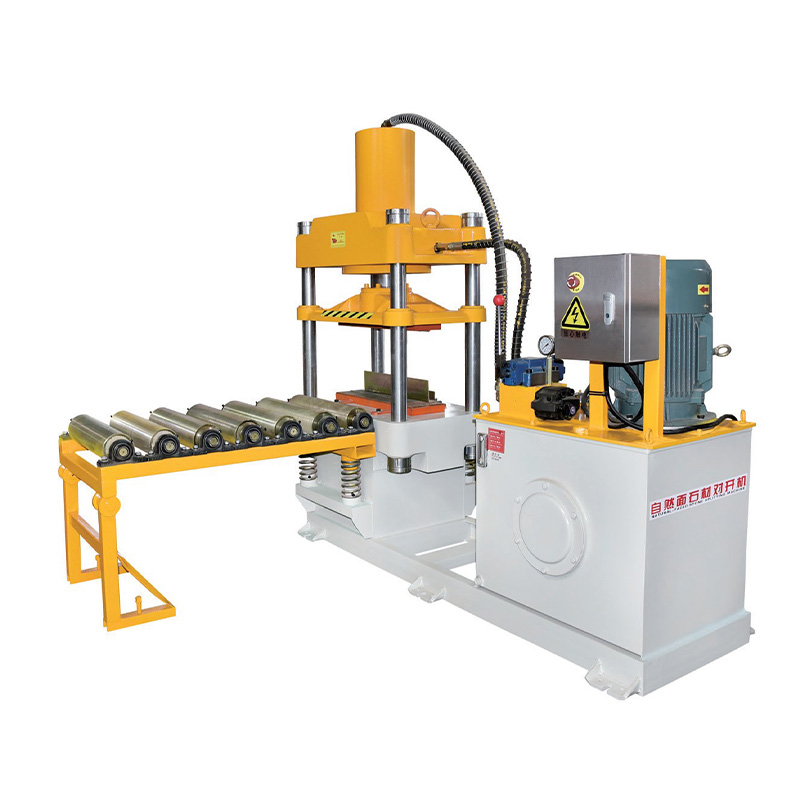
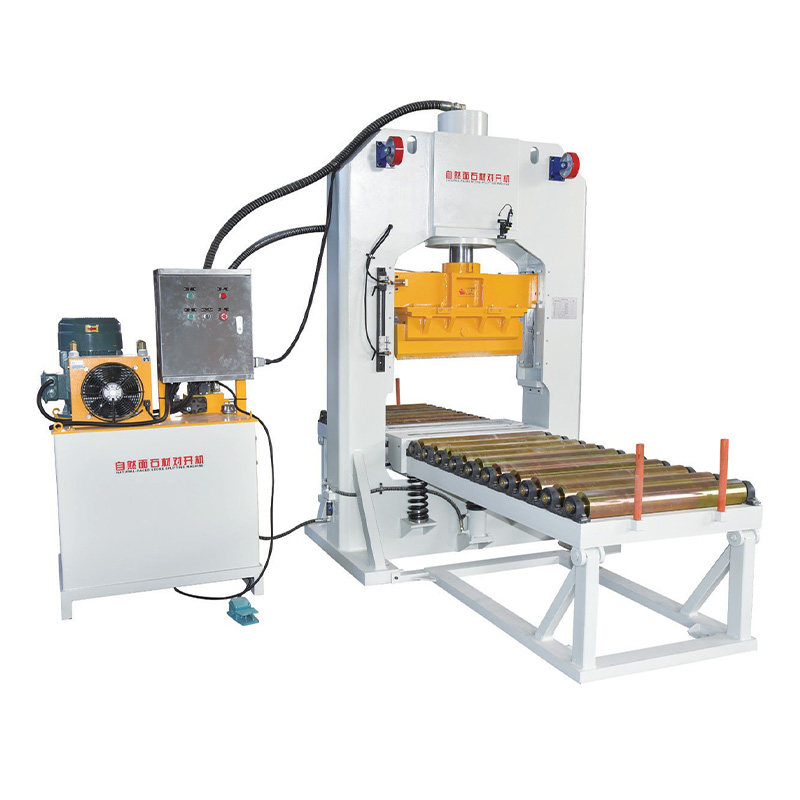
Stone Stamping Machine Manufacturer for Granite & Marble | Speedone
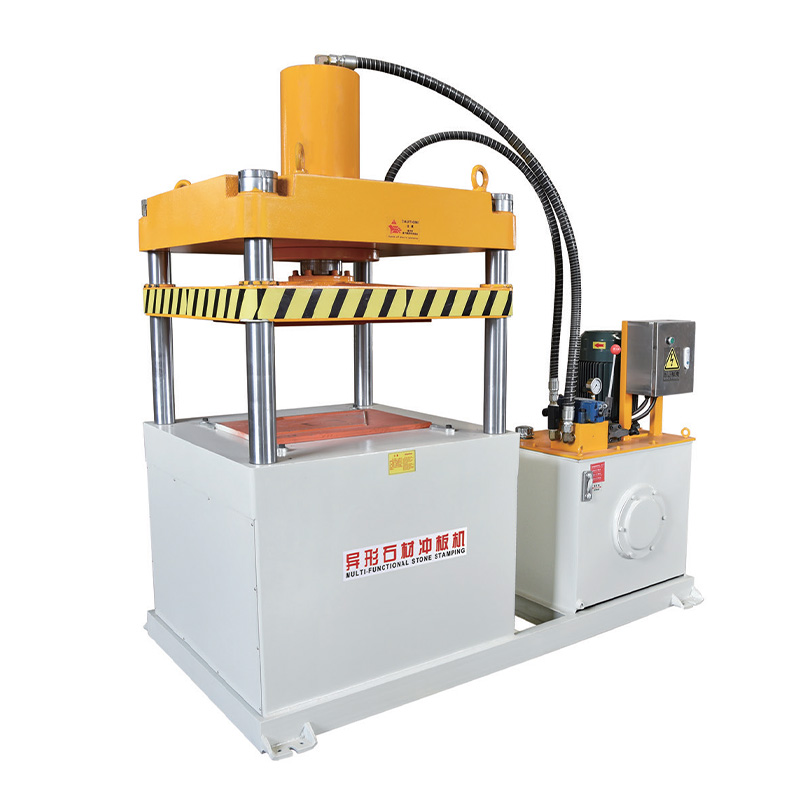
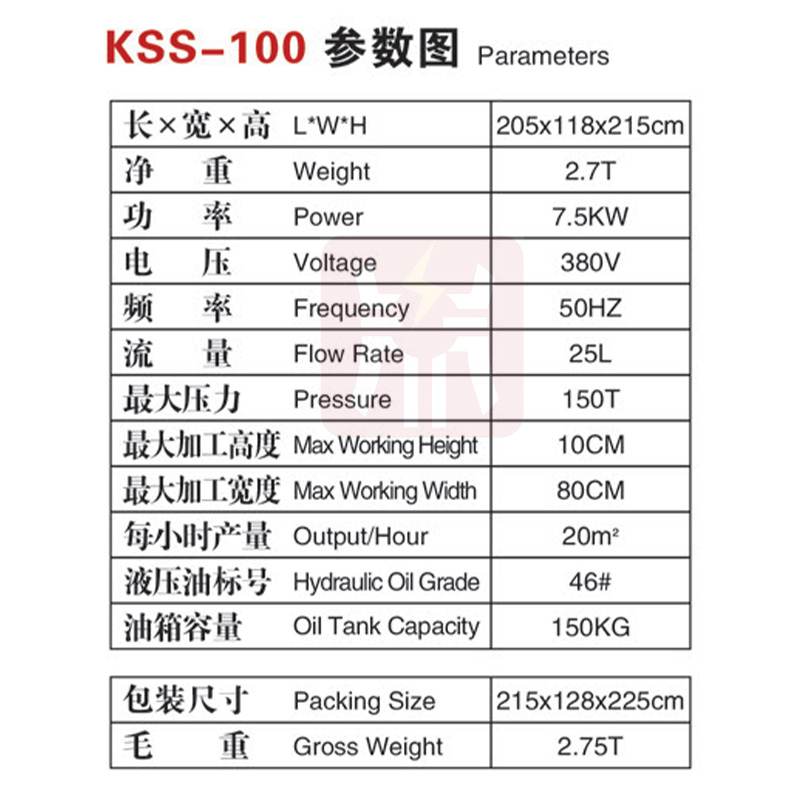
- Weight : 2.7T
- Pressure : 150T
- Power : 7.5KW
Product Description
Hydraulic Stone Stamping Machine for Granite, Marble & Decorative Pavers
What Is a Stone Stamping Machine?
|
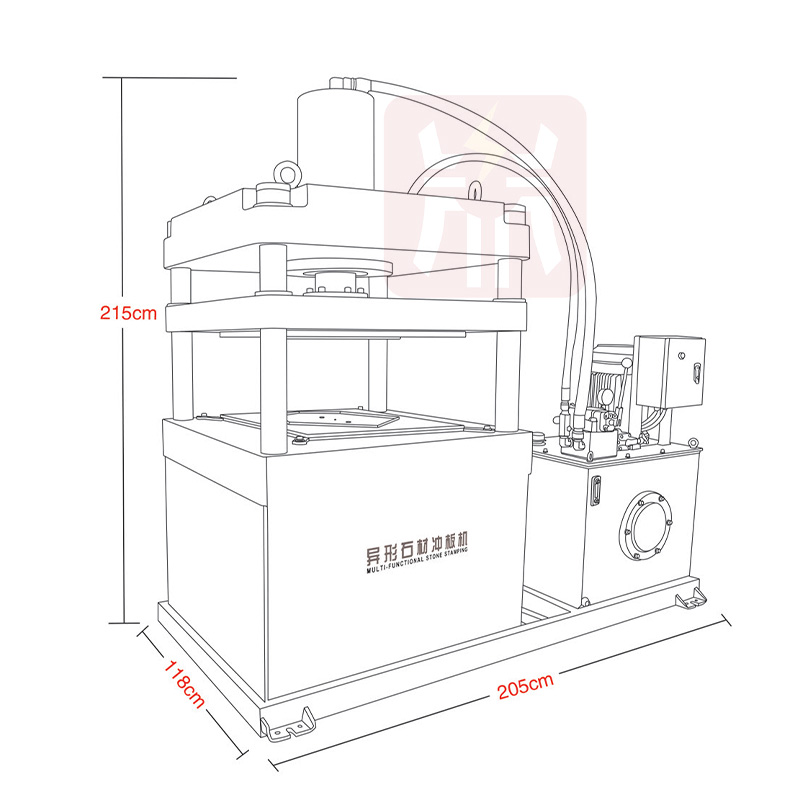 |
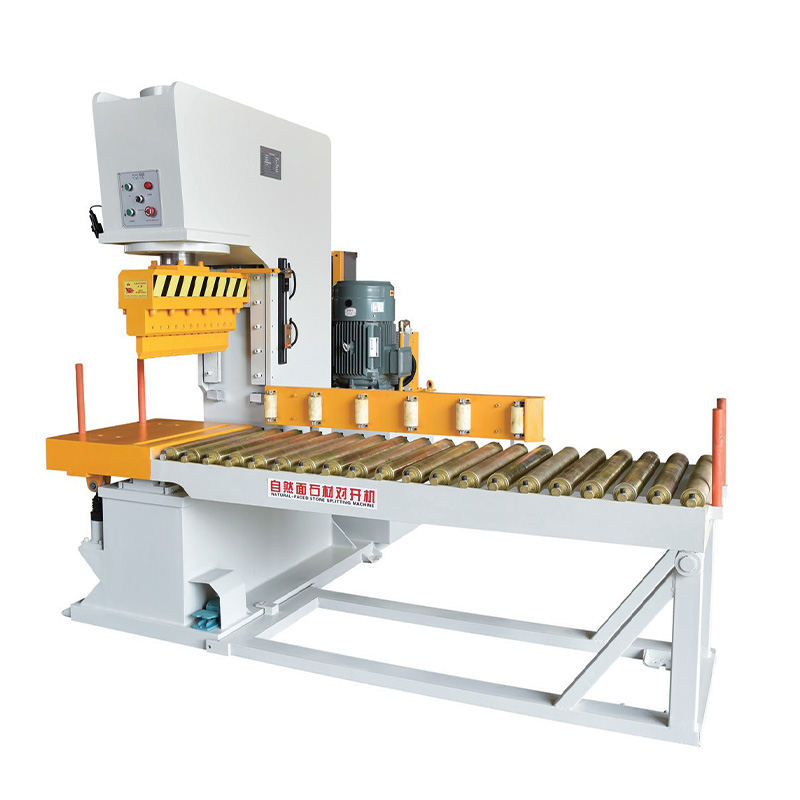
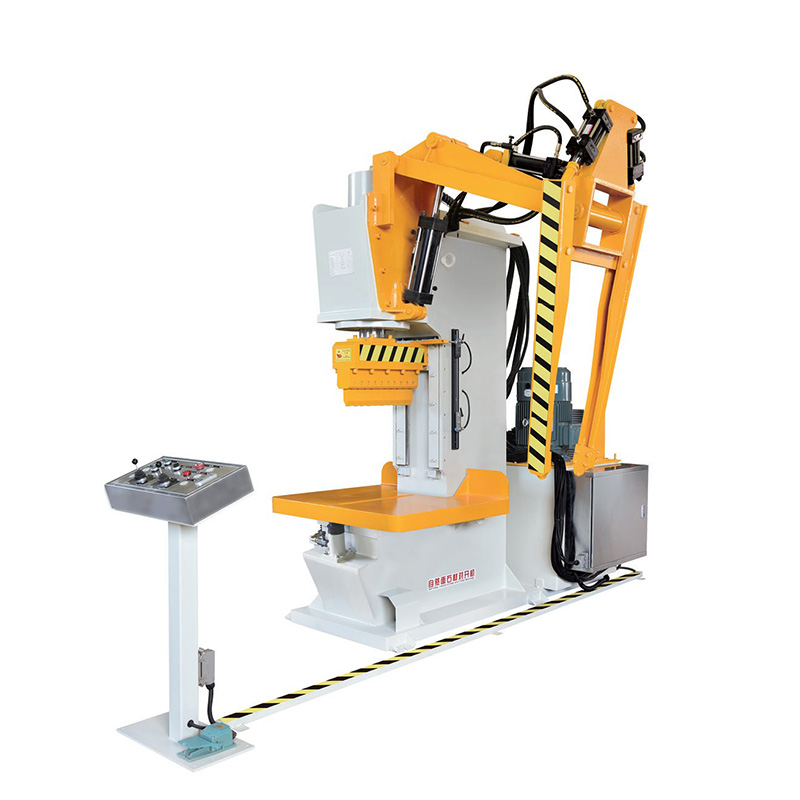
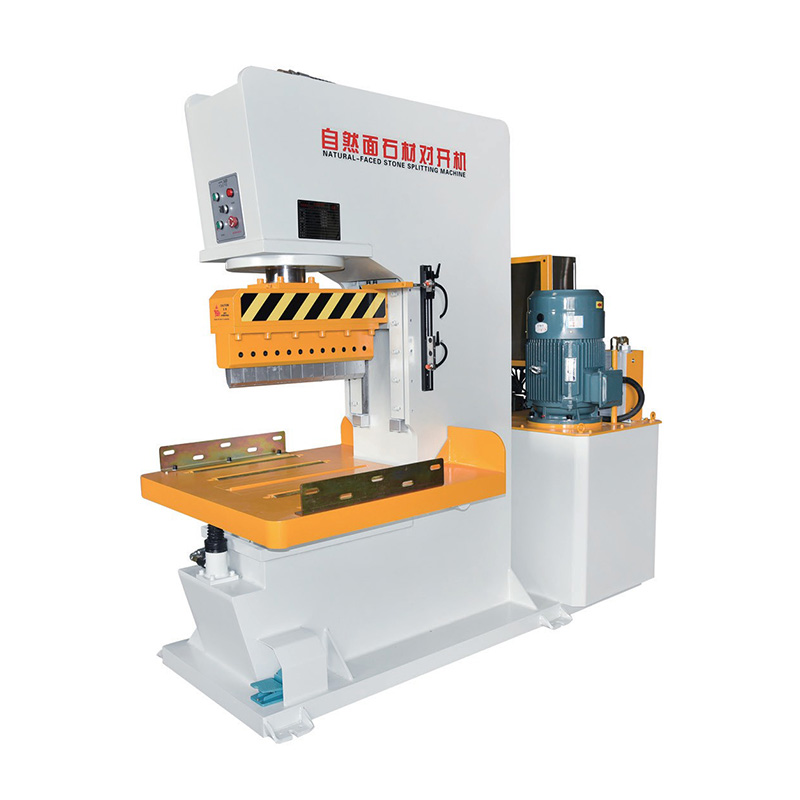
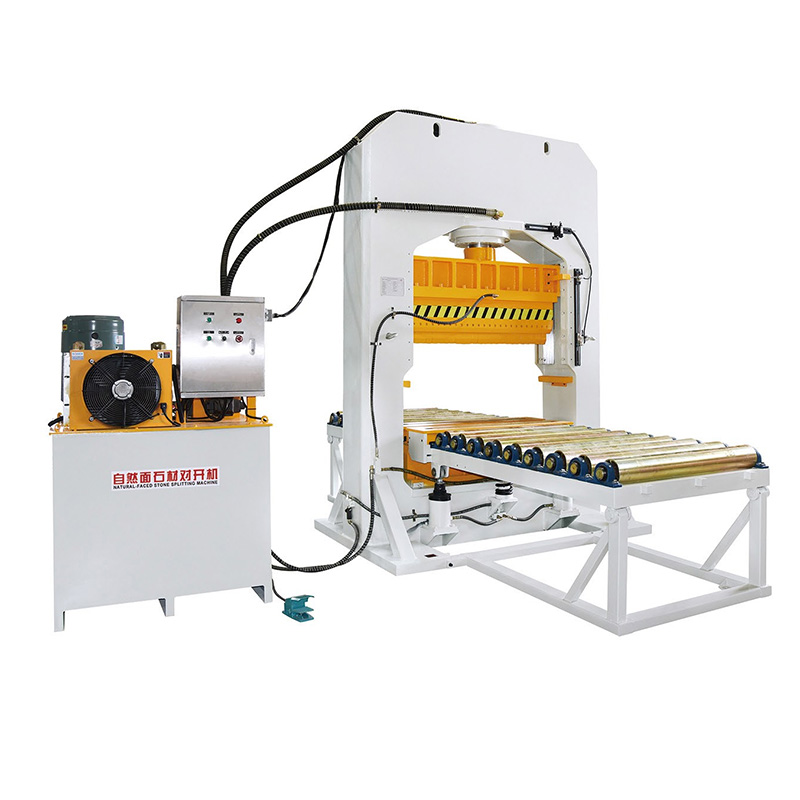
| Product display and size indication | |
A stone stamping machine is hydraulic stone-processing equipment that uses a shaped mould or die to form compatible natural stone into a selected decorative shape or pattern.
The stone blank is positioned on the working table beneath the mould. Hydraulic pressure is then applied through the tooling.
The mould controls the final shape or decorative result.
This makes the machine different from a conventional stone saw or basic stone splitter.
Typical products may include:
- Decorative paving stones
- Garden pavers
- Plaza stone
- Landscape stone
- Patterned stone pieces
- Decorative wall stone
- Rustic architectural pieces
- Geometric paving units
- Small natural-stone products
- Products made from suitable stone offcuts
For many stone factories, one of the most useful applications is turning smaller granite or marble pieces into additional saleable products.
Why Stone Stamping Is Different from Stone Splitting
Stone stamping and stone splitting both use high mechanical force, but they are designed for different results.
A stone splitter mainly creates a natural fracture.
A stone stamping machine mainly uses mould-based pressure to create a defined shape, decorative pattern or paving product.
| Feature | Stone Stamping Machine | Stone Splitting Machine |
|---|---|---|
| Main purpose | Create shapes or patterns | Create natural fractures |
| Main tooling | Mould or stamping die | Splitting blade or chisel |
| Finished appearance | Tool-defined shape or pattern | Natural split surface |
| Repeatability | More controlled by tooling | More naturally variable |
| Decorative products | Main application | Secondary application |
| Offcut processing | Strong application | Also possible |
For factories mainly interested in natural hydraulic splitting, Speedone’s stone splitting machine for granite and marble provides a broader explanation of the splitting process.
For building stone, cobblestones and other natural-fracture products, the stone splitter for granite and building stone focuses more strongly on conventional stone splitting.
This page focuses specifically on mould-based decorative stone stamping.
How Does a Hydraulic Stone Stamping Machine Work?
A hydraulic stone stamping machine converts hydraulic pressure into controlled pressing force.
A typical production cycle is:
Prepare Stone → Select Mould → Install Tooling → Position Stone → Align → Apply Pressure → Release → Inspect
The stone is first prepared to a suitable size.
This may involve cutting a slab into blanks or selecting suitable pieces left from another production process.
The required mould is then installed and aligned.
When the hydraulic cycle begins, the cylinder drives the mould toward the stone.
The tooling applies concentrated pressure according to its shape.
The final result depends on:
- Stone type
- Stone thickness
- Blank dimensions
- Natural cracks
- Stone grain
- Mould geometry
- Mould condition
- Hydraulic force
- Machine alignment
- Stone positioning
This is why buyers should not select a stone stamping machine based only on maximum tonnage.
Why Use Hydraulic Power for Stone Stamping?
Granite, marble and other natural stone require substantial force for pressing and forming.
A hydraulic system can apply this force progressively and in a controlled manner.
A typical hydraulic system may include:
- Hydraulic pump
- Hydraulic cylinder
- Oil reservoir
- Control valves
- Pressure regulation components
- Hydraulic hoses
- Electric motor
- Machine controls
The frame is equally important.
It must carry repeated pressing loads while keeping the mould and workpiece correctly aligned.
Hydraulic force should therefore always be considered together with machine structure, mould design and workpiece size.
Stone Stamping Machine with Interchangeable Moulds
Interchangeable moulds are one of the most important features of this machine category.
The hydraulic system provides the pressure, but the mould determines what the factory can actually produce.
Changing the mould can allow one machine to make several different products.
This can be useful for factories that want to serve more than one paving or decorative market.
Before buying, consider:
- What products do you want to manufacture?
- How many mould designs do you need?
- Are standard moulds suitable?
- Do you need customized moulds?
- How often will the mould be changed?
- What blank sizes will be processed?
- What stone thicknesses will be used?
A factory making one standard garden paver has very different tooling needs from a supplier offering several decorative patterns.
What Can a Stone Stamping Machine Produce?
The exact product depends mainly on the available mould.
Possible products include:
- Geometric stone pavers
- Garden paving stones
- Patterned paving units
- Landscape stones
- Decorative stone pieces
- Small architectural elements
- Rustic stone products
- Special paving shapes
Two factories can use similar hydraulic machines but manufacture completely different products because their mould systems are different.
Stone Stamping Machine for Granite
Granite is one of the main materials used with hydraulic stone stamping equipment.
Suitable granite strips, pieces and offcuts may be processed into smaller decorative or paving products when the machine and mould are correctly matched.
Potential granite products include:
- Garden pavers
- Plaza paving
- Landscape stone
- Decorative blocks
- Small paving units
- Patterned granite products
Granite is dense and can require high processing force.
Important factors include:
- Granite type
- Stone thickness
- Blank width
- Grain structure
- Natural cracks
- Mould geometry
Testing representative material can help confirm a suitable production setup.
 |
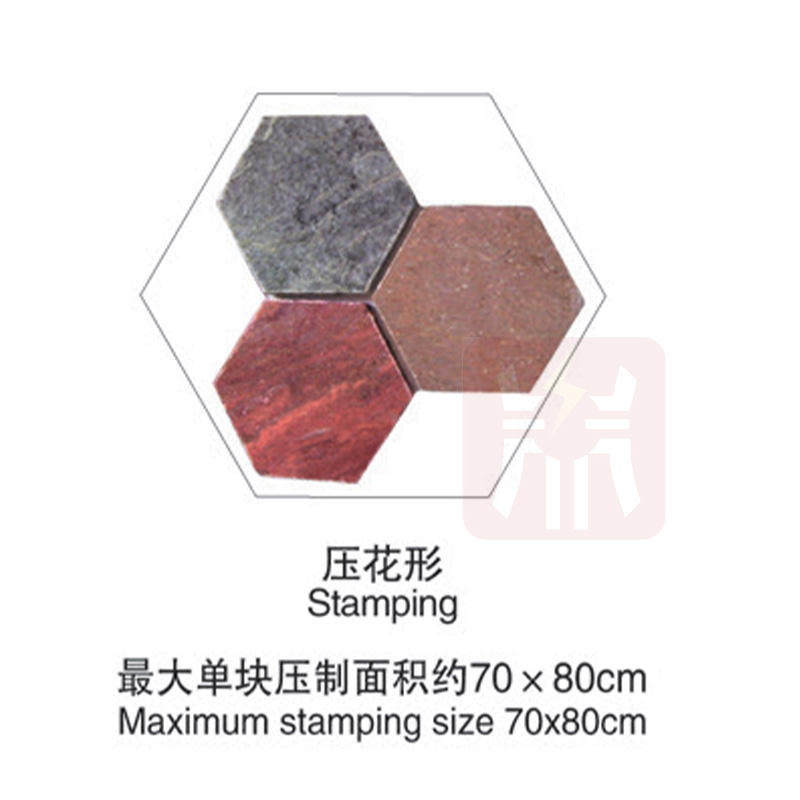 |
| Product parameters and finished product display | |
Stone Stamping Machine for Marble
Marble can also be processed with suitable stone stamping equipment.
Natural veins and internal structure can influence how the stone behaves under pressure.
Possible marble products include:
- Decorative pavers
- Garden stone
- Patterned marble pieces
- Architectural accents
- Small decorative blocks
Factories that need both natural splitting and stamping can also review Speedone’s marble splitting machine for split face and stamping.
The difference is simple:
Marble Splitting Machine: natural split-face production first, decorative stamping second.
Stone Stamping Machine: mould pressing first, decorative shapes, paving products and offcut processing.
Stone Stamping Machine for Paving Stones
Paving stone is one of the strongest applications for this type of machine.
Stone slabs or offcuts can first be prepared into blanks with suitable dimensions.
The blank is then placed below the selected mould and pressed into the required finished shape.
A typical workflow is:
Slab Cutting → Blank Preparation → Stamping → Inspection → Sorting → Packing
Typical applications include:
- Garden paths
- Courtyards
- Villa gardens
- Public plazas
- Pedestrian areas
- Commercial landscapes
- Decorative exterior spaces
For factories with a steady supply of suitable offcuts, paving products can become an additional production category.
Stone Stamping Machine for Decorative Stone
Decorative natural stone does not always need a polished finish.
In landscape and architectural applications, shape, texture and visual character may be more important.
A stone stamping machine allows the mould to control more of the final geometry than natural splitting alone.
Possible products include:
- Decorative paving
- Patterned stone pieces
- Garden accents
- Exterior architectural stone
- Rustic stone products
- Decorative floor pieces
- Small facade components
Stone Stamping Machine for Stone Offcut Recycling
Stone offcut reuse is one of the most commercially interesting applications for a stamping machine.
Granite and marble fabrication can leave many pieces that are too small for another full slab or countertop.
Some of these pieces may still have enough size and structural quality for secondary production.
A suitable stone stamping machine may turn selected offcuts into:
- Paving stones
- Garden stone
- Decorative pieces
- Small flooring units
- Landscape products
- Patterned stone
- Architectural accents
This does not mean every piece of stone waste can be reused.
The offcut must still have suitable dimensions, strength and compatibility with the selected mould.
Stone Stamping Machine vs. Marble Splitting & Stamping Machine
| Feature | Stone Stamping Machine | Marble Splitting & Stamping Machine |
|---|---|---|
| Main process | Mould pressing | Splitting plus stamping |
| Main material focus | Granite, marble and compatible stone | Mainly marble and compatible stone |
| Main product focus | Pavers and decorative products | Split face plus decorative products |
| Mould flexibility | Core feature | Secondary feature |
| Offcut reuse | Strong focus | Important application |
| Natural split face | Optional on suitable configuration | Main function |
Stone Stamping Machine vs. Stone Cutting Machine
Stone cutting and stone stamping perform different operations.
A cutting machine removes material with a blade, wire or abrasive tool.
A stamping machine uses a mould and hydraulic pressure to create the finished shape.
| Requirement | Stone Stamping Machine | Stone Cutting Machine |
|---|---|---|
| Decorative mould shape | Yes | No |
| Straight precision cutting | Not primary purpose | Yes |
| Paver forming | Strong application | Usually blank preparation only |
| Interchangeable patterns | Available with suitable moulds | Not typical |
| Offcut conversion | Strong application | Can prepare blanks |
In many factories, the two machines work together.
The saw prepares the blank. The stamping machine creates the final decorative form.
Stone Stamping Machine vs. Stone Embossing Machine
The terms stone stamping and stone embossing are sometimes used for similar equipment.
However, buyers should focus on the required finished result rather than terminology alone.
Stamping normally refers to mould-based pressing or forming.
Embossing usually emphasizes the raised, recessed or textured pattern created on the stone surface.
For custom products, a drawing, photo or physical sample can help the supplier understand the required tooling.
Can a Stone Stamping Machine Also Split Stone?
Some hydraulic machines can support more than one process.
Depending on the model and approved tooling, a machine may be able to perform both stamping and splitting.
The stamping mould may be replaced with an approved splitting tool.
However, this function must be confirmed for the specific machine.
A hydraulic frame should not automatically be assumed suitable for every type of stone processing.
Main Components of a Stone Stamping Machine
Heavy-Duty Frame
The frame carries the forces created during hydraulic pressing.
Good rigidity helps keep the mould and stone properly aligned.
Hydraulic Cylinder
The cylinder converts hydraulic pressure into the movement used for stamping.
Hydraulic Power Unit
The power unit supplies pressure to the hydraulic cylinder.
Stamping Mould
The mould defines the finished stone shape or decorative pattern.
Mould Holder
The mould holder secures the tooling and keeps it aligned with the workpiece.
Working Table
The stone blank is placed and positioned on the working table.
Control System
The control system allows the operator to manage the machine cycle.
How to Change Stone Stamping Moulds
The exact procedure depends on the machine configuration.
A typical sequence may be:
Stop Machine → Isolate Power → Remove Existing Mould → Inspect Holder → Install New Approved Mould → Secure Tooling → Align → Test → Start Production
Only approved moulds should be installed.
Incorrect or improvised tooling can create serious machine and safety risks because of the high forces involved.
How to Use a Stone Stamping Machine
1. Select the Stone
Confirm that the material is suitable for the machine and selected mould.
2. Inspect the Workpiece
Check for large cracks, defects or damaged areas.
3. Select the Mould
Choose the approved mould for the required product.
4. Inspect the Machine
Check the hydraulic system, frame, mould holder, controls and safety guards.
5. Position the Stone
Place the prepared blank on the working table.
6. Align the Mould
Correct alignment helps create more consistent products.
7. Clear the Working Area
Keep hands and other personnel away from the stamping zone.
8. Start the Hydraulic Cycle
Operate the machine according to the approved procedure.
9. Allow the Cycle to Finish
Do not move the workpiece while the machine is under load.
10. Inspect the Product
Check the finished shape, pattern, cracking and dimensional consistency.
How to Choose the Right Stone Stamping Machine
1. Stone Material
Define whether the machine will mainly process granite, marble or another approved stone.
2. Blank Dimensions
Identify the maximum length, width and thickness of the material.
3. Finished Product
Define the product before selecting the machine.
A garden paver and a larger decorative block may need different working dimensions and moulds.
4. Mould Options
Check which standard designs are available.
5. Customized Moulds
If you have your own product design, confirm whether custom tooling can be manufactured.
6. Hydraulic Capacity
The required force depends on the stone type, workpiece dimensions and mould geometry.
7. Tool Change Efficiency
If several products are made each day, mould-change time can affect total output.
8. Production Volume
Estimate how many pieces must be produced per hour or shift.
9. Material Handling
Heavier blanks may require rollers or additional positioning equipment.
10. Maintenance
Check access to hydraulic components and availability of replacement moulds and wear parts.
11. Factory Layout
Allow enough space for loading, unloading, mould changes, product sorting and machine maintenance.
How Mould Design Affects the Finished Product
The mould is one of the most important parts of the complete stone stamping system.
Important design factors include:
- Overall product shape
- Edge geometry
- Pattern depth
- Contact area
- Mould material
- Stone thickness
- Release geometry
A deeper or more complex pattern can create different processing conditions from a simple paving mould.
For this reason, custom mould design should consider both the required product and the stone being processed.
Using a Stone Stamping Machine in a Stone Factory
A stamping machine should be considered as part of the complete factory workflow.
One possible production route is:
Slab Storage → Sawing → Main Product Fabrication → Offcut Sorting → Blank Preparation → Stamping → Product Sorting → Packing
This workflow can be particularly useful for factories that already process granite or marble slabs.
The main slab product remains the priority.
The stone stamping machine creates a second production route for suitable leftover material.
Handling Large Stone and Porcelain Panels
A stamping machine processes stone inside its working area. It is not designed to lift or transport full slabs.
For suitable large-format porcelain and stone panels, Speedone’s tile suction cup for large-format porcelain and stone can assist with compatible gripping and positioning tasks.
Material handling and stamping should remain separate parts of the factory workflow.
Stone Stamping and Countertop Fabrication
Countertop production can create many granite and marble offcuts.
Selected pieces may be suitable for secondary stamping into pavers or decorative products.
However, countertop installation requires completely different tools.
Once full granite or quartz sections are positioned at the jobsite, Speedone’s countertop seam tool for granite and quartz can assist with seam alignment.
For professional joint positioning, the Stone Pro seam setter for granite and quartz countertops belongs to this final installation stage.
Common Stone Stamping Problems
The Finished Shape Is Incomplete
Check the mould alignment, blank dimensions and material compatibility.
The Stone Cracks Outside the Intended Area
Natural cracks, veins or unsuitable orientation may affect the result.
The Pattern Depth Is Inconsistent
Check blank thickness, stone positioning and approved machine settings.
The Mould Wears Unevenly
Inspect tool alignment and contact conditions.
Do not continue using damaged moulds.
Finished Products Vary Too Much
Natural stone always has some variation.
Excessive variation may come from inconsistent blanks, worn tooling or poor alignment.
Mould Changes Take Too Long
Consider grouping similar production runs together to reduce unnecessary tool changes.
Production Output Is Too Low
Review the complete production cycle.
Blank preparation, loading, alignment, mould changes and sorting may be the real bottlenecks.
Stone Stamping Machine Maintenance
Stone stamping machines operate under repeated hydraulic loads and need regular inspection.
Important maintenance areas include:
- Hydraulic oil
- Hydraulic pump
- Hydraulic cylinder
- Hoses and connections
- Pressure controls
- Stamping moulds
- Mould holders
- Working table
- Machine frame
- Fasteners
- Electrical controls
- Safety guards
- Emergency systems
Keep moulds clean and inspect them regularly for wear or damage.
Stone dust and fragments should not interfere with tooling alignment.
Hydraulic leaks should be repaired before production continues.
Stone Stamping Machine Safety Tips
- Only trained personnel should operate the machine.
- Inspect the machine before production.
- Keep hands away from the stamping area.
- Do not bypass safety guards.
- Use suitable equipment for heavy workpieces.
- Wear appropriate personal protective equipment.
- Keep unauthorized personnel away from the machine.
- Follow lockout procedures before changing moulds.
- Use only approved tooling.
- Do not exceed approved workpiece dimensions.
- Do not exceed approved hydraulic settings.
- Do not use damaged moulds.
- Keep the working area clean.
Natural stone can crack unpredictably, so operators should also consider possible fragments during processing.
Who Uses Stone Stamping Machines?
- Granite factories
- Marble factories
- Countertop fabrication shops
- Stone offcut recycling operations
- Paving stone producers
- Landscape stone manufacturers
- Decorative stone factories
- Architectural stone companies
- Natural stone processors
- Building-material manufacturers
- Stone equipment distributors
Questions to Ask Before Buying a Stone Stamping Machine
- What stone materials will be processed?
- What are the maximum blank dimensions?
- What is the typical stone thickness?
- What finished products do you want to manufacture?
- How many mould designs are required?
- Do you need custom moulds?
- Will the machine process factory offcuts?
- Do you also need splitting capability?
- What production output is required?
- How will the blanks be prepared?
- How will the material be loaded?
- What electrical supply is available?
- How much factory space is available?
This information helps match the machine, mould package and hydraulic capacity to the actual production requirement.
Why Choose Speedone?
Speedone supplies professional equipment and tools for stone processing, handling and installation workflows.
The value of a stone stamping machine should not be judged only by maximum hydraulic force.
A more useful selection process is:
Stone Material → Blank Size → Finished Product → Mould Design → Hydraulic Capacity → Tool Change → Production Volume → Material Handling
For factories with suitable slab and tile offcuts, stamping can create an additional way to turn existing stone into saleable products.
Different approved moulds can allow one hydraulic platform to support several product designs.
Frequently Asked Questions
What is a stone stamping machine?
A stone stamping machine is hydraulic equipment that uses shaped moulds or dies to press compatible natural stone into selected decorative forms, patterns or paving products.
What materials can a stone stamping machine process?
Depending on the machine configuration, suitable equipment may process compatible granite, marble, limestone and other natural stone.
Can a stone stamping machine make paving stones?
Yes. Decorative paving and landscape stone are important applications for hydraulic stone stamping equipment.
Can different moulds be used on the same machine?
Machines designed for interchangeable tooling can use different approved moulds to manufacture several stone shapes and patterns.
Can custom stone stamping moulds be made?
Custom moulds may be possible depending on the machine and required product. Buyers should provide drawings, dimensions or product samples when discussing custom tooling.
Can a stone stamping machine process granite offcuts?
Suitable granite offcuts may be processed when their dimensions, condition and material characteristics match the machine and mould.
Can marble be processed with a stone stamping machine?
Suitable marble pieces can be processed on compatible machines, but natural veins and fractures should be considered.
What is the difference between a stone stamping machine and a stone splitter?
A stone stamping machine uses moulds to create controlled shapes or patterns, while a stone splitter mainly creates a natural fracture.
Can one machine perform both stamping and splitting?
Certain multi-function hydraulic machines can support both operations when equipped with suitable approved tooling. Exact functions depend on the machine configuration.
Is stone stamping the same as stone embossing?
The terms can overlap. Stamping generally refers to mould-based forming, while embossing often emphasizes the decorative surface pattern.
Can a stone stamping machine help reuse stone offcuts?
Suitable slab and tile offcuts may be converted into paving, landscape or decorative products when they meet the machine and mould requirements.
What should I consider when buying a stone stamping machine?
Consider stone type, blank dimensions, finished products, mould options, hydraulic capacity, splitting requirements, mould-change efficiency, production volume, maintenance and factory layout.