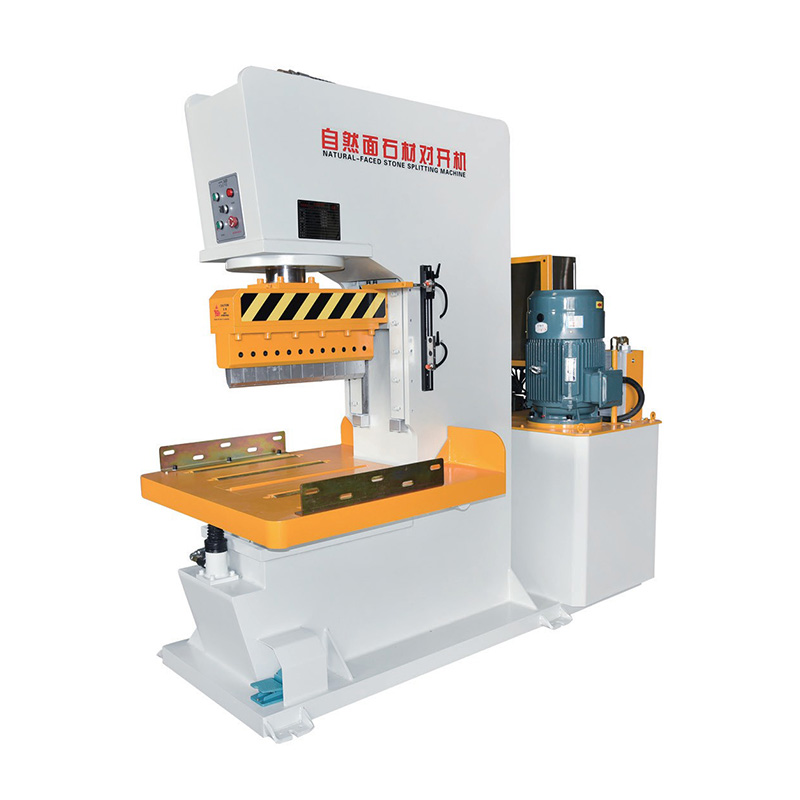
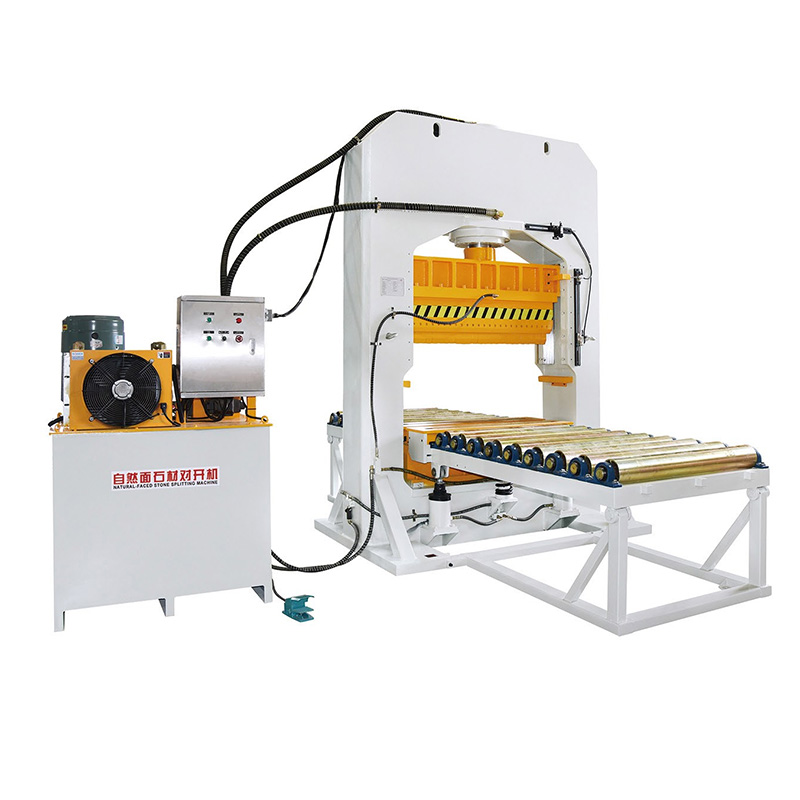
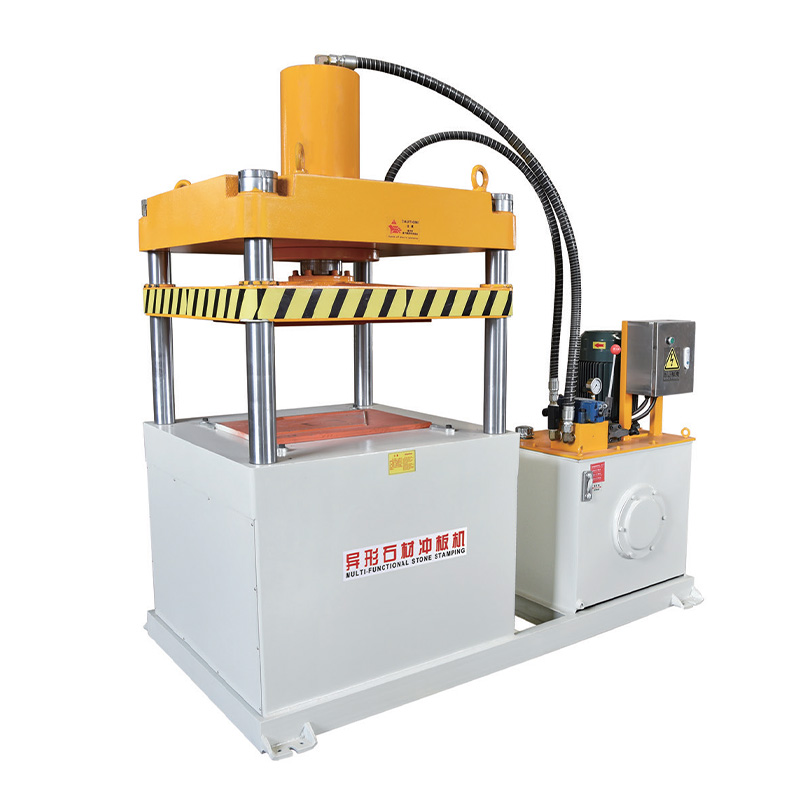
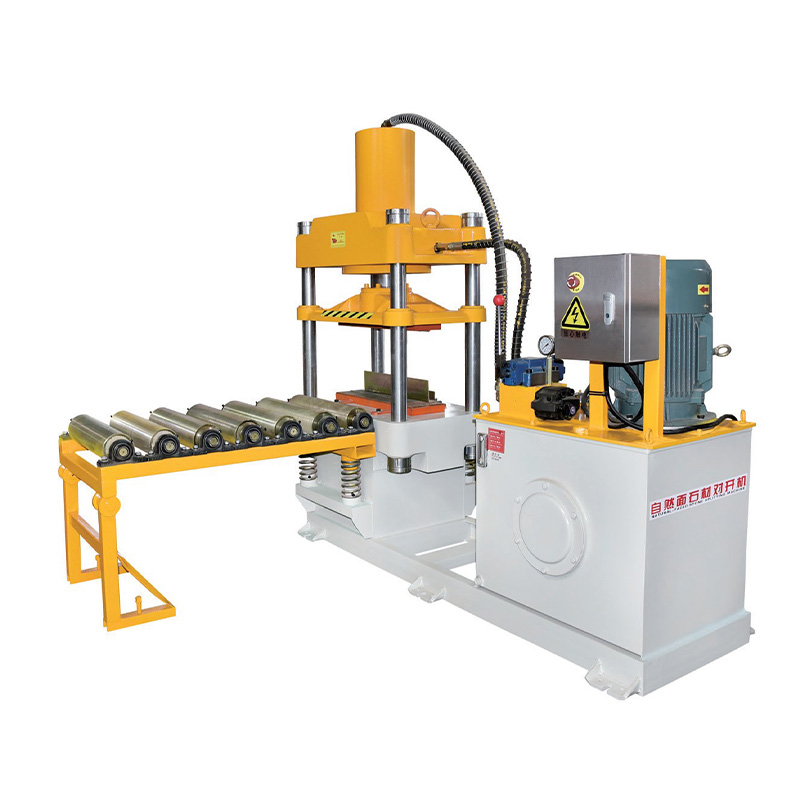
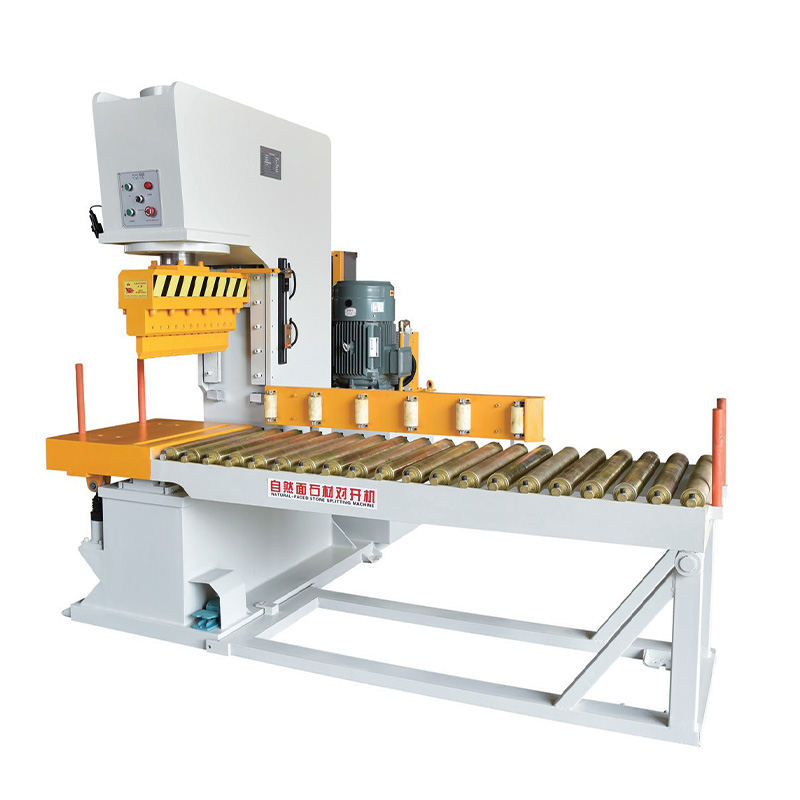
Stone Splitter for Granite & Building Stone | Speedone
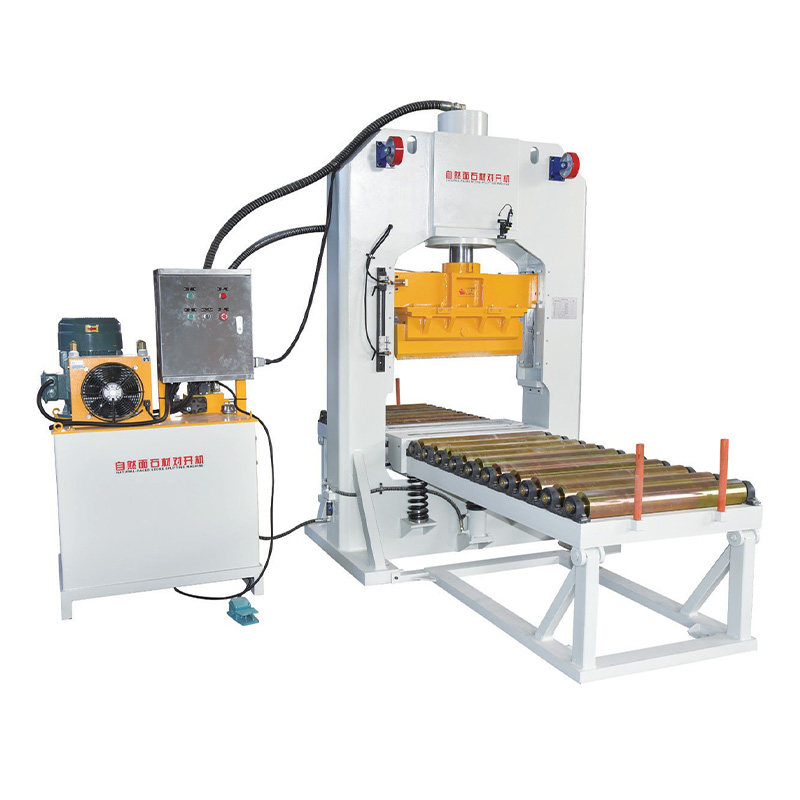
- Weight : 3.8T
- Pressure : 200T
- Power : 11KW
Product Description
Hydraulic Stone Splitter for Granite, Paving & Building Stone
What Is a Stone Splitter?
|
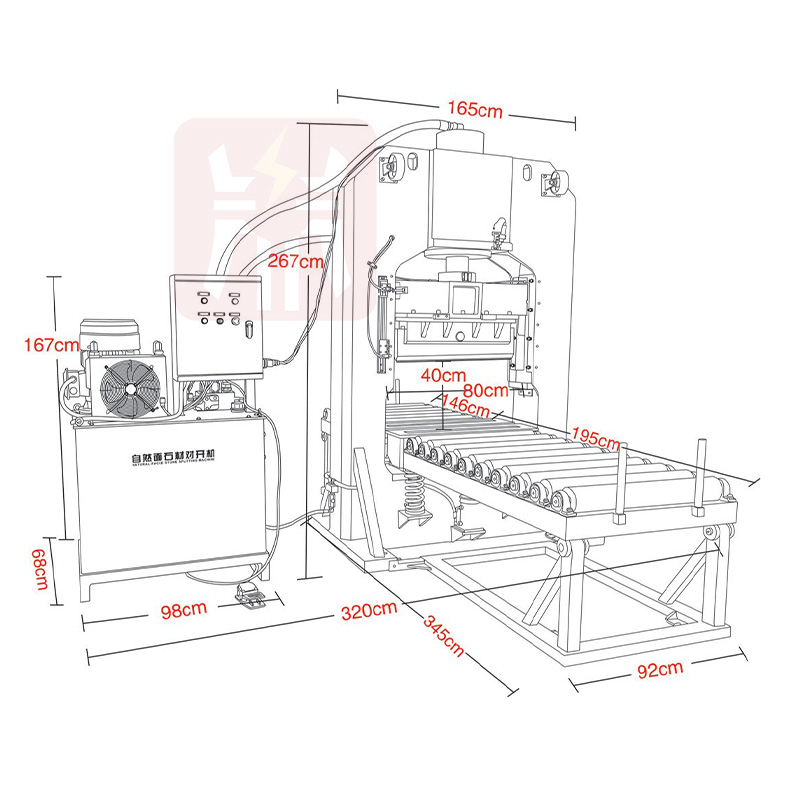 |
| Product display and size indication | |
A stone splitter is an industrial machine used to divide natural stone by applying concentrated mechanical or hydraulic pressure.
The stone is placed between splitting tools. Pressure is then applied until the material fractures along a controlled or naturally favorable line.
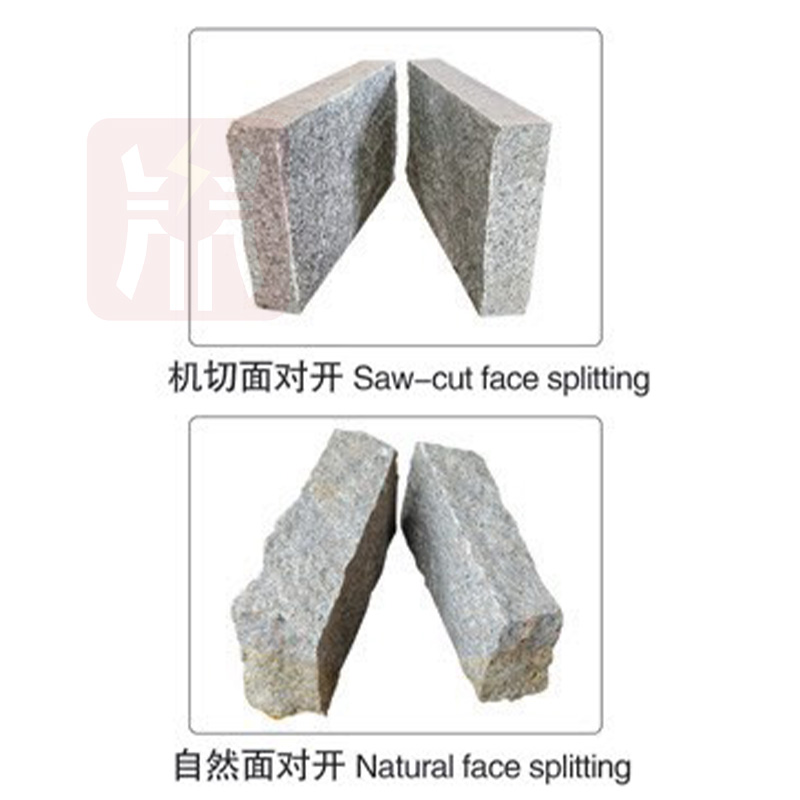
Unlike a diamond saw, a stone splitter does not normally remove material through cutting. Instead, it separates the stone and creates a natural textured surface.
This makes stone splitters especially useful for products where a natural split face is part of the finished appearance.
Typical applications include:
- Building stone
- Paving stones
- Cobblestones
- Wall stone
- Landscape stone
- Curbstones
- Split-face veneer
- Flagstone
- Masonry stone
- Architectural stone
- Natural stone blocks
For a stone factory, a splitter is not simply a machine for breaking rock. It is production equipment used to manufacture saleable stone products with a natural finish.
Stone Splitter vs. Stone Splitting Machine
The terms stone splitter and stone splitting machine are often used for the same type of industrial equipment.
The difference is mainly in how buyers search.
A customer searching for a stone splitter is often looking directly for a machine, supplier or suitable model.
A customer searching for a stone splitting machine may also be researching machine structure, hydraulic systems and complete production solutions.
| Search Term | Typical Buyer Intent |
|---|---|
| Stone Splitter | Direct machine or supplier search |
| Hydraulic Stone Splitter | Industrial hydraulic splitting equipment |
| Building Stone Splitter | Wall and building stone production |
| Paving Stone Splitter | Pavers and cobblestone production |
| Stone Splitting Machine | Broader machinery and process research |
| Stone Block Splitter | Larger stone block processing |
For a broader explanation of machine structure and hydraulic stone processing, see Speedone’s stone splitting machine for granite and marble.
How Does a Hydraulic Stone Splitter Work?
A hydraulic stone splitter uses hydraulic pressure to generate controlled force through the splitting tools.
A typical operating cycle is:
Load → Position → Align → Apply Pressure → Split → Unload → Inspect
The stone is first placed in the working area and aligned with the upper and lower splitting tools.
The hydraulic system then applies pressure gradually. The tools concentrate this force along a narrow area of the stone.
When the internal stress becomes greater than the stone can withstand, the material fractures.
The final result depends on several factors:
- Stone grain
- Natural bedding direction
- Existing cracks
- Workpiece width
- Stone thickness
- Tool geometry
- Tool alignment
- Hydraulic force
- Stone positioning
This is why successful stone splitting is not simply about applying maximum pressure. The material, tooling and positioning all matter.
Why Use a Hydraulic Stone Splitter?
Natural stone requires substantial force to split, especially when processing granite and larger blocks.
Hydraulic systems are widely used because they can apply force progressively and in a controlled way.
Compared with repeated manual hammering, hydraulic splitting can provide a more structured industrial process.
A hydraulic splitter can also be combined with:
- Roller tables
- Conveyors
- Stone manipulators
- Loading equipment
- Sorting stations
- Automated controls
For higher-output factories, the complete workflow can be just as important as the speed of the hydraulic cycle.
 |
 |
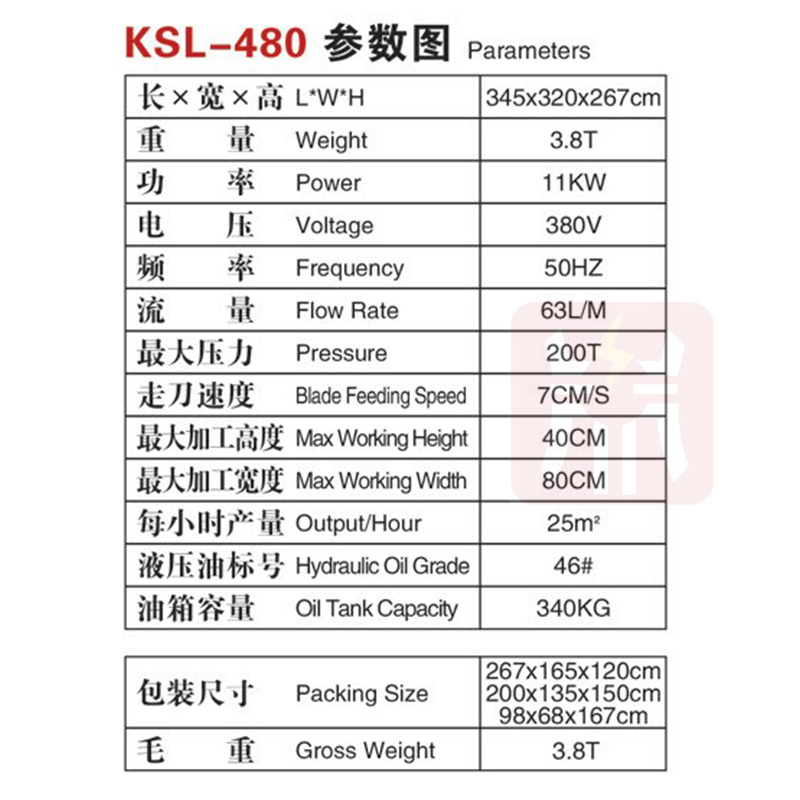
| Product parameters | |
Main Components of a Stone Splitter
Heavy-Duty Machine Frame
The machine frame absorbs the force generated during splitting and keeps the splitting tools aligned.
A strong frame can influence:
- Machine stability
- Tool alignment
- Working opening
- Long-term durability
- Maintenance access
Hydraulic Power Unit
The hydraulic system supplies the force needed for splitting.
Depending on the machine, it may include:
- Electric motor
- Hydraulic pump
- Oil reservoir
- Hydraulic cylinder
- Control valves
- Pressure controls
- Hydraulic hoses
- Cooling components
Splitting Tools
The splitting tools transfer the hydraulic force directly to the stone.
Depending on machine design, these parts may be called splitting blades, knives, chisels or teeth.
Tool condition and alignment can have a direct effect on split quality.
Working Table
The working table supports the stone during loading and splitting.
Possible configurations include:
- Fixed tables
- Roller tables
- Conveyor tables
- Adjustable supports
- Material-positioning systems
Operator Controls
Controls allow the operator to position the stone and start the splitting cycle.
Depending on the model, the machine may use manual, semi-automatic or automated controls.
Stone Splitter for Granite
Granite is one of the main materials processed with heavy-duty hydraulic stone splitters.
Because granite is dense and strong, the machine must match the actual stone size and material characteristics.
Common granite products include:
- Paving stone
- Cobblestones
- Wall stone
- Landscape blocks
- Curbstones
- Building stone
- Architectural stone
- Split-face veneer
Different granite varieties can behave differently during splitting. Grain structure, natural cracks and thickness can all affect the fracture path.
Factories processing several granite types should test representative material before finalizing the machine specification.
Stone Splitter for Building Stone
Building stone is one of the most common commercial applications for hydraulic splitting.
The factory may start with rough stone or pre-sawn material and use the splitter to create a natural architectural face.
Typical products include:
- Masonry stone
- Retaining-wall stone
- Rustic walling stone
- Stone veneer
- Garden stone
- Landscape blocks
- Architectural cladding
One important rule is:
Choose the machine according to the finished product, not only the raw stone.
A machine optimized for wall stone can require a different working opening, tooling and feeding method from a splitter designed for larger blocks.
Stone Splitter for Paving Stone
Paving stone production often needs more repeatable finished dimensions.
The raw stone may first be cut into strips or blocks and then split into smaller paving pieces.
A typical production workflow is:
Saw Block → Produce Strip → Split Pavers → Inspect → Sort → Palletize
A paving stone splitter can be used for:
- Granite pavers
- Natural stone cubes
- Cobblestones
- Small landscape blocks
- Natural paving products
For higher-volume production, feeding and discharge systems should be planned together with the splitter.
Stone Splitter for Cobblestones
Cobblestone production usually involves repeated splitting of relatively small pieces.
This creates a different production requirement from splitting large building blocks.
A cobblestone factory may benefit from:
- Fast feeding
- Convenient operator access
- Repeatable stone positioning
- Efficient discharge
- Sorting areas
- Consistent input sizes
The most powerful splitter is not automatically the most productive. Productivity depends on how efficiently the stone moves through the entire process.
Stone Splitter for Wall Stone
Wall stone often benefits from the natural rough texture created by splitting.
This appearance can be used directly in many architectural and landscape applications.
Typical uses include:
- Garden walls
- Retaining walls
- Building facades
- Rustic masonry
- Residential landscaping
- Commercial landscape projects
The stone may be processed from irregular material or from pre-cut blocks, depending on the required final dimensions.
Stone Splitter for Limestone
Limestone can range from relatively soft material to much denser stone.
Suitable hydraulic splitters can produce:
- Limestone wall stone
- Landscape pieces
- Stone veneer
- Paving stone
- Masonry units
Machine selection should consider actual stone density, width, thickness and finished-product requirements rather than material name alone.
Stone Splitter for Sandstone
Sandstone often contains bedding layers that influence how it fractures.
Correct orientation can make the splitting result more predictable.
Important factors include:
- Bedding direction
- Stone thickness
- Finished dimensions
- Desired split face
- Natural cracks
The splitter provides the force, but the stone’s natural structure still influences the final fracture.
Stone Splitter for Large Stone Blocks
Large blocks require a different machine configuration from small paving pieces.
The splitter must provide enough:
- Working width
- Working height
- Splitting force
- Frame rigidity
- Loading access
Large blocks also create more demanding handling requirements.
Factories may need:
- Heavy-duty conveyors
- Roller tables
- Stone manipulators
- Forklifts
- Overhead cranes
- Other suitable lifting equipment
It is not enough for the block to fit inside the splitter. The factory must also be able to load, position and remove it efficiently.
Stone Splitter vs. Diamond Stone Saw
| Feature | Stone Splitter | Diamond Saw |
|---|---|---|
| Processing method | Controlled fracture | Abrasive cutting |
| Surface finish | Natural split | Smooth sawn surface |
| Material loss | Limited fracture loss | Blade creates kerf |
| Dimensional precision | Lower | Higher |
| Typical products | Pavers, wall stone, building stone | Slabs, countertops, precision pieces |
Neither process is always better.
Many stone factories use both. Stone may first be sawn to controlled dimensions and then split to create a natural finished face.
Stone Splitter vs. Hydraulic Rock Splitter
A stone splitter used in a factory should not be confused with a portable hydraulic rock splitter.
| Equipment | Working Method | Typical Application |
|---|---|---|
| Industrial Stone Splitter | Stone positioned between splitting tools | Factory stone production |
| Hydraulic Rock Splitter | Expanding wedge inserted into drilled hole | Quarrying, excavation and demolition |
If your goal is to manufacture pavers, cobblestones, wall stone or other finished natural stone products, a stationary industrial stone splitter is normally the relevant machine.
Natural Split Stone vs. Sawn Stone
Natural split stone has an irregular, textured surface created by fracture.
Sawn stone has a flatter and more controlled surface produced by cutting equipment.
Natural split finishes are commonly used for:
- Rustic architecture
- Landscape walls
- Traditional paving
- Masonry
- Split-face cladding
- Decorative natural stone
Sawn surfaces are usually more suitable where precise dimensions and smooth finishes are required.
How Stone Size Affects Splitter Selection
Stone dimensions directly affect the machine you need.
Before requesting a quotation, prepare at least the following information:
- Maximum stone width
- Maximum stone height
- Minimum finished product size
- Typical workpiece weight
- Stone type
A splitter designed for thin veneer material can be very different from a machine intended for large building blocks.
How Much Hydraulic Force Does a Stone Splitter Need?
There is no universal hydraulic force suitable for every factory.
Required force depends on:
- Stone strength
- Workpiece width
- Stone thickness
- Geological structure
- Tool geometry
- Finished product
- Machine configuration
A more practical selection process is:
Stone Material → Workpiece Size → Finished Product → Required Force → Machine Configuration
Simply choosing the machine with the highest hydraulic tonnage can lead to unnecessary investment.
Standalone Stone Splitter vs. Complete Splitting Line
| Factor | Standalone Splitter | Complete Splitting Line |
|---|---|---|
| System complexity | Lower | Higher |
| Factory space | Lower | Higher |
| Material feeding | More manual | Can be integrated |
| Product flexibility | Usually higher | Optimized for selected products |
| Production potential | Application dependent | Higher-volume potential |
A standalone stone splitter can be suitable for flexible or lower-volume production.
A complete line may be more suitable for repeated, high-volume manufacturing.
Why Material Handling Matters Around a Stone Splitter
The hydraulic cycle is only one part of production.
Workers still need to:
Load → Align → Split → Remove → Sort → Reposition
If moving the stone takes too much time, overall output can remain low even when the machine itself is fast.
Material-handling equipment may include:
- Roller conveyors
- Powered conveyors
- Stone manipulators
- Forklifts
- Stone carts
- Cranes
- Stone lifting equipment
For larger workpieces, plan the material route before installing the machine.
Handling Stone, Porcelain and Glass in the Same Factory
Some stone factories also handle slabs, porcelain panels and glass.
These materials require separate handling tools.
For compatible large porcelain and stone panels, Speedone’s tile suction cup for large-format porcelain and stone can assist with suitable gripping and positioning tasks.
For glazing applications, Speedone’s glass suction cups for vacuum lifting and handling provide a dedicated solution for compatible glass panels.
A stone splitter should not be used as slab-lifting or glass-handling equipment.
Stone Splitter and Countertop Production
A stone splitter is generally not the main machine used for precision granite or quartz countertop fabrication.
Countertop production normally involves accurate cutting, CNC processing, edge finishing, polishing and installation.
Stone splitters are more closely associated with products that require a fractured natural surface.
After granite or quartz countertop sections are fabricated and positioned, Speedone’s countertop seam tool for granite and quartz can be used for joint alignment.
For related precision installation work, the Stone Pro seam setter for granite and quartz countertops provides another dedicated solution.
Stone Products in Interior Installation
Stone manufacturers and distributors often serve kitchen, bathroom and interior-construction customers.
At the installation stage, other specialized tools may be required.
For example, wall-mounted cabinets need temporary support while they are positioned and secured.
Speedone’s cabinet support tool for wall cabinet installation is designed for that separate task.
How to Operate a Stone Splitter
The exact operating procedure depends on the machine model, but a typical process includes the following steps.
1. Inspect the Stone
Check for major cracks, loose sections and visible defects.
2. Confirm Machine Capacity
Make sure the material and dimensions are within the machine’s approved range.
3. Inspect the Splitter
Check the splitting tools, hydraulic system, guards, controls and working table.
4. Load the Stone
Use suitable material-handling equipment when the stone cannot be moved safely by hand.
5. Determine the Splitting Line
Position the workpiece according to the required finished product.
6. Align the Splitting Tools
Make sure the tools contact the intended splitting area.
7. Clear the Working Area
Keep hands and personnel away from the splitting zone.
8. Start the Splitting Cycle
Apply hydraulic pressure using the approved machine controls.
9. Allow the Stone to Separate
Do not reposition material while the machine is under load.
10. Remove and Inspect the Product
Unload the stone only after the machine reaches a safe condition.
Check the split surface and dimensions before continuing production.
How to Choose the Right Stone Splitter
1. Stone Type
Identify whether you mainly process granite, limestone, sandstone, marble or another natural stone.
2. Finished Product
This is one of the most important factors.
A paver factory and a wall-stone factory may require very different machines.
3. Maximum Stone Width
The working opening must accommodate your widest workpieces.
4. Maximum Stone Height
Stone thickness affects both working clearance and the required splitting force.
5. Splitting Force
Select hydraulic capacity according to the actual stone and workpiece size.
6. Splitting Tool Design
The splitting tools should match the machine and the products being manufactured.
7. Material Feeding
Consider whether the stone will be loaded manually, on rollers, by conveyor or with a manipulator.
8. Production Volume
A custom stone workshop has different needs from a high-volume paving factory.
9. Controls and Automation
Compare manual, semi-automatic and automated options according to the required workflow.
10. Factory Layout
Allow enough room for material storage, loading, splitting, sorting and machine maintenance.
Questions to Ask Before Buying a Stone Splitter
Before requesting a quotation, prepare the following information:
- What stone material do you process?
- What is the maximum stone width?
- What is the maximum stone height?
- What is the typical workpiece weight?
- What finished products do you manufacture?
- What finished dimensions are required?
- Is the input material rough or pre-sawn?
- What production output do you require?
- How will the stone be loaded?
- Do you need conveyors or manipulators?
- What electrical supply is available?
- How much factory space is available?
This information is more useful than asking for a machine based only on price or hydraulic tonnage.
Common Stone Splitter Problems
The Stone Splits in the Wrong Direction
Natural geological features can redirect the fracture.
Check stone orientation and splitting-tool position.
The Finished Pieces Are Too Irregular
Some variation is normal with natural splitting.
If the variation is excessive, check stone consistency, positioning and tool condition.
The Machine Requires Very High Pressure
Confirm that the workpiece is within the approved size and material range.
Do not exceed manufacturer-approved hydraulic settings.
The Splitting Tools Wear Unevenly
Inspect tool alignment and contact pattern.
Worn tools can affect both split quality and machine efficiency.
Production Output Is Lower Than Expected
Review the entire process.
The real bottleneck may be loading, alignment, unloading or sorting rather than the hydraulic cycle.
Large Blocks Are Difficult to Position
Consider adding roller tables, conveyors or dedicated stone-manipulation equipment.
Stone Splitter Maintenance
Stone splitters operate under repeated high loads, so preventive maintenance is important.
Regular inspection should include:
- Hydraulic oil
- Hydraulic pump
- Cylinders
- Hoses and fittings
- Pressure controls
- Splitting tools
- Tool guides
- Machine frame
- Working table
- Conveyors
- Electrical systems
- Safety guards
- Emergency controls
Hydraulic leaks should be repaired promptly.
Splitting tools should be inspected for wear and alignment.
Maintenance should follow the manufacturer’s recommended service intervals.
Stone Splitter Safety Tips
Hydraulic stone splitters generate very high force and should only be operated by trained personnel.
- Inspect the machine before production.
- Keep hands away from the splitting zone.
- Do not bypass guards or safety controls.
- Use suitable equipment to move heavy stone.
- Wear appropriate personal protective equipment.
- Keep unauthorized personnel away from the machine.
- Follow lockout procedures before maintenance.
- Do not exceed approved stone dimensions.
- Do not exceed approved hydraulic settings.
- Replace damaged hydraulic parts promptly.
- Keep the working area clean.
Stone can release chips and fragments during splitting, so the work area should be organized with this risk in mind.
Who Uses Stone Splitters?
- Granite factories
- Natural stone processors
- Building stone manufacturers
- Paving stone factories
- Cobblestone producers
- Landscape stone suppliers
- Masonry stone manufacturers
- Stone veneer producers
- Quarry processing facilities
- Architectural stone companies
- Stone equipment distributors
Why Choose Speedone?
Speedone supplies professional equipment and tools for stone processing, material handling and installation workflows.
When selecting a stone splitter, the machine should be considered as part of the complete production process rather than simply as a hydraulic press.
A practical selection sequence is:
Stone Material → Input Size → Finished Product → Required Force → Tool Configuration → Feeding Method → Production Volume → Factory Layout
For paving stones and cobblestones, production speed and feeding can be especially important.
For larger building blocks, working opening and material handling may become the main priorities.
Frequently Asked Questions
What is a stone splitter?
A stone splitter is industrial equipment that applies concentrated mechanical or hydraulic pressure to divide natural stone into smaller pieces, usually creating a natural textured split surface.
What is a hydraulic stone splitter used for?
Hydraulic stone splitters can be used to produce building stone, paving stones, wall stone, cobblestones, landscape stone, curbstones and other natural split products.
Can a stone splitter split granite?
Yes. Suitable heavy-duty stone splitters can process granite when the machine is correctly selected for the stone dimensions, strength and intended product.
Can a stone splitter produce paving stones?
Yes. Paving stone and cobblestone production are common industrial applications for hydraulic stone splitting equipment.
What is a building stone splitter?
A building stone splitter is a hydraulic machine configured to produce wall stone, masonry pieces, landscape stone and similar natural split products.
What is the difference between a stone splitter and a stone cutting machine?
A stone splitter fractures the material using concentrated pressure. A stone cutting machine removes material using a blade, wire or abrasive process.
What is the difference between a stone splitter and a hydraulic rock splitter?
A stationary industrial stone splitter processes stone between splitting tools. Hydraulic rock splitters used in quarrying or demolition normally use wedges inserted into drilled holes.
Does a stone splitter create a smooth surface?
Normally no. One of the main purposes of stone splitting is to create a natural and irregular split-face texture.
How much hydraulic force does a stone splitter need?
The required force depends on stone type, width, thickness, geological structure, tooling and the finished product. Machine selection should be based on actual workpieces.
Can a stone splitter process irregular stone?
Some machines can process irregular stone, but material positioning and tool contact become more important. The machine must suit the actual workpiece.
Can a stone splitter be used in an automated production line?
Yes. Suitable machines can be integrated with conveyors, manipulators, sorting systems and automated controls.
What should I look for when buying a stone splitter?
Check stone type, maximum workpiece dimensions, finished product, required force, working opening, splitting-tool design, feeding method, production target, maintenance and factory layout.