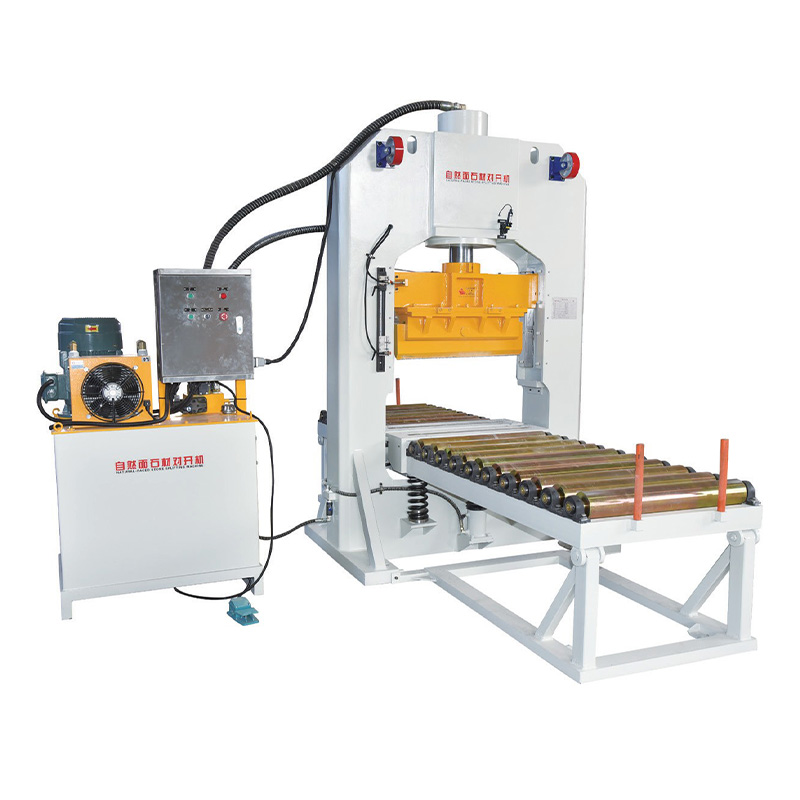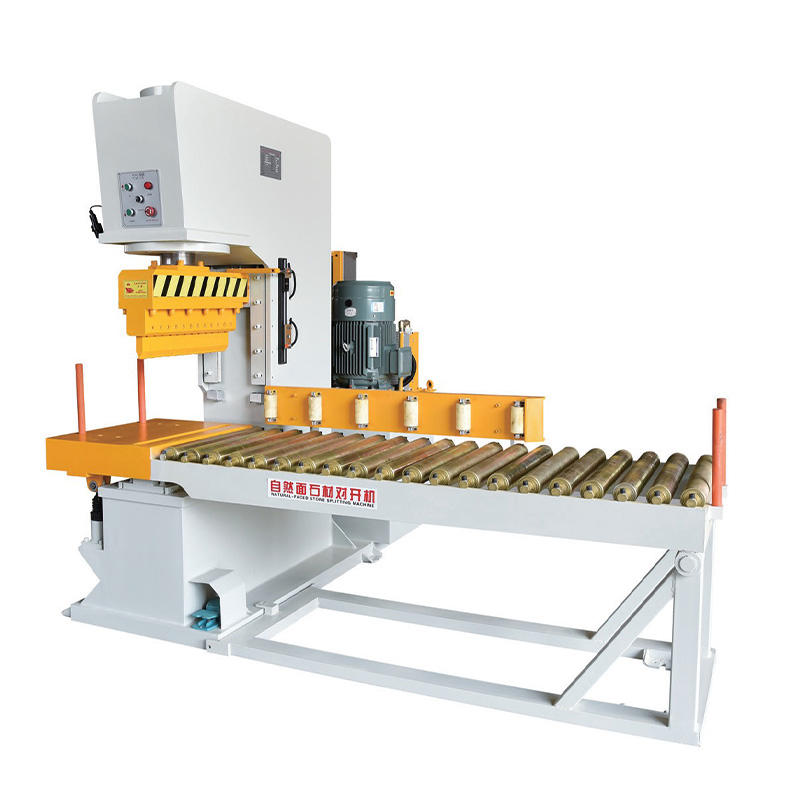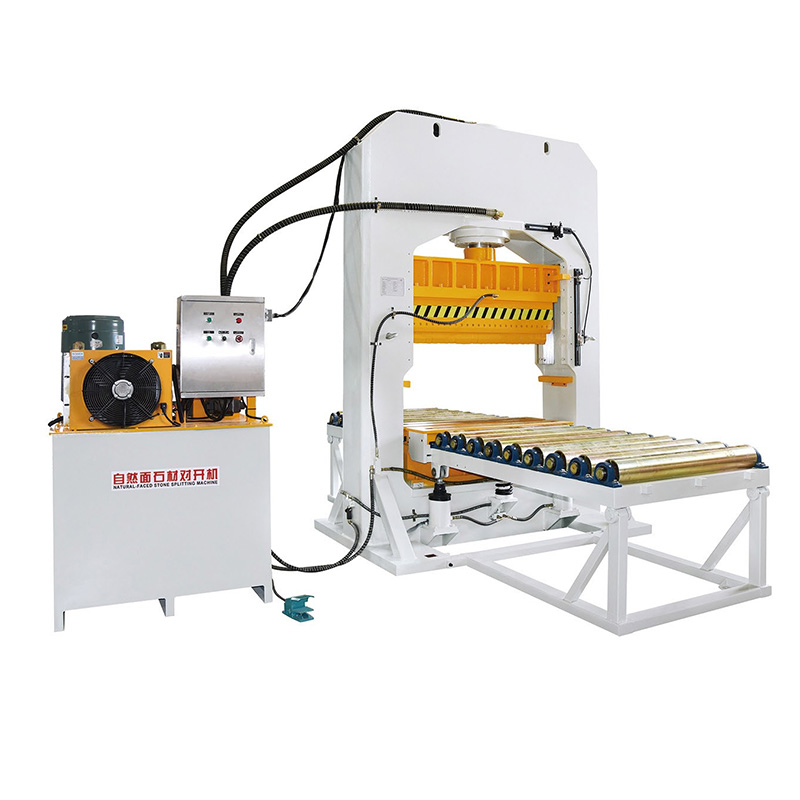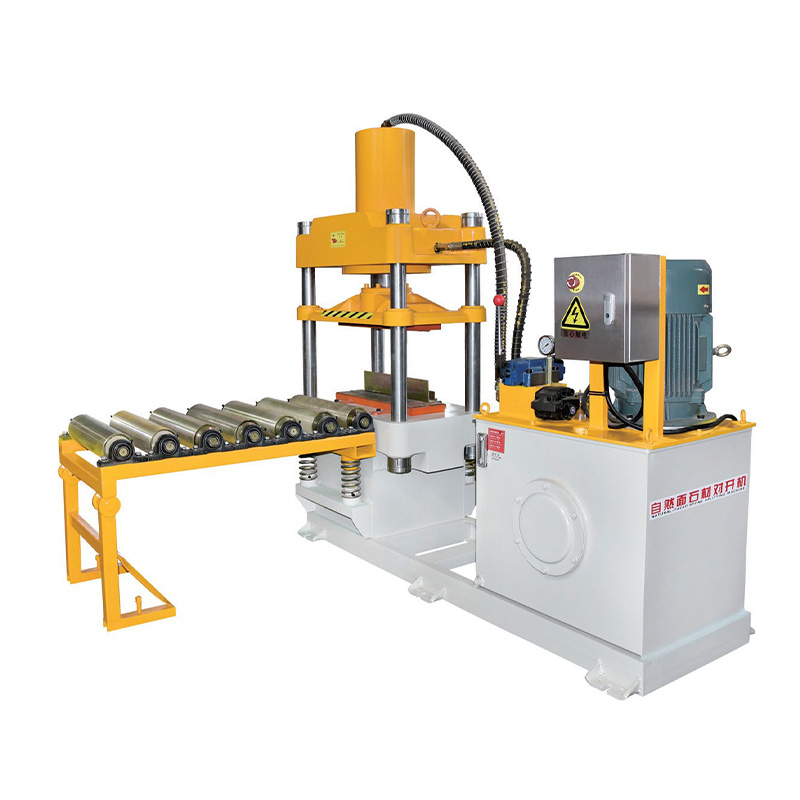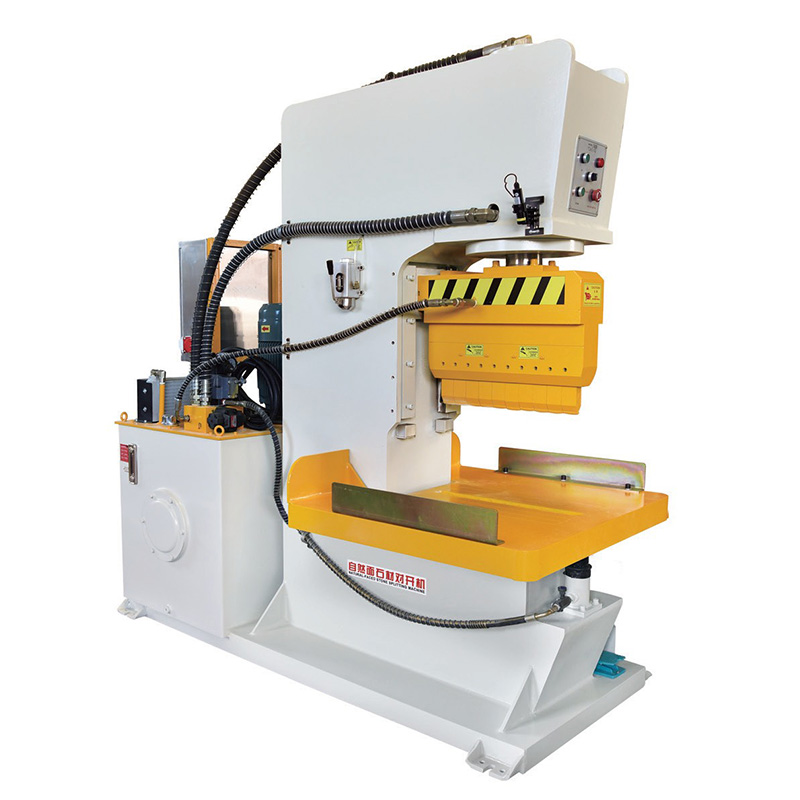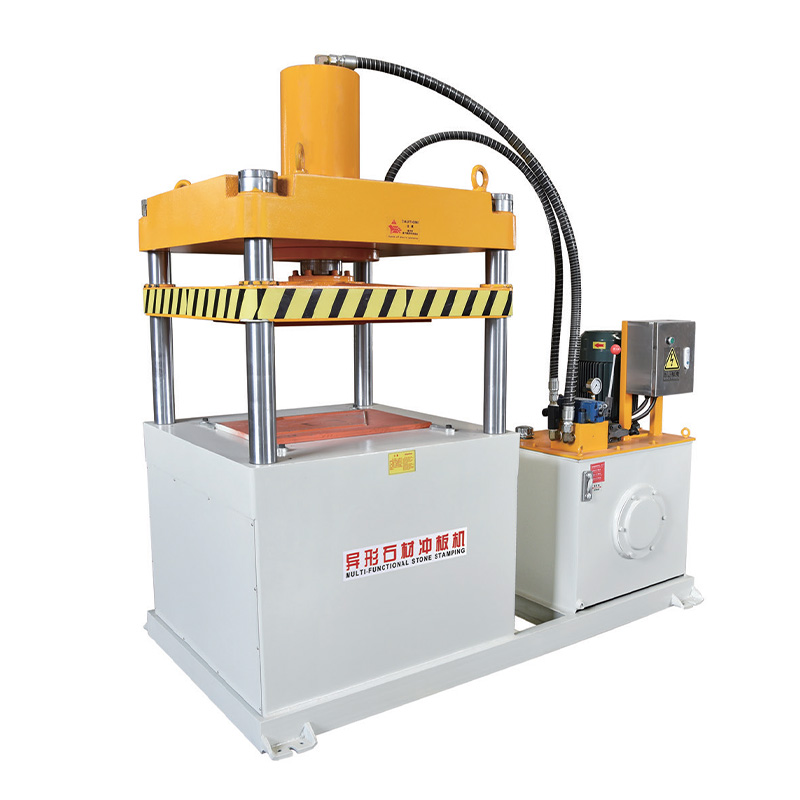


Field Stone Splitter Manufacturer for Wall & Veneer Stone | Speedone
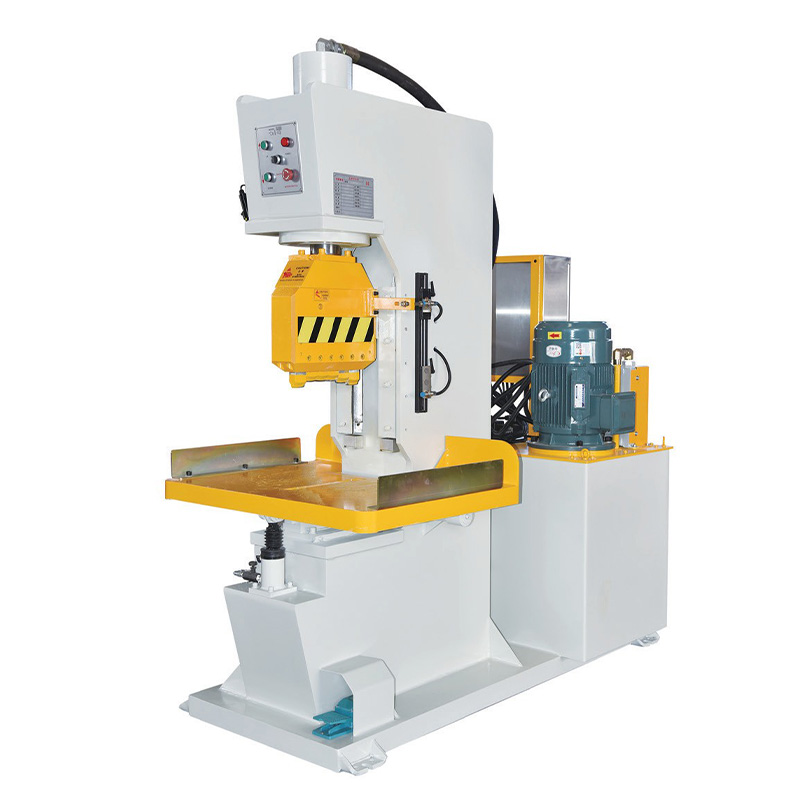
- Weight : 1.7T
- Pressure : 80T
- Power : 11KW
Product Description
Hydraulic Field Stone Splitter for Wall Stone, Veneer & Masonry
The Speedone field stone splitter is designed for professional stone processors working with irregular natural stone. Hydraulic force helps split suitable fieldstone into wall stone, masonry pieces, stone veneer, landscape stone, rubble stone and other natural-face products. Because fieldstone can vary greatly in shape and thickness, the right machine should be selected according to stone type, typical and maximum dimensions, workpiece stability, splitting-tool contact, finished product and production volume.
What Is a Field Stone Splitter?
|
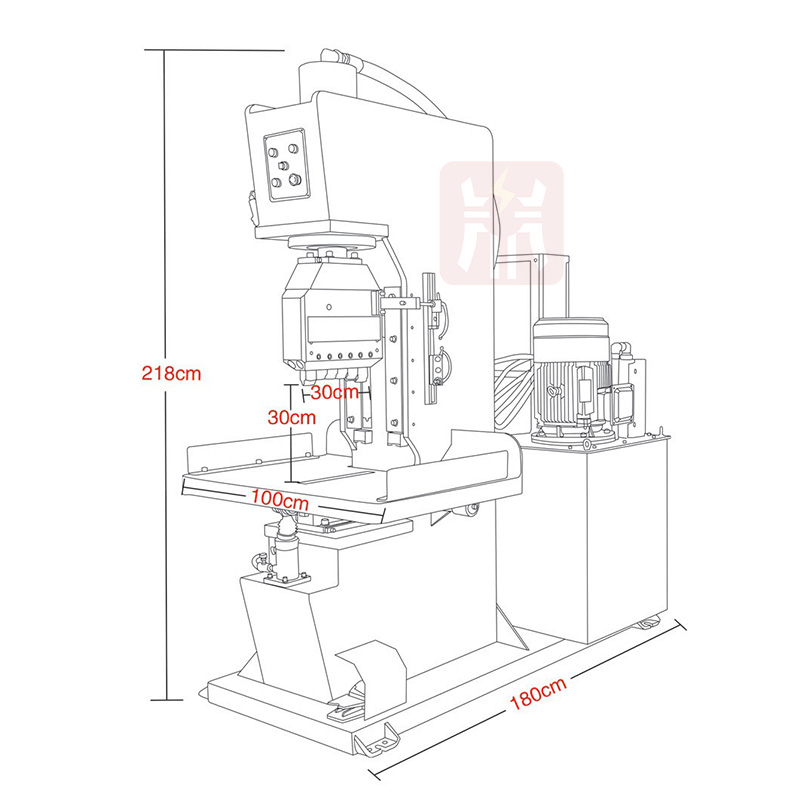 |
| Product display and size indication | |
A field stone splitter is a stone-processing machine used to divide irregular natural stone into more useful pieces for construction, masonry, landscaping and architectural applications.
Fieldstone is different from a precisely sawn stone blank. Raw pieces can vary considerably in shape, thickness and surface profile.
A typical piece may have:
- Uneven upper and lower surfaces
- Rounded edges
- Different thicknesses across the same stone
- Natural cracks
- Weathered surfaces
- Irregular grain or bedding direction
This makes fieldstone splitting different from processing uniform rectangular blocks.
A suitable hydraulic splitter applies controlled force to the stone and exposes its natural internal surface. The finished pieces can then be sorted according to size, face, color and application.
Typical products include:
- Wall stone
- Masonry stone
- Split fieldstone
- Stone veneer
- Landscape stone
- Garden wall stone
- Rubble stone
- Fireplace stone
- Rustic facade stone
- Architectural stone
- Natural-face cladding
- Selected paving products
Field Stone or Fieldstone?
You may see this type of material described as both field stone and fieldstone.
Both forms are commonly used to describe natural stone collected or supplied in irregular shapes rather than uniform sawn blocks.
For machine selection, the spelling is not important. What matters is the actual material:
- Stone type
- Shape
- Width
- Thickness
- Weight
- Natural fracture characteristics
- Required finished product
Photos of the raw stone are especially useful because measurements alone cannot fully describe an irregular workpiece.
Why Use a Hydraulic Field Stone Splitter?
Traditional fieldstone processing often involves hammers, wedges and chisels. These tools are still useful for masonry work, installation and final hand shaping.
For repeated commercial production, however, a hydraulic splitter can provide a more organized way to apply force.
Potential advantages include:
- Reduced repeated manual hammering
- Controlled hydraulic splitting force
- Faster repetitive processing
- Natural fractured stone faces
- Processing of irregular natural stone
- Wall and masonry stone production
- Landscape product preparation
- Improved production organization
- Potential reduction in secondary hand shaping
The most powerful machine is not automatically the best machine.
For irregular fieldstone, stone stability and splitting-tool contact can be just as important as total hydraulic force.
How Does a Field Stone Splitter Work?
A typical splitting process is:
Inspect → Load → Position → Stabilize → Align → Apply Hydraulic Force → Split → Release → Sort
First, the stone is inspected for visible cracks, loose areas and unstable shapes.
The operator then places the workpiece on the supporting table and positions the desired fracture area beneath the splitting head.
The hydraulic system moves the splitting tools toward the stone.
As pressure increases, force is transferred into the workpiece until the stone fractures.
The final result can be influenced by:
- Stone material
- Stone shape
- Grain structure
- Bedding planes
- Existing cracks
- Workpiece width
- Workpiece thickness
- Splitting-tool design
- Contact points
- Stone orientation
- Hydraulic force
Two fieldstones with similar outside dimensions can still split differently because their internal structure is different.
Why Irregular Fieldstone Needs a Different Approach
A sawn stone blank normally has flat surfaces and predictable dimensions.
Fieldstone is often less uniform.
For example, one piece may sit flat on the worktable, while another may have a rounded underside and a high point on its upper surface.
This affects how the splitting force enters the stone.
If the splitting tool contacts only one small high point, the fracture may not develop as intended.
For this reason, buyers should consider:
- Stone stability on the table
- Splitting-head design
- Number of tool contact points
- Working opening
- Worktable access
- Ability to position irregular material
Depending on the machine configuration, segmented tools or multiple contact points may help when processing uneven stone surfaces.
The exact tooling arrangement should be confirmed for the specific machine.
Field Stone Splitter for Wall Stone
Wall stone is one of the main products made from split fieldstone.
Typical applications include:
- Garden walls
- Retaining walls
- Residential masonry
- Landscape walls
- Exterior facades
- Rustic architectural walls
- Decorative stonework
Hydraulic splitting exposes the internal color and texture of the stone.
This can create a completely different appearance from the weathered outside surface of the original fieldstone.
For many wall and facade applications, this freshly exposed natural face is the desired result.
For broader building-stone applications, Speedone’s stone splitter for granite and building stone provides additional information.
 |
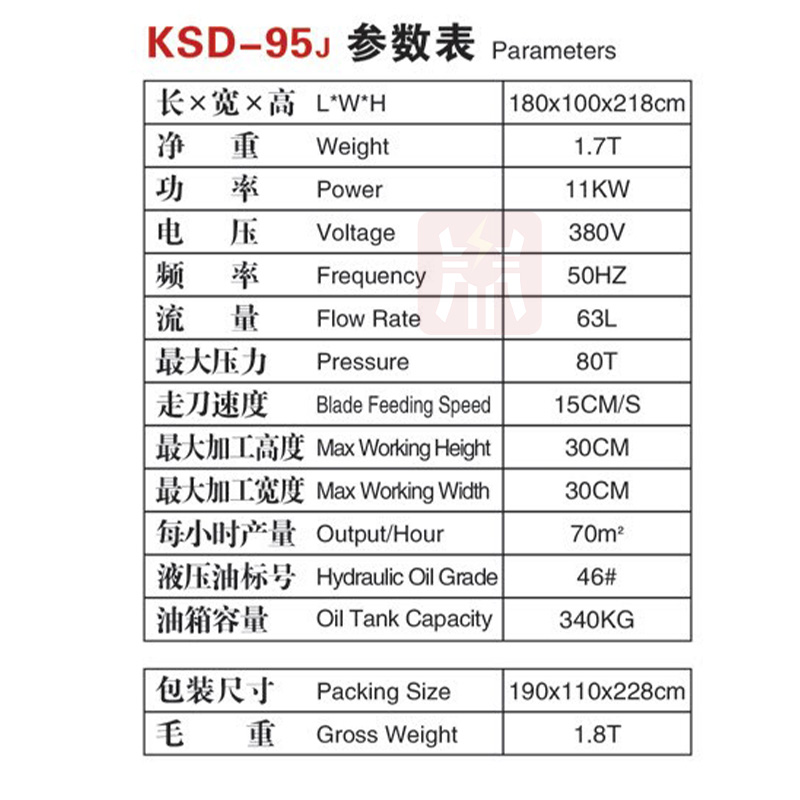 |
| Product display and parameter information | |
Field Stone Splitter for Masonry Stone
Masonry stone needs to be practical for installation as well as visually attractive.
A rounded raw fieldstone can be difficult for a mason to place efficiently.
Splitting can create:
- Flatter working faces
- More manageable pieces
- Exposed natural stone texture
- More usable wall-building shapes
The result is still natural stone, so the pieces will not become perfectly identical blocks.
The objective is to make the material easier to use while preserving its natural character.
Field Stone Splitter for Stone Veneer
Stone veneer is another important fieldstone application.
Splitting can expose an attractive internal stone face that can later be used in wall and facade products.
A typical workflow may be:
Raw Fieldstone → Selection → Hydraulic Splitting → Face Inspection → Additional Sizing if Needed → Sorting → Packaging
Important veneer considerations include:
- Desired face size
- Stone thickness
- Natural color
- Surface texture
- Finished appearance
- Sorting requirements
A field stone splitter mainly creates the fractured face.
If controlled veneer thickness is required, additional sawing or fabrication may also be necessary.
Field Stone Splitter for Landscape Stone
Landscape applications often benefit from the natural variation of fieldstone.
Possible finished products include:
- Garden wall stone
- Landscape edging
- Retaining-wall stone
- Split decorative boulders
- Pathway accents
- Outdoor architectural stone
Hydraulic splitting can make irregular material easier to use without removing the natural appearance that landscape projects often require.
Field Stone Splitter for Fireplace Stone
Natural fieldstone is commonly used for rustic fireplace and feature-wall projects.
Splitting can expose the inner color and texture while also creating more practical surfaces for masonry.
Potential benefits include:
- Exposed natural interior color
- More usable wall-facing surfaces
- Better sorting by appearance
- More practical masonry shapes
The final suitability of the stone for a fireplace or similar application depends on the stone material and project requirements.
Field Stone Splitter for Rubble Stone
Rubble stone is another common material used in natural masonry.
A hydraulic splitter can help convert suitable rough stone into pieces with more useful faces for wall construction and landscape applications.
A simple production process may be:
Rough Stone → Inspect → Position → Hydraulic Split → Sort by Size → Palletize
Finished products can then be grouped according to:
- Size
- Color
- Stone type
- Face appearance
- Intended application
Field Stone Splitter for Granite
Irregular granite fieldstone can require substantial splitting force.
Granite can vary in:
- Grain size
- Density
- Mineral composition
- Weathering
- Natural cracks
For this reason, simply saying “granite” is not always enough when selecting a machine.
A better selection sequence is:
Granite Type → Stone Shape → Typical Width → Thickness → Finished Product → Required Output
For factories also processing more regular granite and marble pieces, Speedone’s stone splitting machine for granite and marble covers the wider stone splitting category.
Field Stone Splitter for Sandstone
Sandstone is commonly used for walls, landscaping and architectural applications.
Its bedding layers can strongly influence fracture direction.
Important factors include:
- Bedding direction
- Workpiece thickness
- Existing fractures
- Desired split face
- Finished size
The hydraulic machine supplies the force, but the natural structure of the sandstone still determines how that force travels through the material.
Field Stone Splitter for Limestone
Limestone is widely used for masonry and landscape products.
Suitable splitting equipment may be used to produce:
- Wall stone
- Stone veneer
- Garden stone
- Architectural pieces
- Landscape products
- Building stone
Different limestone varieties can vary greatly in density and fracture behavior.
Machine selection should therefore be based on representative material and dimensions rather than the stone name alone.
Field Stone Splitter for Marble and Decorative Stone
Marble is less commonly described as traditional fieldstone, but irregular marble pieces can still require hydraulic splitting.
If the required result is a natural fracture, a suitable hydraulic splitter may be appropriate.
If the project requires decorative shapes made with moulds, another process may be more suitable.
Speedone’s marble splitting machine for split face and stamping covers applications where natural splitting and decorative stamping are both required.
Field Stone Splitter vs. Natural Stone Splitter
A natural stone splitter is the broader equipment category.
A field stone splitter is more focused on irregular incoming stone used for masonry, wall stone, veneer and landscape products.
| Factor | Field Stone Splitter | Natural Stone Splitter |
|---|---|---|
| Raw Material | Often irregular | Regular or irregular |
| Fieldstone | Primary application | Possible |
| Wall Stone | Strong application | Common |
| Masonry | Strong application | Common |
| Landscape Stone | Strong application | Common |
| Irregular Shapes | Major consideration | Model dependent |
Field Stone Splitter vs. Building Stone Splitter
Building stone describes the finished-product category, while fieldstone describes the incoming stone or stone style.
A general building stone splitter may process:
- Sawn blocks
- Quarry stone
- Granite
- Limestone
- Sandstone
- Fieldstone
A field stone splitter places more emphasis on irregular raw material and natural masonry products.
Field Stone Splitter vs. Stone Stamping Machine
Stone splitting and stone stamping can both use hydraulic pressure, but they produce different results.
| Feature | Field Stone Splitter | Stone Stamping Machine |
|---|---|---|
| Process | Natural fracture | Mould pressing |
| Incoming Stone | Can be irregular | Usually more controlled |
| Finished Surface | Natural split | Mould-defined |
| Wall Stone | Strong application | Application dependent |
| Decorative Patterns | Limited | Strong application |
For repeatable decorative stone shapes, Speedone’s stone stamping machine for granite and marble may be more suitable.
Field Stone Splitter vs. Hydraulic Stone Splitting Machine
A field stone splitter normally belongs to the broader hydraulic stone splitting machine category.
The main difference is application focus.
A general hydraulic stone splitting machine may be selected around:
- Hydraulic capacity
- Working width
- Working height
- Machine frame
- Conveyor integration
- Industrial production volume
A fieldstone application requires additional attention to:
- Irregular stone shape
- Stone stability
- Splitting-head contact
- Working-table access
- Masonry product requirements
For more information about general hydraulic configurations, see Speedone’s hydraulic stone splitting machine.
Field Stone Splitter vs. Diamond Saw
A hydraulic splitter and diamond saw perform different jobs.
| Feature | Field Stone Splitter | Diamond Saw |
|---|---|---|
| Processing Method | Fracture | Cutting |
| Finished Surface | Natural split | Sawn |
| Irregular Stone | Strong application | May require more fixturing |
| Dimensional Precision | Moderate | High |
| Natural Texture | Strong | Limited |
| Veneer Production | Creates natural face | Controls thickness and sizing |
Many stone processors use both processes.
The splitter creates the natural face, while the saw can provide additional dimensional control when required.
Why Splitting-Tool Contact Matters
Tool contact is especially important when processing irregular fieldstone.
Consider two pieces with the same average thickness:
Stone A: relatively flat upper surface.
Stone B: rounded upper surface with one high point.
The splitting head will contact these stones differently.
This affects how hydraulic force enters the workpiece.
Important areas to evaluate include:
- Tool shape
- Number of contact points
- Stone position
- Working-table support
- Stone stability
- Tool movement
This is why hydraulic tonnage alone is not enough to compare fieldstone splitting machines.
How Much Splitting Force Do You Need?
There is no single hydraulic-force rating that suits every type of fieldstone.
Required force depends on:
- Stone material
- Stone strength
- Width
- Thickness
- Shape
- Natural cracks
- Tool geometry
- Finished-product requirement
A practical selection process is:
Stone → Dimensions → Shape → Finished Product → Required Force → Machine
Choosing the highest available tonnage does not guarantee a better split.
Working Width and Working Height
Working Width
Working width determines the maximum stone width that can fit in the splitting area.
For irregular stone, provide both:
Typical Width + Maximum Width
Working Height
Working height determines how thick or tall a workpiece can be beneath the splitting assembly.
With fieldstone, the highest point can matter more than the average thickness.
Provide:
Typical Height + Maximum Height
This gives Speedone a more realistic understanding of your production material.
Why the Working Table Matters
The worktable does more than simply hold the stone.
For irregular material, it also needs to provide enough support and access for positioning.
Important considerations include:
- Table size
- Workpiece access
- Stone support
- Positioning space
- Loading method
- Ability to stabilize irregular pieces
A broad and accessible working area can make it easier to orient different stone shapes before splitting.
Hydraulic System
The hydraulic system supplies the force used during splitting.
Depending on machine configuration, typical components may include:
- Electric motor
- Hydraulic pump
- Oil reservoir
- Hydraulic cylinder
- Control valves
- Hydraulic hoses
- Pressure-control components
Exact specifications vary by machine and should be confirmed according to the required stone and application.
Standalone Field Stone Splitter vs. Production Line
Fieldstone is less uniform than standardized paving blanks, so a standalone splitter can provide useful flexibility.
| Factor | Standalone Splitter | Integrated Line |
|---|---|---|
| Irregular Stone Flexibility | High | More difficult |
| Initial Investment | Lower | Higher |
| Manual Positioning | Common | Reduced where suitable |
| Product Variation | Easier to handle | Better for more repetitive products |
| Floor Space | Lower | Higher |
| Output Potential | Moderate to high | Higher for suitable material |
Highly irregular stone can still require operator judgment during positioning.
Automation should therefore be planned around the actual raw material rather than only the desired production volume.
Material Handling for Irregular Fieldstone
Irregular fieldstone can be more difficult to handle than rectangular stone blanks.
Individual pieces may:
- Roll
- Tilt
- Have uneven centers of gravity
- Vary greatly in weight
- Be difficult to stack
Depending on stone size, production planning may include:
- Loading tables
- Roller supports where suitable
- Forklift staging
- Overhead lifting equipment
- Stone manipulators
- Sorting bins
- Pallet areas
The splitter should be planned as one part of the complete material-handling workflow.
Field Stone Splitter for Stone Offcuts
Stone fabrication can also generate irregular offcuts that resemble fieldstone in shape.
Selected pieces may be suitable for secondary products such as:
- Wall stone
- Landscape stone
- Garden products
- Decorative split stone
- Masonry pieces
A possible workflow is:
Offcut → Inspection → Selection → Hydraulic Splitting → Sorting → Secondary Product
Not every offcut should be processed.
Stone with severe cracks or unsuitable structure should be rejected before splitting.
Fieldstone Processing in Countertop Factories
Countertop production is not the main application for a field stone splitter.
However, granite and natural-stone fabrication can generate irregular leftover pieces.
Suitable offcuts may be redirected into another production path:
Slab → Countertop Fabrication → Finished Countertop
and
Suitable Offcut → Hydraulic Splitting → Secondary Stone Product
Countertop installation then requires different equipment.
Speedone’s Stone Pro seam setter for granite and quartz countertops is designed for countertop positioning and seam adjustment rather than stone splitting.
How to Operate a Field Stone Splitter
1. Inspect the Stone
Check the workpiece for visible fractures, loose areas and unstable shapes.
2. Confirm Workpiece Size
Make sure the stone is within the machine’s approved working range.
3. Inspect the Hydraulic System
Check visible hoses, fittings and hydraulic components.
4. Inspect the Splitting Head
Look for worn, loose or damaged tooling.
5. Position the Stone
Place the workpiece on the supporting table.
6. Stabilize the Workpiece
Make sure irregular stone cannot roll or shift unexpectedly.
7. Align the Desired Fracture
Position the intended splitting area beneath the tooling.
8. Clear the Working Area
Keep hands and personnel away from the splitting zone.
9. Apply Hydraulic Force
Operate the machine according to the approved instructions.
10. Allow the Split to Complete
Do not reposition the stone while hydraulic force is being applied.
11. Release and Remove the Stone
Wait until the machine reaches a safe unloading position.
12. Inspect and Sort
Sort the finished pieces according to size, face, color and intended use.
How to Choose the Right Field Stone Splitter
1. Identify the Stone Type
Granite, limestone, sandstone and other stone types can behave differently during splitting.
2. Describe the Stone Shape
Explain whether the material is flat, rounded, rough, irregular or partially pre-sized.
3. Provide Typical Dimensions
Normal daily dimensions are often more useful than maximum size alone.
4. Provide Maximum Dimensions
The working opening still needs to accommodate the largest regular pieces.
5. Define the Finished Product
Wall stone, masonry stone, veneer and landscape products may require different setups.
6. Show the Desired Split Face
Photos of the desired finished product can help explain the required appearance.
7. Define Production Volume
Estimate a realistic output requirement per shift.
8. Evaluate Splitting-Tool Contact
This is particularly important for uneven fieldstone surfaces.
9. Plan Material Loading
Decide how heavy or irregular pieces will be placed onto the worktable.
10. Check Operator Access
Allow enough room to position and stabilize irregular material.
11. Ask About Spare Parts
Splitting tools and hydraulic components should be available when replacement is required.
12. Check Supplier Support
Technical documentation, communication and parts support are important for industrial machinery.
Information to Send Speedone for a Quotation
To help Speedone evaluate a suitable field stone splitter, prepare:
- Stone material
- Photos of the raw fieldstone
- Typical width
- Maximum width
- Typical thickness or height
- Maximum thickness or height
- Approximate weight per piece
- Photos of the desired finished product
- Required production volume
- Current splitting method
- Preferred loading method
- Factory voltage and frequency
- Available installation space
For irregular natural stone, raw-material photographs are particularly useful because dimensions alone cannot show the complete workpiece shape.
Common Field Stone Splitting Problems
The Stone Rolls or Moves During Positioning
Irregular geometry can make some workpieces unstable.
Review the support and stone position before applying hydraulic force.
The Stone Splits in an Unexpected Direction
Natural cracks, bedding or grain structure can redirect the fracture.
Only One Small Area Contacts the Splitting Tool
The stone surface may be highly irregular.
Review positioning and the approved tooling configuration.
Excessive Chipping Occurs
Inspect tool condition, contact points and stone orientation.
The Stone Seems to Need More Pressure
Confirm that the stone is within the approved machine range.
Do not exceed the manufacturer’s rated hydraulic pressure.
Production Is Slower Than Expected
Measure loading, positioning, splitting, unloading and sorting separately.
With irregular stone, positioning and handling may be the real bottleneck.
Field Stone Splitter Maintenance
Routine inspection should include:
- Hydraulic oil
- Electric motor
- Hydraulic pump
- Cylinder
- Hoses
- Fittings
- Valves
- Splitting head
- Splitting tools
- Working table
- Machine frame
- Controls
- Safety systems
Hydraulic leaks should be investigated promptly.
Damaged hoses should not remain in normal service.
Splitting tools should also be checked regularly for wear or damage.
Field Stone Splitter Safety
Fieldstone splitting combines high hydraulic force with irregular workpieces, so stone stability deserves particular attention.
- Only trained personnel should operate the machine.
- Inspect the machine before production.
- Inspect every workpiece before loading.
- Make sure the stone is stable before applying force.
- Keep hands away from the splitting area.
- Do not bypass safety guards or controls.
- Inspect hydraulic components regularly.
- Use appropriate heavy-stone handling equipment.
- Wear suitable personal protective equipment.
- Keep unnecessary personnel away from the working area.
- Follow lockout procedures during maintenance.
- Do not exceed approved stone dimensions.
- Do not exceed manufacturer-rated hydraulic pressure.
- Replace damaged tooling.
Natural stone can fracture unpredictably and may release chips or fragments during processing.
Who Uses Field Stone Splitters?
A field stone splitter may be suitable for:
- Fieldstone suppliers
- Stone yards
- Masonry stone producers
- Landscape stone suppliers
- Building stone factories
- Stone veneer manufacturers
- Natural stone processors
- Architectural stone companies
- Quarry processing facilities
- Hardscape suppliers
- Stone equipment distributors
Why Choose Speedone?
Speedone supplies professional equipment for stone processing, handling and installation.
When choosing a field stone splitter, the machine should be matched to the actual raw stone rather than selected by hydraulic tonnage alone.
A practical selection process is:
Stone Material → Shape → Dimensions → Finished Product → Tool Contact → Required Force → Loading Method → Production Target
For irregular fieldstone, buyers should pay particular attention to:
- Working width
- Working height
- Working-table access
- Stone stability
- Splitting-head design
- Hydraulic system
- Material loading
- Spare parts
- Technical documentation
- Supplier communication
The objective is to turn irregular natural material into useful wall, masonry, veneer and landscape products as efficiently as possible.
Need Help Choosing a Field Stone Splitter?Send Speedone photos of your raw fieldstone, typical and maximum dimensions, approximate piece weight, desired finished-product photos and required production volume. Because fieldstone is irregular, photographs can be especially helpful when selecting the working opening, splitting-head configuration and suitable material-handling method.
Frequently Asked Questions
What is a field stone splitter?
A field stone splitter is a machine used to apply controlled force to fieldstone and other suitable irregular natural stone to produce wall stone, masonry pieces, landscape products, veneer and other split stone.
Is field stone the same as fieldstone?
Both forms are commonly used. They generally describe irregular natural stone used in masonry, building and landscape applications.
Is a field stone splitter hydraulic?
Industrial field stone splitters commonly use hydraulic power to provide strong and controlled splitting force.
What is split fieldstone?
Split fieldstone is fieldstone that has been mechanically fractured to expose its internal natural face and create more useful masonry or architectural surfaces.
Can a field stone splitter process irregular rocks?
Suitable machines can process irregular natural stone when the material and dimensions are within the approved machine range. Stone stability and splitting-tool contact are particularly important.
Can it make wall stone?
Yes. Wall stone is one of the main applications for fieldstone splitting equipment.
Can a field stone splitter produce stone veneer?
Yes. Splitting can expose attractive natural faces for veneer production. Additional sizing may be required where controlled veneer thickness is needed.
What is the difference between a field stone splitter and a natural stone splitter?
A natural stone splitter is a broader category, while a field stone splitter focuses more strongly on irregular fieldstone used for wall stone, masonry, veneer and landscape products.
Can it process granite fieldstone?
Suitable hydraulic machines can process compatible granite pieces when their dimensions and material characteristics remain within the machine’s approved working range.
How much hydraulic force does a field stone splitter need?
The required force depends on stone type, width, thickness, shape, natural structure, splitting-tool design and finished-product requirements.
Why is splitting-tool contact important for fieldstone?
Fieldstone often has uneven surfaces. Correct tool contact helps transfer force into the stone more effectively and can influence fracture quality.
What information should I provide when requesting a quotation?
Provide the stone material, raw-stone photos, typical and maximum dimensions, approximate weight, desired finished-product photos, target production volume, factory power supply and preferred loading method.