

Cabinet Jack for Upper Cabinet Installation
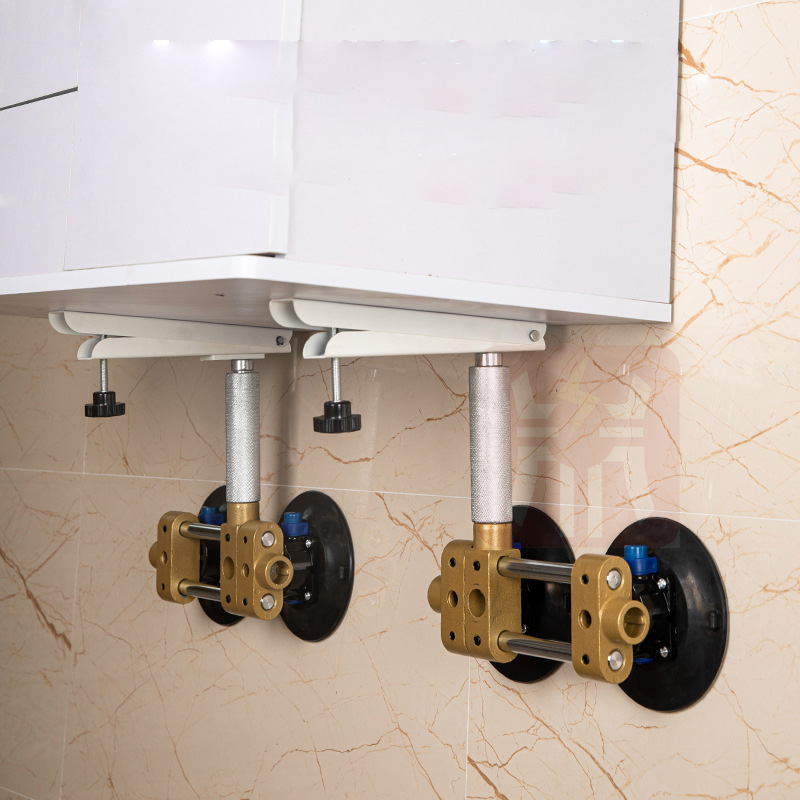
cabinet jack
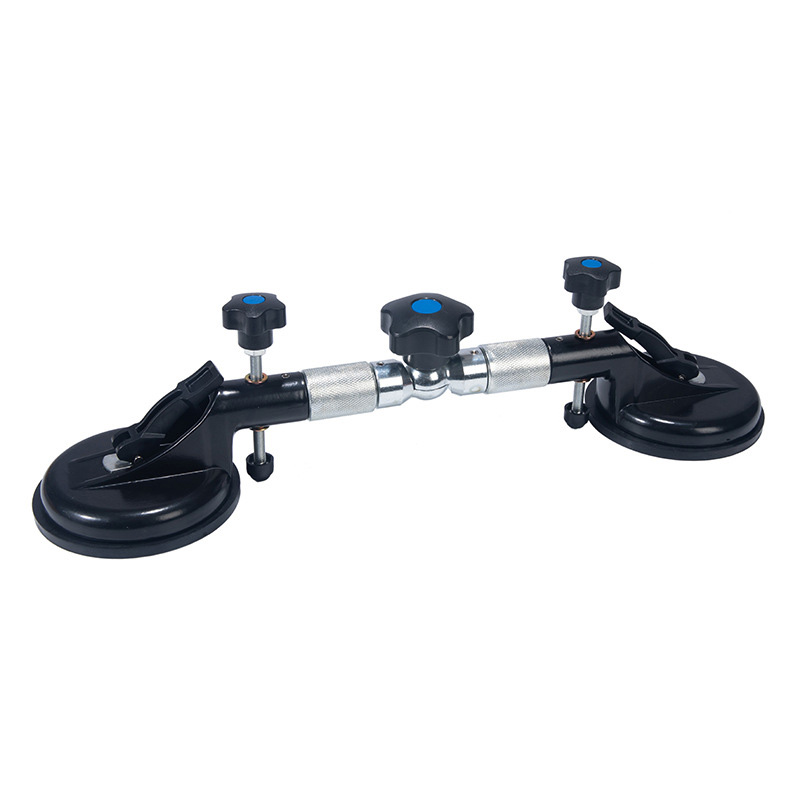
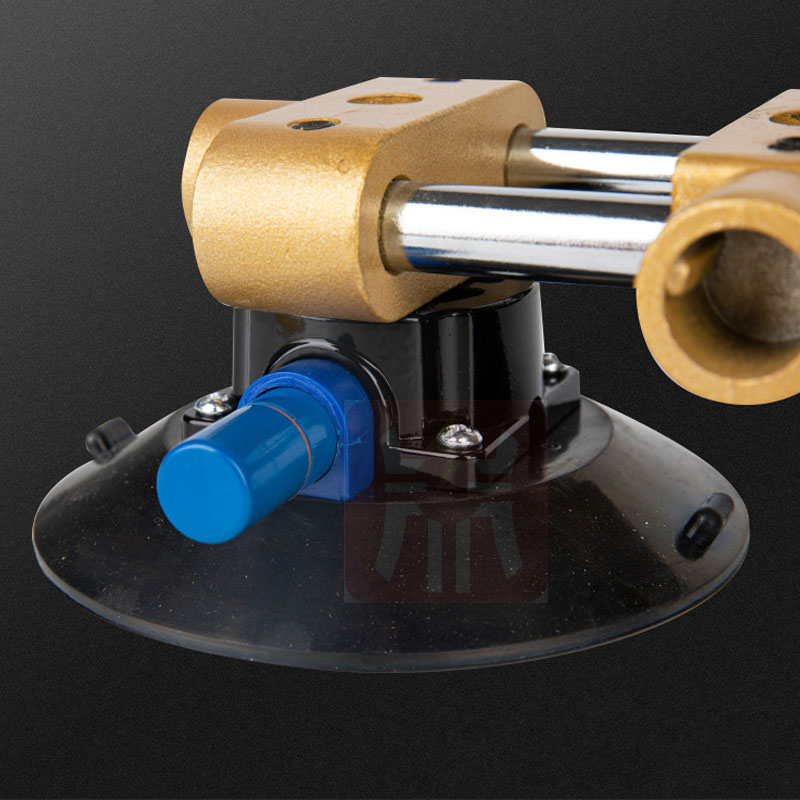
- Model : RS-017-1
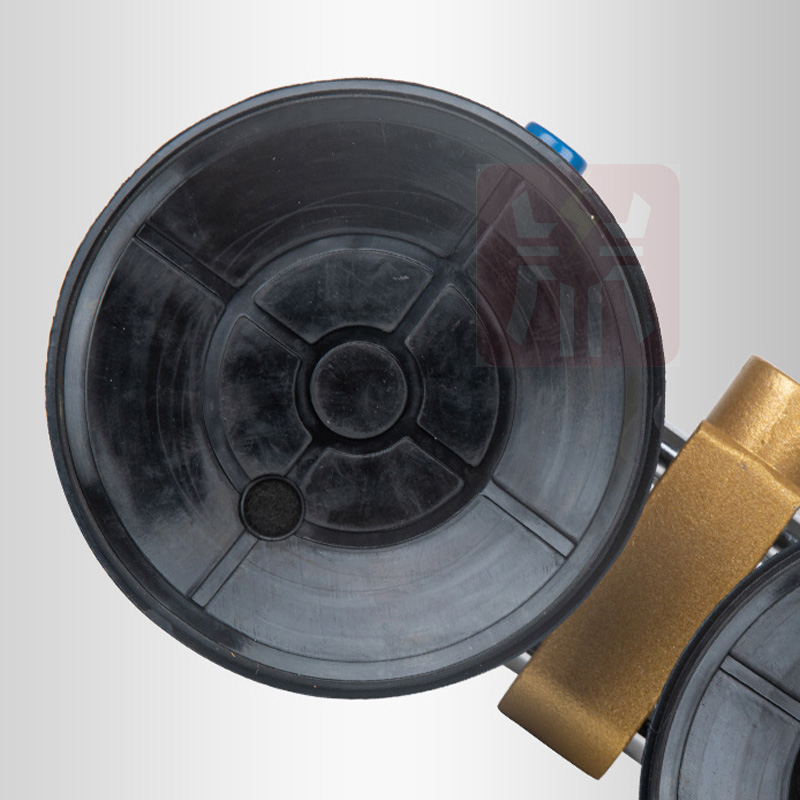
- Disk diameter : 150mm
- Maximum safe suction force : 150kg
Product Description
Heavy Duty Cabinet Jack for Upper Wall Cabinet Installation
What Is a Cabinet Jack?
|
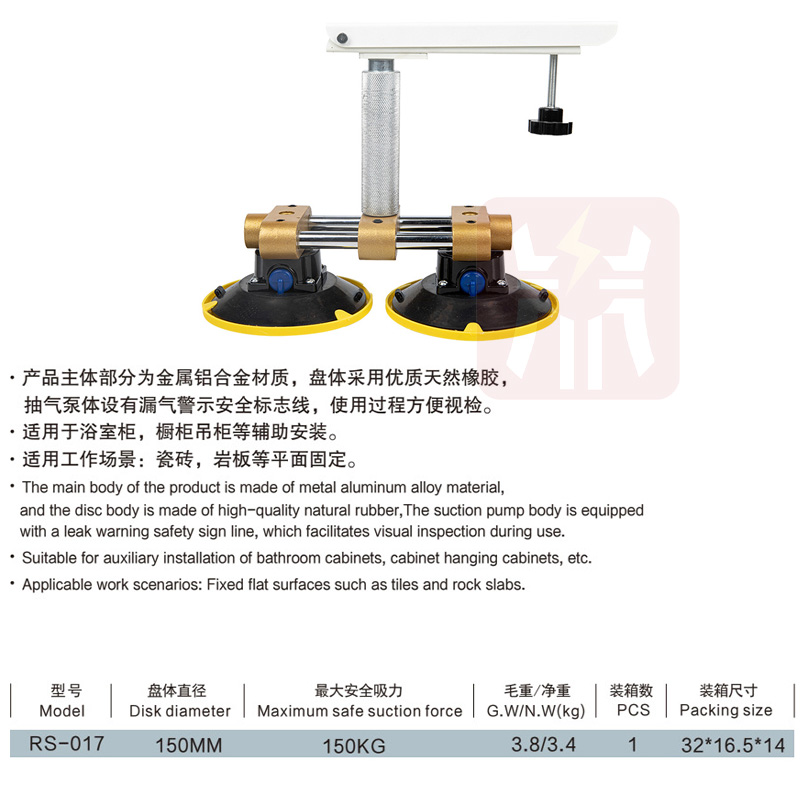 |
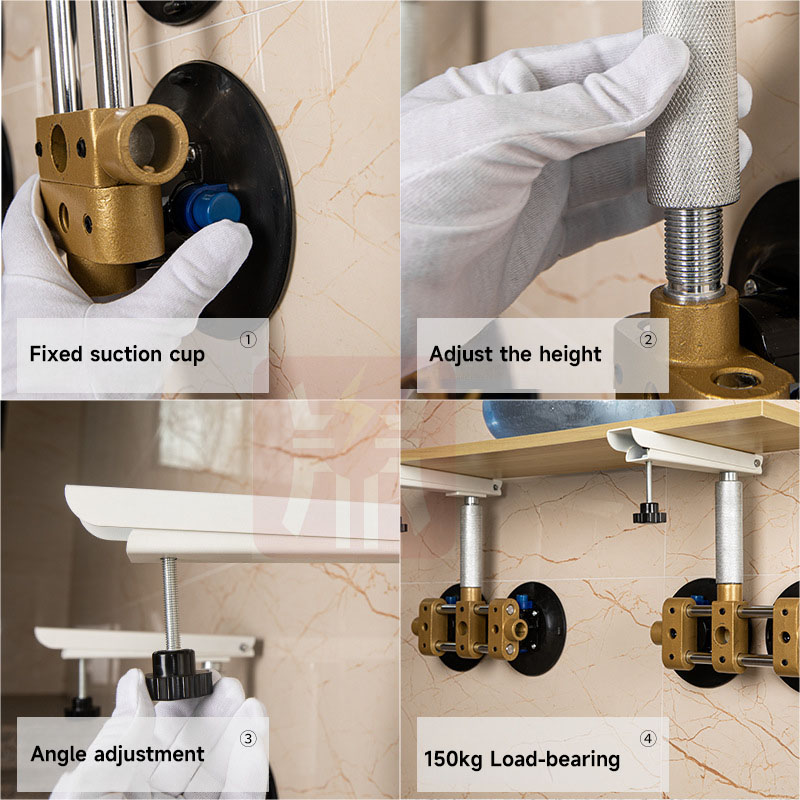
| Product application scenarios and parameter information | |
A cabinet jack is an adjustable support tool used to temporarily hold a wall cabinet near its required installation height.
Upper cabinets can be difficult to install because several tasks need to happen at the same time. The cabinet must be supported while the installer checks height, level, wall position and fixing points.
A cabinet jack creates a temporary support point underneath the cabinet. This allows the installer to focus on the final positioning work rather than continuously carrying the full load by hand.
Depending on the market and product design, similar tools may also be called:
- Cabinet jack support pole
- Cabinet installation jack
- Adjustable cabinet support
- Third hand support pole
- Telescopic support pole
- Cabinet support jack
- Quick support rod
The names vary, but the main purpose is similar: provide temporary and adjustable support while the cabinet is positioned and permanently fixed.
Why Use a Cabinet Jack for Upper Cabinets?
Installing an upper cabinet involves more than lifting it from the floor to the wall.
Once the cabinet reaches approximately the correct height, the installer still needs to make small corrections before fastening it permanently.
Typical adjustments include:
- Matching a reference line
- Checking horizontal level
- Aligning neighboring cabinets
- Positioning the cabinet against the wall
- Checking spacing between units
- Installing screws or anchors
- Adjusting filler-panel clearance
Temporary Mechanical Support
The cabinet jack helps hold the cabinet while the installer checks the final position.
More Freedom for Measuring and Fastening
With temporary support underneath the cabinet, the installer can use both hands for a level, drill, fasteners or measuring tools.
Fine Height Adjustment
Suitable models allow small height corrections once the cabinet is close to the final installation line.
More Consistent Installation
The same support process can be repeated across several cabinets in a kitchen or commercial fit-out project.
How Does a Cabinet Jack Work?
Most modern cabinet jack systems use an adjustable vertical support positioned underneath the cabinet.
The lower section rests on a stable floor or supporting surface, while the upper pad contacts the bottom of the cabinet.
The installer extends the tool close to the required height and then makes smaller adjustments until the cabinet is correctly positioned.
Depending on the design, a cabinet jack may include:
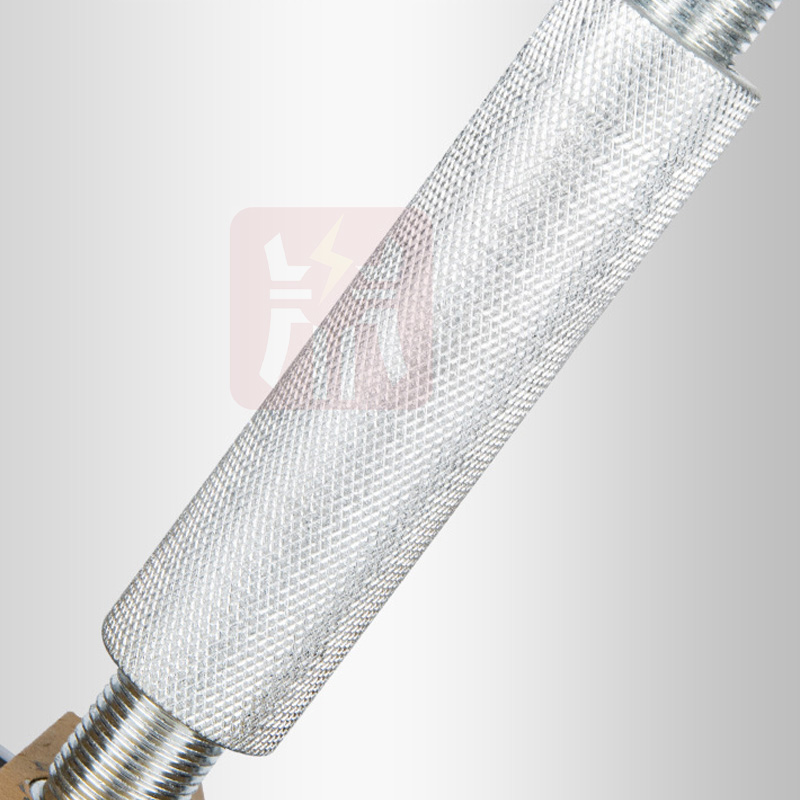
- Telescopic height adjustment
- Quick extension and release
- Fine height adjustment
- Mechanical locking
- Rotating contact pads
- Tilting support heads
- Non-slip pads
- Replaceable support components
The exact adjustment system varies by model, so the tool should always be used according to its stated working conditions and manufacturer instructions.
 |
 |
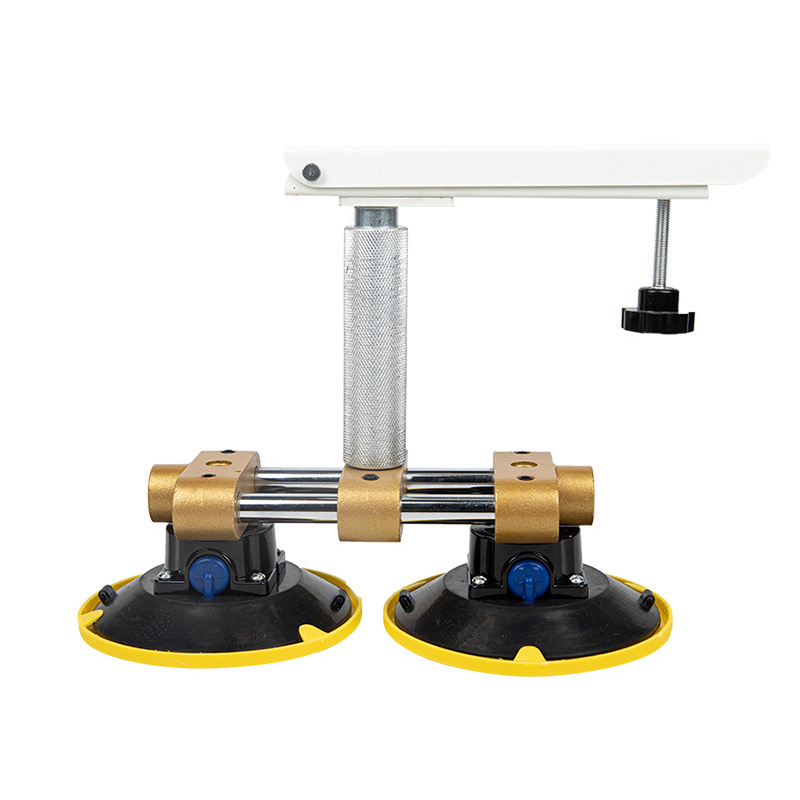
| Product Usage Instructions | |
Cabinet Jack Support Pole for Wall Cabinet Installation
A cabinet jack support pole is a compact and adjustable configuration commonly used for wall cabinet installation.
Instead of using a large fixed stand, the installer can extend the telescopic structure to the height required for the current project.
This is useful because cabinet installation conditions can vary considerably.
Differences may include:
- Cabinet dimensions
- Ceiling height
- Countertop height
- Floor level
- Kitchen layout
- Bathroom configuration
- Available working space
An adjustable support pole gives installers more flexibility when moving between different jobs.
Cabinet Jack for One-Person Installation
A cabinet jack is especially useful when an installer needs additional temporary support during positioning.
It should not automatically be assumed that every cabinet can be installed safely by one person. Cabinet size, weight, installation height and job-site conditions still matter.
However, after the cabinet has been safely positioned on the support tool, the installer may have more freedom to use both hands for:
- Checking level
- Measuring
- Locating fixing points
- Drilling
- Installing fasteners
- Adjusting cabinet faces
A practical workflow is:
Measure → Position → Support → Adjust → Level → Align → Fasten → Verify → Release
Adjustable Cabinet Jack for Fine Height Control
The adjustment system is one of the most important parts of a professional cabinet jack.
Fast extension moves the support close to the required working height, while fine adjustment helps complete the final positioning.
Coarse Height Adjustment
Coarse adjustment is used when the tool needs to move through a larger distance quickly.
Fine Height Adjustment
Fine adjustment becomes useful when the cabinet is already close to the reference line and only a small correction is needed.
Even a small height difference can affect alignment with neighboring cabinets.
Secure Locking
Once the required working height is reached, the support position should remain securely engaged according to the tool’s operating instructions.
Cabinet Jack vs. Manual Cabinet Holding
| Installation Factor | Manual Holding | Cabinet Jack |
|---|---|---|
| Temporary support | Continuous manual effort | Adjustable mechanical support |
| Hands available | Often limited | Installer can focus on alignment and fixing |
| Fine height control | Depends on helper positioning | Controlled on suitable adjustable models |
| Level checking | More difficult while supporting the cabinet | Cabinet remains temporarily supported |
| Repeated installations | Highly dependent on helpers | More repeatable workflow |
Cabinet Jack vs. Cabinet Support Tool
Cabinet jack and cabinet support tool are closely related terms.
Cabinet jack usually emphasizes the height-adjustment and supporting function.
Cabinet support tool is a broader description that may include different types of temporary cabinet support equipment.
Buyers may also find similar products under terms such as:
- Cabinet jack
- Cabinet support tool
- Cabinet installation jack
- Third hand support pole
- Telescopic cabinet support
- Adjustable support rod
The product name is less important than the actual adjustment system, rated working conditions, contact-pad design and intended application.
Cabinet Jack for Kitchen Cabinet Installation
Kitchen installation is one of the main applications for cabinet jacks.
Professional installers may need to position several upper cabinets while keeping the complete cabinet run at a consistent height.
A support jack can assist during:
- First upper cabinet positioning
- Corner cabinet installation
- Wall cabinet alignment
- Microwave cabinet installation
- Cabinet-to-cabinet fastening
- Filler-panel adjustment
- Final leveling
After one cabinet is permanently secured, the support tool can be moved to the next unit as required.
Cabinet Jack for Bathroom Cabinets
An adjustable cabinet jack can also be useful for compatible bathroom installations.
Wall-mounted storage and mirror cabinets often need to be positioned carefully around vanities, sinks, mirrors, plumbing fixtures and other interior elements.
The tool can temporarily support the cabinet while the installer checks:
- Mounting height
- Horizontal alignment
- Clearance around fixtures
- Wall fixing positions
- Relationship with the vanity
The working range, load and contact surfaces should always be appropriate for the specific installation.
Cabinet Jack for Range Hoods and Interior Installation
Some adjustable support systems can be used for more than cabinets.
Depending on the specific model and approved applications, they may provide temporary support for:
- Range hoods
- Wall shelves
- Crown molding
- Interior panels
- Drywall
- Door or window components
- Temporary construction bracing
These applications should only be considered when the specific tool is designed and approved for them.
Third Hand Cabinet Jack
The phrase third hand is commonly used for adjustable support poles because the tool provides an additional temporary support point while the installer performs another task.
During cabinet installation, this can leave the installer free to use:
- A drill
- A level
- A laser level
- Measuring tools
- Cabinet clamps
- Fasteners
The concept does not mean that safe lifting procedures or additional installers are never required. Large or heavy cabinets may still need more people or other handling equipment.
 |
 |
| Product details presentation | |
Cabinet Jack with Non-Slip Support Pads
The contact points at the top and bottom of the tool are important for stable support.
Suitable non-slip pads can help improve contact while reducing direct hard contact with finished cabinet and floor surfaces.
Before using the tool, check:
- Upper support pad
- Lower support pad
- Floor condition
- Cabinet contact surface
- Support angle
- Locking system
Do not use the tool on an unstable, unsuitable or contaminated supporting surface.
Telescopic Cabinet Jack for Different Working Heights
A telescopic cabinet jack can cover a range of working heights instead of being limited to one fixed position.
This can be useful for contractors who work on different kitchen, bathroom and fit-out projects.
Important points to consider include:
- Minimum working height
- Maximum working height
- Adjustment range
- Fine-adjustment mechanism
- Locking method
- Support-pad design
- Storage size
How to Use a Cabinet Jack
Mark the Cabinet Position
Establish the required height and reference lines before supporting the cabinet.
Locate Permanent Fixing Points
Identify suitable wall fixing positions according to the cabinet and supporting wall structure.
Inspect the Cabinet Jack
Check the support pads, locks, adjustment components and main structure for damage or excessive wear.
Place the Jack on a Stable Surface
The lower support point should rest on a stable surface suitable for the intended working load.
Extend the Cabinet Jack
Adjust the tool close to the required cabinet height.
Position the Cabinet
Carefully place or position the cabinet on the intended support area.
Adjust the Height Gradually
Use controlled adjustment to bring the cabinet toward the reference line.
Check Level and Alignment
Confirm both the cabinet level and its relationship with surrounding units.
Install Permanent Fasteners
Secure the cabinet using the appropriate fixing system for the cabinet and wall construction.
Verify Permanent Support
Make sure the cabinet is fully secured before reducing the temporary support.
Release the Cabinet Jack
Lower or retract the support gradually instead of removing it suddenly.
 |
 |
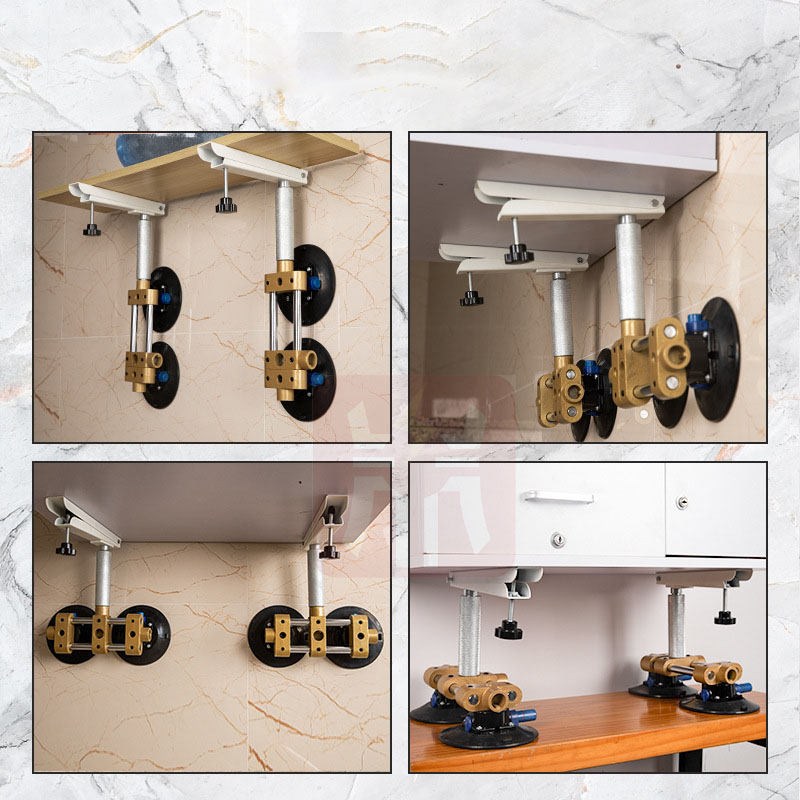
| Product application scenarios | |
How to Choose the Right Cabinet Jack
Working Height Range
The cabinet jack should reach the installation heights commonly required by your projects.
Rated Working Capacity
The supported cabinet must remain within the stated capacity and intended working conditions of the tool.
Fine Adjustment
A practical fine-adjustment system can make final leveling easier.
Quick Height Adjustment
Fast coarse adjustment can reduce setup time when moving between different cabinets.
Locking Mechanism
The tool should maintain the selected support position during alignment and fastening.
Support Pad Design
The upper and lower pads should provide suitable contact for the intended surfaces.
Construction Quality
For repeated professional use, consider the main structure, adjustment components, handles, locks and contact surfaces.
Portability
Cabinet installers frequently move between projects, so compact storage and transport can be valuable.
Cabinet Jack in a Complete Kitchen Installation Workflow
A cabinet jack should be understood as one part of the complete kitchen installation process.
A typical workflow may be:
Cabinet Layout → Temporary Support → Leveling → Permanent Fixing → Worktop Positioning → Seam Adjustment → Final Finishing
The cabinet jack performs its main role during the cabinet support and positioning stages.
After the cabinets are permanently fixed and granite or quartz worktops are installed, dedicated tools are needed for precision countertop seam adjustment.
Cabinet Jack and Vacuum Countertop Seam Setting
Kitchen contractors may also handle granite and quartz countertops after the cabinet installation is complete.
Once the cabinets are permanently secured, countertop sections can be positioned and adjusted at their fabricated joints.
For this later stage, Speedone’s Vacuum Seam Setter for Granite and Quartz Countertops provides controlled vacuum-assisted joint adjustment rather than cabinet support.
Cabinet Installation and Precision Seam Alignment
Many kitchen projects move directly from cabinet installation into countertop installation.
When granite or quartz sections need closer joint positioning before bonding, the Seamless Seam Setter for Granite and Quartz Countertops provides a dedicated solution for precision seam alignment.
The cabinet jack and seam setter therefore serve different stages of the same overall kitchen installation workflow.
Cabinet Jack and Heavy Duty Countertop Tools
Commercial contractors and fabrication teams may need more robust seam-adjustment equipment once cabinet installation is complete.
Speedone’s Heavy Duty Seam Setter Tool for Granite and Quartz Countertops is designed for controlled countertop seam closing, alignment and leveling.
Cabinet Jack for Worktop Installation Projects
Correctly installed cabinets provide the supporting structure for the worktop above them.
After the cabinets are positioned, leveled and fixed, worktop installation becomes the next precision stage.
For granite and quartz worktops that require controlled seam adjustment, installers can use Speedone’s Worktop Seam Setter for Granite and Quartz Countertops.
Cabinet Jack and Stone Fabrication Workflow
Some interior fit-out companies handle both cabinetry and stone surfaces within the same project.
The cabinet jack is used for temporary vertical support and cabinet positioning.
Later in the project, a Stone Seam Setter Tool for Granite and Quartz can be used when separate stone sections require precision joint adjustment.
Keeping these functions separate allows each tool to be used for the job it was designed to perform.
Cabinet Jack and Granite Seam Pulling
Granite countertop installation may also require two fabricated sections to be drawn together at the seam.
For this horizontal joint-closing task, Speedone’s Seam Puller for Granite Countertops and Joint Leveling provides a more suitable solution than trying to use a cabinet support tool for countertop adjustment.
Cabinet Jack vs. Countertop Installation Tools
| Tool | Main Function | Typical Stage |
|---|---|---|
| Cabinet Jack | Temporary cabinet support | Cabinet installation |
| Vacuum Seam Setter | Countertop joint adjustment | Countertop installation |
| Stone Seam Setter | Stone joint alignment | Stone seam positioning |
| Granite Seam Puller | Drawing stone sections together | Final joint adjustment |
Common Cabinet Jack Problems
The Cabinet Jack Slips
Stop work and inspect the floor, support pads, contact surfaces, support angle and locking system before continuing.
The Cabinet Does Not Reach the Required Height
Use a cabinet jack with the correct working range instead of adding unstable improvised extensions.
The Cabinet Is Still Not Level
The support tool is only one part of the installation process. Check the wall, shimming, cabinet construction and reference lines.
The Cabinet Is Too Heavy
Do not exceed the stated working conditions of the support equipment. Additional installers or appropriate handling equipment may be required.
The Cabinet Moves During Fastening
Confirm that the support tool is correctly positioned and securely adjusted before continuing.
The Support Pad Marks the Surface
Check pad condition and compatibility with both the cabinet and supporting surface before use.
Cabinet Jack Safety Tips
A cabinet jack should always be treated as temporary installation support equipment.
- Inspect the tool before every use
- Follow the stated working capacity
- Use a stable supporting surface
- Check upper and lower contact pads
- Engage the locking system correctly
- Avoid shock loading
- Do not use damaged components
- Do not use unstable improvised extensions
- Verify permanent fastening before releasing the jack
- Use additional installers or handling equipment when required
Who Uses Cabinet Jacks?
- Kitchen cabinet installers
- Cabinet manufacturers
- Carpenters
- Kitchen renovation contractors
- Bathroom installers
- Furniture installers
- Interior fit-out contractors
- Construction teams
- Cabinet tool distributors
- Professional installation companies
Why Choose Speedone?
Speedone provides professional tools for installation, positioning, fabrication and material-handling applications.
The purpose of a cabinet jack is straightforward: temporarily support the cabinet so the installer can concentrate on accurate positioning and permanent fastening.
A practical cabinet installation workflow is:
Measure → Position → Support → Adjust → Level → Align → Fix → Verify → Release
For contractors who continue from cabinetry into granite or quartz worktop installation, Speedone also provides dedicated countertop seam-setting and stone-positioning tools for the next stage of the project.
Frequently Asked Questions
What is a cabinet jack?
A cabinet jack is an adjustable temporary support tool used to hold an upper cabinet near its required installation height while the installer checks level, alignment and permanent fixing points.
What is a cabinet jack used for?
It is mainly used to support and position upper wall cabinets during installation. Some multipurpose support-pole designs may also be suitable for other compatible interior installation tasks.
Is a cabinet jack the same as a cabinet support pole?
The terms are often used for closely related tools. A cabinet jack support pole usually refers to an adjustable telescopic design used for temporary cabinet support.
Can a cabinet jack help with one-person installation?
A cabinet jack can provide temporary support and free the installer’s hands for some alignment and fastening tasks. Whether one-person installation is appropriate still depends on cabinet size, weight and job-site conditions.
Can a cabinet jack be used for upper kitchen cabinets?
Yes. Upper kitchen cabinet installation is one of the main applications for suitable cabinet jack systems.
Can a cabinet jack be used for bathroom cabinets?
Suitable models may temporarily support compatible bathroom wall cabinets when the working height, load and contact surfaces are appropriate.
Can a cabinet jack be used for drywall?
Some multipurpose support-pole systems are intended for cabinets, drywall and other temporary-support applications. Always confirm the approved applications of the specific model.
What should I look for when buying a cabinet jack?
Important factors include working height range, rated capacity, fine adjustment, locking system, support-pad design, construction quality, stability and portability.
Related Products