

Seam Puller Granite Countertops for Joint Leveling
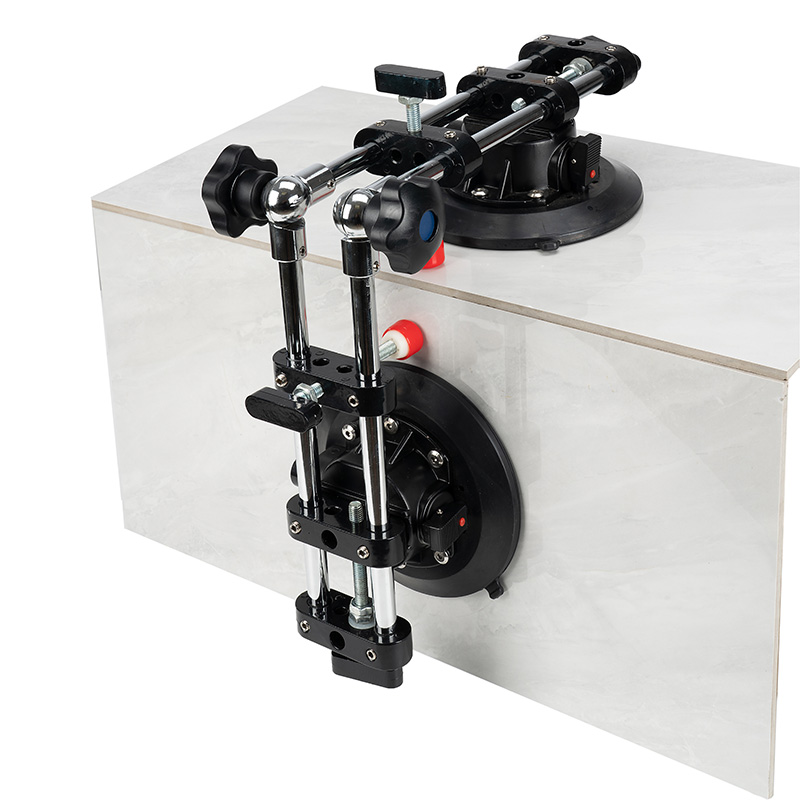
seam puller granite countertops
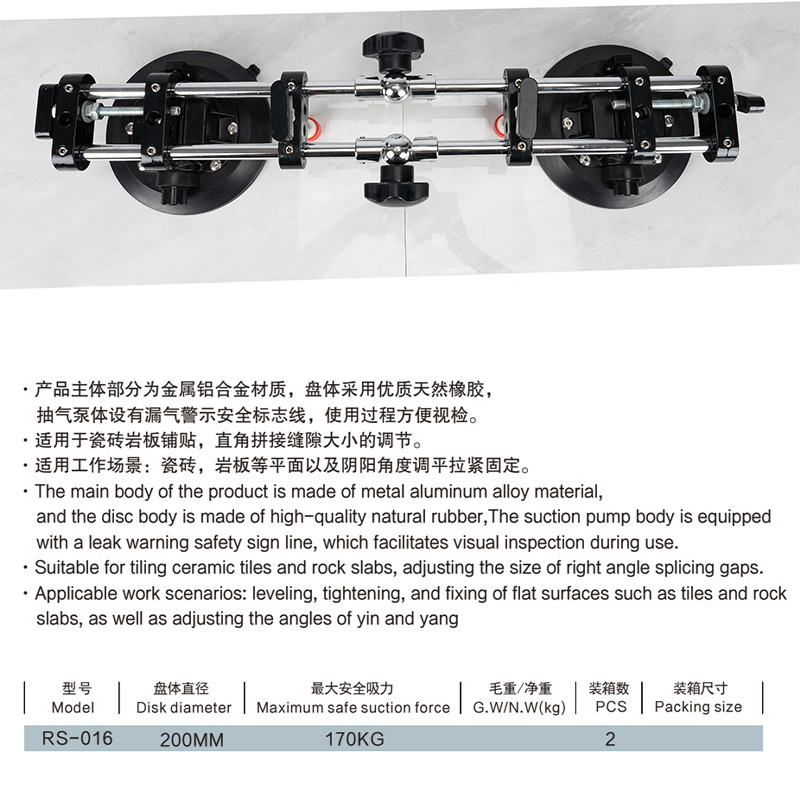
- Model : RS-016
- Disk diameter : 200mm
- Maximum safe suction force : 170kg
Product Description
Heavy Duty Seam Puller for Granite Countertops & Joint Leveling
What Is a Seam Puller for Granite Countertops?
|
 |
| Product parameters | |
A seam puller for granite countertops is a professional installation tool used to bring two separate granite sections together at a fabricated joint.
Large granite countertops are often made from several pieces because of slab size, kitchen layout, transportation limits, sink openings, corners, long runs, stairs, elevators, or restricted site access.
After the granite sections are placed on the cabinets, they still need final adjustment before bonding.
This usually includes:
- Reducing the seam gap
- Pulling the granite sections together
- Matching the front edges
- Correcting horizontal position
- Reducing small height differences
- Keeping the joint stable during curing
A professional seam puller allows these small corrections to be made close to the joint instead of repeatedly moving the entire countertop section.
Why Use a Seam Puller on Granite Countertops?
Granite is heavy and rigid. Once a countertop section is resting on the cabinets, even a small movement can require considerable effort.
Accurate cutting alone is also not enough to create a good seam. Two well-fabricated edges can still look uneven if the sections are not correctly positioned during installation.
Common problems include:
- Wide or uneven seam gaps
- One section sitting higher than the other
- Misaligned front edges
- Visible lippage
- Movement during adhesive curing
- Difficult manual repositioning
Controlled Joint Closing
The pulling mechanism helps move the two granite sections together gradually rather than using sudden manual force.
Better Edge Alignment
Installers can continue checking the seam and front edge while making small corrections.
Minor Surface Leveling
Some seam-setting systems also provide vertical adjustment to reduce small height differences between adjoining surfaces.
Stable Position During Bonding
Once the desired joint position is reached, suitable equipment can help keep the granite sections stable while the adhesive cures.
How Does a Granite Countertop Seam Puller Work?
Many professional granite seam pullers use vacuum suction cups positioned on opposite sides of the joint.
The suction cups create temporary gripping points on suitable polished granite. A mechanical adjustment system then transfers controlled pulling force between the two sections.
The general workflow is:
Position → Grip → Pull → Align → Level → Bond → Hold → Finish
For installers who specifically want vacuum-based seam adjustment, Speedone’s Vacuum Seam Setter for Granite and Quartz Countertops provides a related option for secure suction gripping and controlled joint positioning.
Seam Puller for Tight Granite Joint Closing
One of the main purposes of a seam puller is to close the gap between two fabricated granite sections.
Professional seam work should be gradual. Applying too much force at once can move the countertop out of position or disturb the front edge.
Start with Correct Positioning
The granite sections should already be close to their final installation position before fine seam adjustment begins.
Pull Gradually
Move the sections together in small steps rather than trying to close the joint in one movement.
Check the Seam Gap
Pause during adjustment and inspect how the fabricated edges are meeting.
Monitor the Front Edge
The visible countertop edges should remain aligned as the seam closes.
This controlled process provides more predictable results than pushing heavy granite sections manually.
Granite Seam Puller for Surface Leveling
A narrow seam does not automatically mean the finished joint will look good.
If one granite section sits slightly higher than the other, the difference may be visible and can also be felt across the countertop surface.
Suitable seam-setting systems may include a leveling function for small vertical corrections.
Before using the tool for leveling, check whether the problem comes from:
- Uneven cabinets
- Incorrect support
- Improper shimming
- Granite thickness variation
- Fabrication tolerance
- Debris beneath the stone
- Incorrect initial positioning
The tool should be used for fine correction rather than for hiding major support or fabrication problems.
For projects where a flatter and less noticeable seam is especially important, Speedone’s Seamless Seam Setter for Granite and Quartz Countertops provides another precision-focused option.
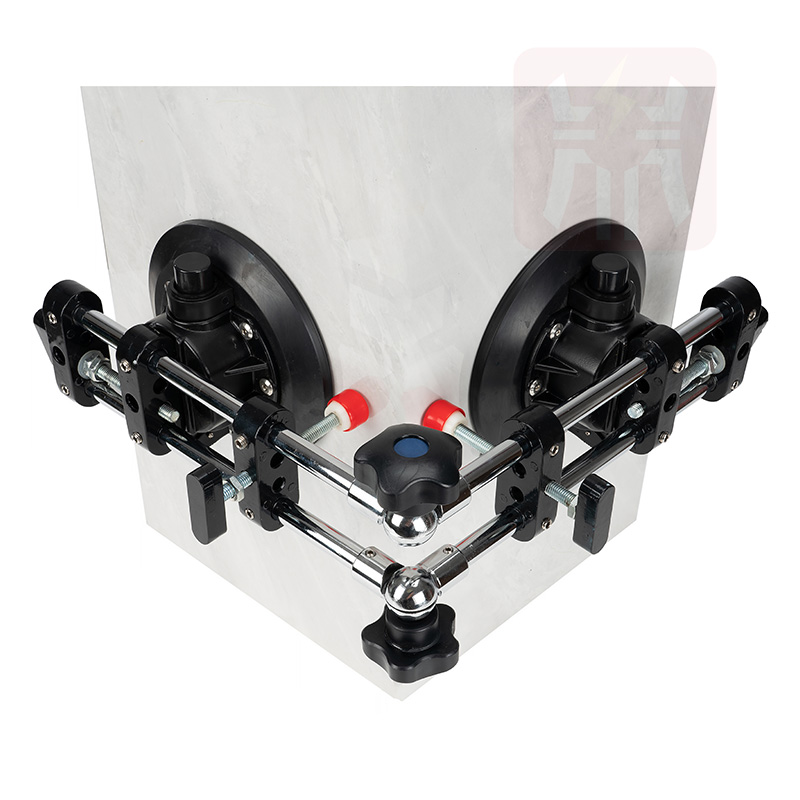 |
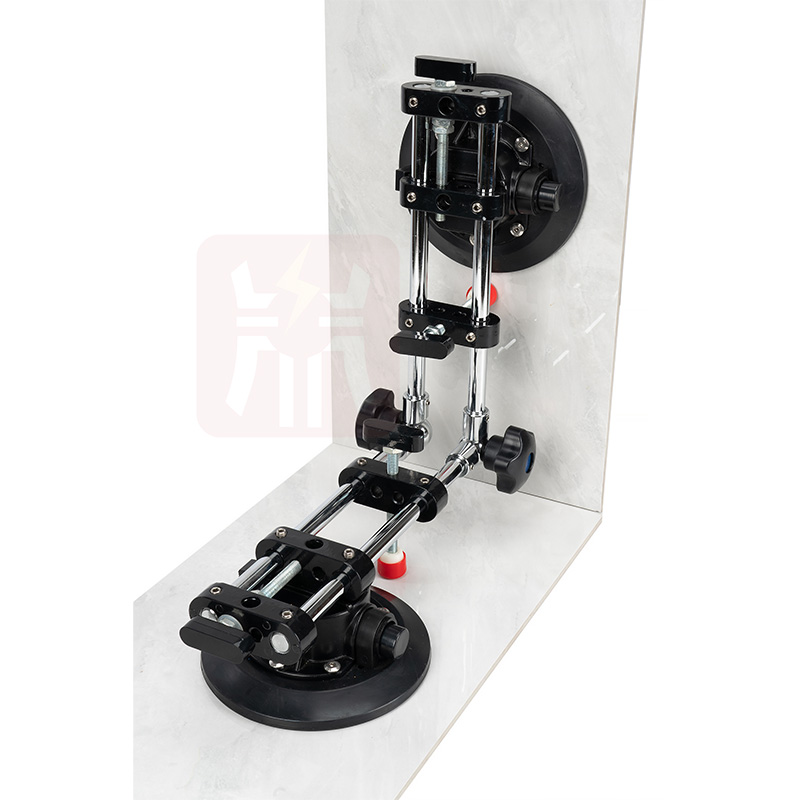 |
| Product multi-angle display | |
Granite Seam Puller vs. Manual Joining
| Installation Factor | Manual Method | Granite Seam Puller |
|---|---|---|
| Joint closing | Manual pushing and pulling | Controlled mechanical pulling |
| Fine positioning | Highly operator dependent | Incremental adjustment |
| Heavy granite sections | Higher physical effort | Less repeated manual movement |
| Joint leveling | More difficult | Available on suitable systems |
| Holding during curing | Position may shift | More stable positioning |
Vacuum Seam Puller for Polished Granite
Vacuum technology is commonly used in granite seam tools because polished stone can often provide a suitable surface for compatible suction cups.
This creates temporary gripping points without drilling into or permanently fastening to the finished countertop.
Before applying pulling force, check:
- Granite surface cleanliness
- Surface smoothness
- Suction cup condition
- Seal condition
- Vacuum stability
- Tool compatibility
- Direction of applied force
Dust, moisture, grease, polishing residue, worn pads, damaged seals, and rough textures can reduce suction performance.
If a suction point becomes unstable, stop the adjustment and inspect the gripping system before continuing.
Heavy Duty Granite Seam Puller for Professional Use
Professional installers may use seam pullers repeatedly in fabrication shops, residential kitchens, commercial projects, and renovation sites.
For regular use, buyers should consider more than basic pulling ability.
Important factors include:
- Structural rigidity
- Fine pulling control
- Reliable vacuum gripping
- Leveling capability
- Accessible controls
- Ease of repositioning
- Replaceable suction parts
- Suitability for repeated professional use
For installers who need a broader professional seam-setting configuration, Speedone’s Heavy Duty Seam Setter Tool for Granite and Quartz Countertops provides another solution for demanding stone installation work.
Seam Puller vs. Seam Setter
The terms seam puller and seam setter are sometimes used for similar countertop tools, but they can emphasize different functions.
A seam puller mainly describes the action of drawing two sections together.
A seam setter may include a broader combination of:
- Pulling
- Horizontal alignment
- Surface leveling
- Joint stabilization
For buyers, the actual functions of the tool are more important than the product name alone.
| Tool Type | Main Function | Typical Application |
|---|---|---|
| Granite Seam Puller | Drawing sections together | Granite countertop joining |
| Seam Setter | Pulling, alignment and leveling | Precision seam installation |
| Seam Leveler | Correcting relative height | Reducing lippage |
| Seam Clamp | Holding the joint in position | Bonding and curing |
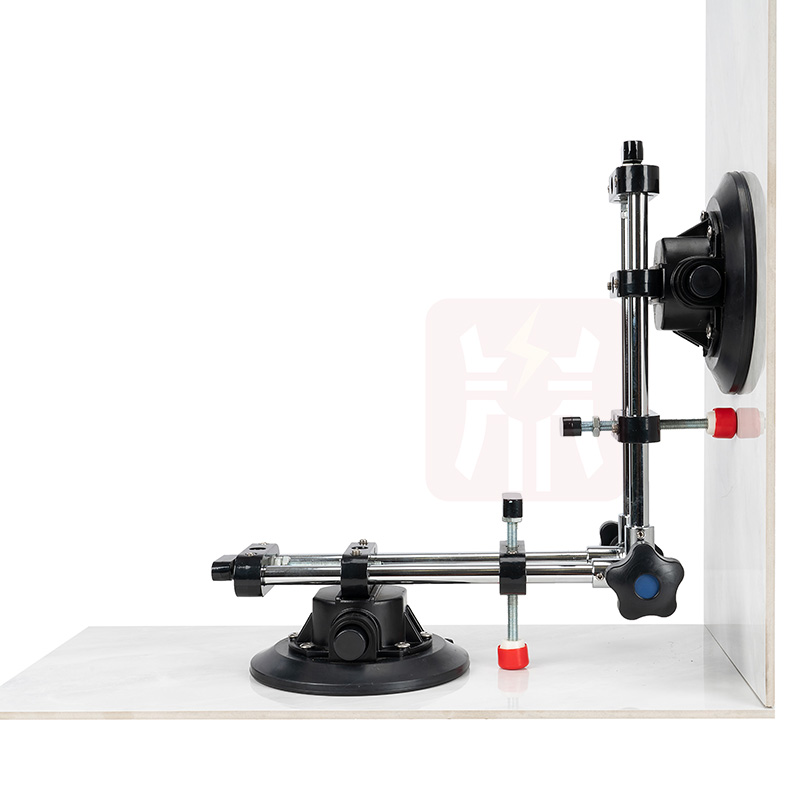 |
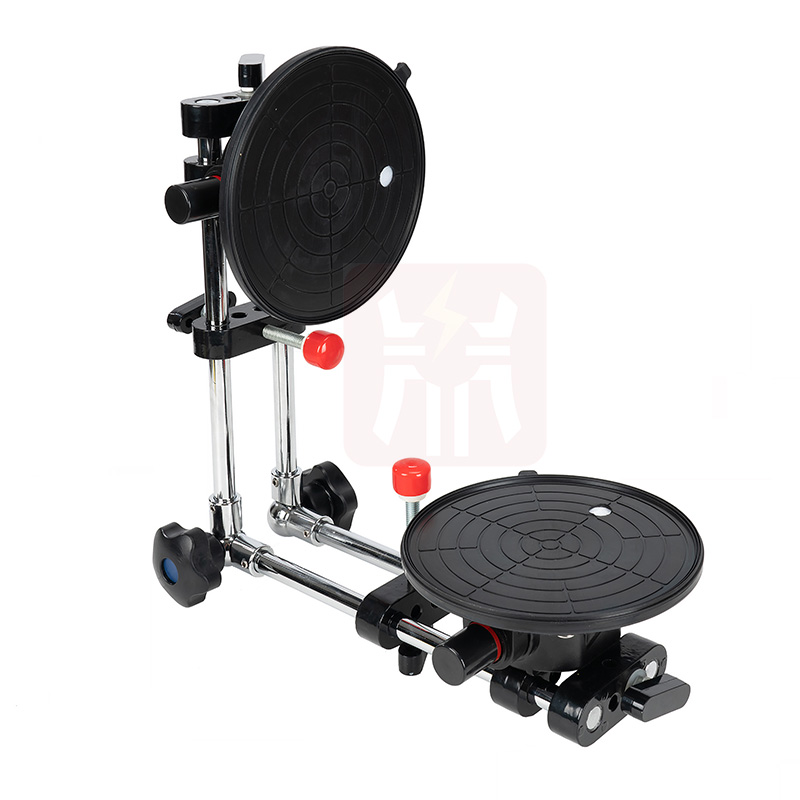 |
| Product display | |
Granite Countertop Seam Puller vs. Worktop Seam Setter
The words countertop and worktop often describe the same type of application but are used in different markets.
“Countertop” is common in North America, while “worktop” is widely used in the UK and other regions.
The seam-setting process is similar: separate fabricated pieces need to be joined and aligned accurately.
For worktop-focused markets, Speedone’s Worktop Seam Setter for Granite and Quartz Countertops provides a related solution for professional worktop joint installation.
Granite Seam Puller vs. Stone Seam Setter Tool
A granite seam puller has a specific focus on granite countertop joining.
Stone fabrication companies may also work with several materials, including:
- Granite
- Quartz
- Marble
- Engineered stone
- Other compatible countertop materials
For workshops requiring broader material compatibility, Speedone’s Stone Seam Setter Tool for Granite and Quartz provides another option for multi-material seam-setting applications.
Seam Puller for Granite Kitchen Countertops
Kitchen countertops are one of the main applications for granite seam pullers.
Seams may be required around:
- L-shaped countertops
- U-shaped kitchens
- Long countertop runs
- Sink sections
- Cooktop sections
- Peninsulas
- Large kitchen islands
- Waterfall assemblies
After the main granite sections are safely positioned, the seam puller helps make the final small adjustments required at the joint.
Seam Puller for Large Granite Kitchen Islands
Large granite islands may need several sections because of slab dimensions, transportation limits, building access, or the final design.
Since islands are often visible from several directions, seam alignment can be especially important.
A suitable seam puller can help control:
- Seam spacing
- Front-edge alignment
- Relative surface height
- Joint stability
- Position during bonding
Countertop Seam Setter for Granite and Quartz
Some professional installers work mainly with granite, while others handle several countertop materials.
For companies installing both granite and quartz, a broader seam-setting system may provide more flexibility.
Speedone’s Heavy Duty Countertop Seam Setter for Granite and Quartz provides another option for professional installers working across several compatible countertop surfaces.
How to Use a Seam Puller on Granite Countertops
Inspect the Granite Edges
Check the fabricated edges for chips, dirt, damage, or other problems that may affect the joint.
Check the Cabinet Support
Make sure both sections have stable and properly prepared support.
Dry Fit the Granite
Move the sections close to their final positions before applying adhesive.
Clean the Suction Areas
Remove dust, water, oil, grease, and polishing residue from the intended gripping areas.
Position the Seam Puller
Place the suction or gripping points on suitable areas on opposite sides of the seam.
Confirm Secure Suction
Check that the vacuum attachment is stable before applying pulling force.
Pull the Sections Gradually
Move the granite pieces together in small steps.
Check Seam Width
Monitor the joint continuously while adjusting.
Check Front-Edge Alignment
Inspect the visible edges and other important reference points.
Level the Joint
If the tool provides leveling adjustment, make small vertical corrections to reduce height differences.
Apply the Adhesive
Use an appropriate stone bonding system and follow the adhesive manufacturer’s instructions.
Maintain the Position
Keep the seam stable during the required curing period.
Release and Finish
After the joint has stabilized, carefully release the gripping system and complete the final seam cleaning and finishing.
How to Choose a Seam Puller for Granite Countertops
Reliable Vacuum Gripping
Stable suction is important for controlled pulling on suitable polished granite.
Fine Pulling Adjustment
Professional seam work benefits from gradual and predictable movement.
Leveling Capability
If reducing lippage is important, choose a model with suitable vertical adjustment.
Rigid Construction
A stable connecting structure helps transfer adjustment force more predictably.
Accessible Controls
The pulling and leveling controls should remain easy to operate near walls, sinks, backsplashes, and corners.
Replaceable Components
Suction pads, seals, knobs, and other working parts should be easy to inspect and replace when necessary.
Material Compatibility
If your business also installs quartz, check whether the selected system is suitable for both materials.
Common Granite Seam Pulling Problems
The Seam Will Not Close
Do not simply increase pulling force. Check the fabricated edges, countertop position, support, adhesive space, and nearby obstructions first.
The Suction Cup Loses Grip
Stop adjustment and inspect the contact surface, suction pad, seal, and vacuum condition.
One Granite Section Is Higher
Check the cabinetry, supports, shims, granite thickness, and initial position before relying on fine leveling adjustment.
The Front Edges Become Misaligned
Reduce the pulling force and correct the countertop position before continuing.
The Seam Moves During Curing
Keep the joint stable for the bonding period specified by the adhesive manufacturer.
Too Much Force Is Required
Do not use excessive mechanical force to compensate for major fabrication, support, or positioning errors.
Who Uses Seam Pullers for Granite Countertops?
- Granite countertop fabricators
- Kitchen countertop installers
- Stone fabrication workshops
- Residential kitchen contractors
- Commercial fit-out contractors
- Countertop factories
- Stone equipment distributors
- Professional installation tool suppliers
Why Choose Speedone?
Speedone develops professional equipment for stone fabrication, countertop installation, slab handling, glass, porcelain, and related applications.
Granite seam pulling works best as one precision stage within a complete countertop installation workflow.
A practical process is:
Position → Dry Fit → Grip → Pull → Align → Level → Bond → Finish
- Solutions for granite countertop installation
- Equipment for quartz and stone fabrication
- Vacuum-based seam adjustment
- Professional countertop installation tools
- Solutions for fabrication shops and factories
- Heavy-duty professional applications
- OEM and ODM support
- Solutions for distributors and equipment suppliers
Frequently Asked Questions
What is a seam puller for granite countertops?
A seam puller for granite countertops is a professional installation tool used to draw adjoining granite sections together and help control their position during seam installation.
How does a granite countertop seam puller work?
Many models use suction cups on both sides of the seam together with a mechanical adjustment system that gradually pulls the countertop sections together.
Can a granite seam puller level the joint?
Some seam-pulling systems also provide leveling adjustment to help correct small height differences between adjoining sections.
Is a vacuum seam puller suitable for polished granite?
Suitable vacuum systems can work on compatible polished granite when the suction pads, surface condition, equipment capacity, and application meet the tool requirements.
What is the difference between a seam puller and a seam setter?
A seam puller mainly brings two countertop sections together, while a seam setter may also provide horizontal alignment, leveling, and temporary stabilization.
Can a granite seam puller also be used on quartz?
Some professional seam tools are suitable for both granite and quartz. Material and surface compatibility should be checked for the specific model.
Can a granite seam puller lift countertops?
A seam puller should not be used as primary lifting equipment unless the manufacturer specifically approves it for that purpose. Heavy countertop sections should be handled with suitable lifting equipment.
What should I look for when buying a granite seam puller?
Important factors include gripping reliability, fine pulling control, leveling capability, structural rigidity, accessible controls, replaceable suction components, and compatibility with the countertop materials you install.